
As cities grow upward and high-rise buildings become a regular part of urban life, lifts have become essential for moving people between floors quickly and efficiently. From residential apartments and offices to hospitals, malls and industrial buildings, their regular use makes safety and regulatory compliance increasingly important.
Before a newly installed lift becomes part of a building's daily operations, several technical checks, inspections and approvals may come into the picture. This makes understanding the Lift License in India, the registration process and applicable compliance requirements important for building owners and operators.
What is a Lift License?
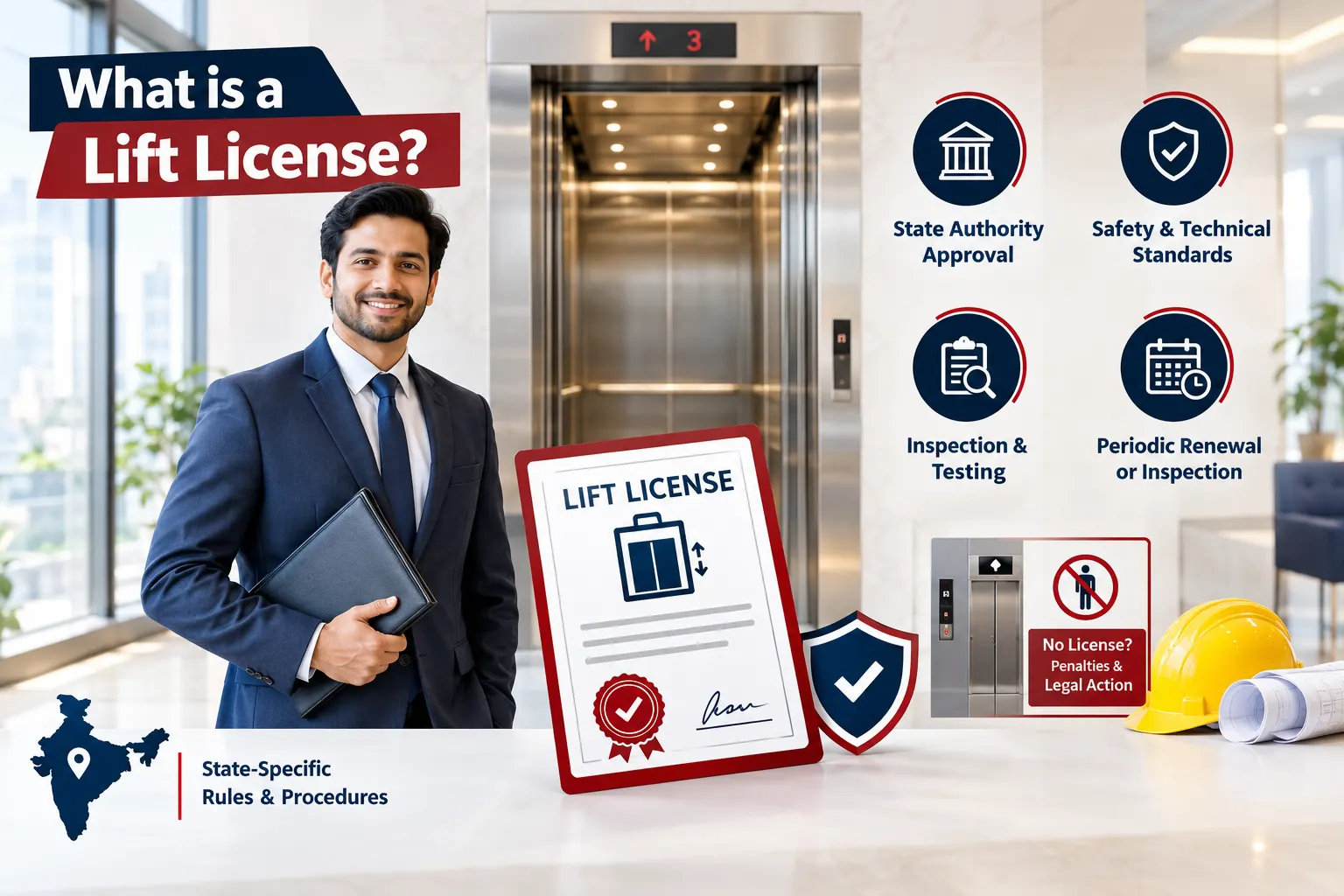
A Lift License is an official approval issued by the competent state authority that permits a lift or elevator to be operated after meeting prescribed safety and technical requirements. It confirms that the installed lift has undergone the required inspection, testing and verification before being used by passengers or for goods movement.
In India, lift licensing requirements are generally governed by state-specific laws, rules and procedures, so the application process and conditions may vary across states. The license may require periodic renewal or inspection to ensure continued compliance. Operating a lift without the required approval can result in penalties, restrictions on operation or other legal action.
Which Type of Lift License Do You Need?
The type of Lift License you need depends on your role, the purpose of the lift and the stage of installation or operation. Building owners may need approval to install and operate a lift, while contractors and service providers may require separate authorisation to undertake installation or maintenance work. Since lift licensing requirements vary by state, applicants should check the applicable regulations before choosing the relevant license.
Main Types of Lift Licenses and Permits Include:
|
License to Erect (Installation Permission / Form A) |
Issued before work begins to approve the design, layout drawings, and compliance with Bureau of Indian Standards (BIS) codes (such as BIS IS 14665). |
|
License to Operate (Working License / Form C / Form F) |
Granted by the State Electrical Inspectorate or Chief Electrical Inspector after a physical safety audit and testing of the installed lift. |
|
Lift Maintenance License |
Issued to qualified agencies or contractors authorised to handle Annual Maintenance Contracts (AMCs), routine servicing, and safety repairs. |
|
Escalator License |
Covers the installation, testing, and operation of escalators in commercial spaces, malls, and transit hubs (following BIS IS 15785 standards). |
|
Travelator License |
Specifically applies to horizontal moving walkways in airports, exhibition centres, and large public spaces. |
Why is Obtaining a Lift License Important?
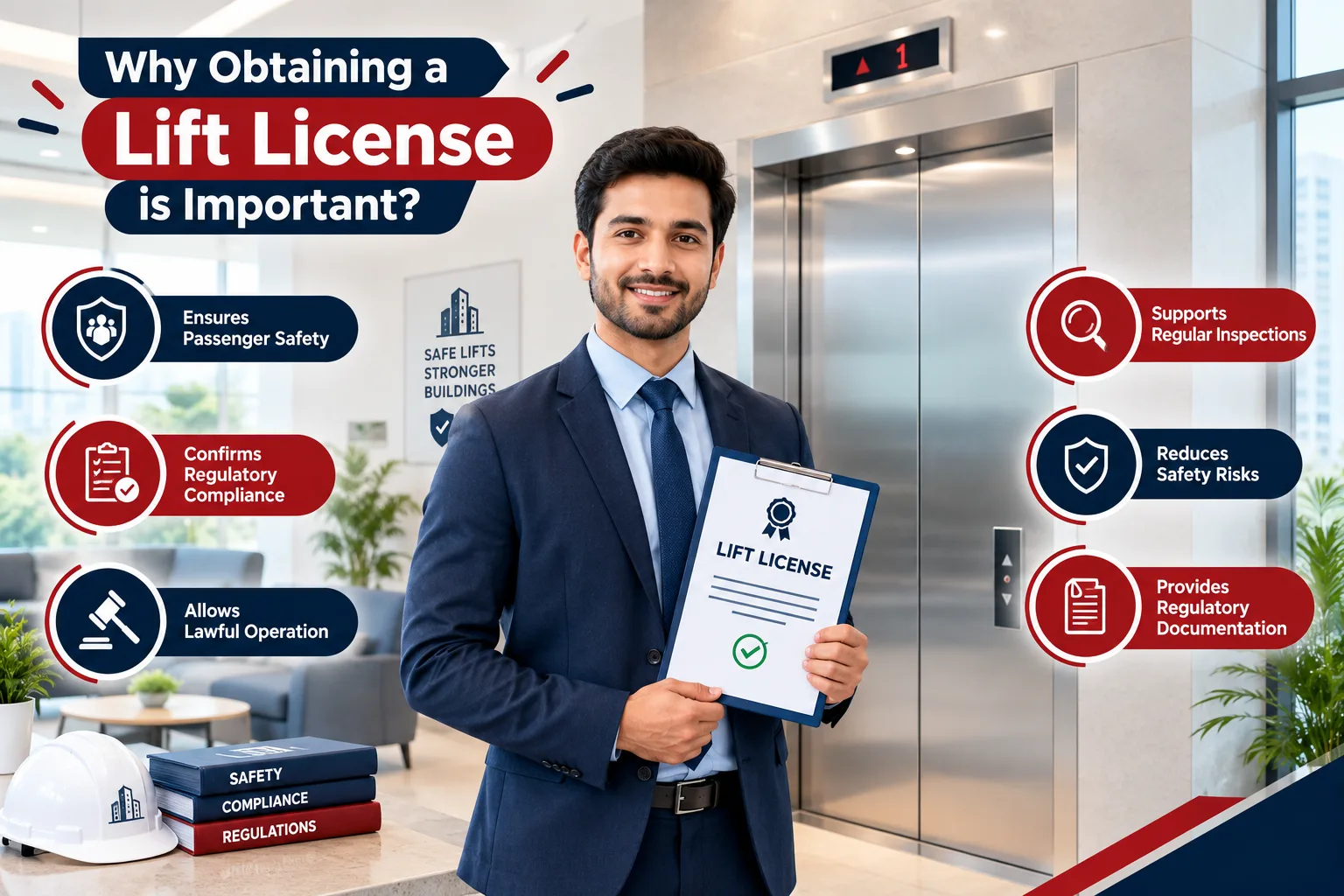
A lift license is an important regulatory requirement for ensuring that a lift is safe to operate and complies with applicable technical standards. Obtaining the required approval also helps building owners demonstrate compliance and avoid legal or operational issues.
Here is why a lift license is important:
1. Ensures Passenger Safety: A licensed lift is inspected and tested for essential safety requirements before operation, helping identify potential mechanical, electrical or structural issues that could endanger passengers, workers or maintenance personnel.
2. Confirms Regulatory Compliance: Obtaining a lift license demonstrates that the installation and operation of the lift comply with the applicable state laws, rules, technical requirements and safety conditions prescribed by the competent authority.
3. Allows Lawful Operation: A valid license provides the necessary regulatory approval to operate the lift. Operating a lift without the required permission may result in penalties, restrictions on use or other action by the authorities.
4. Supports Regular Inspections: Lift licensing requirements may involve periodic inspections or renewals. These checks help ensure that the lift continues to meet prescribed safety requirements throughout its operational life.
5. Reduces Safety Risks: Mandatory inspection and testing can help detect defective components, inadequate safety mechanisms and other hazards before the lift is used regularly, thereby reducing the likelihood of accidents and operational failures.
6. Provides Regulatory Documentation: A valid lift license serves as official documentation that the lift has received the required approval. It can be useful during regulatory inspections, property transactions, audits or other compliance-related processes.
Which States Have Lift License Rules and Requirements?
The following states and union territories currently have dedicated lift laws, rules, and licensing requirements in force:
|
Maharashtra |
Maharashtra Lifts Act 1939 and Bombay Lift Rules 1958 (the newer 2017 Act is not in force) |
|
Gujarat |
Gujarat Lifts and Escalators Act 2000 and Rules 2001 (amended) |
|
Karnataka |
Karnataka Lifts, Escalators and Passenger Conveyors Act 2012 and Rules 2015 |
|
Tamil Nadu |
Tamil Nadu Lifts and Escalators Act (amended and active as of February 2026) |
|
Kerala |
Kerala Lift Acts and Rules |
|
West Bengal |
West Bengal Lift Rules |
|
Assam |
Assam Lifts and Escalators Act 2006 and Rules 2010 |
|
Haryana |
Haryana Lifts and Escalators Act 2008 and Rules 2009 |
|
Himachal Pradesh |
Himachal Pradesh Lifts Act 2007 and Rules 2009 |
|
Delhi |
Bombay Lifts Act 1939 (as extended) and Delhi Lifts Rules 1942 (amended 2017) |
|
Andhra Pradesh |
Andhra Pradesh Lifts and Escalators Act 2025 and Rules notified in 2025 |
Which Authority Issues a Lift License in India?
A Lift License in India is issued by the competent state government authority responsible for lift safety and regulatory compliance. Depending on the state, this may be the Electrical Inspectorate, Chief Electrical Inspector, Lift Inspectorate or another designated department.
The authority reviews the application, verifies the required documents and conducts or arranges the prescribed safety inspection before granting approval. Applicants must follow the applicable state lift laws, rules and procedures, as requirements vary across jurisdictions.
What are the Benefits of Obtaining a Lift License?
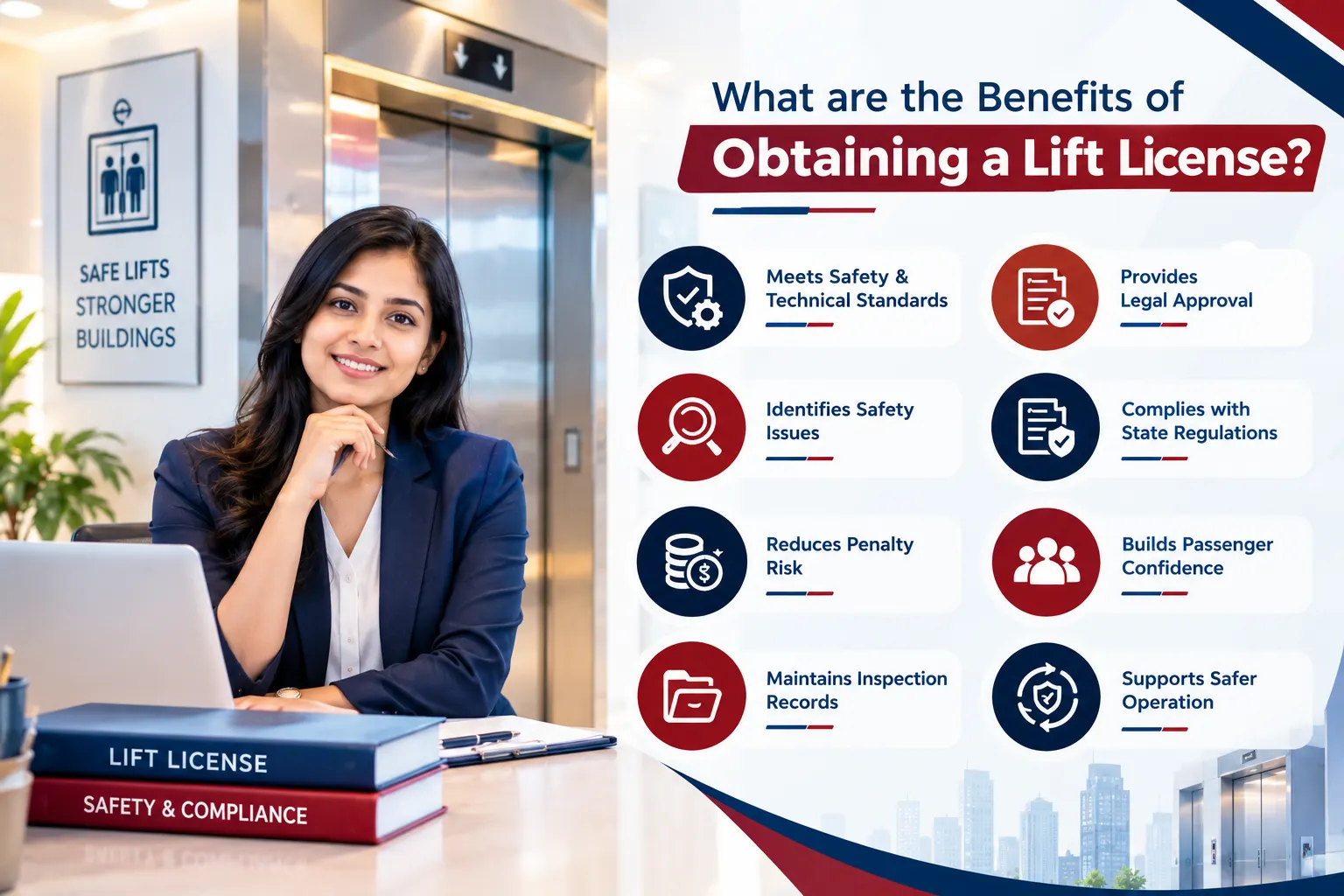
Obtaining a lift license helps building owners meet applicable regulatory requirements while supporting safe and compliant lift operation. It also provides formal approval and helps maintain proper safety standards throughout the lift’s use. The other key benefits of a lift license include the following:
-
Ensures the lift meets prescribed safety and technical requirements.
-
Provides legal approval to operate the lift.
-
Helps identify safety issues through mandatory inspections.
-
Supports compliance with applicable state lift regulations.
-
Reduces the risk of penalties for unauthorised operation.
-
Builds confidence among passengers and building occupants.
-
Helps maintain proper records of lift inspections and approvals.
-
Supports safer operation through periodic inspection and renewal requirements.
Who Needs a Lift License?
A lift license is generally required by the person, organisation, or building owner responsible for installing and operating a lift, such as:
-
Residential Building Owners
-
Apartment Societies
-
Commercial Property Owners
-
Office Building Owners
-
Shopping Mall Operators
-
Hospital Administrators
-
Hotel Owners
-
Educational Institutions
-
Industrial Establishments
-
Construction Site Operators
-
Public Building Authorities
-
Lift Installation Contractors
What Approvals Are Required for Installing a Lift?
Installing a lift generally involves multiple approvals to ensure the equipment, building structure and electrical systems meet applicable safety and regulatory requirements. The exact approvals vary by state, building type and local authority requirements. However, some of the basic requirements include the following:
|
Building Plan Approval / Modification NOC |
Local bodies (Municipal Corporations or Development Authorities ) must approve the layout plan if the lift shaft or structure alters the building footprint. |
|
Erection Permission (Pre-Installation) |
An application (often Form-A with complete lift shaft, machine room, and layout drawings) must be submitted to the state/regional electrical inspectorate before starting construction |
|
Structural Stability Certificate |
Issued by a qualified and licensed structural engineer certifying that the building foundation and new shaft/bridge can safely handle the extra load. |
|
Society / RWA Consent |
A No Objection Certificate (NOC) and consent from a majority (typically 50% to 70% or more) of resident owners or the Cooperative Group Housing Society (CGHS) managing committee. |
|
Electrical Safety Clearance |
Approval or NOC from the local power distribution company and electrical contractor wiring diagrams signed by a certified engineer. |
|
Fire Safety Clearance |
Required particularly for high-rise or commercial structures, or where the lift installation impacts existing fire escape routes. |
|
Lift Inspectorate Audit / Final Clearance |
Post-installation inspection by a government-appointed Lift Inspector to verify mechanical and electrical safety compliance. For real estate projects, developers should also check whether RERA approval and other applicable project-level requirements apply to their development. |
How Many Lifts Are Allowed in a Building?
There is no single fixed limit on the number of lifts that can be installed in a building across India. The number generally depends on the building's height, occupancy, floor area, purpose, expected traffic and applicable building regulations.
For example, a residential apartment may require fewer lifts than a large commercial building or hospital with high passenger movement. Building owners may also need to consider accessibility requirements, emergency arrangements and local authority rules while determining the number of lifts.
Therefore, the permitted number of lifts should be determined according to the applicable state laws, local building regulations and approved building plan rather than a uniform national limit.
What are the Eligibility Criteria for Obtaining a Lift License?
To obtain a lift license (or a license to install, operate, or contract for lifts) in India, the eligibility criteria depend on whether you are applying as a building owner/developer (for a specific lift installation) or as a lift contractor/engineer (to install and maintain lifts).
1. Eligibility for Building Owners & Developers (Operating/Erecting a Lift)
If you own or manage a residential, commercial, or industrial building, the requirements to get clearance and an operating license include:
-
Compliance with state lift rules and the National Building Code (NBC) of India 2016 (e.g., buildings over 13–15 meters may have specific passenger capacity or fire-lift mandates).
-
The physical installation, modernisation, or major repair must be executed by a licensed lift contractor.
-
Submission of triplicate technical drawings signed by the applicant and an authorised person from the lift company, showing the layout, section elevation, well enclosure, and machine position.
-
A valid sanctioned building plan and approval from the local municipal or urban local body.
-
Valid electrical safety test reports, earthing layout, circuit diagram, and third-party insurance covering lift users (varies by state, e.g., Haryana or Delhi norms).
2. Eligibility for Lift Contractors, Engineers, and Technicians
If a company or technical professional wants a license to install, erect, or maintain lifts and escalators, the criteria typically require:
-
At least one engineer holding a degree or diploma in electrical or mechanical engineering from a recognised institution/AICTE.
-
Degree holders require roughly 3 to 4 years of hands-on experience in elevators or escalators.
-
Diploma holders require roughly 5 to 8 years of field experience.
-
Personnel holding an ITI certificate or trade license in electrical/electronics with verified field experience.
-
In many states, the contracting firm must possess an active high- or medium-voltage electrical contractor license.
What are the Documents Required to Obtain a Lift License?
The documents required for obtaining a Lift License may differ depending on the state, type of building and requirements of the concerned licensing authority. Applicants generally need to provide documents relating to the building, lift installation, technical specifications and safety compliance.
Commonly required documents include:
-
Approved building plan
-
Lift installation permission
-
Lift layout and drawings
-
Technical specifications of the lift
-
Lift manufacturer's details
-
Installation completion certificate
-
Test and inspection report
-
Electrical safety certificate
-
Structural stability certificate
-
Lift installation contractor details
-
Manufacturer's test certificate
-
Ownership or occupancy documents
-
Identity and address proof of applicant
-
Prescribed application form
-
Government fee payment receipt
-
Other documents prescribed by the state authority
How to Obtain a Lift License in Maharashtra?
To obtain a Lift License in Maharashtra, applicants must follow the procedure prescribed by the state authorities under the applicable lift regulations. The process generally involves securing installation permission, submitting technical documents, completing the installation and passing the required safety inspection before the lift is approved for operation.
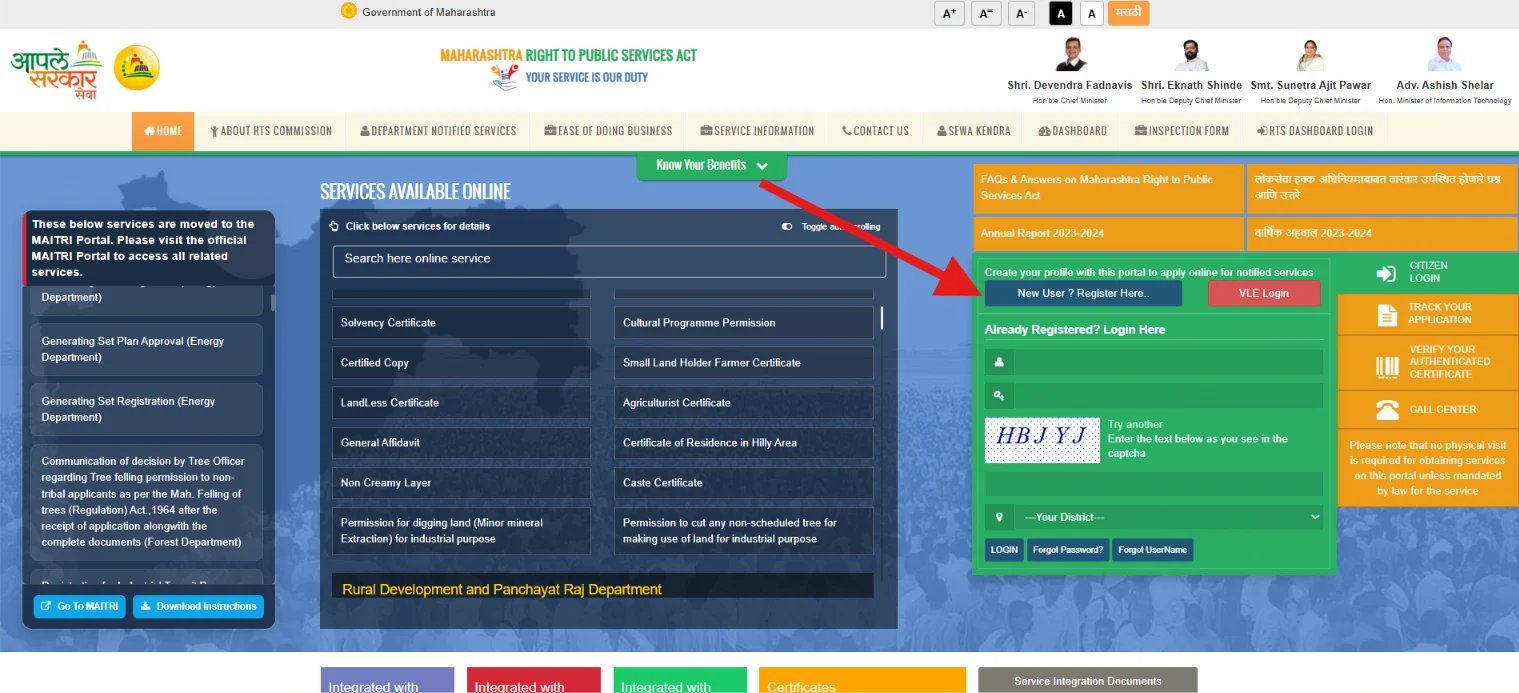
1. Open the Aaple Sarkar portal and navigate to the Energy Department to access lift licensing services.
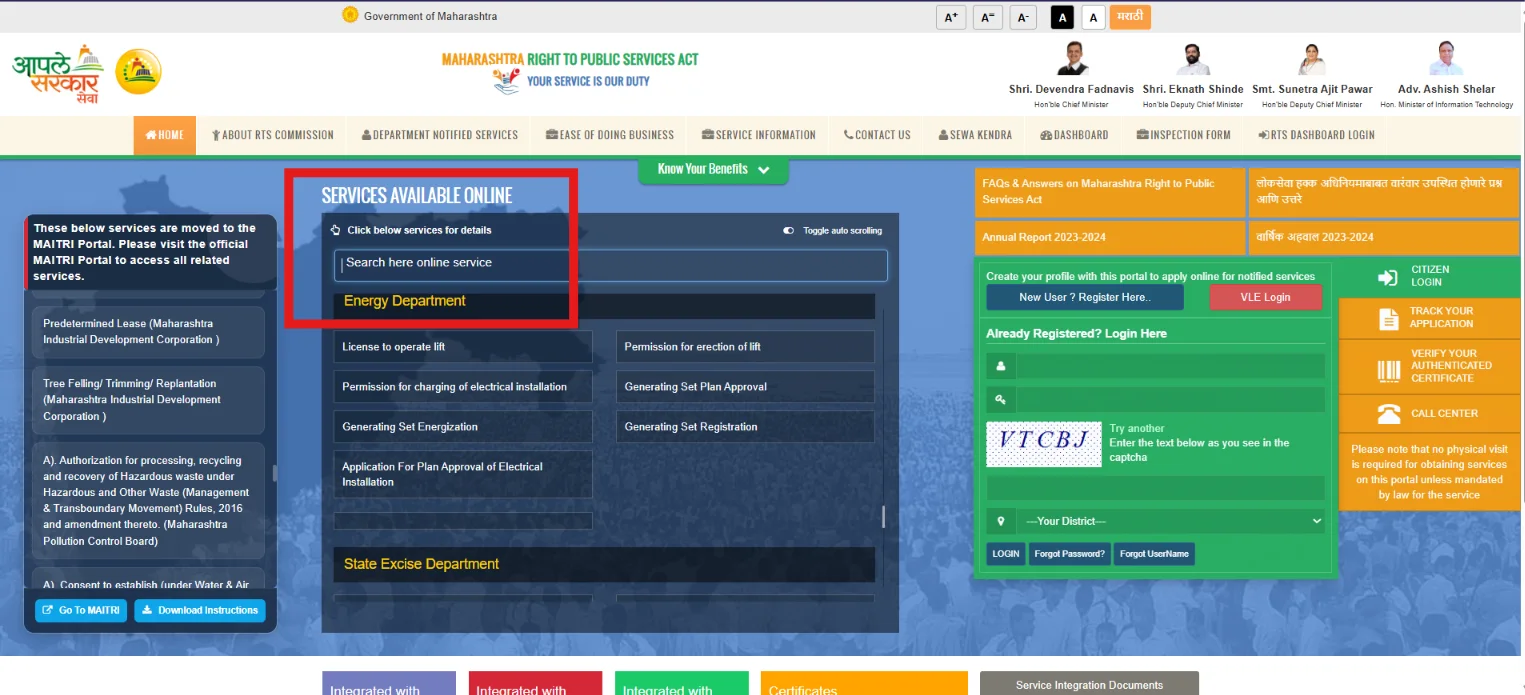
2. Create an account using the portal's registration facility if you are a new user. Existing users can log in with their credentials to access the available services.
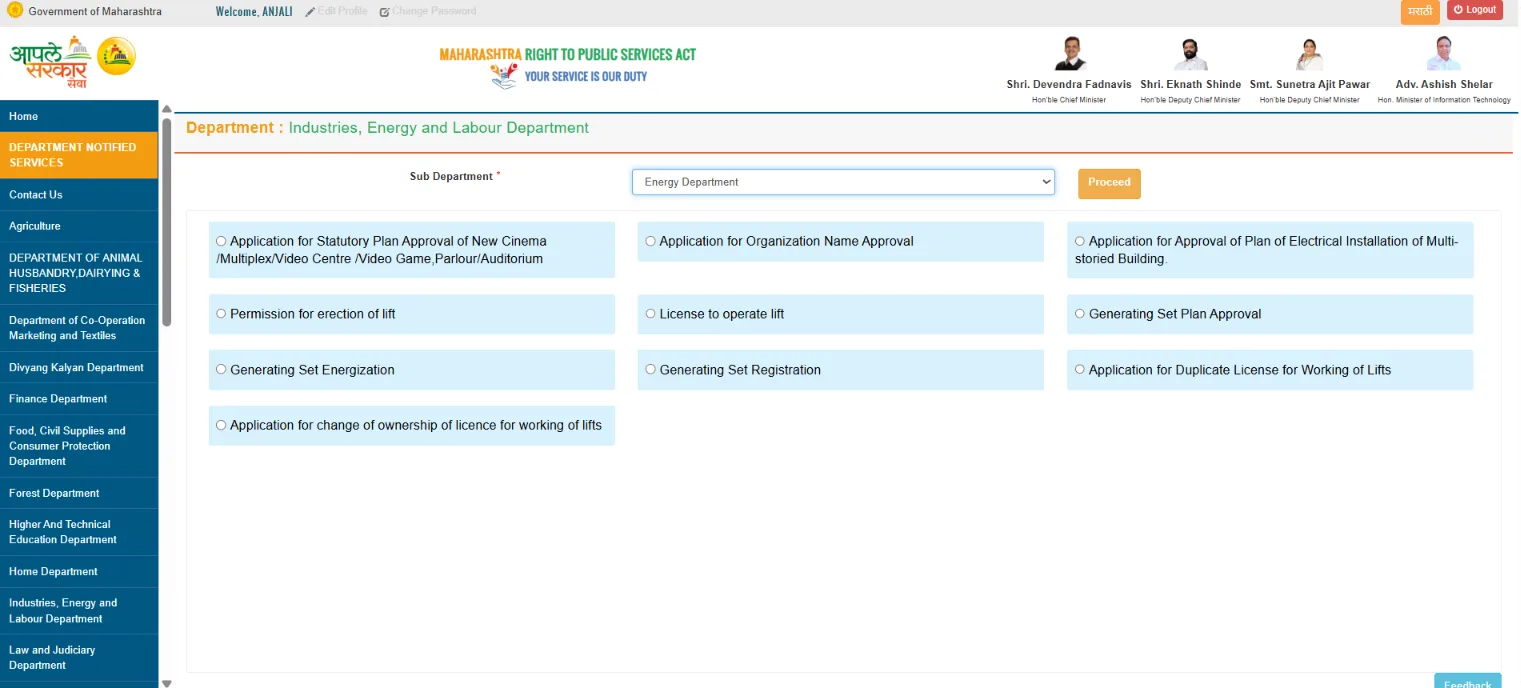
3. Choose Permission for Erection of Lift if you are planning a new installation, or License to Operate Lift if the lift has been installed and requires operating approval.
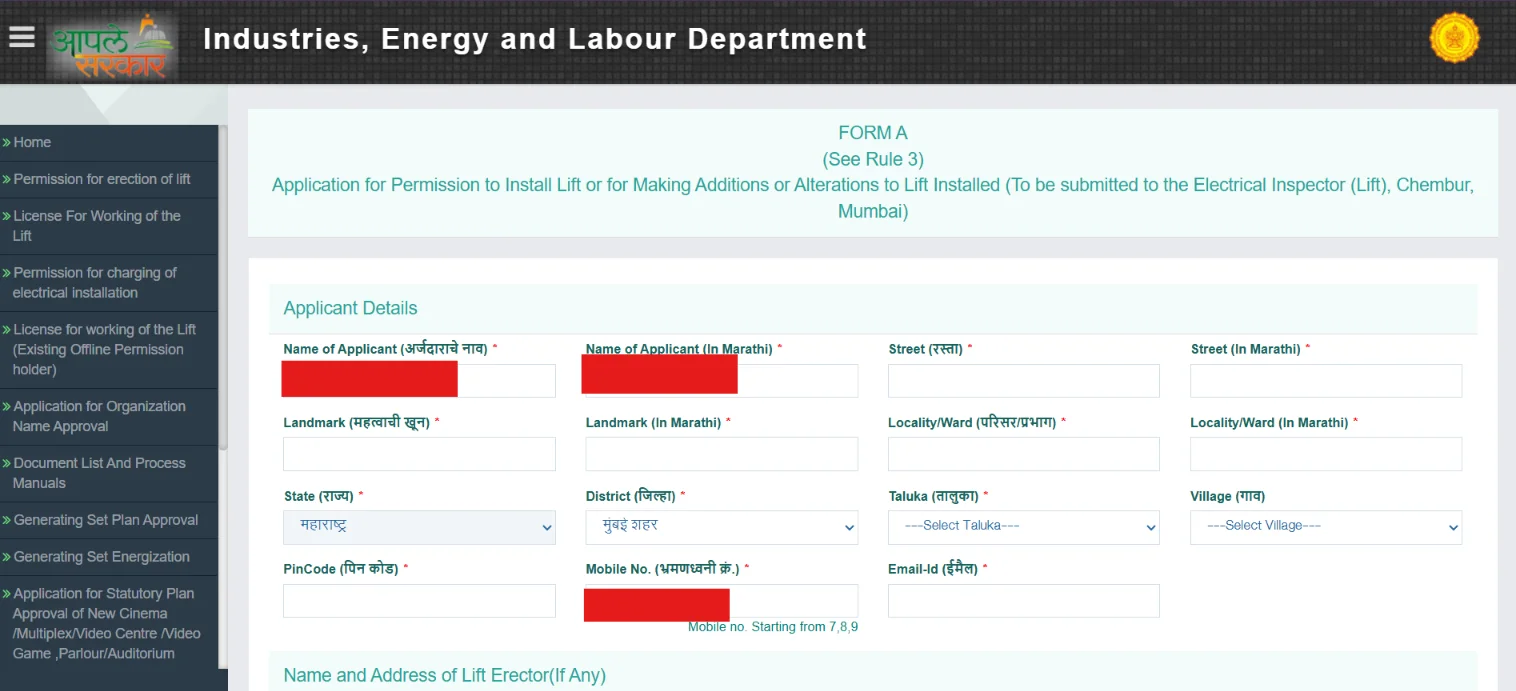
4. Enter the applicant's details and the lift-related information requested by the portal, ensuring that all information matches the supporting records.
5. Submit the documents specified by the relevant service, which may include lift erection plans, technical specifications, building details and other prescribed records. Confirm the current checklist before submitting the application.
6. Pay the prescribed government fee through the available payment facility, if applicable, and retain the acknowledgement or payment receipt for future reference.
7. Review the information, submit the application and keep the application reference number to track its progress.
8. Cooperate with the competent authority if a site inspection or technical verification is required to assess the lift's safety and compliance with applicable requirements.
9. After the authority completes the required verification and confirms compliance, the applicant can receive the relevant permission or operating license through the prescribed process.
10. Use the portal's application tracking facility to check the progress of your application and follow up if additional information or corrective action is requested.
How to Apply for a Lift License in Tamil Nadu?
In Tamil Nadu, a lift license is issued through the Electrical Inspectorate, Government of Tamil Nadu, after the lift has been installed and inspected for compliance with applicable safety requirements. The application process is handled online through the Tamil Nadu Single Window Portal.
Here is the step-by-step procedure:
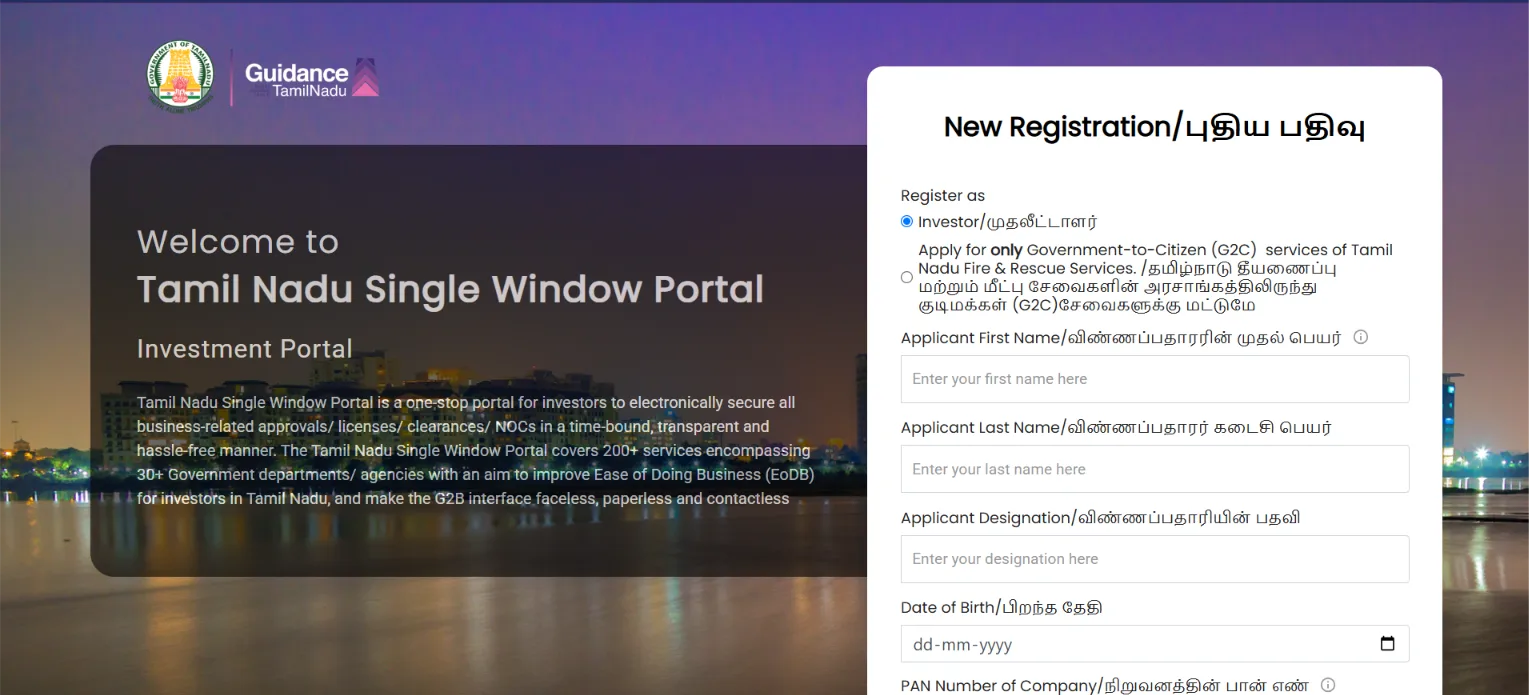
1. Open the Tamil Nadu Single Window Portal. Register as an applicant using your email ID and mobile number, then complete the two-step verification process.
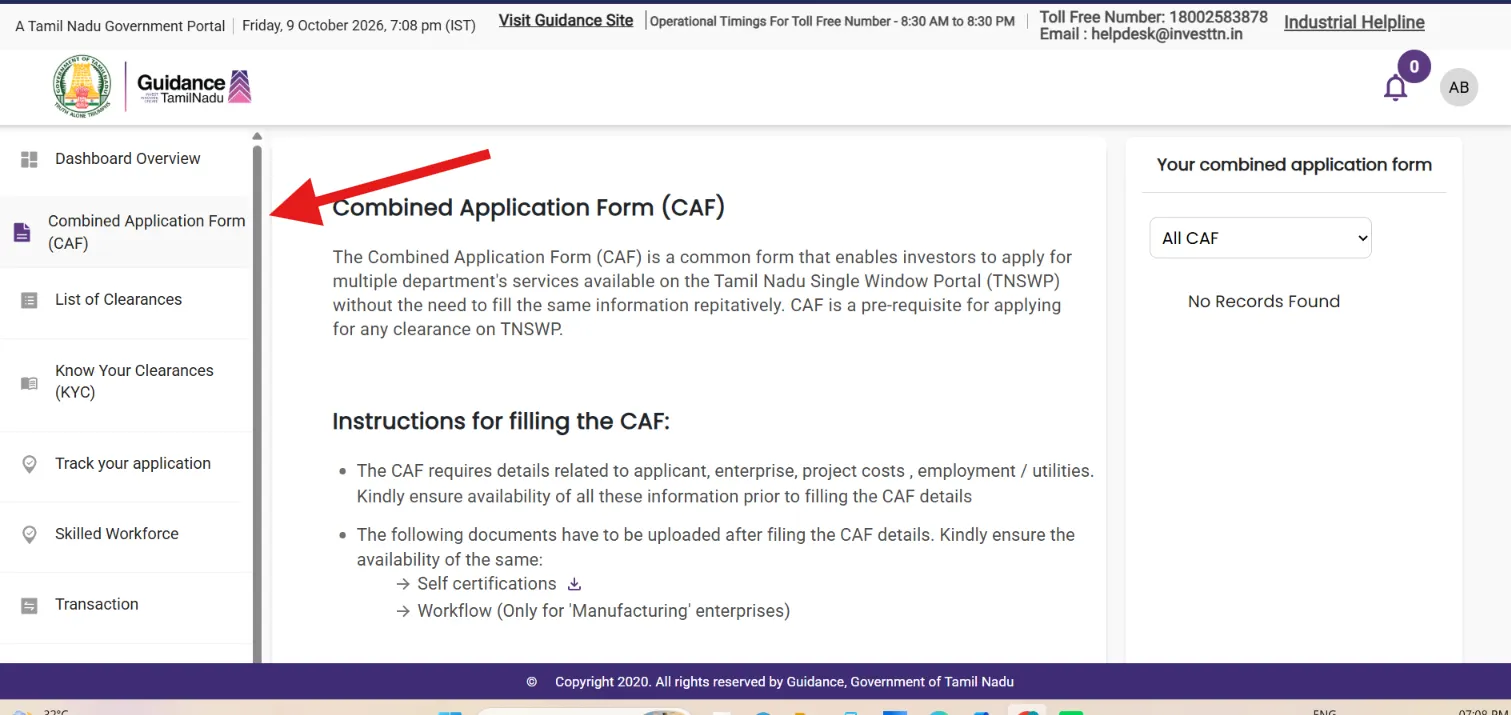
2. Log in to the portal and select the Combined Application Form (CAF) option.
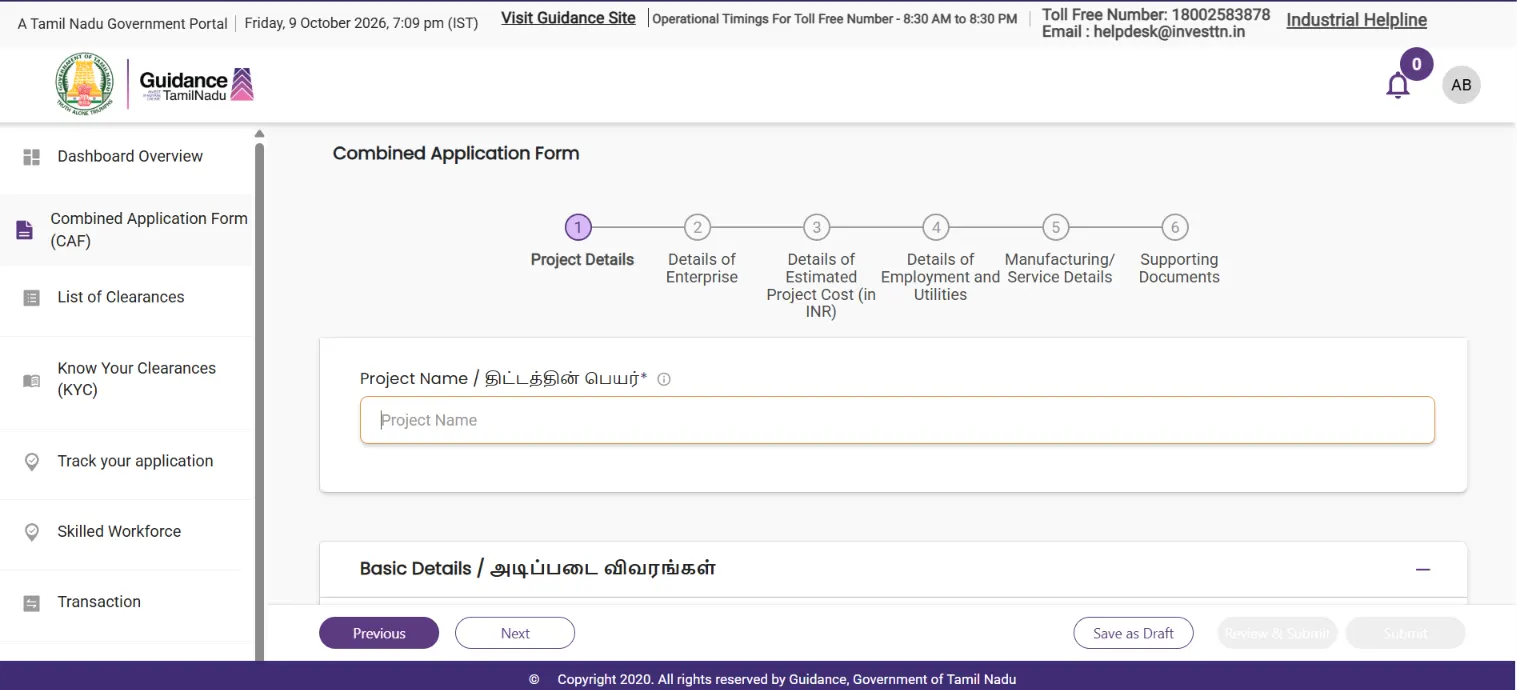
3. Enter the required project and establishment details and upload the supporting documents requested by the portal. Submit the form to create your project record.
4. Go to List of Clearances, select Pre-Operation Stage Clearance, and search for “Licence for working of new lift.” Review the document checklist and applicable fee details, then click Apply and select the relevant project or CAF.
5. Enter the mandatory information about the lift, its location, ownership and installation. Upload the documents required for the application, including the prescribed completion reports and insurance policy.
6. Submit the application and complete the fee payment through the portal. Save the payment receipt and application token ID for future reference. The applicable fee depends on the lift configuration and the current prescribed fee schedule.
7. The Electrical Inspectorate reviews the application and supporting documents. If the application is complete, the department schedules an inspection. Ensure the lift meets the applicable safety requirements and rectify any defects identified during inspection.
8. Track the application through the portal using the project details or token ID. Once the application is approved, download the license order from the application status or action section. If the department raises a query, submit the requested clarification promptly.
How to Obtain a Lift License in Delhi?
In Delhi, the Electrical Inspectorate under the Labour Department, Government of NCT of Delhi, regulates lift safety under the Bombay Lifts Act, 1939, as extended to Delhi, and the Delhi Lifts Rules, 1942. The process involves obtaining permission to install the lift, completing the installation, and securing a license to operate it.
Here is the step-by-step process:
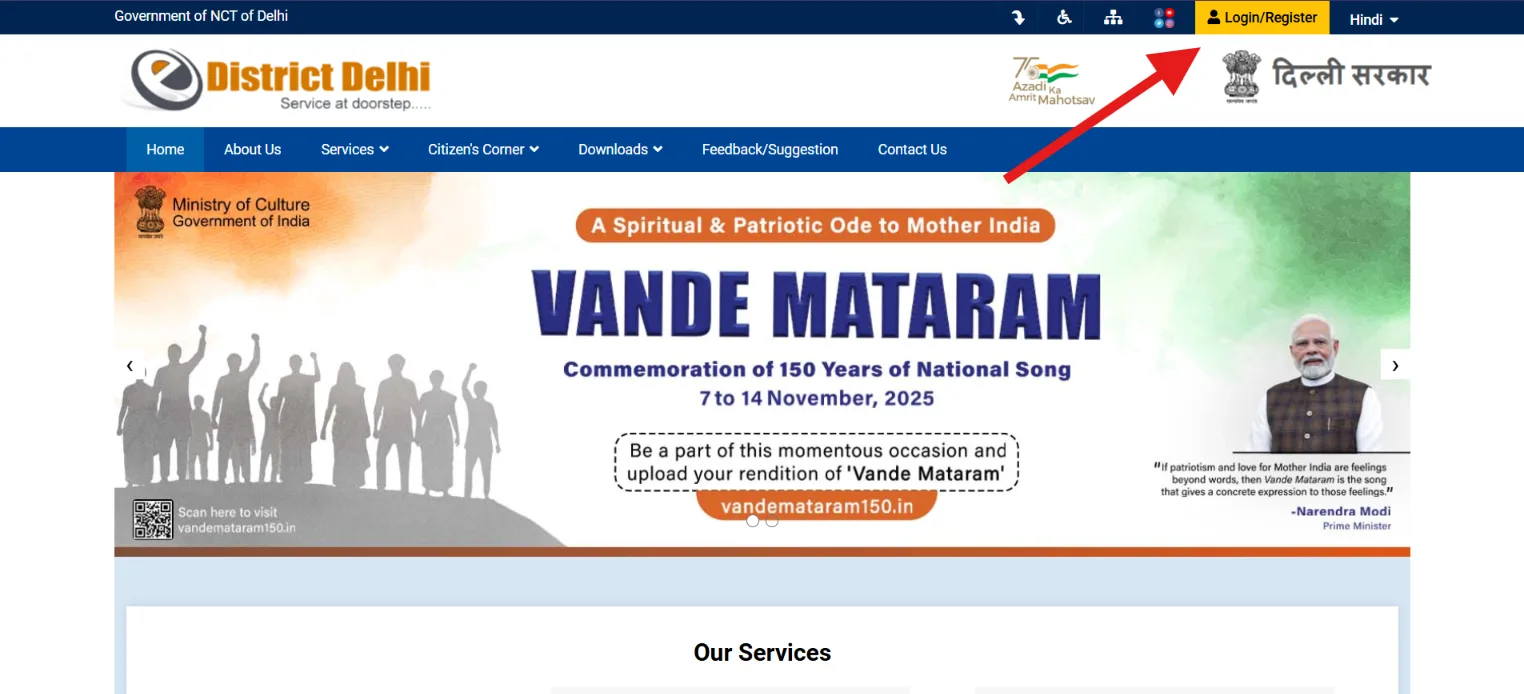
1. Open the Delhi e-District Portal and register or log in to your account to access the lift-related services offered by the Labour Department.
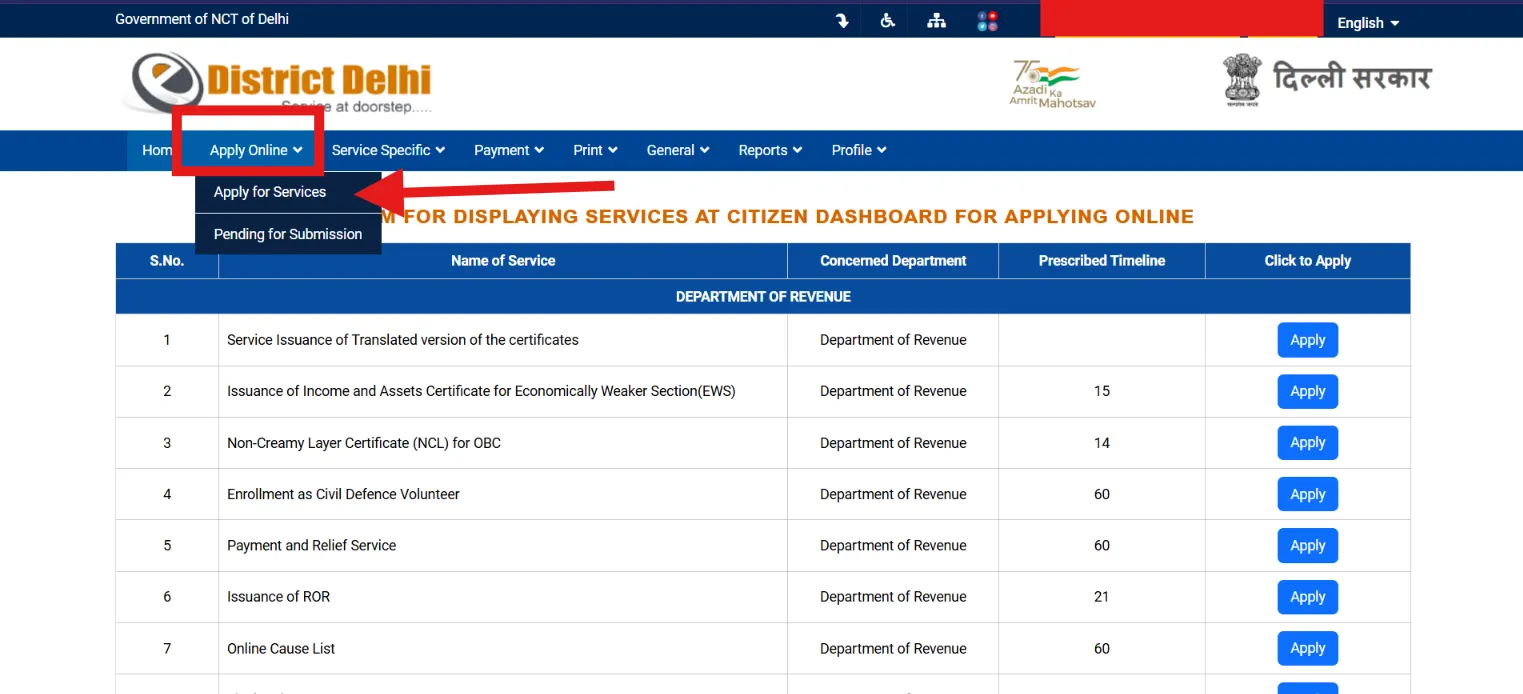
2. Go to the “Apply Online” section and select “Apply for services.”
3. Apply for “Approval of Installation of Passenger Lift, Lift Shaft and Machine Room.”
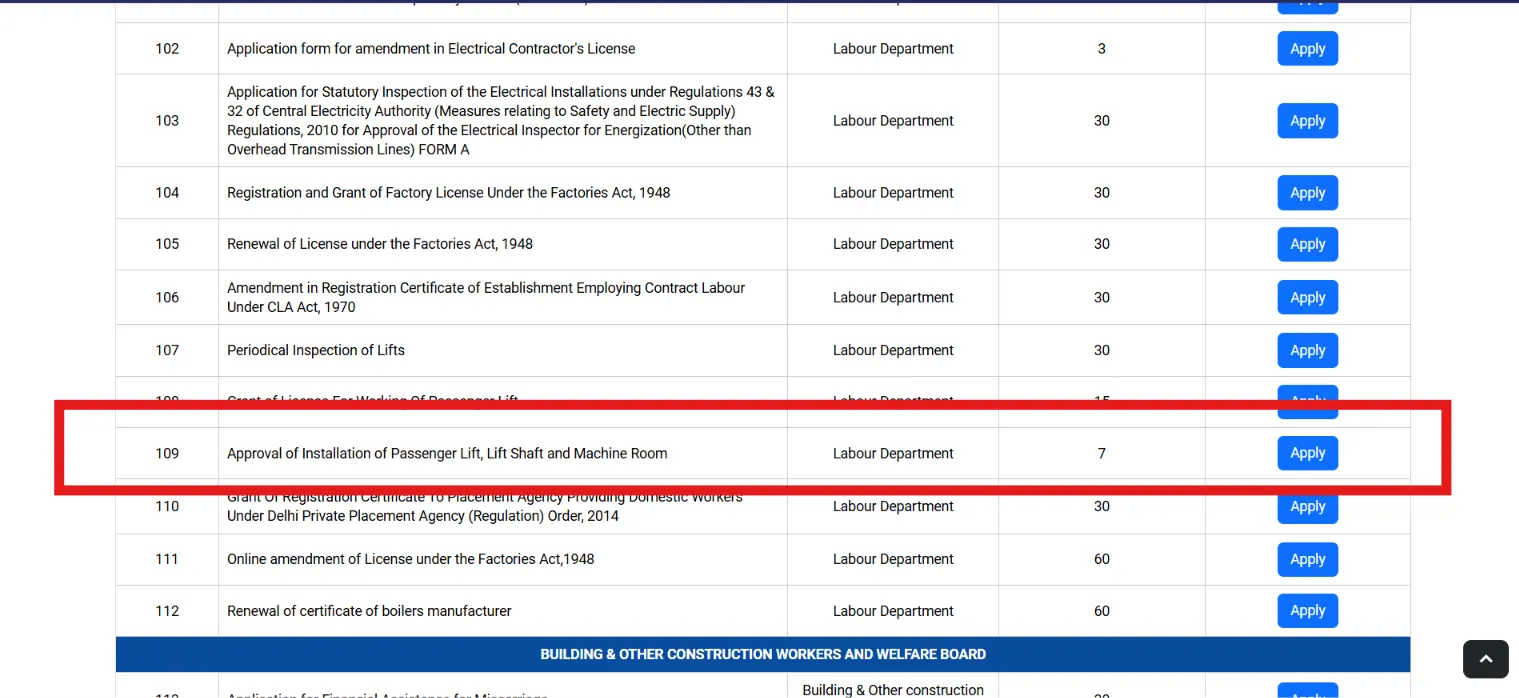
3. Fill out the prescribed Form-A, upload the complete lift installation drawings and submit the owner's self-declaration in the prescribed format. The department's stated timeline for this approval is seven working days
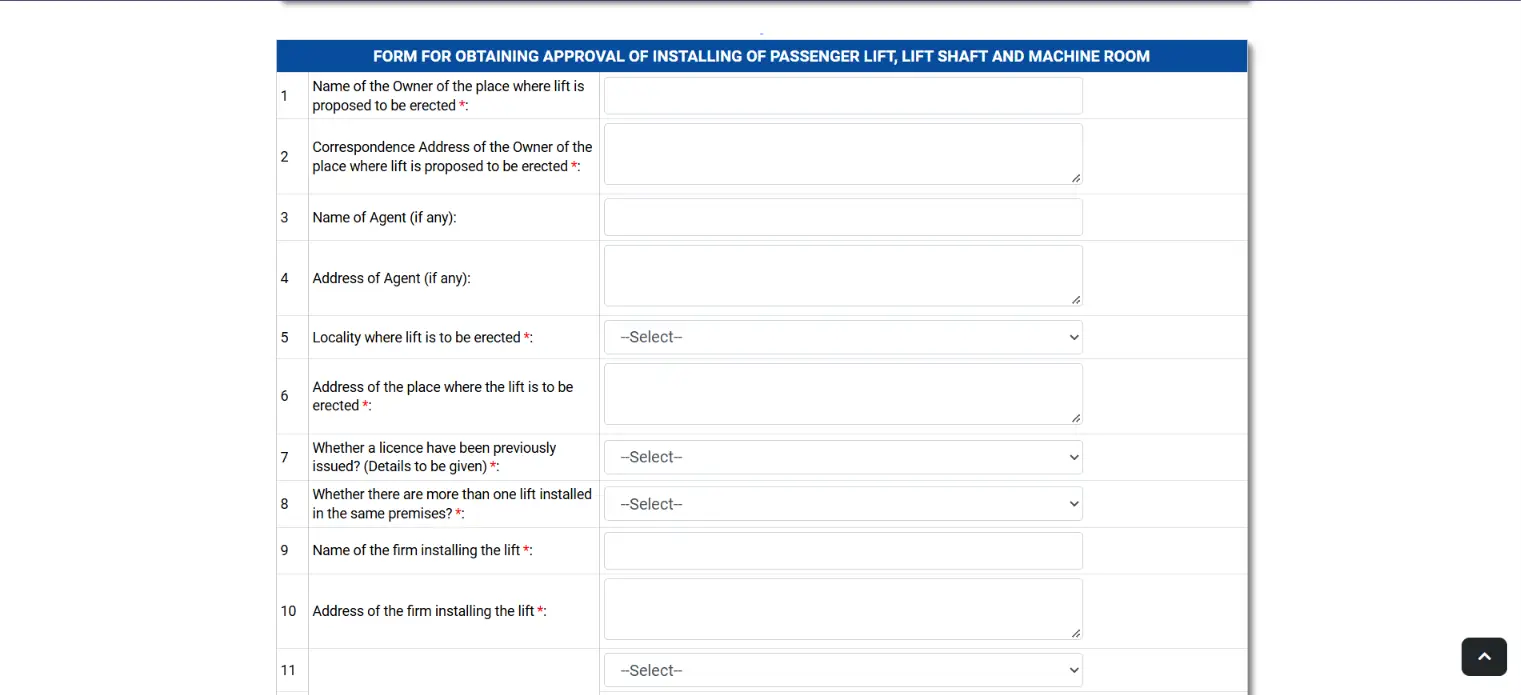
4. After receiving erection permission, arrange for the lift to be installed according to the approved plans and applicable safety requirements. Keep the installation and completion documents ready for the licensing stage.
5. Once installation is complete, log in to the portal and select “Grant of License for Working of a Passenger Lift.” Submit the prescribed Form-B or completion details, as required by the service, along with the supporting documents.
6. Prepare the documents specified in the official application guidelines, which may include:
-
Identity proof of the applicant
-
Present and permanent address proof
-
Date-of-birth proof and passport-size photograph, where required
-
Lift installation and completion details
-
Erection permission and prescribed application form
-
Other technical documents requested by the department
7. Pay the prescribed fee online. After receiving the application, the Inspector of Lifts examines the installation, electrical systems and safety mechanisms. If any deficiencies are identified, rectify them as instructed by the department before approval.
8. Once the inspection is satisfactory and the applicable requirements are met, the department issues the license online. The published service timeline is 15 working days for the operating license. Track the application through the e-District portal and download the license after approval.
What is the Validity Period of a Lift License?
The validity period of a lift license depends on the state regulations where the lift is installed. Here is a list of state-wise validity periods for a lift license:
|
Delhi |
Valid for 1 year (annual renewal required, with applications recommended 3 months before expiry) via the Delhi Lift Rules. |
|
Maharashtra |
Valid for 20 years from the date it is granted, and can be renewed for up to 5 years at a time under the Maharashtra Lifts, Escalators and Moving Walks Act, 2017. |
|
Karnataka |
Valid for 10 years initially, and can be renewed for periods of 5 years under the Karnataka Lifts, Escalators and Passenger Conveyors Act. |
|
Kerala |
Valid for 3 years initially, and subsequently renewed on an annual basis under the Kerala Lifts and Escalators Act. |
|
Gujarat |
Valid for 5 years from the date of issue, with renewal applications submitted to the Chief Inspector at least 30 days prior to expiry via the Gujarat CEICED Portal. |
|
Other States (e.g., Haryana, Uttar Pradesh/Noida, etc.) |
Typically valid for 1 year, requiring an annual safety inspection and a valid Annual Maintenance Contract (AMC). |
Can a Lift License be Cancelled or Suspended by the Authorities?
Yes, a Lift License can be suspended, cancelled or revoked by the competent authority if the lift fails to comply with applicable safety standards or licensing conditions. This may occur due to serious safety violations, failed inspections, unauthorised modifications, non-renewal, defective safety mechanisms or submission of incorrect information.
If the license is suspended or cancelled, the lift may be required to remain out of operation until the identified deficiencies are corrected and the necessary inspection, testing or approval is completed.
What Safety Requirements Must a Lift Meet for Licensing?
To obtain an operating license, a lift must comply with the following requirements:
|
Bureau of Indian Standards (BIS) Codes |
Lifts must comply with IS 17900 (the current Indian lift safety standard that superseded older codes like IS 14665, IS 14671, and IS 15785) and guidelines under the National Building Code (NBC). |
|
Door Interlocks & Sensors |
Lifts must have interlocked doors that prevent the car from moving if any door is open, alongside infrared door curtains. |
|
Emergency Systems |
Installation of Automatic Rescue Devices (ARD), emergency stop switches, backup lighting, and two-way communication systems. |
|
Over-Speed & Movement Protection |
Inclusion of over-speed governors and Unintended Car Movement Protection (UCMP). |
|
Fire Safety Provisions |
Buildings taller than 15 meters require an eight-passenger fire lift equipped with automatic doors and fire recall modes. Buildings taller than 30 meters must make arrangements for a stretcher lift. Fire-resistant enclosures and fire-rated lift car materials are mandatory |
|
Electrical Safety |
Proper earthing of electrical components, metal limit switches, flexible and fireproof trailing cables, and Earth Leakage Circuit Breakers (ELCB). |
|
Pit & Shaft Specifications |
Dry lift wells with proper drainage, clean and ventilated machine rooms, and required structural clearances. |
What is the Fees for Obtaining Lift License?
The fees for obtaining or renewing a lift license are managed at the state level by the respective Electrical Inspectorate or Chief Inspector of Lifts, meaning rates vary depending on the state, lift speed, and motor type.
|
State |
Operational License |
Periodic Inspection or General Inspection |
Renewal, Addition, Alteration |
|
Delhi |
Speed up to 1.0 m/s: ₹520 Speed above 1.0 m/s and up to 1.5 m/s: ₹770 Speed above 1.5 m/s: ₹1,020 |
Speed up to 1.0 m/s: ₹520 Speed above 1.0 m/s and up to 1.5 m/s: ₹770 Speed above 1.5 m/s: ₹1,020 |
Speed up to 1.0 m/s: ₹520 Speed above 1.0 m/s and up to 1.5 m/s: ₹770 Speed above 1.5 m/s: ₹1,020 |
|
Maharashtra |
AC motor: ₹2,000 DC motor: ₹5,000 Gearless lift: ₹7,000 |
AC motor: ₹600 DC motor: ₹900 Gearless lift: ₹1,500 |
— |
|
Haryana |
Registration fee: ₹ 3,500 |
Every 3 years: ₹1,000 per lift |
Every 3 years: ₹1,000 per lift |
|
Assam |
Fees for lifts with speed up to 0.63 meter/second: ₹1,000 |
Inspection of lifts: ₹1,000 Inspection of escalators: ₹2,000 Maintenance of escalators: ₹4,000 |
Erection and maintenance of lifts: Rs. 1,500/- Erection and maintenance of escalators: Rs. 2,500/- Maintenance of lifts only: Rs. 1,000/- Maintenance of escalators only: Rs. 2,000/- Inspection and testing of lifts: Rs. 500/- |
|
Gujarat |
Lift Drawing Approval / Erection Permission: ₹500 Escalator Drawing Approval / Erection Permission: ₹1,000 |
Post-Installation Lift (up to 5 floors above ground): ₹1,500 Lift (more than 5 floors above ground): ₹2,000 Escalator Operating License: ₹10,000 |
Alteration to Lift: ₹500 Addition or Alteration to Escalator: ₹1,000 Lift License Renewal: ₹1,500 Escalator License Renewal: ₹5,000 |
|
Tamil Nadu |
Up to 5 landings: ₹2,500 More than 5 landings: ₹5,000 |
Up to 5 Landings: ₹5,000 per year More than 5 Landings: ₹10,000 per year Escalators: ₹10,000 per escalator per year |
Up to 5 landings: ₹5,000 More than 5 landings: ₹10,000 For each escalator: ₹10,000 |
|
Himachal Pradesh |
₹5,000 for existing and new lift/escalator licenses |
₹750 for related inspections of the lift or escalator |
Annual renewal is required, with a periodic fee hike of 10% every three years. |
How to Renew a Lift License in India?
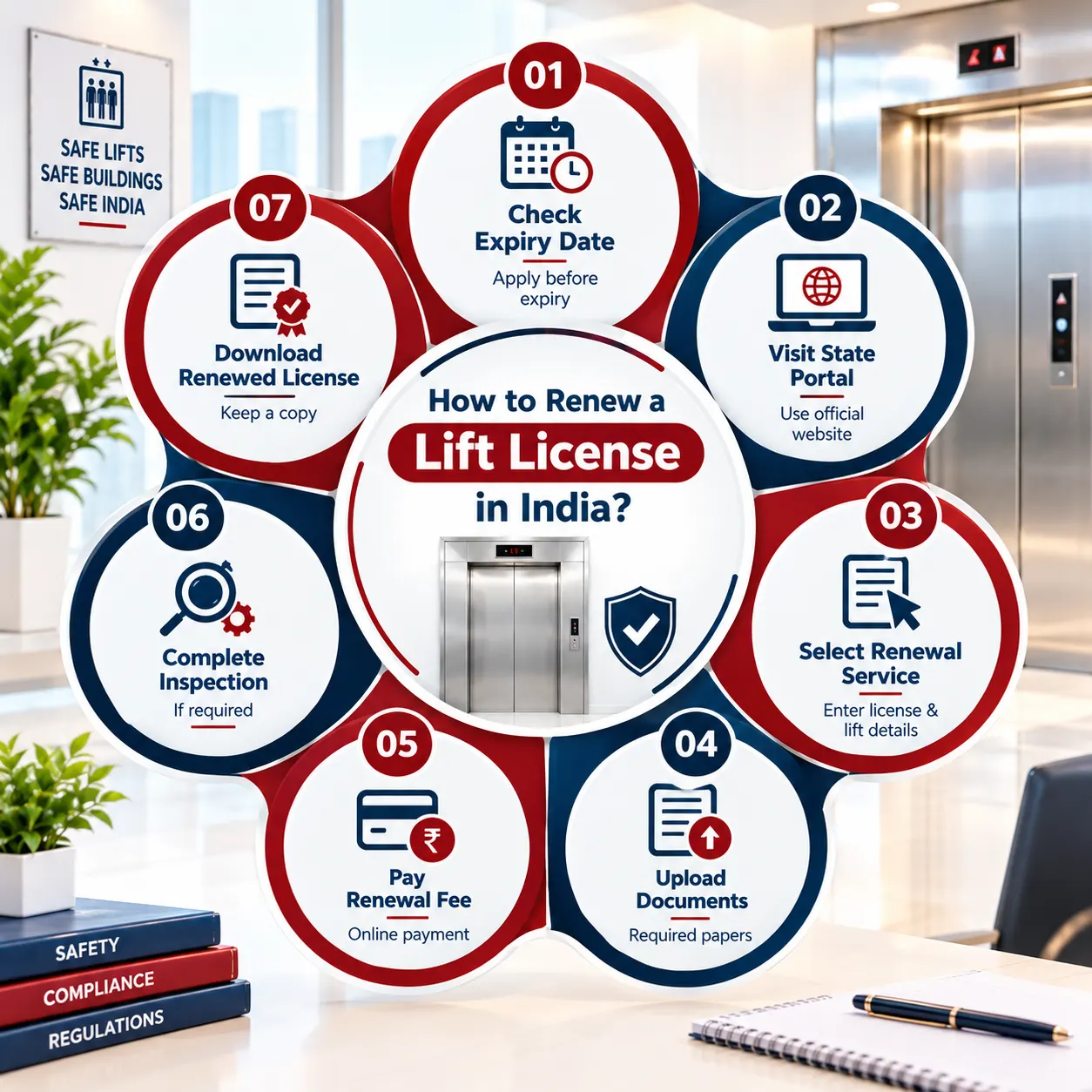
A lift license must be renewed according to the applicable state or Union Territory rules to ensure that the lift continues to meet prescribed safety standards. Since lift licensing is administered by the relevant state authority, the renewal procedure, application form, fees, validity period and inspection requirements may differ across India.
Generally, the renewal process involves submitting an application to the competent Electrical Inspectorate or other designated authority, paying the prescribed fee and completing any required safety inspection.
Step-by-Step Process for Lift License Renewal
Step 1: Check the License Expiry Date
Review the existing lift license to confirm its expiry date and the renewal deadline prescribed by your state authority. Apply before expiry to avoid late fees or interruption in authorised operation.
Step 2: Visit the Relevant State Portal
Open the official Electrical Inspectorate or government single-window portal for the state where the lift is installed.
Step 3: Select the Lift License Renewal Service
Log in to your account and choose the service labelled “Renewal of Licence for Working of Lift” or its equivalent. Enter the existing license number and the required lift and building details.
Step 4: Upload the Required Documents
Prepare the documents requested by the relevant authority. These may include:
-
Existing lift license
-
Completed renewal application
-
Latest lift inspection or maintenance report, where required
-
Valid insurance policy, where applicable
-
Proof of fee payment and other prescribed documents
Step 5: Pay the Renewal Fee
Pay the applicable renewal fee through the authorised payment system. Fees and late-payment charges vary by state, so check the current official fee schedule before submitting your application.
Step 6: Complete Inspection, If Required
The competent authority may inspect the lift or review its safety and maintenance records before renewal. Address any defects or compliance issues identified during this process.
Step 7: Download the Renewed License
Track your application online. Once the authority approves the renewal, download the renewed license and retain a copy for your building records.
How Long Does it Take to Obtain a Lift License?
The time required to obtain a Lift License in India varies depending on the state, completeness of the application, document verification and inspection schedule of the concerned authority.
The process generally involves submitting the application and documents, technical scrutiny, inspection and testing of the lift, followed by approval and license issuance. Delays may occur if documents are incomplete, safety deficiencies are identified or corrections are required after inspection.
Can a Lift Operate Without a Valid License?
You cannot operate a lift without a valid Lift License or approval from the competent authority. Operating an unlicensed lift may violate applicable state regulations and can expose the owner or responsible person to penalties or other regulatory action. The authority may also direct that the lift remain closed until the necessary approval, inspection or testing is completed.
What Happens If a Lift License Application Is Rejected?
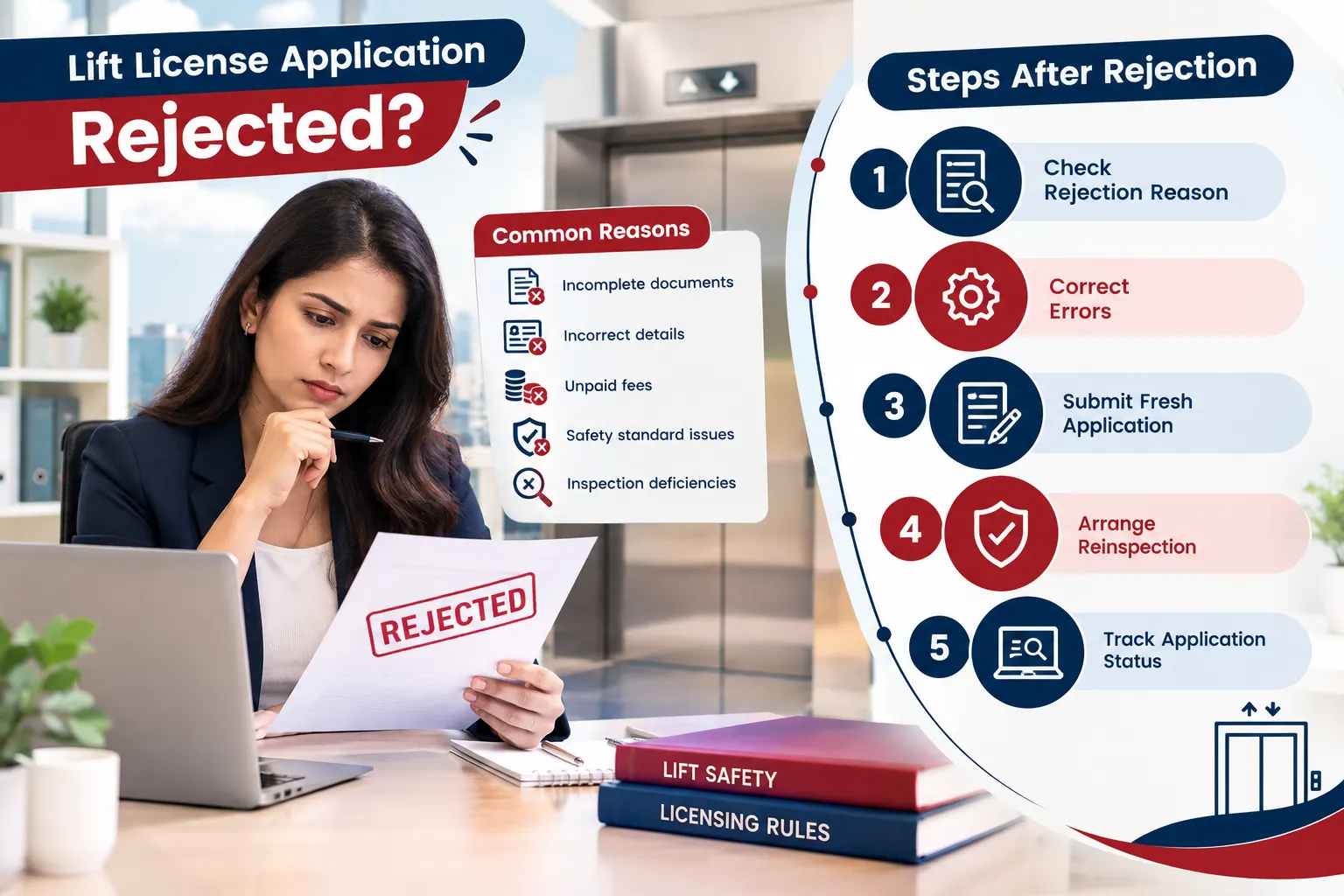
If a lift license application is rejected, the applicant may not receive permission to operate the lift until the competent authority resolves the identified issues. Rejection reasons may include incomplete documentation, incorrect application details, unpaid fees, non-compliance with safety standards, or deficiencies found during inspection. The exact procedure depends on the applicable state lift laws and licensing authority.
Applicants can take the following steps after rejection:
1. Check the Rejection Reason: Review the application status, rejection notice or remarks provided by the Electrical Inspectorate to identify the specific deficiencies.
2. Correct the Errors: Update incorrect details, submit missing documents, pay outstanding fees or rectify technical and safety issues identified by the authority.
3. Submit a Fresh Application or Request Reconsideration: Follow the procedure prescribed by the relevant state portal. Depending on the rules, you may need to reapply or submit a clarification or appeal.
4. Arrange a Reinspection, If Required: If rejection resulted from safety defects, get the lift inspected again after completing the necessary repairs.
5. Track the Revised Application: Monitor the application status online and respond promptly to additional queries from the licensing authority.
What is the Penalty for Non-Compliance with the Requirements of a Lift License?
Operating a lift without the required licence or registration can result in financial penalties, continuing fines, imprisonment in certain states, or suspension of the lift's operation. Since lift regulations are governed primarily by state-specific laws, the penalties differ across India. The table below provides the statutory penalties prescribed under the respective state laws.
|
State |
Penalty |
Continued Default |
|
Maharashtra |
Fine up to ₹50,000 |
Up to ₹1,000 per day after conviction |
|
Gujarat |
Fine up to ₹5,000 |
Up to ₹100 per day after conviction |
|
Karnataka |
Fine up to ₹10,000, or imprisonment up to 6 months, or both |
Up to ₹100 per day after conviction |
|
Tamil Nadu |
Up to ₹10,000 for first contravention and ₹20,000 for second/subsequent contravention |
Up to ₹500 per day after penalty is imposed |
|
Kerala |
Fine up to ₹5,000 to ₹10,000 |
Up to ₹500 per day; imprisonment up to 3 months if continued beyond 30 days |
|
West Bengal |
Fine up to ₹500 |
Up to ₹50 per day after conviction |
|
Assam |
Fine up to ₹5,000 |
Up to ₹100 per day after conviction |
|
Haryana |
Fine up to ₹50,000, or imprisonment up to 3 months, or both |
Up to ₹1,000 per day after conviction |
|
Himachal Pradesh |
Fine up to ₹5,000 |
Up to ₹500 per day, subject to a maximum of ₹45,000; licence may also be cancelled |
|
Delhi |
Fine of ₹500 |
₹50 per day for each day the violation continues |
|
Andhra Pradesh |
Fine up to ₹10,000 |
Up to ₹200 per day after conviction |
What Are the Responsibilities of a Lift Owner After Licensing?
Obtaining a lift license is only the first step towards ensuring passenger safety and regulatory compliance. After licensing, the lift owner must maintain the lift in safe working condition, arrange periodic inspections, comply with applicable state regulations and address technical issues promptly.
The specific obligations depend on the lift laws and rules applicable in the state where the lift is installed. Businesses handling multiple regulatory requirements can explore relevant license and registration services to understand their additional compliance needs
The key responsibilities of a lift owner after licensing include:
1. Regular Maintenance: Arrange periodic servicing through qualified lift maintenance professionals to ensure that the lift, electrical systems, brakes, doors and safety mechanisms function correctly.
2. Periodic Inspection and Renewal: Schedule inspections as required by the competent authority and renew the lift license within the prescribed period.
3. Compliance with Safety Standards: Ensure that the lift continues to meet applicable safety requirements and that any defects identified during inspections are rectified promptly.
4. Display of License and Safety Instructions: Display the license and required safety notices in the locations prescribed by the relevant authority. Provide emergency instructions and applicable passenger safety information.
5. Emergency Preparedness: Maintain a functional alarm, emergency communication system and rescue procedure. Ensure that building staff know how to respond to a lift entrapment or breakdown.
6. Prompt Repair of Defects: Stop operating the lift when a serious safety defect makes its use unsafe. Arrange repairs and obtain the necessary clearance before restarting it, where required.
7. Record Maintenance: Keep records of servicing, repairs, inspections, breakdowns and license renewals for verification by the competent authority.
8. Reporting Accidents: Report lift accidents, dangerous occurrences or other incidents to the relevant authority within the prescribed timeframe, wherever required by law.
FAQS
Have some questions about Lift License?
We have got you covered:
-
Which authority has the right to grant the lift license in India?
The designated state lift authority, Electrical Inspectorate, or other competent authority grants licenses, depending on the applicable state regulations.
- Is a lift license mandatory?
- Are lifts in commercial spaces different from residential buildings?
- Is lift inspection mandatory in India for licensing?
- Is a lift license required separately for each lift in a building?
- Can an old lift be operated without renewing its lift license?
- Can the ownership of a lift license be transferred to a new building owner?
- What happens if a lift fails the mandatory inspection?
- Is a lift license required for a temporary or construction-site lift?
- Does a lift license cover the lift equipment as well as its installation?


