
What is ESI Filing in India? Complete ESI Return Guide
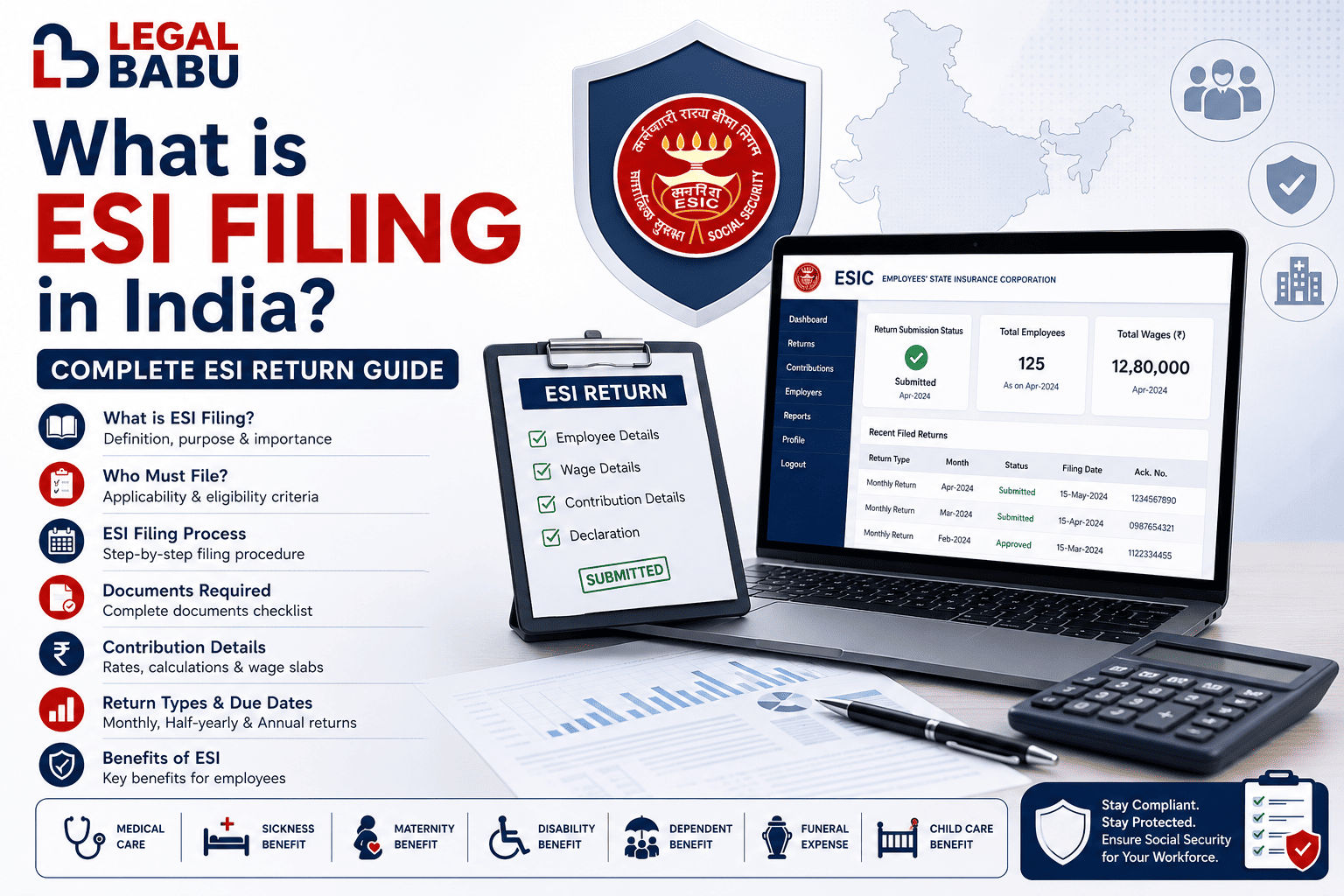
ESI Filing in India is a mandatory compliance requirement for employers under the Employees' State Insurance (ESI) scheme. It involves the submission of periodic returns to the Employees' State Insurance Corporation (ESIC), documenting employee contributions, wage details, and statutory compliance information. This comprehensive guide will help you understand ESI filing requirements, deadlines, necessary documentation, and the step-by-step process to file ESI returns seamlessly.
The Employees' State Insurance (ESI) scheme is a self-financing social security and health insurance mechanism designed to protect workers in India. Governed by the ESIC under the Ministry of Labour and Employment, this scheme mandates that employers with 10 or more employees (20 in some states) register and file periodic ESI returns. Regular filing ensures employee protection and keeps your business compliant with statutory obligations.
What is ESI Filing in India? Understanding the Basics
ESI filing refers to the regular submission of returns to the Employees' State Insurance Corporation (ESIC) by registered employers. These returns contain critical information about:
-
Monthly/bi-annual wage details of employees
-
Employer and employee contribution amounts
-
Employee attendance and leave records
-
Changes in employee status or resignations
Why is ESI Filing Important for Your Business?
Timely ESI filing in India is crucial because it:
-
Ensures legal compliance and avoids penalties
-
Protects employees with health and social security benefits
-
Maintains accurate records for statutory audits
-
Enables smooth processing of employee claims
-
Demonstrates responsible employer practices
When Do You Need to File ESI Returns? Know the Key Deadlines
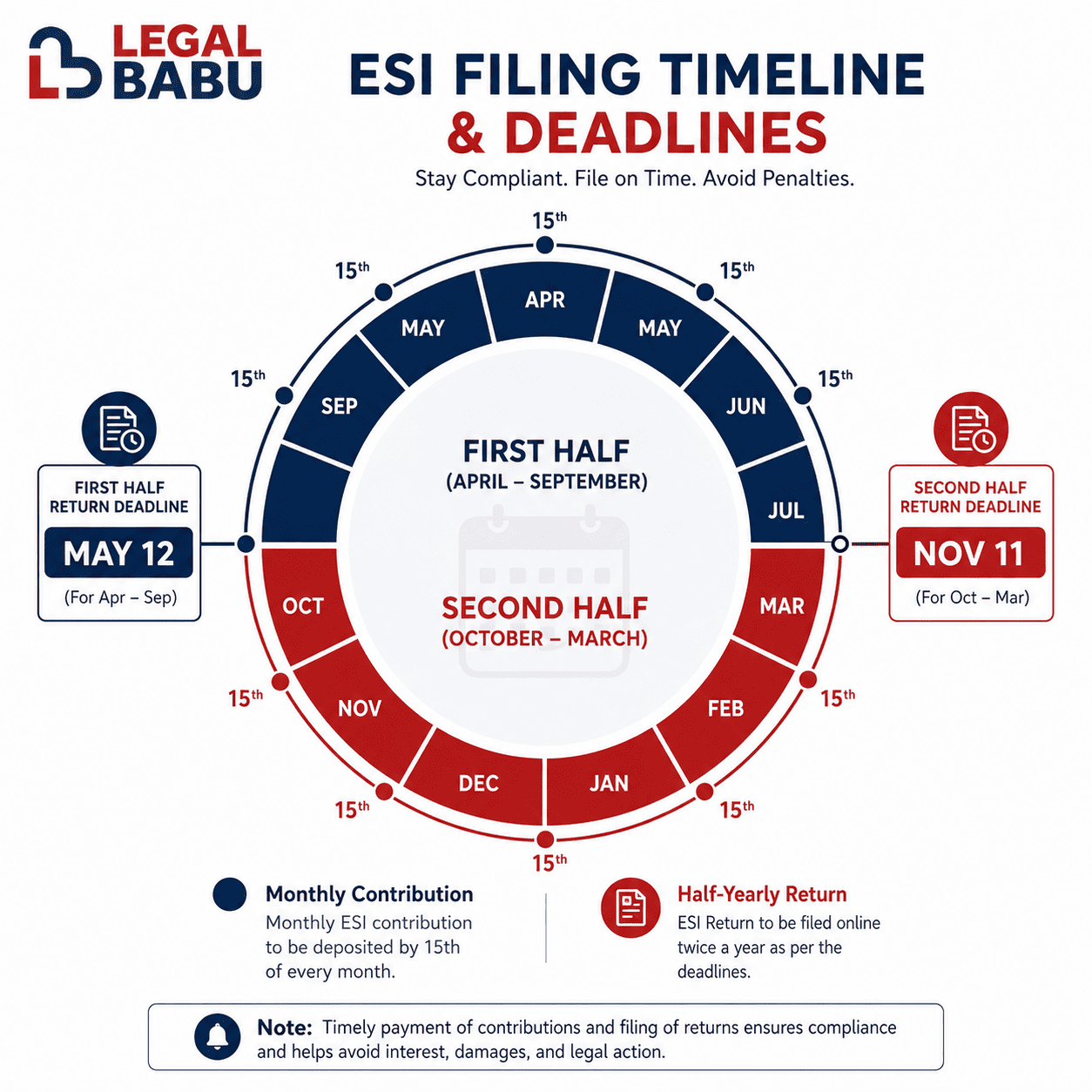
ESI returns in India follow a biannual filing schedule with specific deadlines that employers must adhere to:
|
ESI Filing Period |
Return Type |
Due Date |
Coverage Dates |
|
Monthly Contribution |
ESI Challan & Monthly Return |
15th of the following month |
Last day of each month |
|
First Half-Year |
Half-Yearly Return (Form 5) |
12th May |
October 1 - March 31 |
|
Second Half-Year |
Half-Yearly Return (Form 5) |
11th November |
April 1 - September 30 |
|
NIL Declaration |
Monthly NIL Filing |
15th of the following month |
When no employees on payroll |
Why These Deadlines Matter:
Missing ESI filing deadlines in India can result in:
-
Penalty of 12% per annum simple interest on delayed contributions
-
Legal action and prosecution under the ESI Act, 1948
-
Suspension of ESI registration
-
Difficulty in employee benefit claims
How Does ESI Filing in India Work? Step-by-Step Process
Step 1: Access the ESIC Portal
-
Visit the official ESIC portal (www.esic.in)
-
Log in using your 17-digit Employer Code, User ID, and Password
-
Navigate to the "File Monthly Returns" section
Step 2: Verify Employee Details
-
Review and update all employee information in the system
-
Ensure accurate wages, designation, and employment dates
-
Correct any discrepancies from the previous month
Step 3: Enter Monthly Contributions
-
Input employer contribution amount (3.25% of wages)
-
Enter employee contribution amount (0.75% of wages)
-
Verify the total contribution amount before submission
Step 4: Submit Bank Details
-
Provide bank account information for ESI deduction
-
Confirm the payment gateway authorization
-
Review and submit the ESI return form
Step 5: Generate ESI Challan
-
Navigate to "List of Actions" after payment
-
Select "Generate Challan" for record-keeping
-
Download and retain the challan document
Step 6: Self-Certification
-
For organizations with less than 40 employees: Self-certify the return
-
For organizations with 40+ employees: Upload the Chartered Accountant certificate
-
Tick the declaration checkbox to confirm accuracy
Step 7: Final Submission
-
Click "Submit" to officially file the ESI return
-
Receive acknowledgment number for record purposes
-
Download and store the submission receipt
What Documents Are Needed for ESI Filing in India?
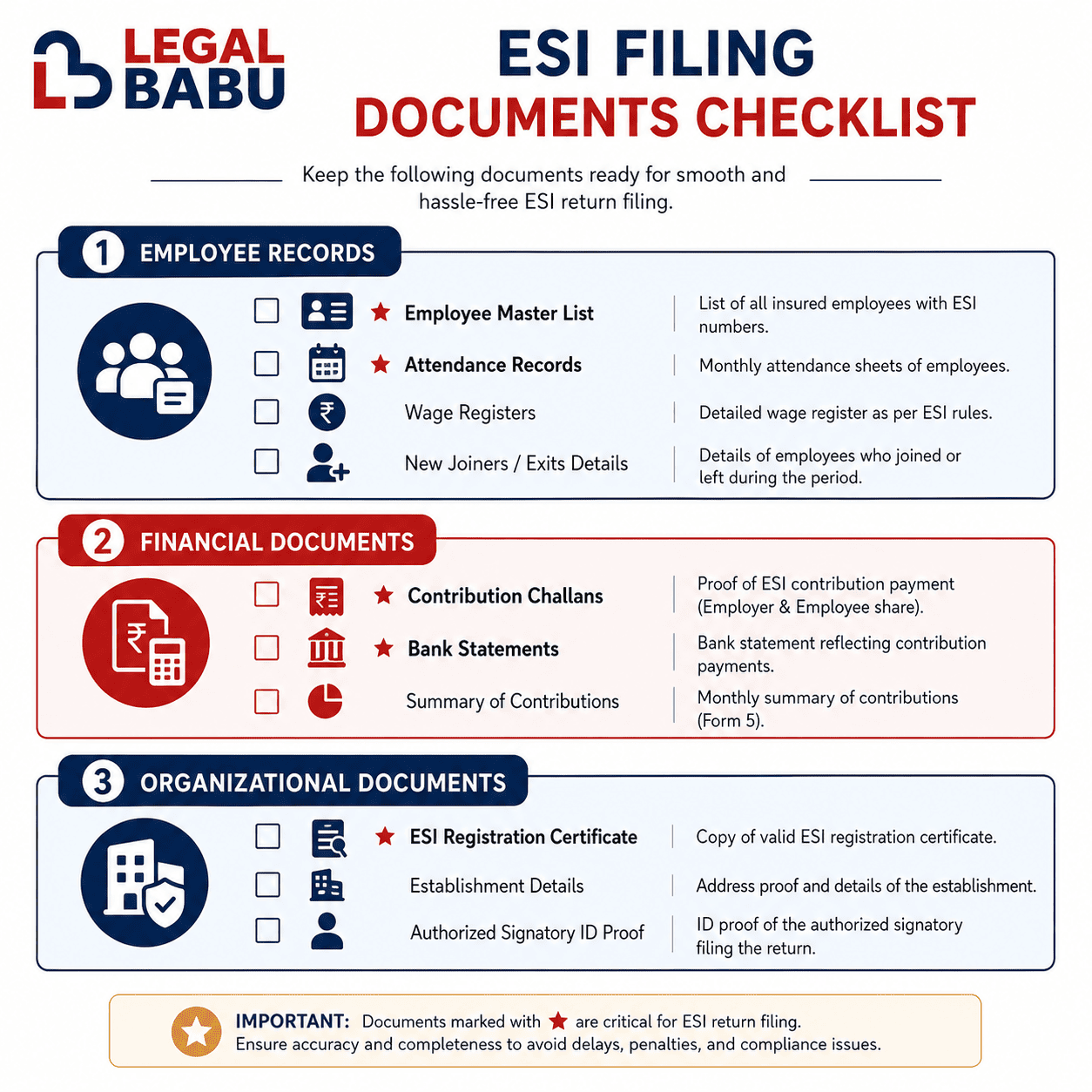
For Regular ESI Return Filing:
|
Document Category |
Required Documents |
Purpose |
|
Employee Records |
Attendance Register, Wage Register, Leave Records |
To verify employee details and wages paid |
|
Statutory Forms |
Form 6 (ESI Registration), Form 5 (Returns) |
Official submission forms required by ESIC |
|
Financial Documents |
Bank Statements, ESI Challans, Payment Receipts |
Proof of contributions and payments made |
|
Workplace Documents |
Accident Report List, Inspection Book, Safety Records |
Documentation of workplace incidents and inspections |
|
Organization Credentials |
Registration Certificate, PAN, CIN, and Incorporation Certificate |
Verification of business legitimacy and identity |
|
Employee Details List |
Comprehensive employee database with ESI numbers |
Individual employee contribution tracking |
|
Certification Documents |
CA Certificate (for 40+ employees), Auditor Report |
Professional verification of filing accuracy |
Additional Supporting Documents
-
Certificate of Incorporation - For companies registered under the Companies Act, 2013
-
Memorandum and Articles of Association - Defining company operations
-
Trust Deed or Partnership Agreement - For partnership firms and trusts
-
Factory Work Commencement Certificate - For manufacturing establishments
-
Director/Shareholder/Partner Information - Complete list with contact details
-
Property Address and Lease Documentation - Proof of operational premises
-
Attendance Records - Digital or manual logs showing employee presence
-
Resignation and Relieving Letters - For employee status changes
How Much Are ESI Contributions and What Are the Contribution Rates?
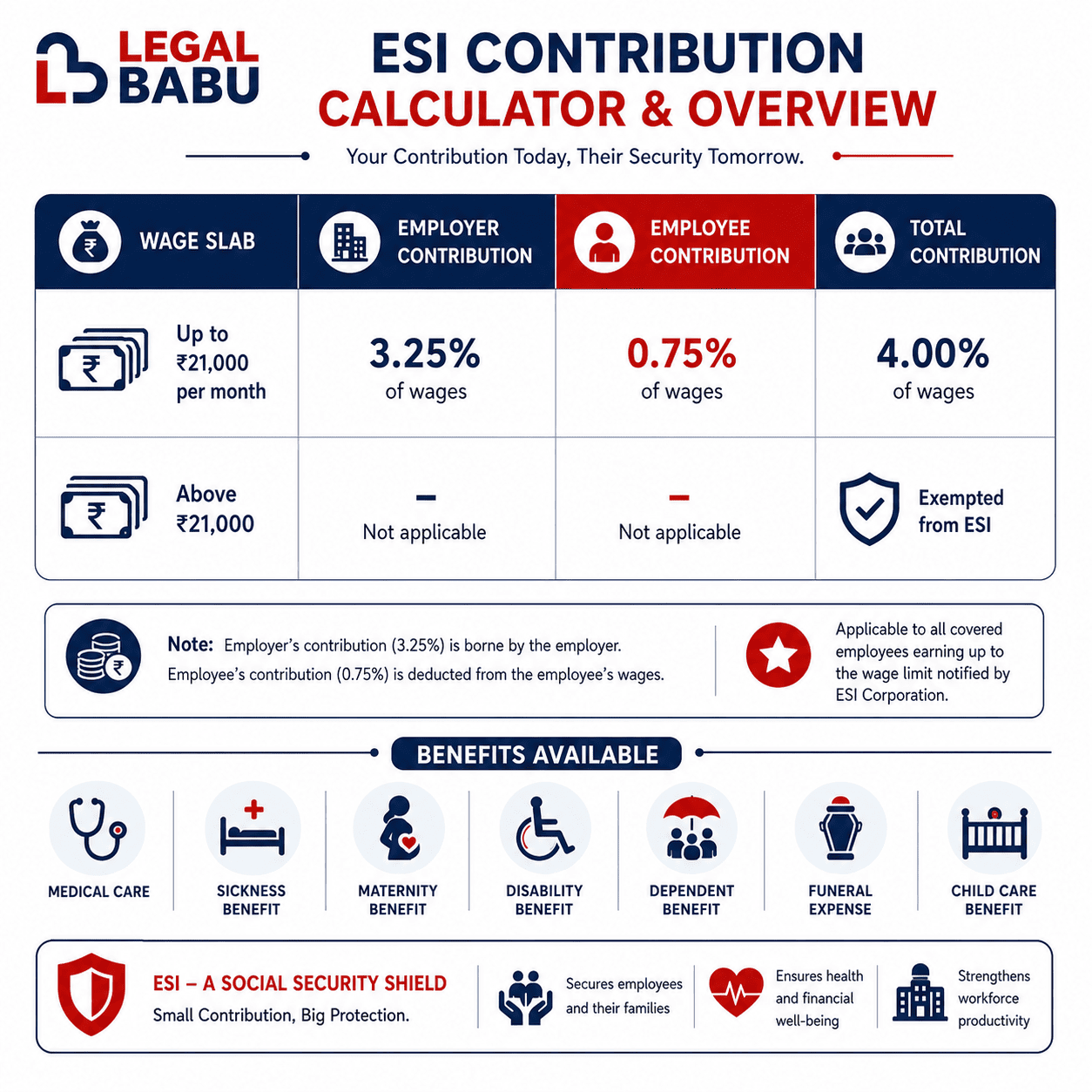
The ESI scheme operates on a cost-sharing model where both employers and employees contribute:
|
Wage Slab |
Employer Contribution |
Employee Contribution |
Total Contribution |
|
Up to ₹21,000 per month |
3.25% of wages |
0.75% of wages |
4.00% of wages |
|
Above ₹21,000 |
Not applicable |
Not applicable |
Exempted from ESI |
Example Calculation:
-
Employee monthly wage: ₹15,000
-
Employer contribution: ₹15,000 × 3.25% = ₹487.50
-
Employee contribution: ₹15,000 × 0.75% = ₹112.50
-
Total monthly ESI: ₹600
Why Should You File ESI Returns on Time? Key Benefits
For Employees:
-
Health and Medical Benefits - Free or subsidized healthcare services for employees and dependents
-
Sickness Benefits - Income protection during illness periods (up to 91 days per year)
-
Maternity Benefits - Financial assistance during pregnancy and childbirth (up to ₹16,000)
-
Disability Benefits - Permanent disability allowance if unable to work
-
Survivor Benefits - Financial support to family members after employee death
-
Vocational Rehabilitation - Training programs for disabled employees
For Employers:
-
Legal Compliance - Avoids fines, penalties, and prosecution
-
Employee Retention - Demonstrates commitment to employee welfare
-
Enhanced Reputation - Shows responsible business practices
-
Smooth Audits - Maintains clear records for statutory examinations
-
Claims Processing - Faster and easier employee benefit claims
-
Reduced Disputes - Minimizes labor-related conflicts
For Business Operations:
-
Maintains good standing with regulatory authorities
-
Avoids workplace disputes and legal complications
-
Demonstrates transparency and accountability
-
Builds trust with employees and stakeholders
What Are the Penalties for Not Filing ESI Returns on Time?
Financial Penalties:
-
Simple interest at 12% per annum, calculated from the due date until actual payment
-
Penalty charges up to ₹10,000 for late filing (varies by state)
-
Compounding interest on unpaid contributions
Legal Consequences:
-
Suspension of ESI registration
-
Criminal prosecution under the ESI Act, 1948
-
Imprisonment up to 3 months and/or fines up to ₹10,000
-
Inability to employ workers under ESI coverage
-
Restrictions on business operations and statutory clearances
Operational Impact:
-
Difficulty obtaining statutory clearance certificates
-
Complications in business transfer or sale
-
Employee difficulty in claiming benefits
-
Damage to the employer's reputation
-
Regulatory scrutiny and increased inspections
Example: If an employer fails to pay the ₹10,000 ESI contribution by the 15th and pays on the 30th (15 days late):
-
Simple interest: ₹10,000 × 12% × (15/365) = ₹49.32
-
Total amount due: ₹10,049.32
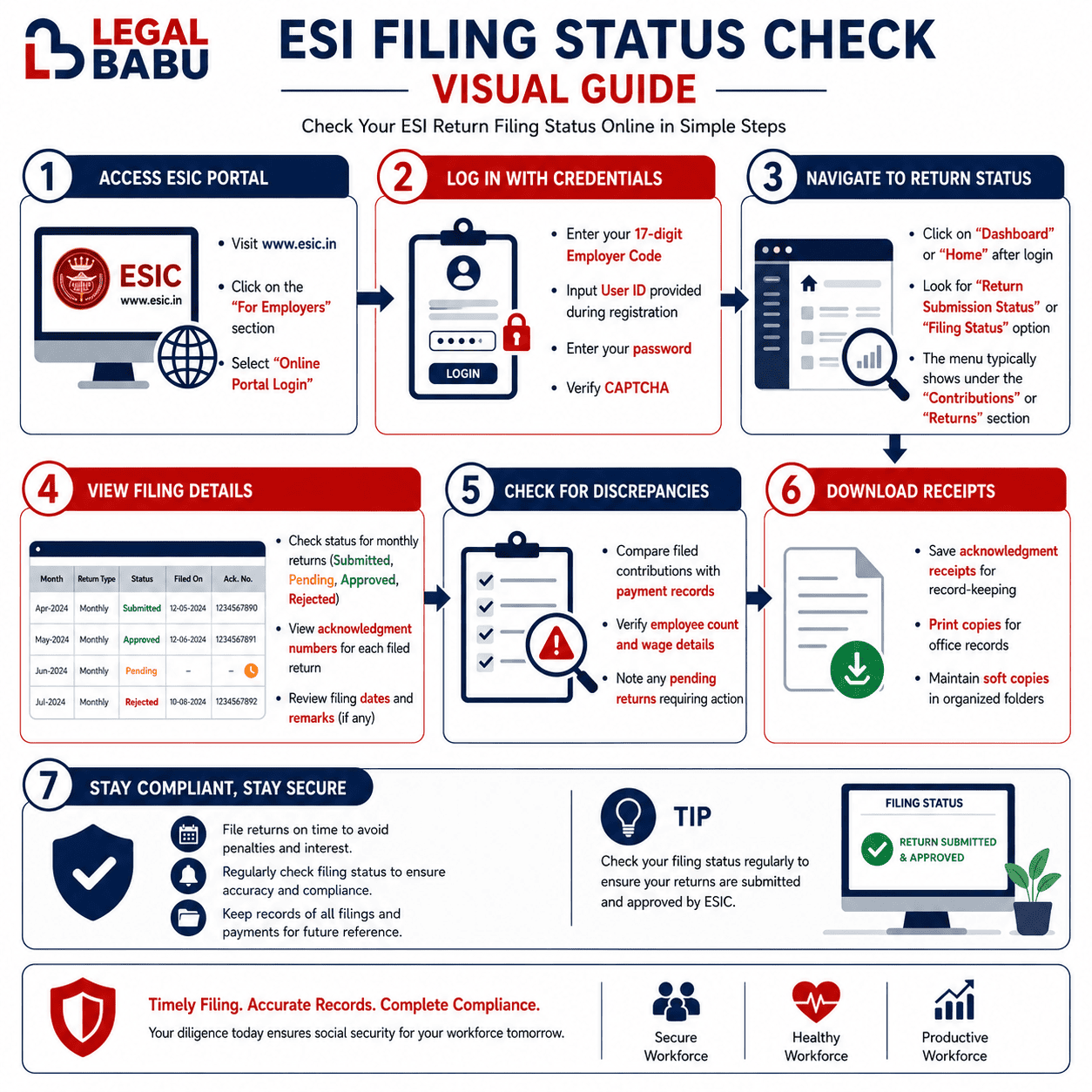
How to Check Your ESI Return Filing Status? Verification Steps
What is the Process to Check ESI Return Filing Status Online?
Step-by-Step Guide:
-
Access ESIC Portal
-
Visit www.esic.in
-
Click on the "For Employers" section
-
Select "Online Portal Login"
-
Log in with Credentials
-
Enter your 17-digit Employer Code
-
Input User ID provided during registration
-
Enter your password
-
Verify CAPTCHA
-
Navigate to Return Status
-
Click on "Dashboard" or "Home" after login
-
Look for the "Return Submission Status" or "Filing Status" option
-
The menu typically shows under the "Contributions" or "Returns" section
-
View Filing Details
-
Check status for monthly returns (Submitted, Pending, Approved, Rejected)
-
View acknowledgment numbers for each filed return
-
Review filing dates and remarks (if any)
-
Check for Discrepancies
-
Compare filed contributions with payment records
-
Verify employee count and wage details
-
Note any pending returns requiring action
-
Download Receipts
-
Save acknowledgment receipts for record-keeping
-
Print copies for office records
-
Maintain soft copies in organized folders
Common Status Indicators:
-
Submitted - Return successfully uploaded and awaiting processing
-
Pending - Awaiting payment confirmation from ESIC
-
Approved - Return accepted and validated
-
Rejected - Return has errors requiring resubmission
-
Amendment Required - Changes needed in the submitted return
Common Issues in ESI Filing and How to Resolve Them
What Are Common ESI Filing Mistakes and Solutions?
|
Common Issue |
Cause |
Solution |
|
Portal Access Denied |
Forgotten login credentials or account lockout |
Contact the ESIC help desk or visit the nearest ESI office with ID proof to reset credentials |
|
Wage Entry Errors |
Incorrect or incomplete wage data entry |
Review the wage register, correct entries, and resubmit for that period |
|
Missing Employee Data |
Newly hired employees were not added to the system |
Update employee details immediately upon joining and include them in the next return |
|
Payment Status Not Updating |
Bank clearance delay or challan mismatch |
Verify bank transaction, wait 2-3 business days, or contact the bank for clearance confirmation |
|
Duplicate Submissions |
Accidental multiple filings in the same period |
Contact the ESIC office with acknowledgment numbers to rectify duplicate submissions |
|
Challan Generation Failure |
Technical issue or system glitch |
Try again after a few hours, clear browser cache, or use a different browser/device |
|
Certificate Upload Rejected |
Incorrect format or incomplete CA certificate |
Ensure the CA certificate is in PDF, properly signed, and includes the required details |
|
Employee Exemption Not Recorded |
Wages exceeding ₹21,000 are not marked as exempted |
Mark eligible employees as exempted in the employee master before the return filing |
How Can Legalbabu Help with ESI Filing?
For businesses struggling with ESI compliance, Legalbabu's ESI Consulting Services provide expert assistance in:
-
ESI Registration Assistance - Complete the registration process with ESIC
-
ESI Return Filing - Timely and accurate filing of monthly and half-yearly returns
-
Compliance Management - Ensuring adherence to all ESI regulations and deadlines
-
Documentation Support - Preparing and organizing required documentation
-
Issue Resolution - Addressing portal errors, penalties, and compliance gaps
-
Audit Preparation - Preparing records and documentation for ESI inspections
-
Employee Benefit Claims - Assisting employees in claiming ESI benefits
Legalbabu's ESI Return Filing Services ensure your business remains compliant while protecting your employees. Their expert team handles everything from initial registration to ongoing compliance, allowing you to focus on core business operations.
Conclusion: Ensuring Compliance with ESI Filing in India
What is ESI Filing in India? - A critical compliance requirement that protects employees while keeping your business on the right side of the law. Regular and timely ESI filing in India is not just a statutory obligation; it's a responsibility toward your workforce's welfare and security.
Key Takeaways:
-
ESI filing is mandatory for employers with 10+ employees (20 in some states)
-
Monthly contributions are due by the 15th of the following month
-
Half-yearly returns must be filed by May 12th and November 11th
-
Timely filing ensures employee benefits and legal protection
-
Delays attract 12% per annum interest and significant penalties
-
Proper documentation is essential for smooth filing and audits
-
Online filing through the ESIC portal is the quickest and most efficient method
By understanding the ESI filing process and adhering to deadlines, you ensure that your employees receive the social security protection they deserve while maintaining your business's legal compliance. For professional assistance with ESI filing, compliance, and related HR services, consult with Legalbabu's expert team today.
FAQS
Frequently Asked Questions About ESI Filing
-
Q1: What is the deadline for monthly ESI contributions?
Monthly ESI contributions and returns must be filed by the 15th of the following month. For example, contributions for January must be filed by February 15th.
- Q2: Are there different deadlines for half-yearly returns?
- Q3: What happens if I file an ESI return after the deadline?
- Q4: Is ESI filing mandatory for all employers?
- Q5: What if my employees earn more than ?21,000 per month?
- Q6: Do contract workers need to be included in ESI returns?
- Can ESI returns be filed manually instead of online?
- Q8: What documents must I attach to ESI returns?
- Q9: Can I file ESI returns on behalf of an employee?
- Q10: What are the main benefits covered under the ESI scheme?
- Q11: How long does it take to process ESI benefit claims?
- Q12: Are family members covered under ESI?


