Table of Content
- What is HALAL Certification?
- HALAL Certification: Overview and Details
- Key Principles of Quality Management in HALAL Certification
- Key Requirements for Obtaining HALAL Certification
- Why Choose HALAL Certification?
- Stages Involved in the HALAL Certification Process
- Role of a HALAL Certification Consultant
What is HALAL Certification?
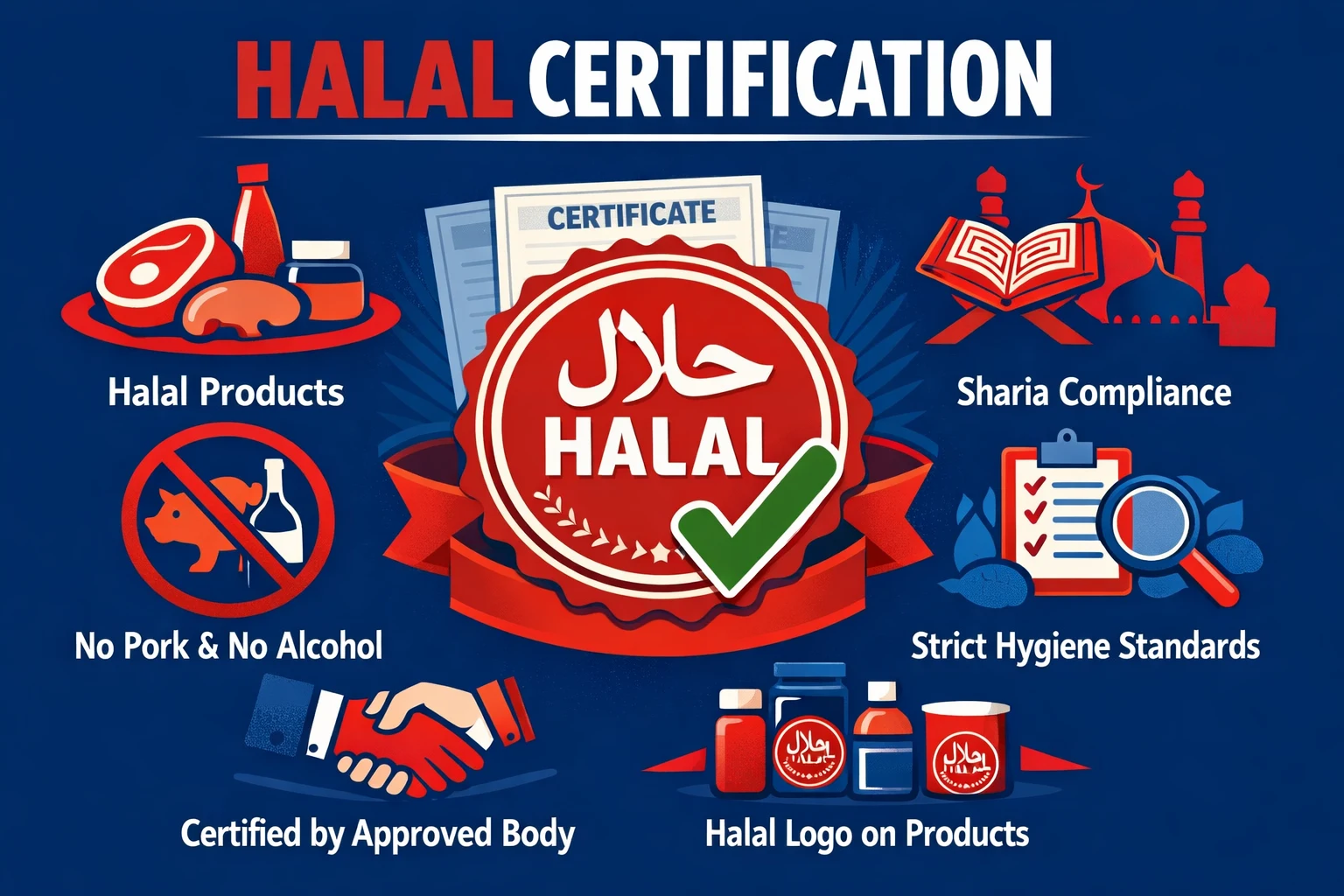
HALAL certification is an official document verifying that the product, ingredients, or process meets Islamic law and is safe for consumption and use by the Muslim community. The term “halal” means “permissible” in Arabic and applies to food and beverages, cosmetics, pharmaceuticals, and other products. It signifies that the products are made after considering the Sharia law, religious perspectives, strict hygiene, and are free from prohibited items like pork or alcohol.
This certification is provided by non-governmental organisations or private organisations. Once the certificate is issued, businesses are allowed to use the halal logo on their products, reflecting compliance and building customers' trust. Halal certification combined with ISO 22000 and FSSC 22000 helps businesses ensure religious compliance, strengthen food safety management, and build greater trust with consumers and regulators.
HALAL Certification: Overview and Details
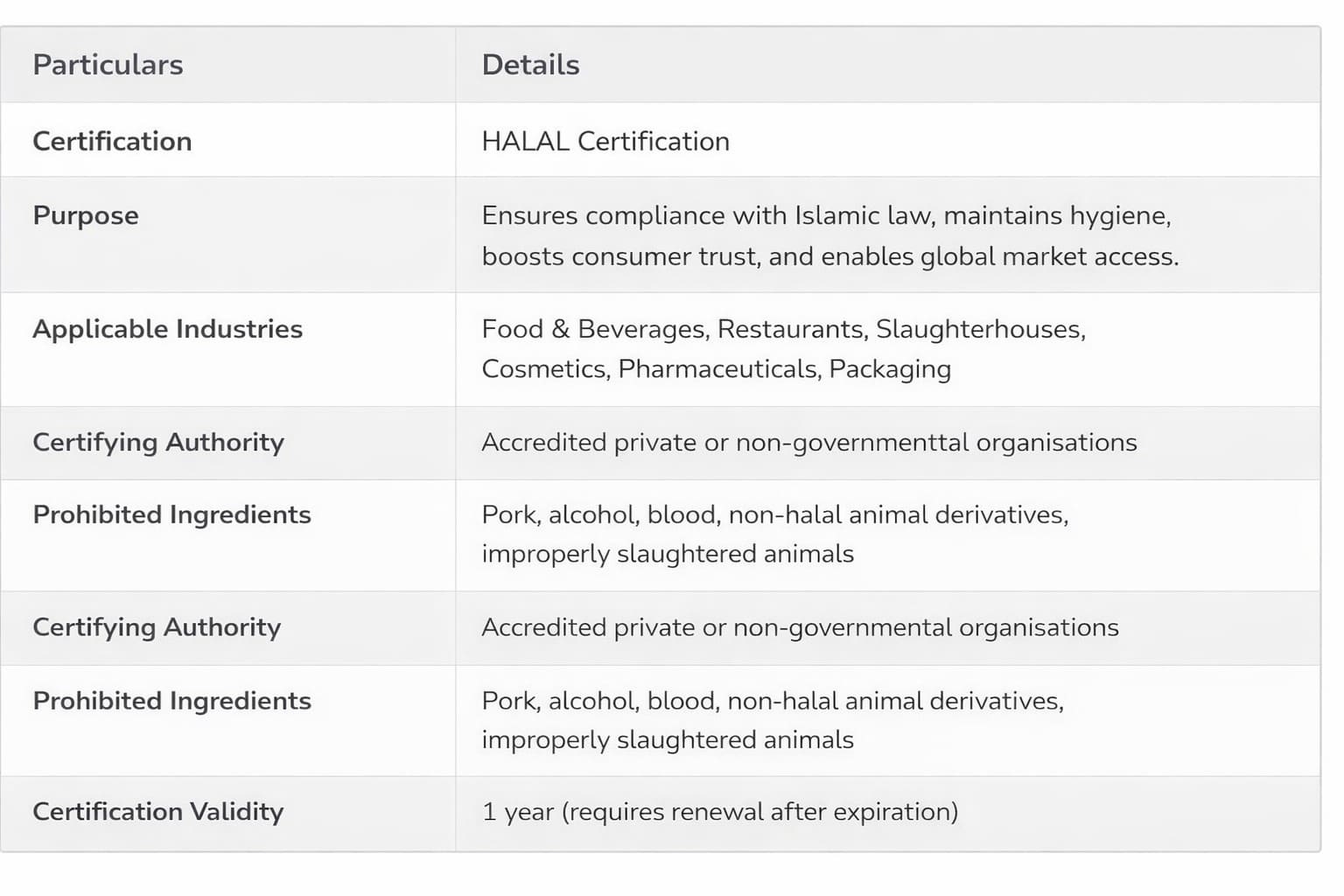
What are the key principles of quality management outlined in HALAL Certification?
The following are the key principles of quality management outlined in HALAL certification:
- Compliance: Ensuring that the products or ingredients comply with the Sharia law. It includes avoiding substances or raw materials that are haram or not permissible.
- Hygiene and Sanitation Control: Emphasising high standards of cleanliness across the facility, equipment, and personnel.
- Traceability and Transparency: Ensuring proper labelling, records maintenance, product verification and tracing the process from beginning to end to ensure strict halal practices are followed throughout the process.
- Risk Management: Continuously monitoring performance and process. Identifying potential risk of contamination and implementing corrective measures.
- Management Responsibility and Commitment: Demonstrating clear commitment towards halal quality management and establishing strong policies and supporting compliance initiatives.
What are the key requirements for obtaining HALAL Certification?
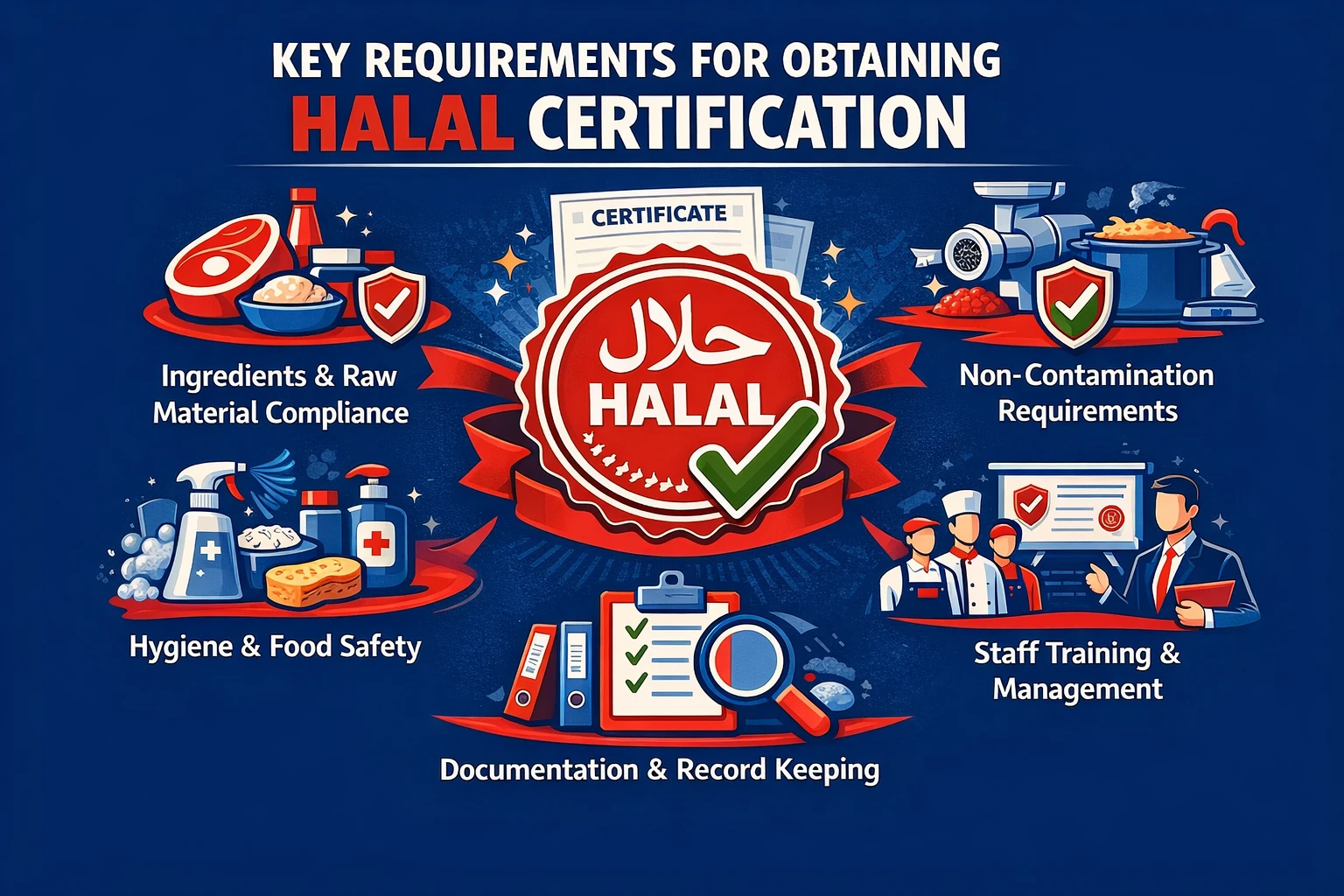
The key requirements for obtaining halal certification are as follows:
1. Ingredients and Raw Material Compliance: all the ingredients and raw materials used for the product should comply with the halal requirements. It means they should be free from forbidden substances like alcohol, blood, and non-halal animals and their derivatives.
2. Non-Contamination Requirements: The entire manufacturing process must be carefully monitored to ensure alignment with halal principles. The equipment, machinery, and utensils used for manufacturing the product should not be contaminated with non-halal or other prohibited substances. It is mandatory that the business make a clear segregation between halal and non-halal products.
3. Hygiene and Food Safety Requirements: Food safety and hygiene are prerequisite requirements for halal certification. Businesses should implement high standards and techniques to maintain strict hygiene and sanitation in the facility and manufacturing process. Besides, businesses must implement effective cleaning processes, waste management systems, and personal hygiene practices.
4. Documentation and Record Keeping: Maintaining proper records and documentation is a must for halal certification. Businesses must maintain records of ingredients, raw materials, suppliers, cleaning activities, production processes, and annual or semi-annual audits. These documents serve as evidence of compliance and consistency.
5. Staff Training and Management: For obtaining halal certification, businesses must provide essential training to their employees and establish a responsive as well as an accountable management system. The certification body usually evaluates the training and management programme to ensure adherence to halal standards.
Why Choose HALAL Certification?
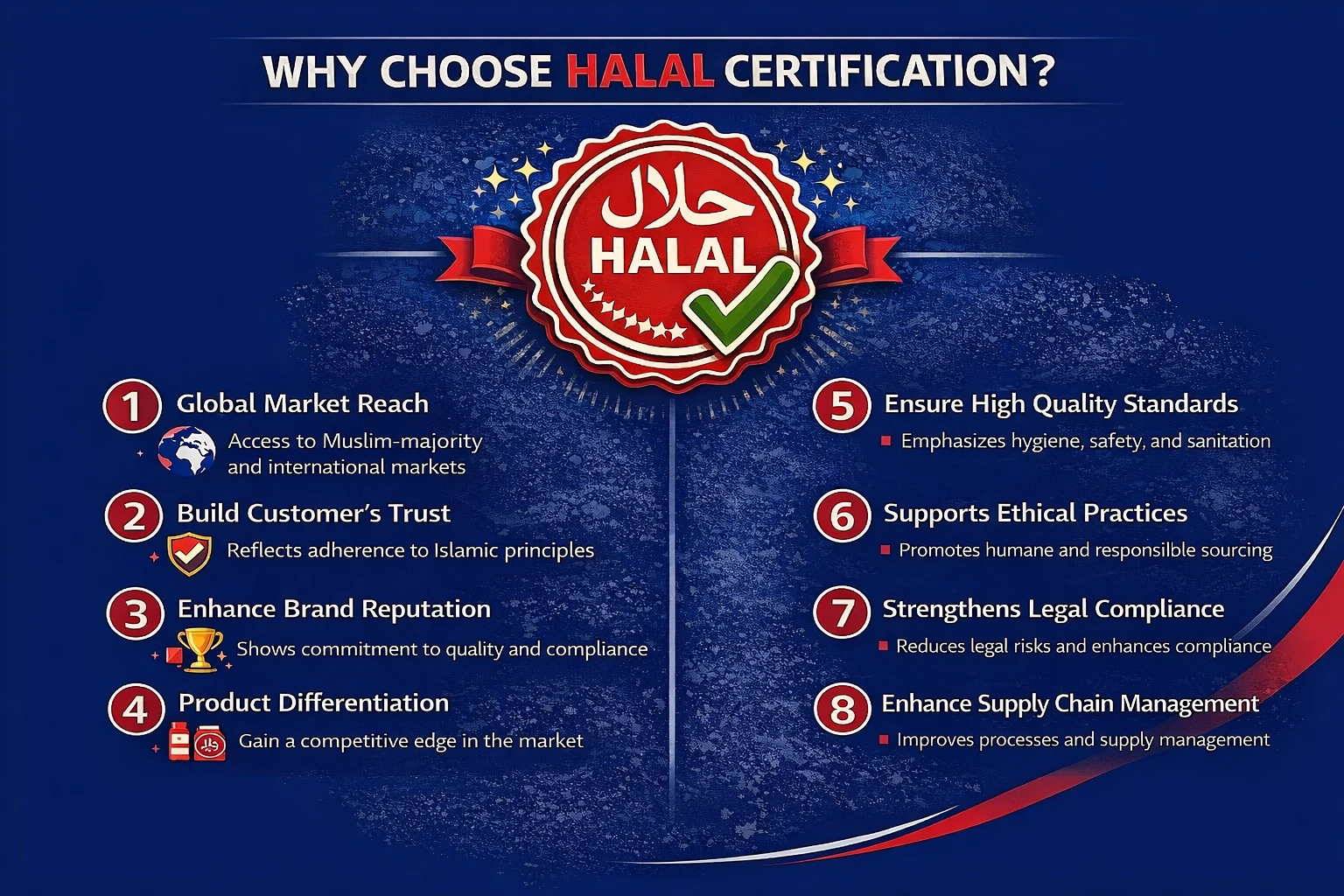
Halal certification demonstrates business compliance with Islamic principles and contemplates high standards of hygiene and safety. It enhances the brand’s credibility, builds customers’ trust, and ensures smooth access to global markets. Beyond religious principles and compliance, halal certification also reflects transparent processing, ethical manufacturing processes, and responsible manufacturing, making the product authentic and premium.
Here are the key benefits of choosing halal certification:
- Global Market Reach: Halal certification allows businesses to enter the global market and Muslim-majority countries with ease. It removes trade barriers by meeting religious practices and principles, tremendously increasing the export opportunities.
- Build Customer’s Trust: Halal certification reflects that the product adheres to the Islamic guidelines and helps businesses to build customers’ trust in their product.
- Enhance Brand Reputation: Having a halal certification on your product reflects commitment to quality, ethics, and compliance. It shows that your brand undergoes audits and controls, increasing its credibility and reputation.
- Ensure High-Quality Standards: The certification emphasises that the brand undergoes high cleanliness, sanitation, and safe handling throughout the production, making the product safer and high in quality.
- Supports Ethical Practices: Halal certification supports ethical sourcing, humane animal treatment, and responsible manufacturing.
- Help Meet International Requirements: Many countries require halal certification on products. Obtaining certification before entering the international market ensures that your product fulfils all the international requirements.
Additional Benefits:
- Product Differentiation: Halal certification helps your product to differentiate itself from non-halal products and gain a competitive edge.
- Strengthens Legal Compliance: The certification reflects food safety, high-quality production, and consumer safety, reducing legal risk and penalties.
- Enhance Supply Chain Management: The certification establishes clear procedures for sourcing, handling, supply management, wastage, and errors, resulting in reliable supply chain management across all operations.
- Improves Process Standardisation: Halal certification requires well-defined procedures and documentation. This leads to discipline, staff accountability, and standardisation, thereby enhancing the overall internal process system.
What are the stages involved in the HALAL certification process?
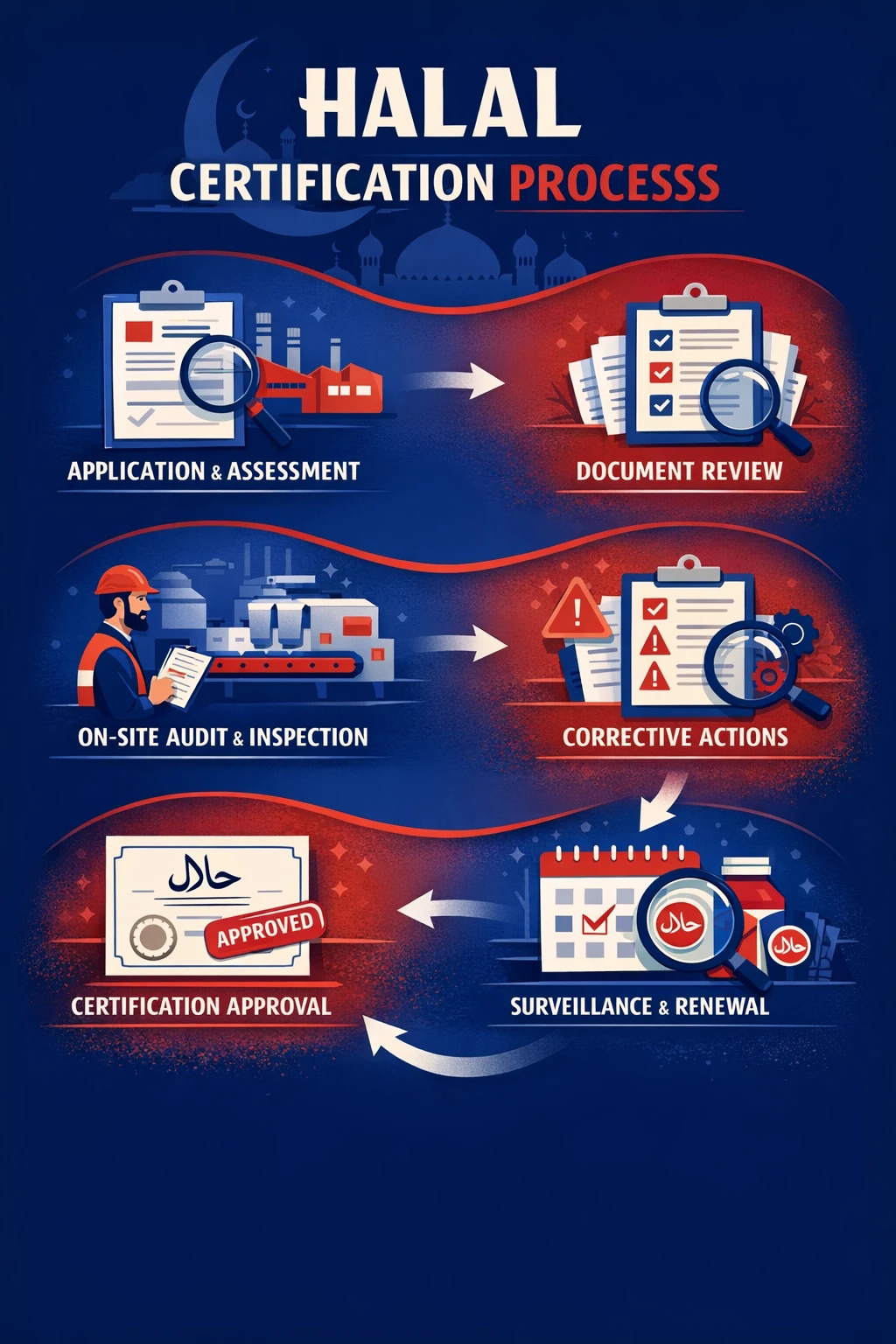
Here is a detailed overview of the stages involved in the halal certification process:
1. Application and Assessment:
The certification process begins with submitting an application to the accredited certification body. It includes assessing the organisation's processes, products and suppliers and providing detailed information of the same in the application.
2. Reviewing Documents:
In the next stage, the certifying authority reviews all the documents to identify their authenticity and strict compliance with halal requirements.
3. On-site Audit and Inspection:
An on-site audit is conducted to verify the practice and process of the organisation. The auditor inspects the facility, equipment, storage, hygiene, and effective handling. They also assess the employees' training and management system at operation levels before making a decision.
4. Corrective Actions and Compliance:
If any non-conformity is found during the process, the business must take suitable corrective actions within a given period to ensure compliance. The repost of the same is submitted to the certification body.
5. Certification Approval and Issuance:
Once compliance is confirmed, the halal certification body approves the application and issues the certificate. This authorises the business to use the halal logo on their products.
6. Surveillance Audit and Certification Renewal:
Periodic surveillance and renewal audits are conducted by the certification body to ensure strict compliance with halal requirements. Businesses must notify the certification body of any changes in the process, suppliers or ingredients before the surveillance audit.
What is the role of a HALAL certification consultant?
A halal certification consultant plays a crucial role in guiding the organisation throughout the certification process effectively and accurately. The consultant evaluates the business's process, management, ingredients, raw materials, suppliers, and training and manufacturing methods to identify potential gaps and develop corrective measures. They assist in developing a functional and impeccable halal management system for effective product handling and legal compliance.
The consultant coordinates with the certification body and supports businesses during the audits. By providing their expert guidelines, a halal certification consultant reduces long waiting periods, minimises compliance risk, and ensures adherence to all principles and requirements.
FAQS
Have a question about Halal Certification?
We have got you covered:
-
Is halal certification mandatory in India?
No, halal certification is not mandatory in India. However, obtaining a certificate is a prerequisite in many international markets, especially the Muslim-majority countries.
- Who needs a halal certification?
- What ingredients are prohibited in halal certification?
- How long does the halal certification process take?
- How long is halal certification valid?
- What is the cost for obtaining halal certification?
- What documents are required for halal certification?
- Can halal certification be suspended?
- Can halal certification be combined with ISO standards?
- Is halal certification applicable to beverages?
- How does halal certification help small businesses?
- Can cosmetics and pharmaceuticals be HALAL certified?
- Is an on-site inspection mandatory in HALAL certification process?
- What happens if non-compliance is found during audit?
- Which countries require HALAL certification?
- Is HALAL certification the same as ISO certification?
- Does HALAL certification cover packaging materials?
- Is separate HALAL certification required for each product?
- Is employee training required for HALAL compliance?
- Can a company hold multiple HALAL certifications?


