

A Term Loan gives a business a defined amount for a specific purpose, followed by repayment over an agreed period. It is commonly considered for machinery, premises, technology, vehicles, expansion or a new project rather than routine daily expenses. Getting the facility, however, involves more than submitting KYC papers.
The lender examines the project cost, promoter contribution, cash generation, existing debt, credit history, statutory compliance and security, where applicable. This guide explains how Indian businesses can prepare a credible application, compare offers and complete the post-sanction formalities. Requirements vary among banks, NBFCs, schemes and borrower profiles, so the sanction letter always remains the controlling document.
What Is a Term Loan?
A Term Loan is a credit facility disbursed for a fixed tenure and repaid through scheduled instalments. Each instalment normally contains principal and interest, although some project loans allow a moratorium before principal repayment begins. The rate may be fixed, floating or structured as a combination, subject to the lender’s product and credit decision.
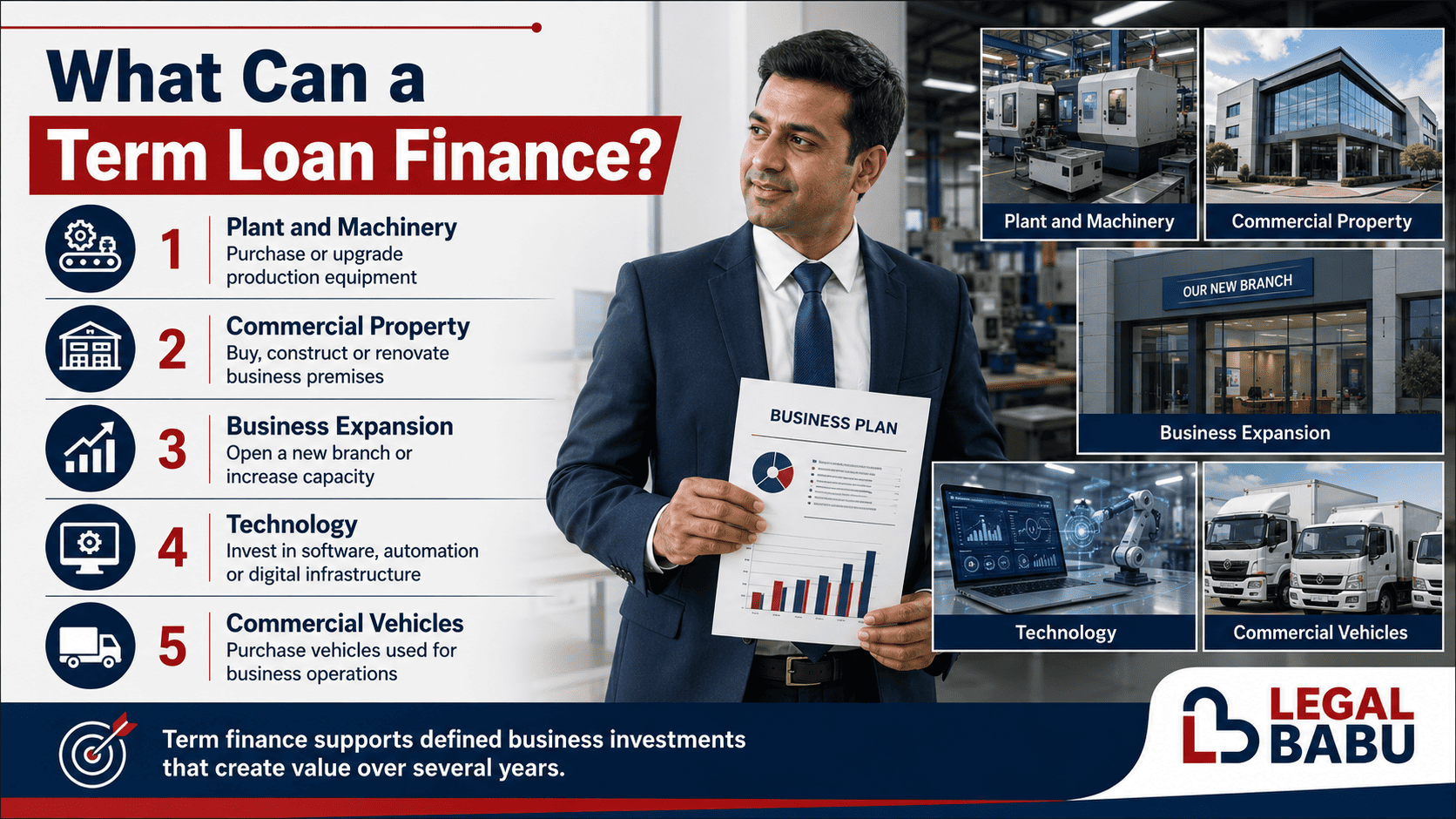
Businesses usually match this borrowing with an asset or project that will generate value over several years. Typical uses include plant and machinery, factory construction, a new branch, software, commercial vehicles or added production capacity.
The facility is not the same as a cash credit or overdraft limit. A term facility is ordinarily disbursed once or in approved stages and follows a repayment schedule. A revolving working-capital facility may be drawn, repaid and reused within its sanctioned limit.
Which Type of Term Loan Fits the Requirement?
Labels such as short-term, medium-term and long-term do not carry one universal duration across the market. Compare the actual repayment period and conditions instead of relying only on the product name.
|
Type |
How it works |
Common business use |
Main consideration |
|
Secured |
Identified assets support the facility |
Property, equipment or larger expansion |
Asset valuation, charge and enforcement risk |
|
Unsecured |
No specific collateral is pledged |
Smaller expansion or equipment requirement |
Stronger cash-flow and credit assessment |
|
Fixed-rate |
Rate stays fixed for the agreed period |
Predictable budgeting |
May cost more if market rates fall |
|
Floating-rate |
Rate changes with the stated benchmark and spread |
Medium or longer projects |
Instalment or tenure may change after resets |
|
Project-linked |
Disbursed against milestones or invoices |
Construction, plant setup or capacity addition |
Evidence of utilisation and promoter contribution |
A moratorium is not necessarily interest-free. Interest may remain payable or be added to the outstanding amount. Review its effect in the repayment schedule.
Who Is Eligible for a Term Loan in India?
Proprietorships, partnership firms, limited liability partnerships, companies and other eligible entities may apply, depending on the lender’s policy. There is no single minimum turnover, business vintage, credit score or profit figure applicable to every applicant.
|
Assessment area |
What a lender commonly checks |
How to prepare |
|
Legal status |
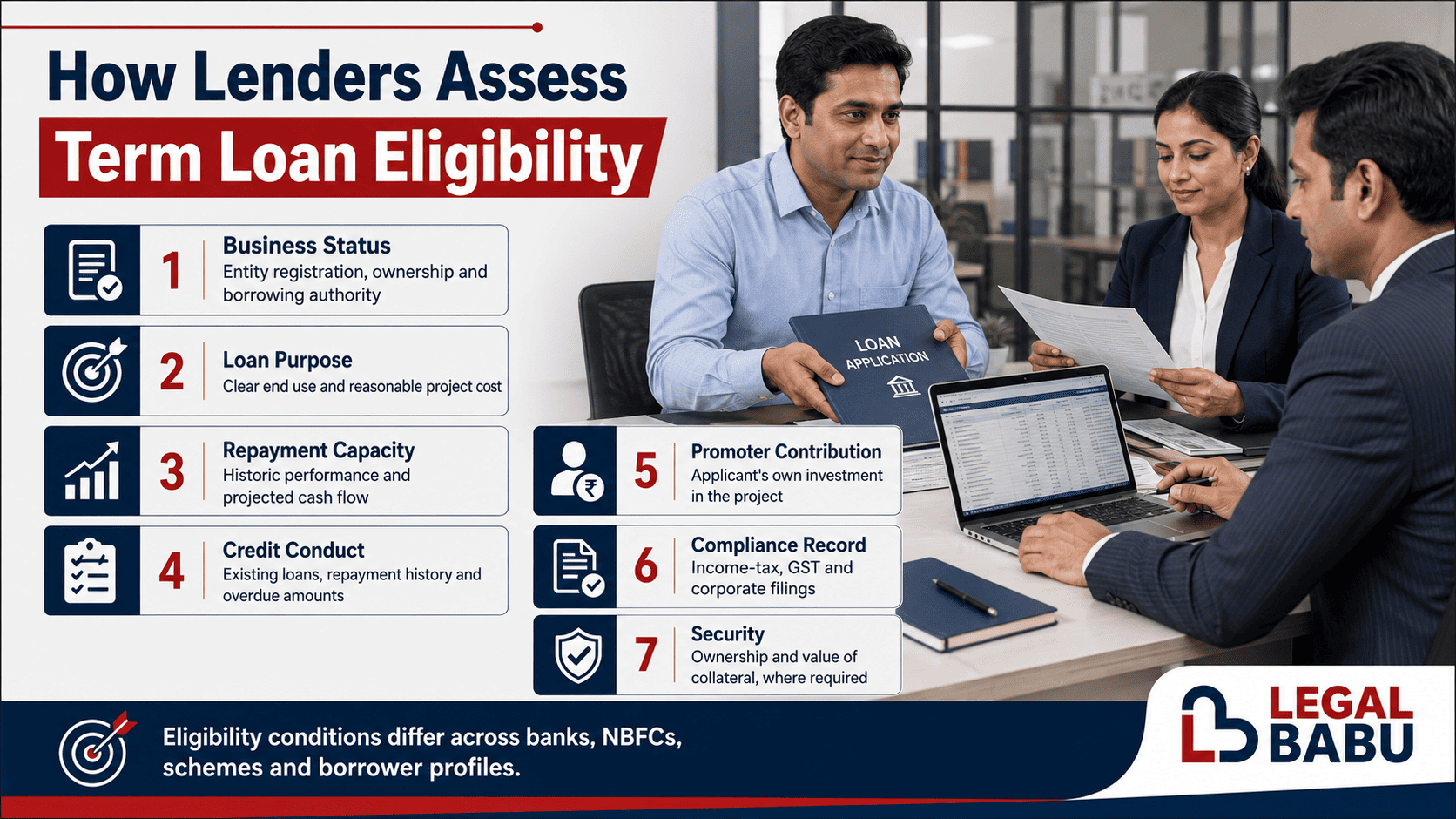
Constitution, ownership and authority to borrow |
Keep incorporation or registration records updated |
|
Purpose |
Clear end use and reasonable project cost |
Provide quotations, estimates and a project report |
|
Repayment capacity |
Historic and projected cash flow |
Reconcile accounts and use defensible assumptions |
|
Credit conduct |
Repayment history, existing facilities and overdue amounts |
Correct reporting errors and explain past delays |
|
Promoter contribution |
Borrower’s own funds in the project |
Show the source and availability of contribution |
|
Compliance |
Income-tax, GST and corporate filings, where applicable |
Clear avoidable filing gaps before applying |
|
Security |
Ownership, valuation and legal acceptability |
Organise title and asset records early |
New projects face closer scrutiny of promoter experience, demand, licences, implementation risks and contingency funding. Existing businesses are assessed through results, bank conduct, orders, capacity utilisation and debt.
An MSME should keep its Udyam Registration current where a product or guarantee route requires MSME recognition. Registration establishes status; it does not create a right to finance.
Read more: See how Udyam Registration works in India, including its eligibility, documents and online registration process.
Documents Required for a Term Loan
The final checklist depends on the entity, amount, purpose, security and scheme. A lender may request additional records during appraisal.
|
Document group |
Common records |
|
Applicant KYC |
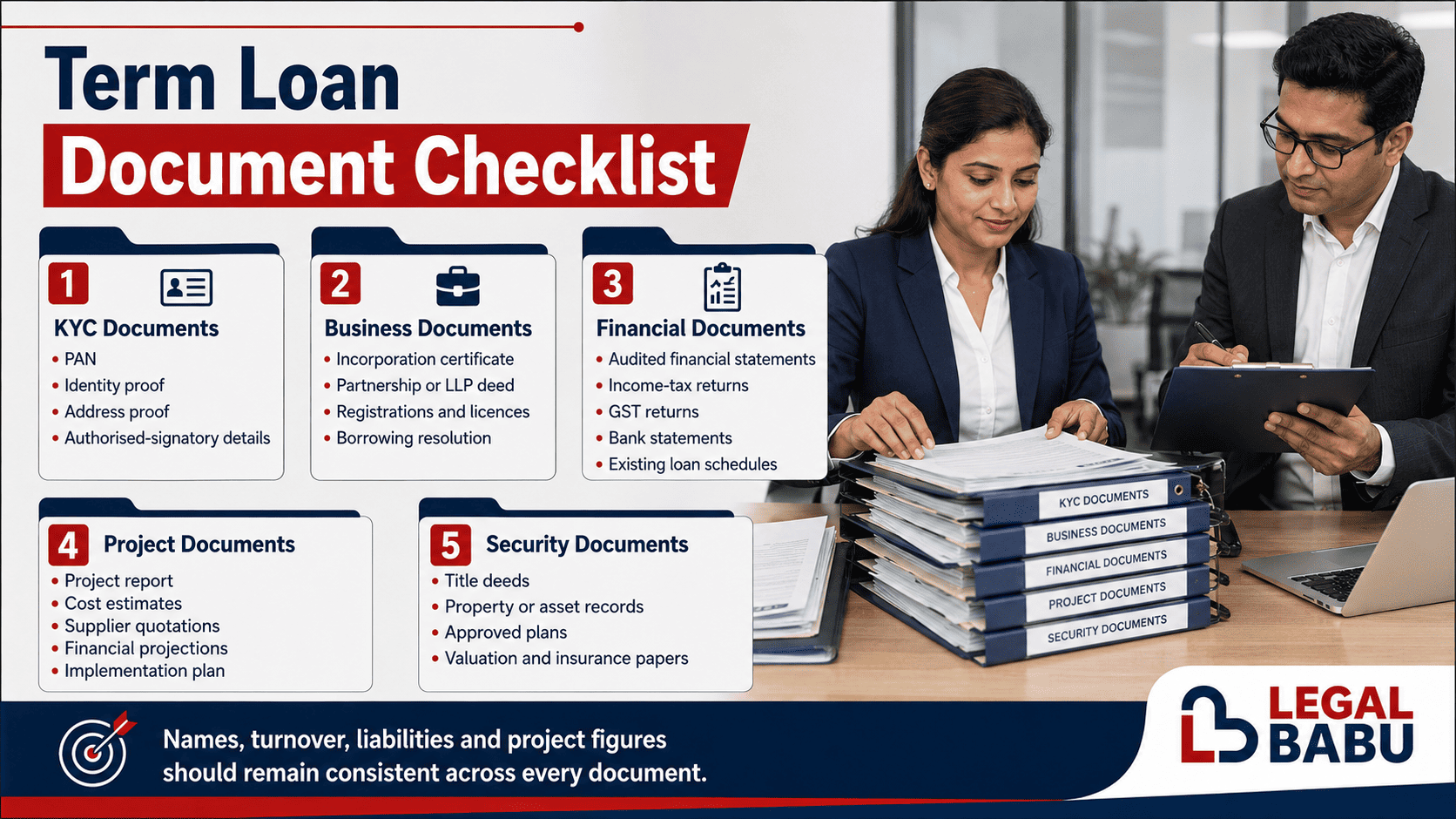
PAN, permitted identity and address proof, photographs and authorised-signatory details |
|
Entity records |
Incorporation certificate, partnership or LLP deed, constitutional documents, registrations and licences |
|
Borrowing authority |
Board or partner resolution and authority letter, as applicable |
|
Financial records |
Audited balance sheets, profit and loss accounts, cash-flow statements and current provisional figures |
|
Tax records |
Income-tax returns, GST returns and relevant reconciliations |
|
Banking and debt |
Bank statements, existing sanction letters, repayment schedules and facility conduct |
|
Project evidence |
Project report, cost estimates, supplier quotations, implementation plan and projected financials |
|
Security papers |
Title deeds, approved plans, tax receipts, asset details, valuation and insurance records, where required |
|
Scheme papers |
Udyam certificate, category proof or scheme-specific declarations, where applicable |
Figures must agree across financial statements, tax returns, bank statements and the project report. Unexplained differences invite queries.
Read more: Understand how to prepare a project report in India for a structured assessment of project cost, feasibility and projected performance.
What Does a Term Loan Cost?
The interest rate alone does not show the complete cost. Pricing reflects risk, benchmark, spread, tenure, security and guarantee cover.
|
Cost item |
What to verify |
|
Interest |
Fixed or floating basis, benchmark, spread, reset frequency and default consequences |
|
Processing charge |
Percentage or fixed amount, applicable tax and refundability |
|
Legal and valuation expense |
Who appoints the professional and who bears repeat costs |
|
Documentation and stamp duty |
State-specific amount and timing |
|
Insurance |
Asset or borrower cover, premium and whether it is optional or required |
|
Guarantee fee |
Applicability under a credit-guarantee scheme and payment responsibility |
|
Prepayment charge |
Part-payment, foreclosure, lock-in and fixed-versus-floating conditions |
|
Penal charge |
Trigger, calculation method and treatment of missed instalments |
How to Apply for a Term Loan
A well-sequenced application reduces avoidable clarification rounds.
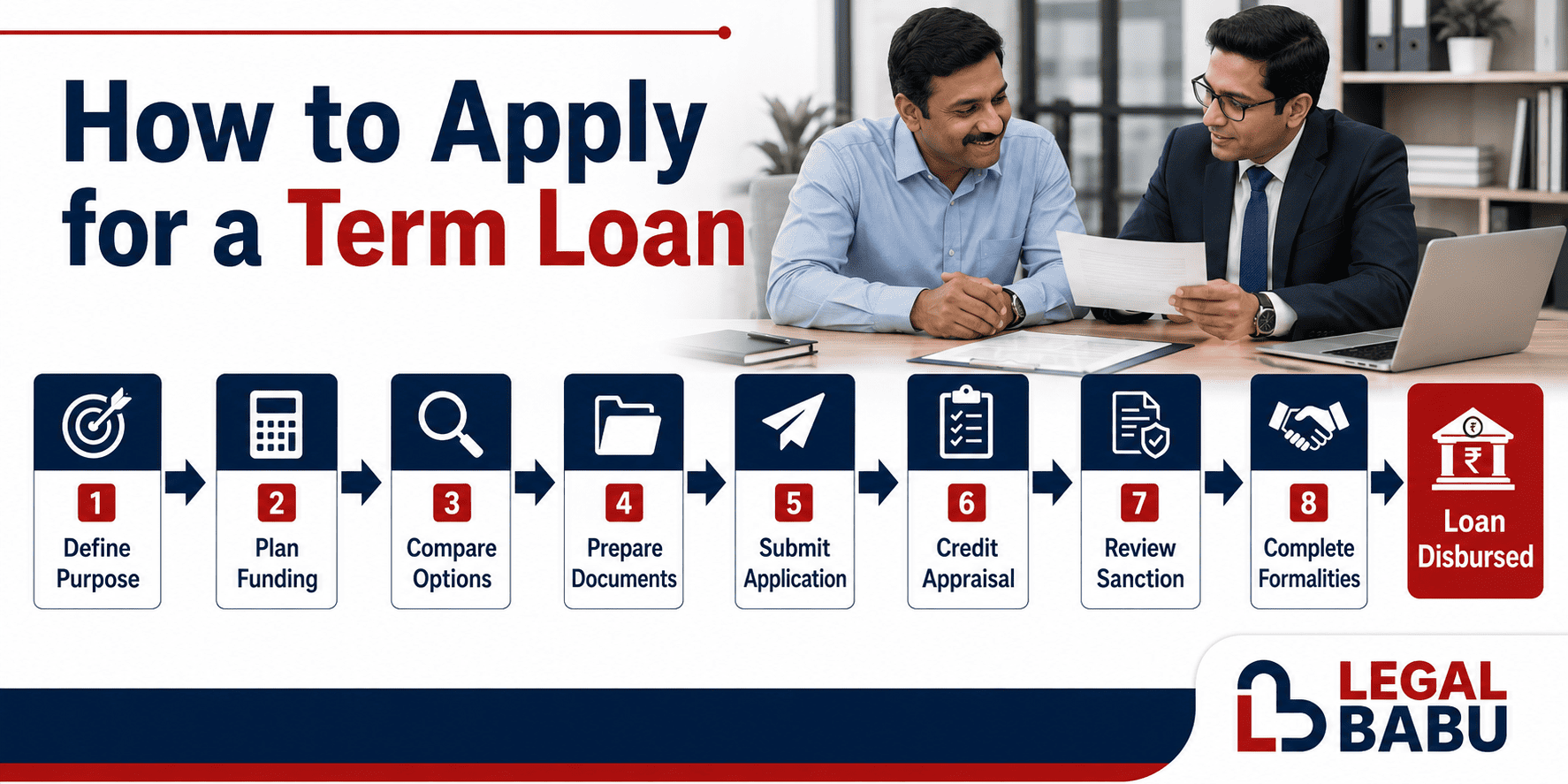
Define the end use
State what will be bought or built, its cost, completion date and commercial benefit. Separate asset costs from operating expenses.
Estimate the funding mix
Calculate the request, promoter contribution, confirmed subsidy and working-capital requirement. Do not count an unapproved subsidy as cash.
Select a route
Compare banks, eligible NBFCs and official schemes by purpose, security, repayment, total cost and service. Verify the lender’s status.
Prepare the file
Compile KYC, entity records, financials, tax filings, statements, quotations, security papers and a realistic project report. Keep details consistent.
Submit the application
Use the lender’s branch or official digital channel. Record the application number, documents delivered and any fee paid. Never hand original title documents to an unauthorised intermediary.
Respond during appraisal
The credit team may visit the site, verify suppliers, order legal and valuation reports, or stress-test projections. Answer with documents.
Review the sanction
Check amount, end use, rate, benchmark, margin, security, covenants, moratorium, instalments, fees, prepayment, validity and conditions. Sanction is conditional, not disbursement.
Complete documentation and disbursement
Execute agreements, create security, bring the stipulated contribution and meet conditions. Payment may go to suppliers or be released in tranches.
How Do Lenders Appraise the Proposal?
Credit appraisal asks two connected questions: is the proposed investment viable, and will the borrower generate enough cash to pay on time? Profit alone does not answer either question. Lenders examine cash accrual, existing instalments, working-capital needs, taxes, promoter withdrawals and the timing of project revenue.
Debt Service Coverage Ratio, or DSCR, compares cash available for debt service with scheduled principal and interest. Each lender may calculate it differently. Understand the proposal’s formula and test what happens if sales start later, costs rise or margins decline.
Appraisal also covers leverage, net worth, bureau reports, account conduct, related parties, industry risk and management. Collateral supports recovery but does not replace viable repayment. A government guarantee does not remove the borrower’s obligation.
Accurate accounting records make the assessment easier because turnover, margins, receivables and liabilities can be traced to supporting records.
Read more: Explore why accounting services matter for small businesses in India and which financial records should remain updated throughout the year.
Which Government-Backed Routes May Apply?
Official programmes serve different borrowers and purposes. Scheme eligibility does not compel sanction; lenders still appraise credit.
The CGTMSE credit-guarantee scheme covers eligible fund-based and non-fund-based facilities up to ₹10 crore per eligible borrower when lending is based on project viability without collateral security or a third-party guarantee. It can cover an eligible Term Loan, working capital or both. The borrower applies to a member lending institution, not directly to CGTMSE.
Under the official MUDRA offerings, categories range from Shishu up to ₹50,000 through Tarun, above ₹5 lakh and up to ₹10 lakh. Tarun Plus covers above ₹10 lakh and up to ₹20 lakh for entrepreneurs who successfully repaid a previous Tarun loan. The facility may meet eligible business requirements under lender and programme rules.
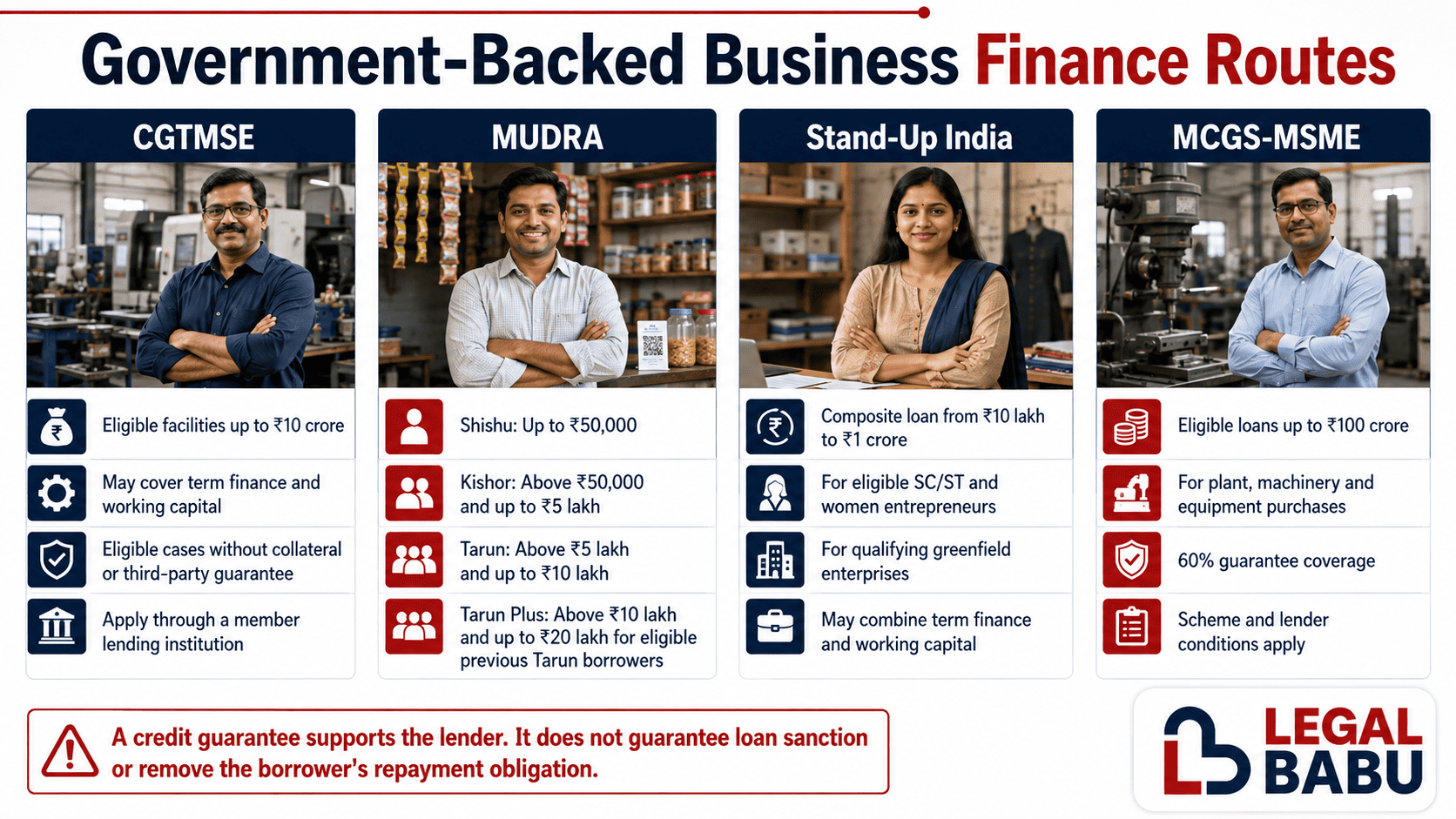
Stand-Up India provides eligible SC/ST and women entrepreneurs a composite loan of ₹10 lakh to ₹1 crore for a greenfield enterprise, including term finance and working capital. Ownership, project and borrower conditions apply.
For equipment-intensive projects, the official MCGS-MSME provides 60% guarantee coverage on eligible loans up to ₹100 crore for plant and machinery or equipment purchases. These limits describe guarantee frameworks, not assured loan amounts.
Read more: Review the complete guide to getting a collateral-free loan under CGTMSE, including eligibility, guarantee coverage, documents and the lender-led application process.
Term Loan vs Working Capital Loan
|
Point |
Term Loan |
Working-capital facility |
|
Main purpose |
Long-lived asset or defined project |
Inventory, receivables and operating cycle |
|
Drawdown |
One-time or milestone-based |
Revolving or periodically renewed, depending on product |
|
Repayment |
Scheduled over agreed tenure |
Linked to facility structure and renewal terms |
|
Evidence |
Project cost, quotations and implementation plan |
Stock, receivables, turnover and operating cycle |
|
Key risk |
Asset fails to generate projected cash |
Daily operations remain underfunded |
Some projects need both. Plan asset finance alongside raw material, wages and receivables; otherwise, completed machinery may sit idle while instalments begin.
Common Mistakes That Delay or Weaken an Application
Borrowers often request an amount before calculating project cost and repayment capacity. Aggressive first-month sales that ignore commissioning, ramp-up and seasonality also weaken the proposal.
Other mistakes include undisclosed debt, inconsistent figures, unresolved defaults, incomplete ownership records and unsupported quotations. Read covenants as carefully as the rate because restrictions may affect later decisions.
If a company secures borrowing against its assets, corporate filings may also follow. Missing post-sanction conditions can hold up disbursement even after credit approval.
Read more: Learn about the registration of a charge with the ROC, including board authorisation, Form CHG-1 and the filing process after secured borrowing.
Conclusion
A Term Loan works best when its period matches the asset’s life and instalments fit conservative cash flow. Start with a precise end use, realistic cost and confirmed promoter contribution. Organise consistent financial, tax, banking, entity and security records. Compare the annual percentage rate and contract, not merely the headline rate. Scheme eligibility and collateral never substitute for repayment capacity. Preparation cannot guarantee sanction, but it gives the lender a coherent proposal and the business a clearer view of its debt before accepting the facility.
FAQS
FAQs About Term Loan
-
What is a Term Loan used for?
It usually finances a defined asset or project, such as machinery, commercial premises, technology, vehicles, expansion or capacity creation. Permitted use depends on the sanction.
- Is collateral compulsory for a business term loan?
- What credit score is required?
- Can a new business apply?
- How long does approval take?
- Is a moratorium the same as an interest-free period?
- Can the loan be prepaid without charges?
- Does CGTMSE approve the loan directly?
- What happens after sanction?
- Can a term facility include working capital?


