Can BBB Accreditation Build More Trust in Your Business?
- by kapil
- Updated October 5, 2026
- 15 mins read
BBB Accreditation can strengthen trust when customers in the United States or Canada already consult BBB profiles before buying. BBB reports more than 170 million visits to BBB.org in 2025, showing that many consumers still use its profiles to evaluate businesses. Yet the badge is neither a government licence nor a guarantee of sales, service quality or an A+ rating. For an Indian company, the first question is not the fee but eligibility: BBB operates through local North American offices, and an India-only business should not assume it can apply.
This guide explains the BBB accreditation requirements, evidence, charges, review stages, renewal duties and practical value of becoming a BBB Accredited Business. It also separates the accreditation from BBB ratings, customer reviews and Indian statutory registrations, helping exporters, software firms and other India-based businesses decide whether the badge fits their market, legal presence and customer-acquisition strategy before committing funds upfront.
Can BBB Accreditation Really Build More Trust?
It can, but only in the right market. BBB Accreditation shows that a business has been vetted against defined conduct standards, pays annual dues and agrees to remain accountable to its local BBB. The BBB Accredited Business seal can therefore reassure a buyer who recognises BBB and checks the linked profile before placing a high-value or unfamiliar order.
The trust effect is not automatic. A badge cannot compensate for weak service, unresolved complaints, unclear contracts or poor reviews elsewhere. BBB’s own accreditation agreement states that its marks and programmes do not guarantee revenue or profit and do not amount to an endorsement of the company’s products or services.
The distinction below is essential before assessing the BBB accreditation benefits.
| Item | What It Means | What It Does Not Mean |
| BBB Accreditation | The business has been approved, pays dues and commits to BBB standards | Government approval or a compulsory business licence |
| BBB rating | BBB’s opinion of likely customer interaction, expressed from A+ to F or NR | A guarantee of reliability or performance |
| Customer review | A customer’s account of a marketplace interaction | A factor used directly in the BBB letter-grade calculation |
| Indian registration | A legal, tax, sectoral or operational registration issued under Indian rules | Automatic eligibility for North American accreditation |
Indian founders should first complete the registrations applicable to their activity. Legal formation, tax compliance and sector permissions remain separate from BBB Accreditation, so the badge must never be presented as a substitute for an Indian business licence review.
For businesses comparing trust signals, ISO 9001 QMS certification addresses quality-management systems, while BBB Accreditation assesses marketplace conduct and accountability. One should not be presented as a substitute for the other.
Can an Indian Business Become a BBB Accredited Business?
BBB’s public directory and local-office finder cover the United States and Canada, and the general application asks for a business postal code so the correct local BBB can handle the file. This makes BBB Accreditation most relevant to an Indian-owned company that has a genuine operating entity, location or accountable marketplace presence within a BBB service area.
An India-only company selling remotely to North American customers should not treat a registered-agent address, mail-forwarding address or customer base as proof of eligibility. It should ask the local BBB in writing whether that office will accept the business, which entity and locations would be covered, and what evidence of operations is required. BBB does not publish a general route promising accreditation to every overseas company.

For an Indian applicant with a North American subsidiary, the Indian parent’s records may still matter if ownership, management or related-business history forms part of the review. The safest approach is to disclose the complete group structure and avoid implying that the accreditation covers entities or locations not named in the agreement.
The Indian parent should keep its private limited company registration or LLP registration records consistent with the ownership disclosures supplied to BBB. These Indian registrations do not establish BBB eligibility by themselves.
Where the goal is broader international credibility rather than a North American consumer profile, compare the badge with relevant management-system or product business certification options. Each serves a different purpose and should be described accurately.
What Are the BBB Accreditation Requirements?
The official BBB Accreditation Standards contain eight continuing standards. A business normally needs at least six months of active selling, the required competency and trade licences, no disqualifying government action, and at least a B rating at its headquarters and company-owned locations.
| Standard | Practical Expectation |
| Build trust | Maintain a positive operating record, required licences and at least a B rating |
| Advertise honestly | Follow lawful and ethical advertising practices and amend unsupported claims when requested |
| Tell the truth | Describe products, services and material terms accurately |
| Be transparent | Disclose ownership, location, contact details, total price, recurring commitments and refund terms |
| Honour promises | Perform contracts, commitments and representations |
| Be responsive | Answer complaints professionally, provide evidence and join requested dispute-resolution processes |
| Safeguard privacy | Explain data practices, apply information security management controls and respect contact preferences |
| Embody integrity | Deal in good faith and avoid conduct that undermines marketplace trust |
These BBB accreditation requirements continue after approval. A business must cooperate with information requests, correct misleading advertising, address complaint patterns and keep relevant licences current. An applicant that meets the rules only on paper but lacks a structured complaint management system may struggle to retain accreditation.
An Indian business can use a supplier and vendor assessment to review its records before applying. It is not mandatory, but it may expose mismatched names, expired permissions and unsupported claims that delay verification.
Which Documents and Records Should You Prepare?
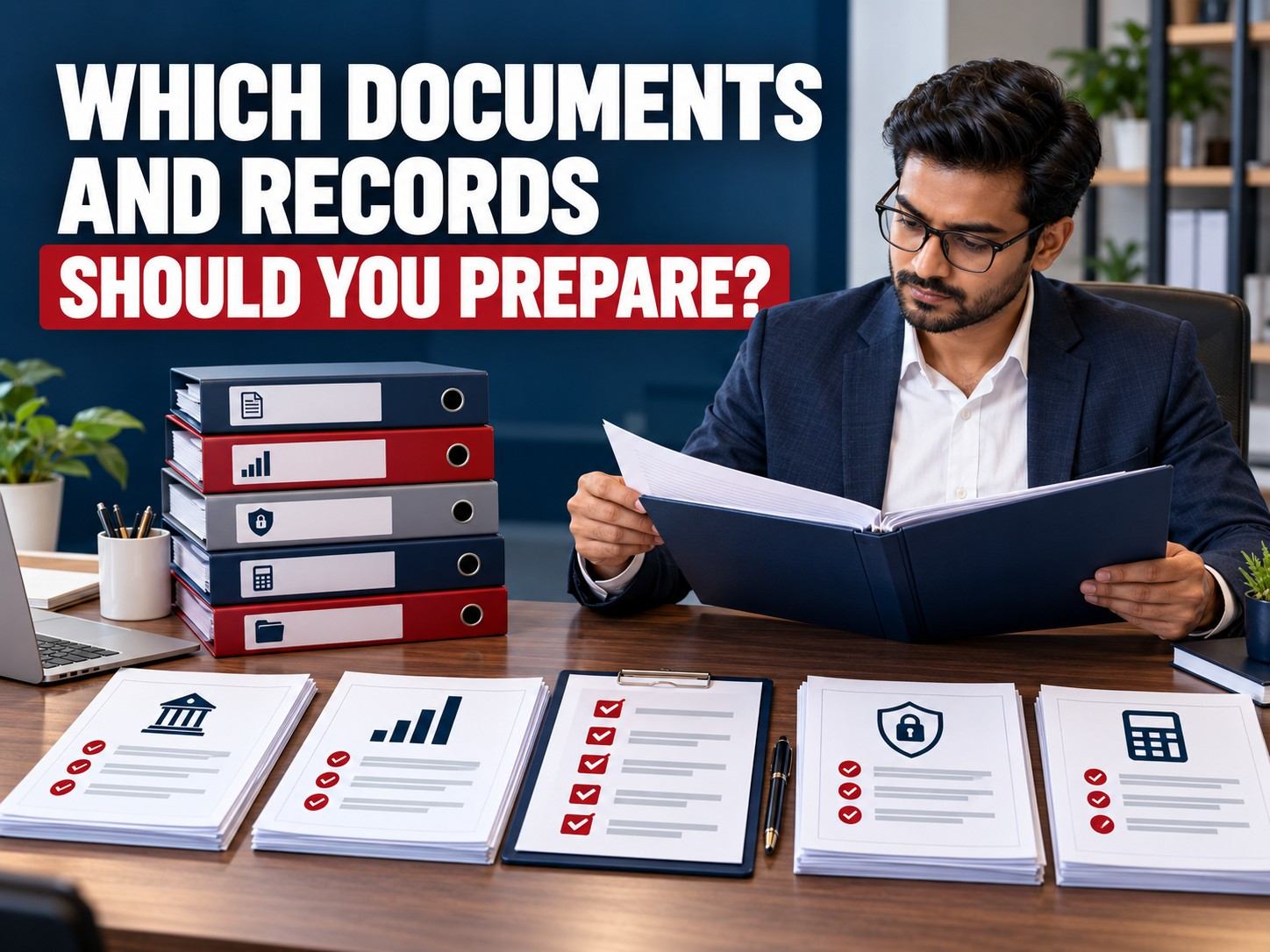
BBB’s current preparation guidance identifies business licences for every state of operation, financial records showing at least six months of activity, the current business plan, professional licences, relevant tax identification numbers and an existing BBB listing. The application also requests operational information such as employee count and annual revenue.
| Evidence | Why BBB May Need It |
| Entity and ownership details | To confirm the legal business, controllers and related operations |
| Business and professional licences | To verify permission and competency requirements in each service area |
| Six months of financial or operating records | To establish an active marketplace track record |
| Current business plan | To understand the activity and representations being made |
| Tax identification details | To match the entity to its service area |
| Website privacy and security information | To assess handling of customer and sensitive data |
| Contracts, refund terms and recurring-payment disclosures | To test transparency and promise-keeping |
| Complaint responses and supporting records | To assess responsiveness and good-faith resolution |
Treat these BBB accreditation requirements as a baseline because the exact request can vary by local BBB and industry. Keep legal names, addresses, website disclosures and licence details consistent. Udyam registration guidance may help an eligible Indian MSME formalise its records, but it does not replace BBB checks.
How Does the BBB Accreditation Process Work?
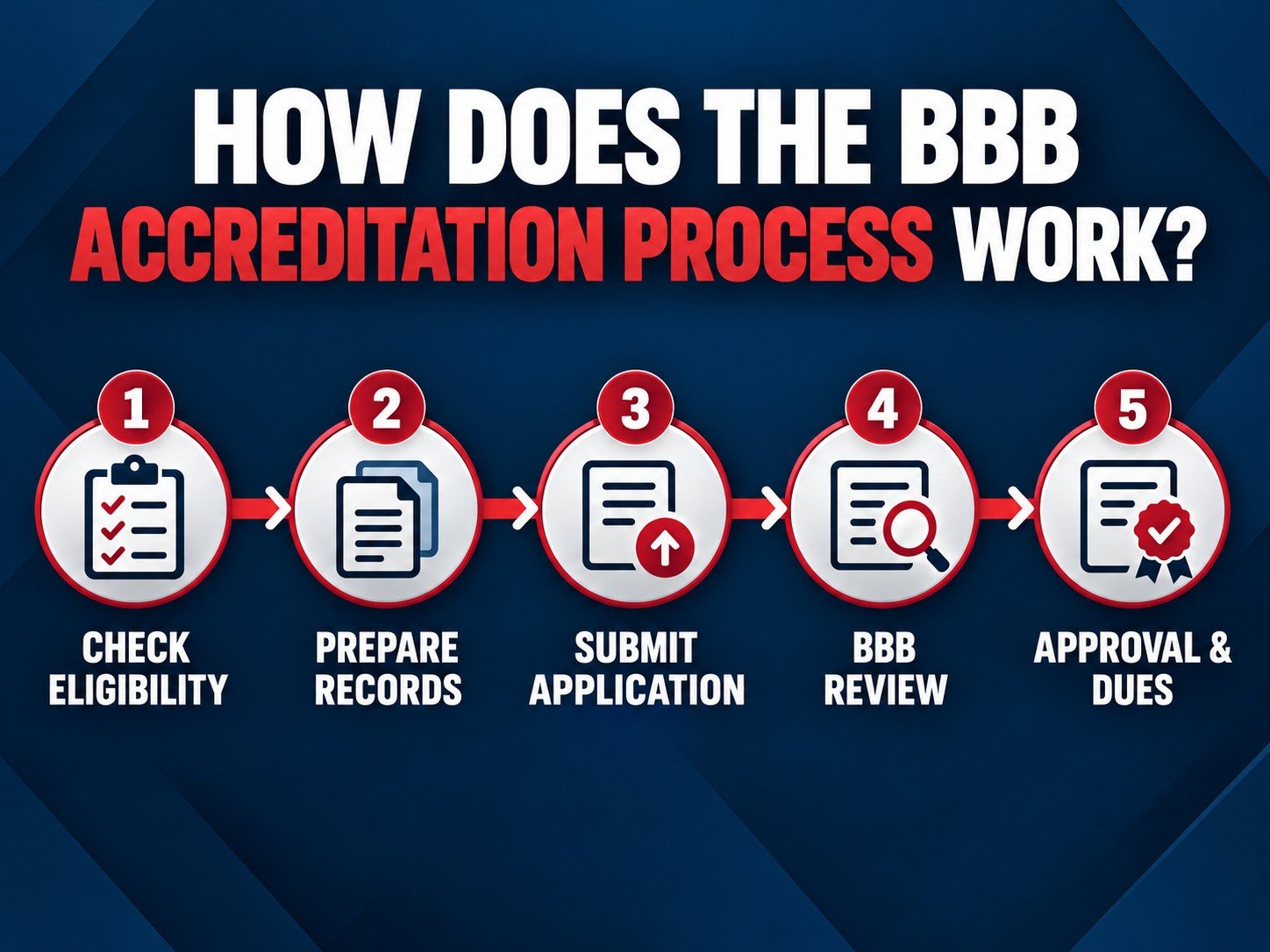
Businesses asking how to get BBB accredited should treat the application as a conduct review, not a badge purchase. BBB’s official how to get BBB accredited guidance covers preparation and eligibility, while the wider BBB accreditation process includes local verification and a board decision.
1. Confirm the Service Area and Applicant
Identify the legal entity, physical locations and local BBB office that would handle the application. An Indian-owned group should obtain written confirmation that the proposed North American operation falls within that office’s service area before paying.
2. Review the BBB Profile and Standards
Check the business’s BBB profile, rating, complaint history and ownership details for errors. Resolve eligible complaints in good faith and compare current practices with all eight standards rather than focusing only on the rating.
3. Assemble the Supporting Evidence
Collect entity, licensing, financial, tax, privacy and operating records before opening the form. Align the legal name and address across all documents, and prepare explanations for government action, complaint patterns or recent ownership changes.
4. Complete the Online Application
BBB says its application usually takes 10 to 20 minutes, provided the information is ready. Once started, the applicant has 24 days to edit and submit it, and it will need to provide business statistics including employee count and annual revenue.
5. Respond to Local Verification
The local BBB may request clarification, supporting documents or changes to advertising and disclosures. A prompt, complete response is important because the BBB accreditation process tests transparency and responsiveness as well as formal eligibility.
6. Await the Board Decision
BBB staff vet the application against the standards and recommend approval or denial to the local board or its authorised committee. The outcome may be approval, a hold for more information or denial with an explanation and, in some cases, an opportunity to correct the issue.
7. Pay Dues and Use the Seal Correctly
Approved businesses must keep dues current and follow the trademark rules supplied by the local BBB. Online use generally needs to link the seal to the correct BBB Business Profile, while any change in rating or status should be reflected without delay.
Permission to display the BBB seal does not protect the applicant’s own business name or logo in India. Indian trademark registration is a separate brand-protection process.
What Does BBB Accreditation Really Cost?
BBB does not publish one universal national fee. It states that a BBB Accredited Business pays an annual dues investment and that the amount depends on factors including business size. Local BBBs can use different schedules, billing cycles, introductory offers and optional paid programmes, so a fee quoted for another state or company should not be copied into a budget.
Before payment, request a written quotation covering:
- The legal entity and locations included
- The full annual dues in US or Canadian dollars
- The employee count or revenue band used
- The billing frequency and first charge date
- Any tax, joining charge or optional programme fee
- The refund position if the application is denied
- The renewal, price-change and cancellation terms
- The treatment of prepaid dues after voluntary termination
BBB’s central application warns that a local office may collect dues when the application is submitted. Some published local agreements say application fees are refunded if accreditation is denied, while paid dues after approval are non-refundable. Because those terms vary by location, rely only on the agreement and quotation issued to your business.
Keep the BBB budget separate from Indian growth programmes. Startup India recognition follows an Indian eligibility framework and cannot purchase or guarantee BBB approval.
How Long Does Approval Take and How Is Status Maintained?
The form itself may take about 10 to 20 minutes, but review is not instant. BBB’s current guidance says local evaluation can take from a few days to a few weeks depending on the region, the completeness of the records and whether questions remain. BBB does not publish a guaranteed approval period.
Accreditation remains active while the business pays its dues and continues to meet the standards. Renewal is therefore more than another payment: licences, advertising, privacy practices, complaint handling, promises and rating eligibility must remain in order.
Cancellation and refund rules should be read in the local agreement before signing. Published local forms are not identical. They may differ on the initial commitment, notice period, billing cycle and refund treatment, and the business must stop using BBB marks once accreditation ends.
Which BBB Accreditation Benefits Are Realistic?
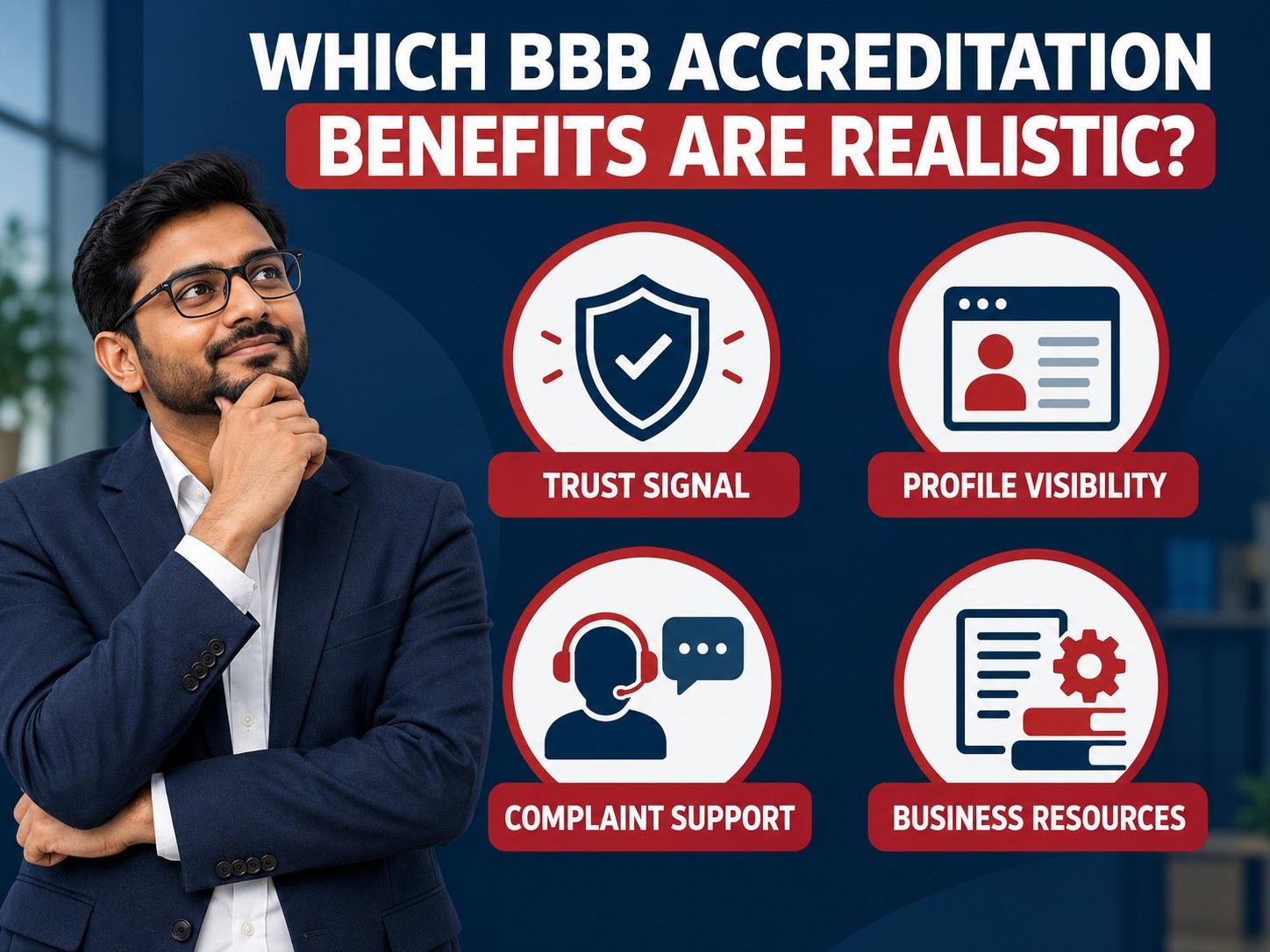
The most defensible BBB accreditation benefits are the licensed seal, accredited profile status, directory visibility, complaint-resolution channels and certain business resources. BBB also offers profile-based quote requests in participating contexts.
| Potential Benefit | Commercial Limitation |
| Recognisable trust seal | Recognition is strongest where customers already use BBB |
| Detailed BBB profile | Prospects may still prioritise Google reviews, references or sector credentials |
| Complaint-resolution framework | BBB cannot force either party to settle |
| Differentiation from non-accredited rivals | A non-accredited rival can still hold a strong BBB rating |
| Business tools and local offerings | Availability and value vary by local BBB |
BBB’s survey of 13,000 accredited businesses found that four out of five respondents would recommend accreditation and nearly 90% said the seal added value. These BBB accreditation benefits are first-party findings, not independent proof of return. Measure profile views, enquiries and conversions before renewal.
What Can Delay, Deny or End Accreditation?
Common risks follow directly from the BBB accreditation requirements and application guidance:
- Operating for less than six months without an eligible prior track record
- Holding a rating below B at the headquarters or a company-owned location
- Unresolved complaints or repeated failure to respond professionally
- Expired, missing or mismatched competency licences
- A false or unverifiable business address
- Unclear ownership, pricing, refund or recurring-payment disclosures
- Unsupported advertising claims or misuse of BBB trademarks
- Significant government action inconsistent with BBB’s ethical principles
- Incomplete records or slow answers to verification questions
- Non-payment of dues or failure to maintain the standards after approval
Businesses should correct the underlying issue rather than merely rewriting the application. A company that misstates its location, hides related entities or uses the seal before approval creates a larger trust problem than the badge can solve.
How Should an Indian Business Decide If It Is Worthwhile?
BBB Accreditation is more likely to justify its cost when the applicant has a verifiable North American presence, serves consumers who check BBB and can measure profile leads. It is less persuasive for an India-only operation, a market unfamiliar with BBB or a company expecting the seal to replace service quality.
Use this decision check before starting:
| Question | Proceed When | Pause When |
| Is the entity within a BBB service area? | The local BBB confirms eligibility in writing | The business relies only on an Indian or mail-forwarding address |
| Do buyers recognise BBB? | Customers check BBB during vendor selection | The target market uses other trust signals |
| Are records consistent? | Entity, licences, ownership and website details match | Addresses, names or permissions conflict |
| Can value be measured? | Tracking is set for profile traffic and qualified enquiries | Approval is treated as an unmeasured branding expense |
| Can standards be maintained? | A responsible person owns complaints and renewals | No one monitors disputes, claims or privacy disclosures |
For an India-based exporter, BBB Accreditation may sit alongside IEC code registration, Indian AEO registration and a corporate due diligence review, but BBB Accreditation itself does not authorise exports. Before learning how to get BBB accredited, confirm that the badge has a measurable role in the target market.
Conclusion
BBB Accreditation can build trust when a qualifying business serves a North American market that recognises the seal and already meets the conduct standards behind it. Its value lies in visible accountability, a verified profile and disciplined complaint handling, not guaranteed sales.
The practical answer to how to get BBB accredited starts with confirming local eligibility, the covered entity and locations, written dues and cancellation terms, and measurable commercial value. A BBB Accredited Business must then keep its licences, advertising, privacy practices, promises and complaint responses compliant.
FAQs About BBB Accreditation
Does a negative customer review directly lower a BBB rating?
No. BBB states that customer reviews are not used in its letter-grade calculation. Complaints are different because complaint volume, responses, resolution efforts and patterns can affect the rating, so a BBB Accredited Business should manage both channels carefully. Keep reviews separate from formal complaint responses.
Can a business pay BBB to receive an A+ rating?
No. Accreditation dues do not buy a rating or remove a complaint, and accredited and non-accredited companies are rated using the published rating elements. Paying the annual dues is a condition of accreditation, not a payment for an A+ grade. The rating can change as new information arrives.
May a company display the BBB seal while its application is pending?
No. The seal is a licensed trademark available only after approval and subject to the applicable BBB agreement and usage policies. Displaying it early or after status ends can trigger an advertising issue and undermine the BBB accreditation application. Wait for formal approval before marketing accreditation.
What must happen to the seal after accreditation ends?
The business must stop using BBB trademarks and update its website, advertising and other digital media to reflect its current status. Local agreements may also require destruction or return of branded physical items, so the signed terms should guide the offboarding process. Plan this cleanup before the termination date.
Does one approval automatically cover every branch and related company?
Do not assume it does. BBB standards require at least a B rating at the headquarters and all company-owned locations, while local agreements can limit where the seal may be used. Ask the local BBB to name every covered entity and location in writing. Related companies may require separate review or approval.
Does BBB endorse the products or services of an accredited company?
No. BBB accreditation agreements state that accreditation and trademark use do not confer endorsement or approval of the company’s products or services. The seal communicates accredited status and a commitment to standards, not a product warranty. Customers should still assess the underlying offer.
Can BBB force a customer and business to settle a complaint?
No. BBB acts as a neutral intermediary and does not hold government or policing power. However, failure to respond, resolve issues in good faith or honour a mediation settlement or arbitration decision can harm the business’s standing. Its role is facilitation rather than enforcement.
Are BBB dues treated as a charitable donation?
BBB’s official FAQ says the dues are not deductible as charitable contributions for US federal tax purposes. Any Indian or cross-border tax treatment depends on the paying entity and applicable law, so obtain advice from the business’s tax professional rather than relying on the accreditation invoice alone. Retain the invoice and agreement for records.
What happens if an accredited business merges or changes ownership?
Published BBB agreements require disclosure of a merger or acquisition and state that the resulting business may need to qualify again. Notify the local BBB before using the seal under a new name, owner or entity, and obtain written confirmation of continued status. A new application or investigation may follow.
Does BBB publish profiles only for accredited companies?
No. BBB publishes profiles for accredited and non-accredited businesses, and each profile identifies the accreditation status. A company can therefore appear in the BBB directory without completing the BBB accreditation process or paying annual accreditation dues. Non-accreditation alone is not a negative finding.
You may also like
Can PAIMA Membership Expand Your Global Moving Network?
PAIMA membership can help an established Indian moving company build relationsh