
Table of Content
- What is GDP Certification?
- Who Needs GDP Certification?
- Key Principles of Quality Management in GDP Certification?
- Key Requirements of GDP Certification?
- What makes GDP Certification different from GMP Certification?
- Why Choose GDP Certification?
- Documents required for GDP Certification?
- Process for Obtaining GDP Certification?
- Consequences of Not Having a GDP Certification?
- The bottom line?
What is GDP Certification?
GDP (Good Distribution Practice) Certification is a highly recognised standard in the medical field. It governs the regulation, distribution, and administration of medicinal products intended for human use. It ensures that the products are handled effectively throughout their life cycle, safe to use, and premium.
GDP certification combined with ISO 13485, GMP, ISO 45001, and ISO 14001 enhances the overall production quality, distribution efficacy, and legal compliance.
Who Needs GDP Certification?
GDP certification is essential for:
- Pharmaceuticals manufacturing and distribution firms
- Pharmaceuticals wholesale traders
- Third-party pharma logistics firms
- Cold-chain management for healthcare products
- Medical products export or import firms
In short, businesses or firms dealing with the storage, transport, or distribution of medicines require GDP certification to maintain pharmaceutical integrity.
What are the Key Principles of Quality Management in GDP Certification?
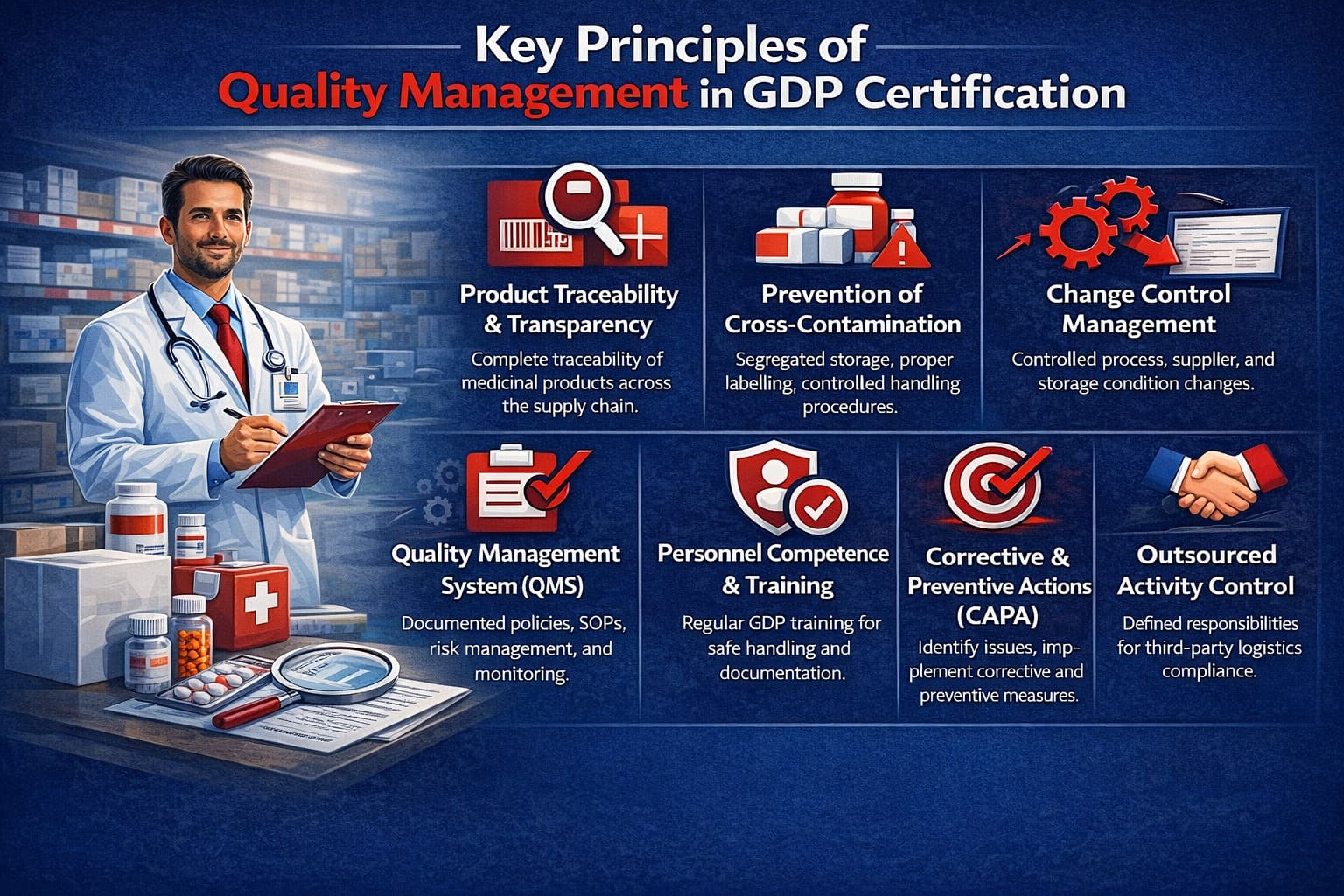
The following are the key principles of quality management in GDP Certification:
- Product Traceability and Transparency: Ensuring complete traceability of medicinal products throughout the supply chain.
- Prevention of Cross-Contamination: Preventing contamination, mix-ups, and product deterioration by segregating storage areas, proper labelling, and controlled handling procedures.
- Change Control Management: Effectively managing the changes in process, suppliers, storage conditions, or transportation system to ensure that the modification does not affect product quality and compliance status.
- Quality Management System: Preparing and maintaining a well-documented quality management system, including quality policies, operation procedures, risk management, and continuous monitoring.
- Personal Competence and Training: Providing sufficient training to the employees to ensure that they understand handling, storage, documentation, and transportation requirements.
- Corrective Actions: Corrective and preventive actions should be taken frequently to ensure proper record maintenance, reduce product failure, improve quality and ensure effective distribution operations.
- Outsourced Activity Control: When activities are outsourced, responsibilities must be clearly defined to ensure that the third-party logistics comply with the GDP standards.
What are the Key Requirements of GDP Certification?
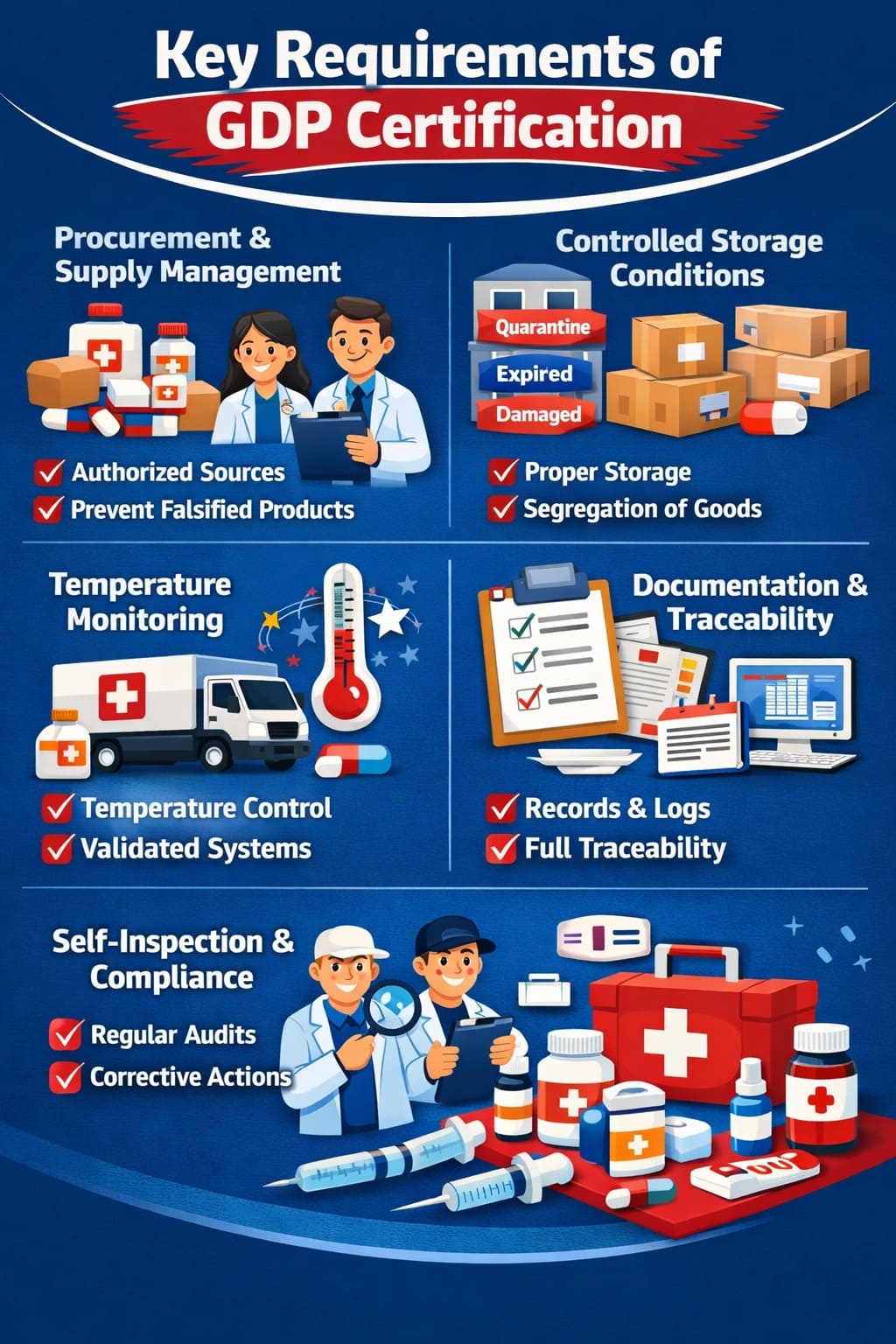
Here are the key requirements for Good Distribution Practice (GDP) Certification:
1. Procurement and Supply Management: The medicinal products must be obtained or procured from authorised manufacturers, importers or licensed manufacturers. This ensures prevention of falsified or unauthorised products entering the supply chain.
2. Controlled Storage Conditions: Products must be stored under specified environmental conditions as per manufacturer labelling requirements. Moreover, expired, damaged, recalled, returned, or quarantined products should be kept separate to prevent mix-ups and unauthorised distribution.
3. Temperature Monitoring and Control: GDP requires validated temperature monitoring systems for warehouses and transport vehicles. Temperature-sensitive products must be stored and transported within defined ranges.
4. Documentation and Traceability: the manufacturer must prepare accurate records of receipt, storage, and distribution. Documentation must include invoices, delivery notes, temperature logs, complaints, and recall records to facilitate audit inspection and verification.
5. Self-Inspection and Regulatory Compliance: Regular internal self-inspections must be conducted to verify GDP compliance. Corrective and preventive actions must be implemented for identified deficiencies and for ensuring compliance.
What makes GDP Certification Different from GMP Certification?
GDP (Good Distribution Practice) is quite different from GMP (Good Manufacturing Practices) in several aspects. Some of them are:
|
Aspect |
GDP (Good Distribution Practice) |
GMP (Good Manufacturing Practices) |
|
Main Focus |
Safe storage and transportation of medicines |
Safe and quality manufacturing of medicines |
|
Stage Covered |
Post-manufacturing |
Production stage |
|
Applies To |
Pharmaceutical manufacturers and production units |
manufacturers in pharmaceuticals, food and beverages, medical devices, and cosmetics |
|
Objective |
Maintain product integrity throughout the supply chain |
Ensure consistent product quality and safety at production |
|
Risk Prevention |
Prevents contamination, defects, and batch failures |
Prevents damage, mix-ups, theft, counterfeit circulation |
|
Regulatory Focus |
Supply chain compliance and documentation |
Manufacturing compliance and quality assurance |
Why Choose GDP Certification?
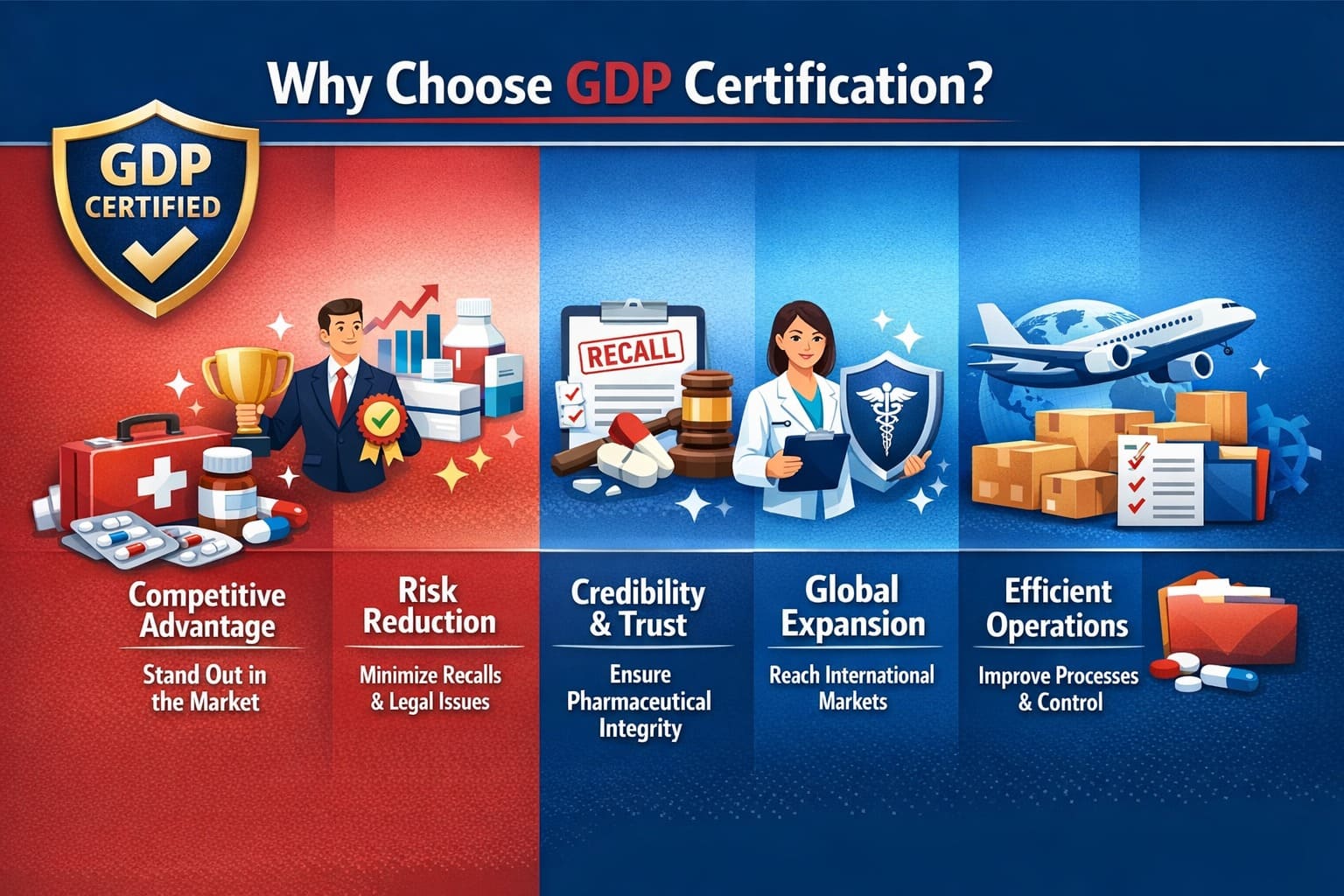
Choosing a GDP certification ensures that the distribution practices, procedures, and operations are consistent, transparent, and timely. This certification not only ensures regulatory compliance but also adds value to your core business activities. Here’s why you should choose GDP certification:
1. It provides competitive advantages and helps distinguish your product from non-certified products.
2. It reduces the risk of product recalls, legal failures, and damage to brand reputation by reflecting that all the GDP standards are complied with.
3. GDP certification reflects commitment towards pharmaceutical integrity and helps the brand in building its credibility and reputation.
4. It facilitates global expansion and allows manufacturers and businesses to represent themselves in the global market.
5. It improves operational efficiency and documentation control systems
What are the Documents required for GDP Certification?
The following documents are required to successfully obtain GDP certification:
- Organizational & Legal Documents
- System Manuals and Quality Manual
- Quality Management System (QMS) & SOPs
- Warehouse Layout & Facility Documents
- Supplier & Customer Qualification Records
- Technical Documentation
- Temperature Monitoring Records
- Risk Assessment Reports
- Complaint & Recall Procedures
What is the Process for Obtaining GDP Certification?
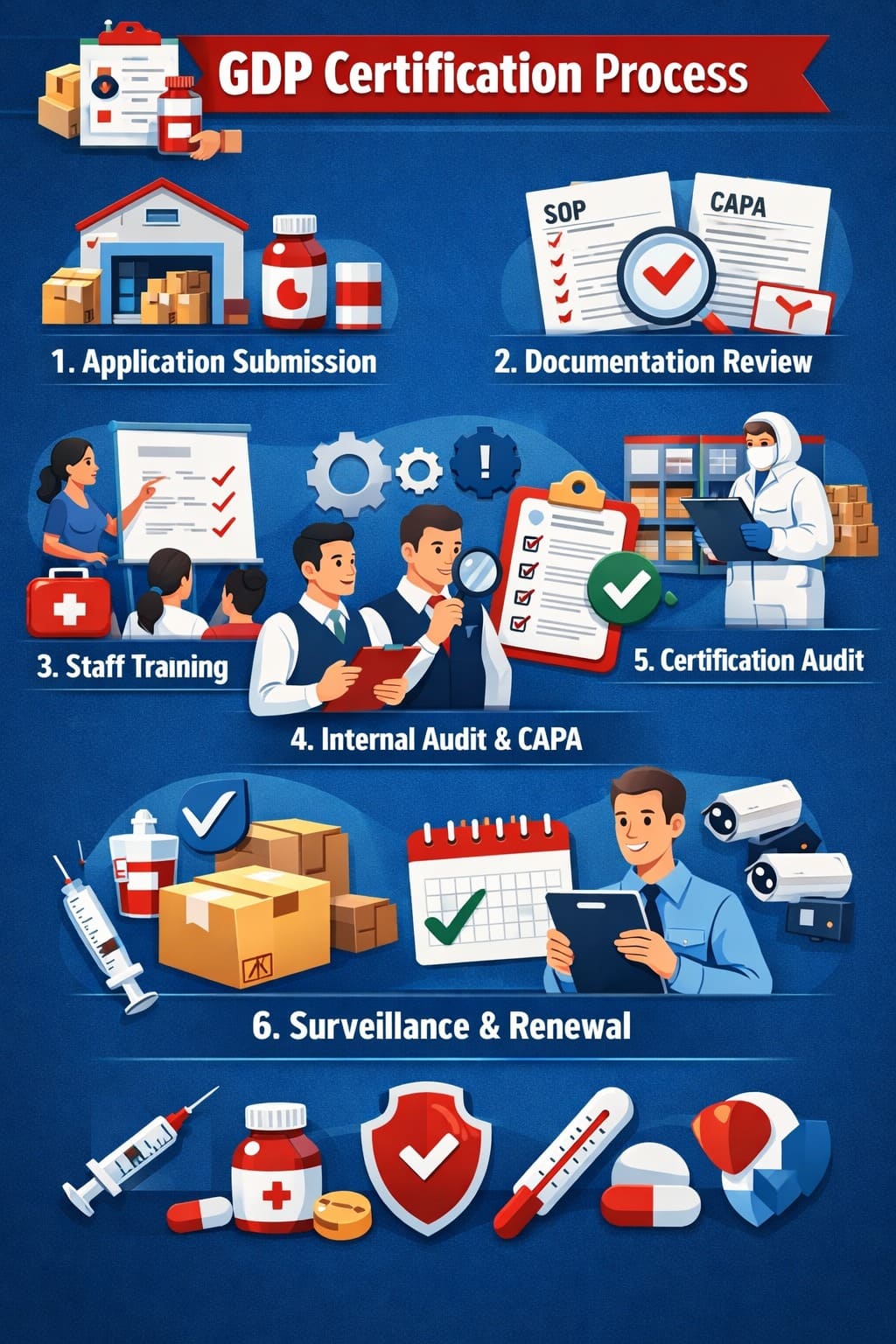
The process for obtaining GDP certification involves a structured approach to ensure compliance with regulatory distribution requirements. Here are the key steps you need to follow:
1. Application Submission
The organisation begins by submitting a formal application to an accredited certification body. The application includes company details, scope of distribution activities, product categories, warehouse locations, and regulatory licenses.
2. Documentation Preparation and Review
The organisation prepares and updates all required GDP documentation, including quality manuals, SOPs, risk assessments, temperature control procedures, deviation handling processes, CAPA records, and recall procedures. The certification body reviews these documents to verify compliance readiness before proceeding to the on-site audit stage.
3. Training and Personnel Qualification
The organisation must provide training to its employees. Training should include handling procedures, hygiene practices, documentation control, complaint management, and emergency response.
4. Internal Audit and Corrective Actions
Before the external audit, the organisation conducts an internal audit to identify non-conformities and compliance gaps. Corrective and preventive actions (CAPA) are implemented to address identified issues. Management review meetings are conducted to evaluate system effectiveness and ensure full readiness for certification assessment.
5. Certification Audit and Approval
The certification body conducts a formal audit, including document verification and on-site inspection. If compliance is demonstrated and all the legal requirements are complied with, the accredited certification body grants the GDP certification.
6. Surveillance Audit and Renewal
After certification is granted, the certification body conducts periodic surveillance audits to ensure continued compliance with GDP requirements. These audits verify ongoing compliance and implementation of procedures, documentation control, training, and facility conditions.
What are the Consequences of Not-Having a GDP Certification?
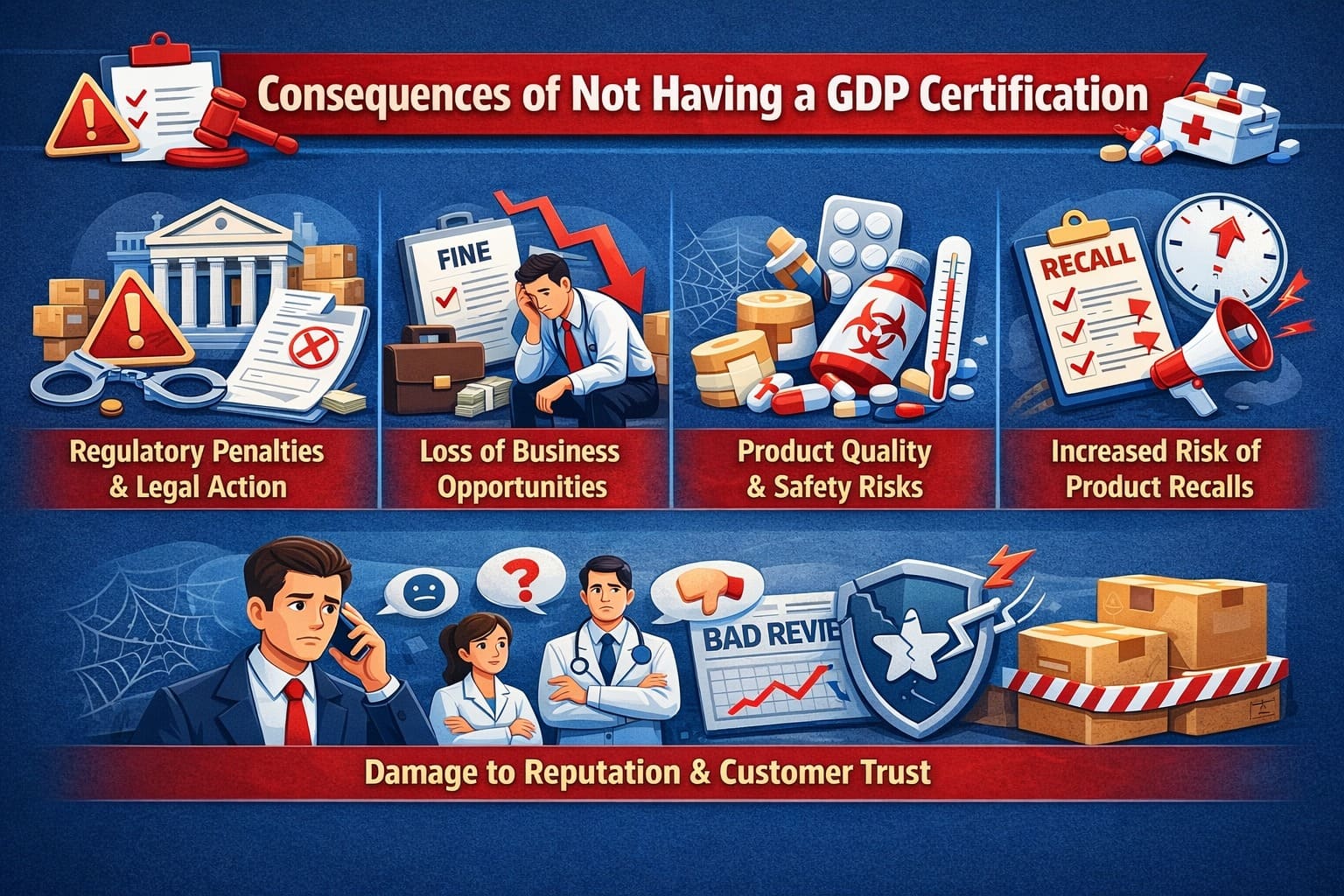
Failure to obtain GDP certification can significantly impact pharmaceutical distributors. Without this certification, organisations may struggle to demonstrate compliance with regulatory distribution standards. Other consequences include:
- Regulatory Penalties and Legal Action: Non-compliance may result in fines, license suspension, product seizure, or legal proceedings by regulatory authorities.
- Loss of Business Opportunities: Many manufacturers and healthcare organisations require GDP-certified distributors. Lack of certification can lead to contract loss and restricted market access.
- Product Quality and Safety Risks: Improper storage or transportation conditions may compromise medicinal product quality, leading to deterioration, contamination, or reduced effectiveness.
- Increased Risk of Product Recalls: Weak traceability and documentation systems can result in delayed recalls, higher financial losses, and regulatory scrutiny.
- Damage to Reputation and Customer Trust: Non-certified organisations may be perceived as unreliable, reducing credibility among clients, partners, and regulatory authorities.
Apply for GDP Certification with Confidence!
Obtaining GDP certification strengthens your pharmaceutical distribution system and ensures regulatory compliance. By implementing structured procedures, proper documentation, and controlled storage practices, your organisation can enhance product integrity and market credibility. You can start your GDP certification journey today with us to secure operational excellence and long-term business growth.
FAQS
Have some questions about GDP Certification?
We have got you covered:
-
How long does GDP certification take?
GDP certification typically takes three to six months depending on organisational readiness.
- What is the validity of GDP certification?
- Does GDP certification require training?
- What is the cost of GDP certification?
- Is GDP certification mandatory?
- Can small distributors obtain GDP certification?
- Is GDP certification applicable to transporters?
- Can GDP certification be revoked?
- What is the role of management in GDP certification?
- Does GDP certification improve business credibility?
- Can GDP certification support international trade?
- What infrastructure is required for GDP certification?
- Does GDP certification require risk management?
- How does GDP certification protect product quality?
- Is documentation essential for GDP certification?
- Can GDP certification reduce recalls?
- Can GDP certification increase customer trust?
- Can startups apply for GDP certification?
- Can GDP certification improve supply chain efficiency?
- Does GDP certification cover cold chain products?


