
TDS Filing in India: Complete Guide to Process, Forms & Due Dates
TDS Filing in India is an essential part of the country’s tax compliance system. Tax Deducted at Source (TDS) ensures that tax is collected by the government at the time income is generated rather than waiting until the end of the financial year.
Under this system, the payer deducts a certain percentage of tax before making payments such as salary, rent, professional fees, interest, or contractor payments. The deducted tax is then deposited with the government and reported through TDS returns.
The government introduced TDS to improve income tax collection efficiency and reduce tax evasion. It helps maintain a steady flow of revenue to the government while ensuring taxpayers contribute gradually.
Businesses, employers, and organizations must deduct and report TDS accurately and on time. Failure to comply may lead to penalties, interest charges, and compliance issues.
Understanding taxation policies is important for businesses because government tax reforms directly affect compliance rules. Recent policy updates explained in Budget 2026 tax changes highlight how financial regulations can influence deductions, reporting obligations, and tax planning for businesses and individuals.
What is TDS and How Does It Work?
Tax Deducted at Source (TDS) is a mechanism under the Income Tax Act where tax is deducted directly from payments made to individuals or businesses. Instead of the taxpayer paying the full tax amount at year-end, a portion is deducted during the payment process.
This system ensures the government receives tax revenue throughout the year.
How the TDS Mechanism Works
- The payer makes a payment, such as salary, rent, or professional fees.
- A specified percentage of tax is deducted before payment.
- The deducted amount is deposited with the government.
- The payer files a TDS return to report the deduction.
Businesses must deduct tax based on specific rates defined under the Income Tax Act. These rates vary depending on the type of payment and are updated periodically. To understand the latest deductions applicable for businesses and employers, refer to the TDS rate chart for FY 2025–2026.
Common Examples of TDS
| Payment Type | TDS Section | Example |
| Salary | Section 192 | Employer deducts tax before paying salary |
| Professional Fees | Section 194J | Consultant payments |
| Rent | Section 194I | Office rent payments |
| Contractor Payments | Section 194C | Payments to contractors |
TDS rules and deductions may also change depending on government policies and budget announcements. For example, tax reforms announced in the Union Budget can influence TDS structures and deductions.
Who is Required to Deduct and File TDS?
Not every individual is responsible for deducting TDS. The responsibility typically falls on entities that make payments exceeding certain thresholds.
Entities Required to Deduct TDS
The following entities are generally required to deduct and file TDS returns:
- Companies
- Partnership firms
- LLPs
- Employers paying salaries
- Government departments
- Trusts and societies
- Businesses making contractor or professional payments.
Many startups and organizations that register as companies or LLPs must comply with TDS regulations from the beginning.
Businesses operating as registered entities must comply with tax regulations, including TDS deduction and filing. For example, companies registered as a private limited company, limited liability partnership (LLP), or one person company are typically required to deduct TDS when making certain payments.
Non-profit entities such as Section 8 companies or organizations formed through trust registration may also have TDS obligations depending on the nature of payments they make.
What Are the Different Types of TDS Returns?
TDS returns must be filed quarterly using specific forms depending on the nature of payments.
TDS Return Forms
| Form | Purpose |
| Form 24Q | TDS on salary |
| Form 26Q | TDS on non-salary payments |
| Form 27Q | TDS on payments to non-residents |
| Form 27EQ | TCS return |
These forms contain details such as deductor information, deductee information, challan details, and TDS amounts deposited.
Businesses that maintain proper tax compliance not only avoid penalties but also build financial credibility. Many organizations prefer professional tax assistance through tax compliance and filing services to ensure accurate reporting and timely submissions.
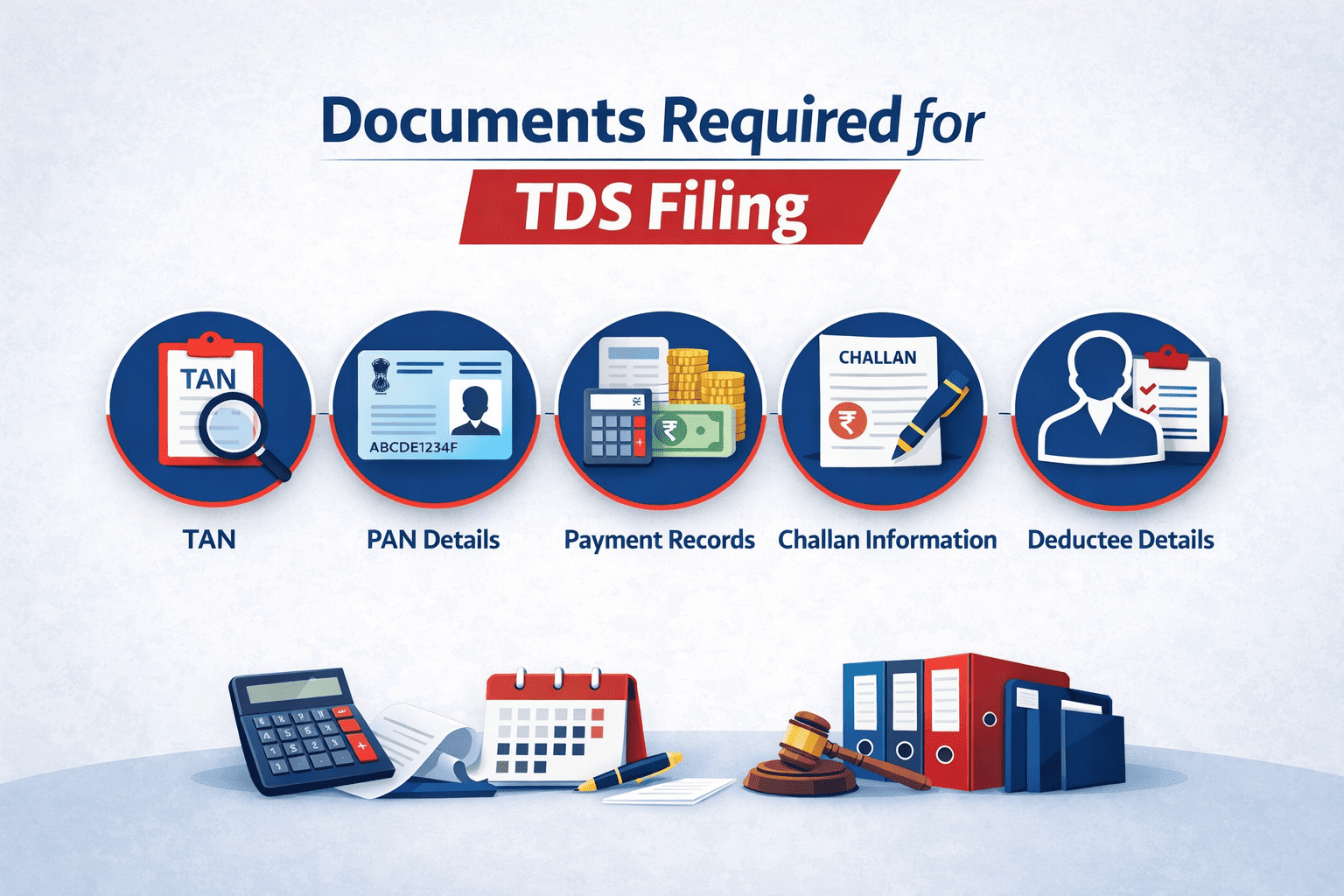
What Documents Are Required for TDS Filing?
Before filing a TDS return, certain information and documents must be prepared in advance to avoid errors or delays.
Essential Details Required
- TAN (Tax Deduction Account Number)
- PAN of the deductor and the deductee
- Challan details of deposited tax
- Payment records and transaction details
- Deductee information
- TDS return file generated through utilities
How to File TDS Return Online? (Step-by-Step Process)
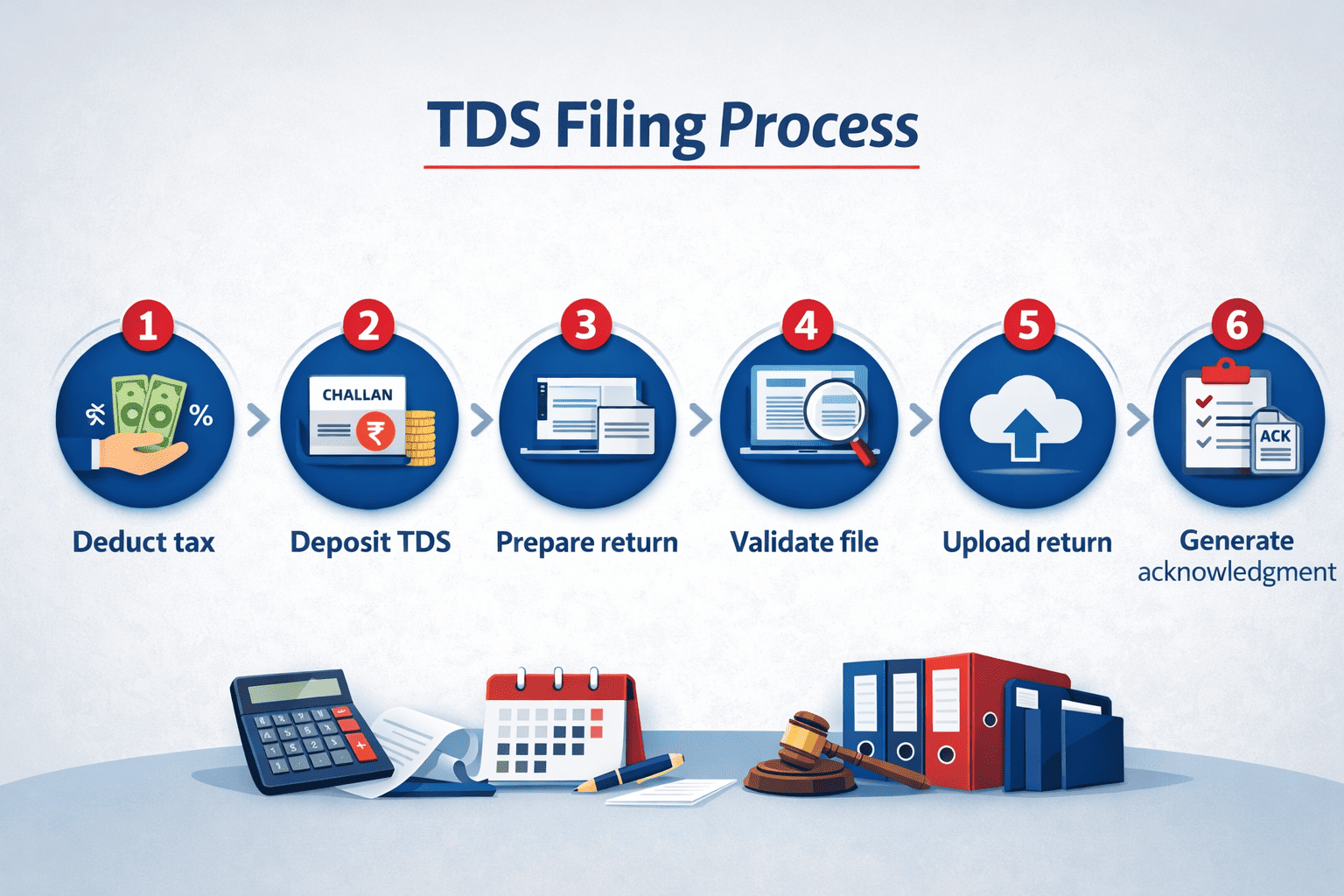
Filing TDS returns online involves several technical steps that ensure accurate reporting of deducted taxes.
Step-by-Step TDS Filing Process
- Step 1 – Collect Deductee Payment Details: Gather details of all payments made and the tax deducted.
- Step 2 – Calculate TDS Amount: Calculate the applicable TDS amount based on tax sections and rates.
- Step 3 – Deposit TDS via Challan ITNS 281: The deducted tax must be deposited with the government using the designated challan.
- Step 4 – Prepare TDS Return Using RPU Utility: Use the Return Preparation Utility (RPU) provided by the Income Tax Department.
- Step 5 – Validate File Using FVU: Validate the return file using the File Validation Utility (FVU).
- Step 6 – Upload Return on TRACES or Income Tax Portal: Submit the validated file through the official portal.
- Step 7 – Generate Acknowledgement: Once submitted successfully, an acknowledgement receipt is generated.
What Are the Due Dates for Filing TDS Returns?
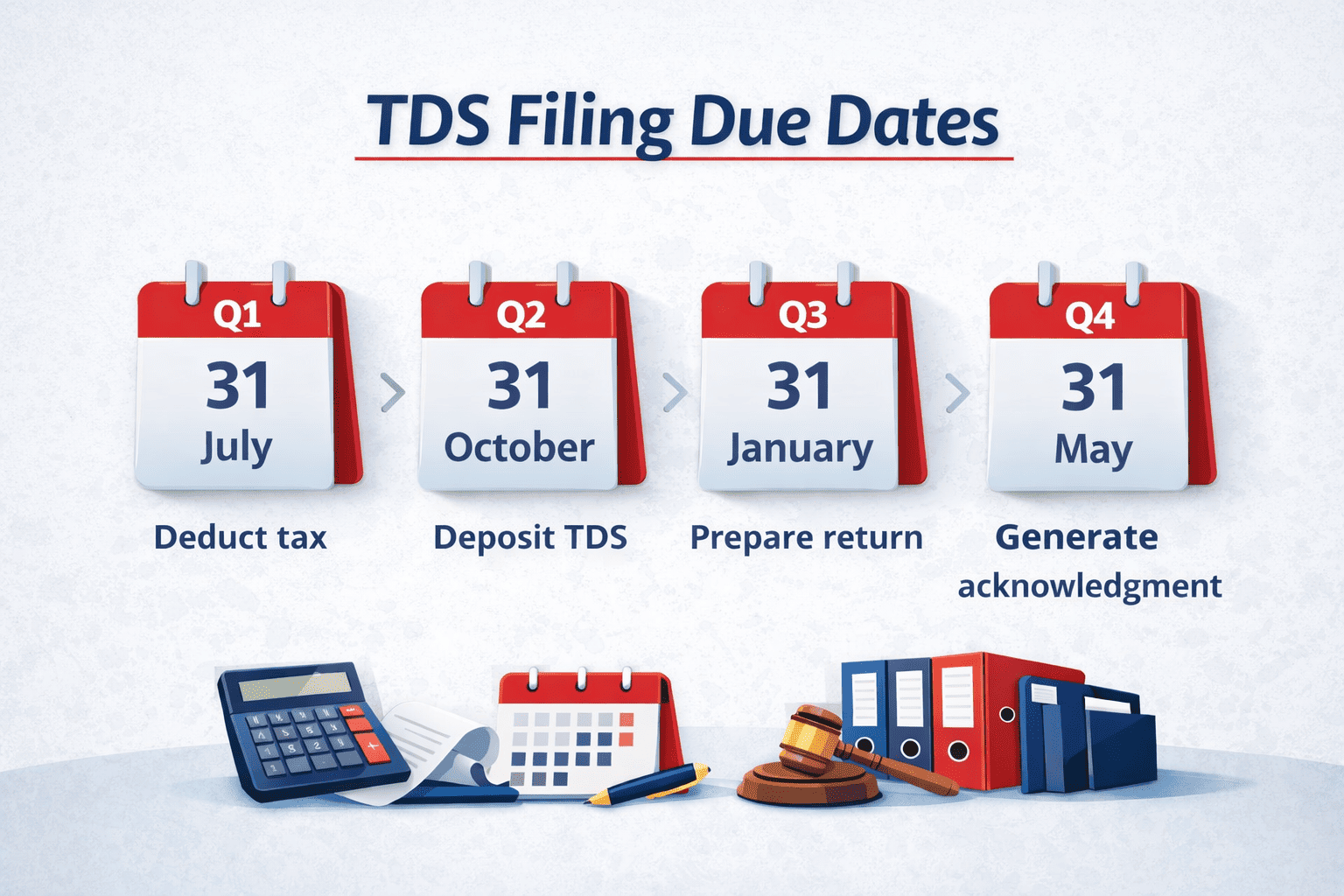
TDS returns must be filed quarterly. Missing the deadlines may lead to financial penalties.
TDS Filing Due Dates
| Quarter | Due Date |
| April – June | 31 July |
| July – September | 31 October |
| October – December | 31 July |
| January – March | 31 May |
What Are the Penalties for Late TDS Filing?
Failure to comply with TDS rules can result in financial penalties and legal consequences.
Key Penalties
- Penalty under Section 234E: A late filing fee of ?200 per day is charged until the TDS return is filed.
- Penalty under Section 271H: The Income Tax Department may impose an additional penalty ranging from ?10,000 to ?1,00,000.
- Interest on Late TDS Payment: If TDS is not deposited on time, interest charges apply on the outstanding amount.
Maintaining accurate financial records and filing taxes regularly helps businesses avoid these penalties.
What Are the Benefits of Filing TDS Returns on Time?
Timely filing of TDS returns offers multiple advantages for both businesses and employees.
Key Benefits
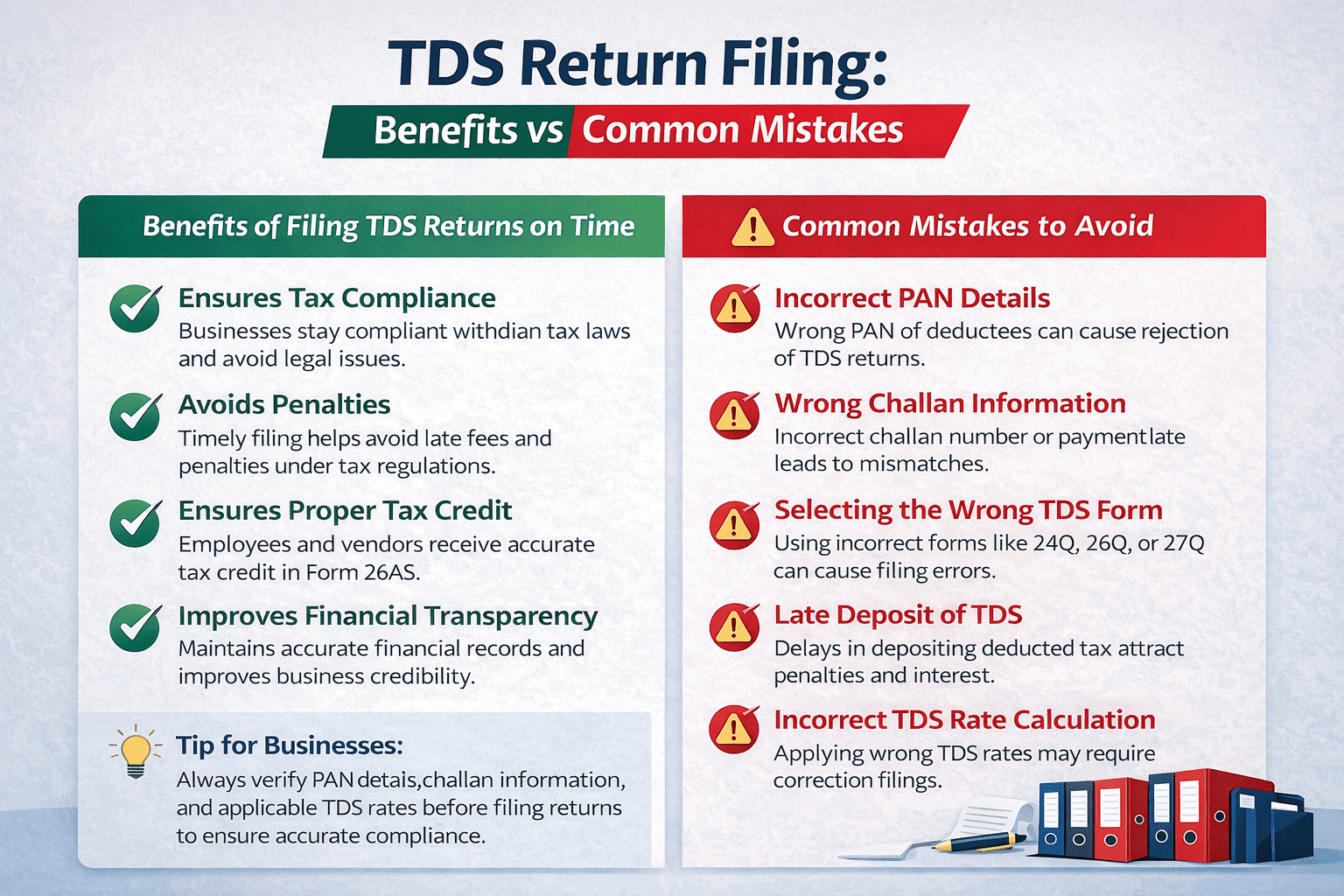
- Ensures Tax Compliance: Businesses remain compliant with Indian tax regulations.
- Avoids Penalties: Timely filing prevents late fees and legal complications.
- Ensures Proper Tax Credit: Employees and vendors receive proper tax credit in their Form 26AS.
- Improves Financial Transparency: Accurate reporting helps maintain credibility and smooth financial operations.
What Are the Common Mistakes to Avoid While Filing TDS Returns?
Errors in TDS returns can lead to rejection, penalties, or correction filings.
Common Mistakes
- Incorrect PAN details of deductees
- Wrong challan number or date
- Selecting the wrong TDS return form
- Late deposit of the deducted tax
- Incorrect TDS rate calculation
Another frequent mistake is selecting the wrong tax structure for income calculation. Taxpayers often struggle with choosing between the new tax regime and the old tax regime, which can affect the overall tax liability and reporting requirements.
Conclusion
TDS Filing in India is a crucial compliance requirement for businesses, employers, and organizations making specified payments. It ensures timely tax collection and helps maintain transparency in financial transactions.
Understanding the TDS filing process, applicable forms, due dates, and documentation requirements allows businesses to remain compliant and avoid costly penalties.
By maintaining accurate records, depositing TDS on time, and filing quarterly returns correctly, organizations can streamline their tax compliance and ensure smooth financial operations.
As tax regulations evolve, businesses should stay updated with government policies, tax rates, and filing requirements to ensure full compliance with India’s taxation system.
-
1. Is TDS filing mandatory for all businesses in India?
No, TDS filing is not mandatory for every business. It applies only to individuals, companies, firms, LLPs, and other entities that make payments exceeding the prescribed threshold limits under the Income Tax Act. If such payments are made, the payer must deduct TDS and file quarterly TDS returns.
- 2. What is the difference between TDS payment and TDS return?
- 3. What happens if TDS is deducted but not deposited?
- 4. Can TDS returns be revised after submission?
- 5. What is TAN, and why is it required for TDS filing?
- 6. What are the quarterly due dates for filing TDS returns?
- 7. What is the penalty for late TDS filing?
- 8. Which TDS return form should be used for salary payments?
- 9. Is TDS applicable to payments made to freelancers or consultants?
- 10. How can businesses avoid mistakes while filing TDS returns?


