Table of Content:
- What is REACH Certification?
- Who Requires REACH Certification?
- What are the Key Principles of Quality Management in REACH Certification?
- What is the Difference Between REACH Certification and RoHS Certification?
- What are the Key Requirements for REACH Certification?
- Who Regulates REACH Certification?
- Why Choose REACH Certification?
- What are the Documents Required for REACH Certification?
- What is the Process to Obtain REACH Certification?
- The Way Ahead!
What is REACH Certification?
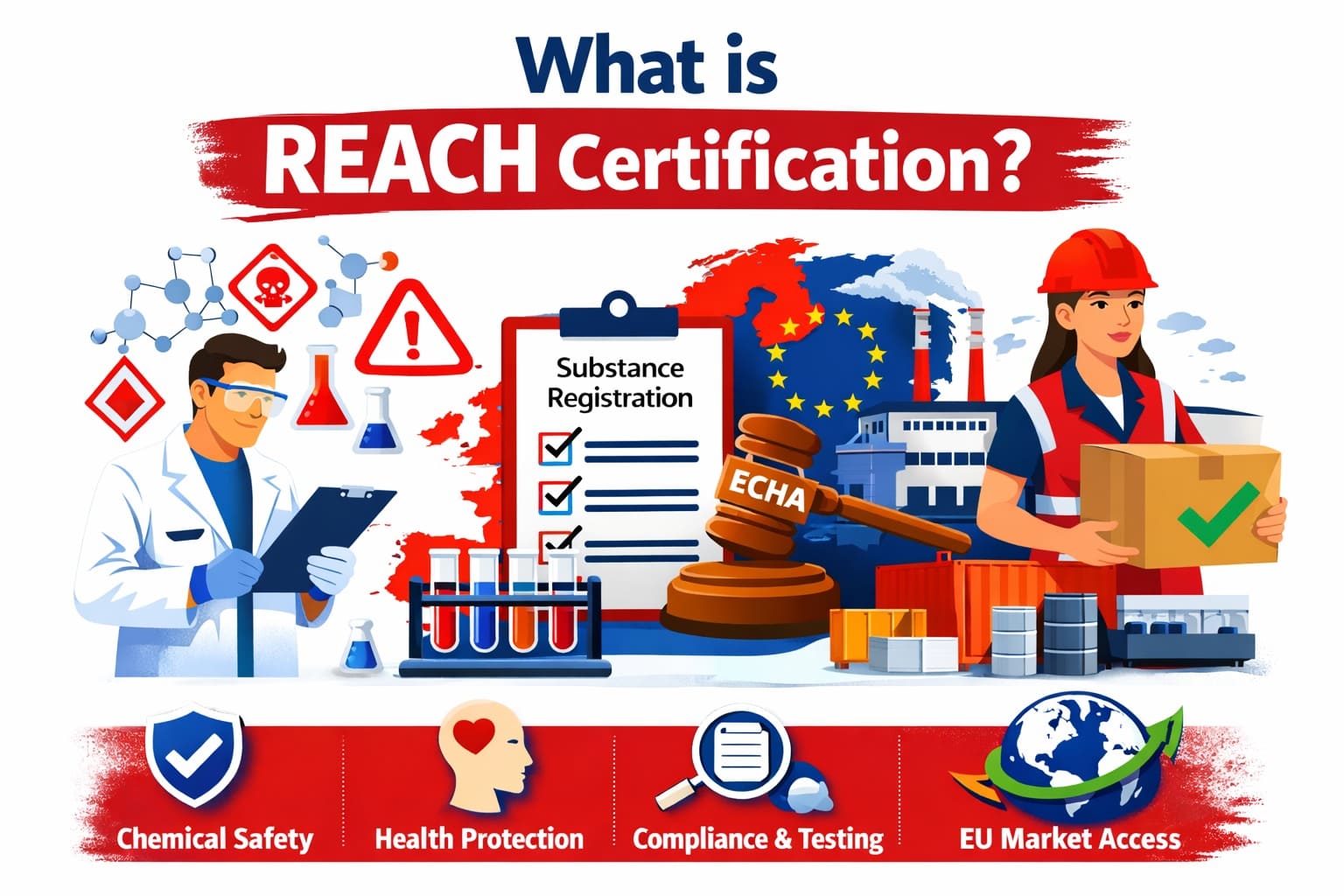
REACH Certification refers to compliance with the European Union’s chemical regulation governing the Registration, Evaluation, Authorisation, and Restriction of Chemicals. It ensures that substances manufactured or imported into the EU are assessed for risks to human health and the environment.
REACH Certification effectively integrated with ISO 14001 and ISO 45001 strengthens environmental protection, chemical risk control, and workplace safety compliance.
Who Requires REACH Certification?
REACH Certification is required for businesses that manufacture, import, distribute, or use chemical substances within the European Union in quantities of one tonne or more per year.
It applies to:
- Manufacturers producing chemical substances within the EU.
- Importers bringing chemicals, mixtures, or articles containing substances into the EU market.
- Representatives appointed by non-EU manufacturers to fulfil REACH obligations.
- Downstream users who use chemicals in industrial or professional activities.
- Distributors who store and place chemical substances or mixtures on the EU market.
What are the Key Principles of Quality Management in REACH Certification?
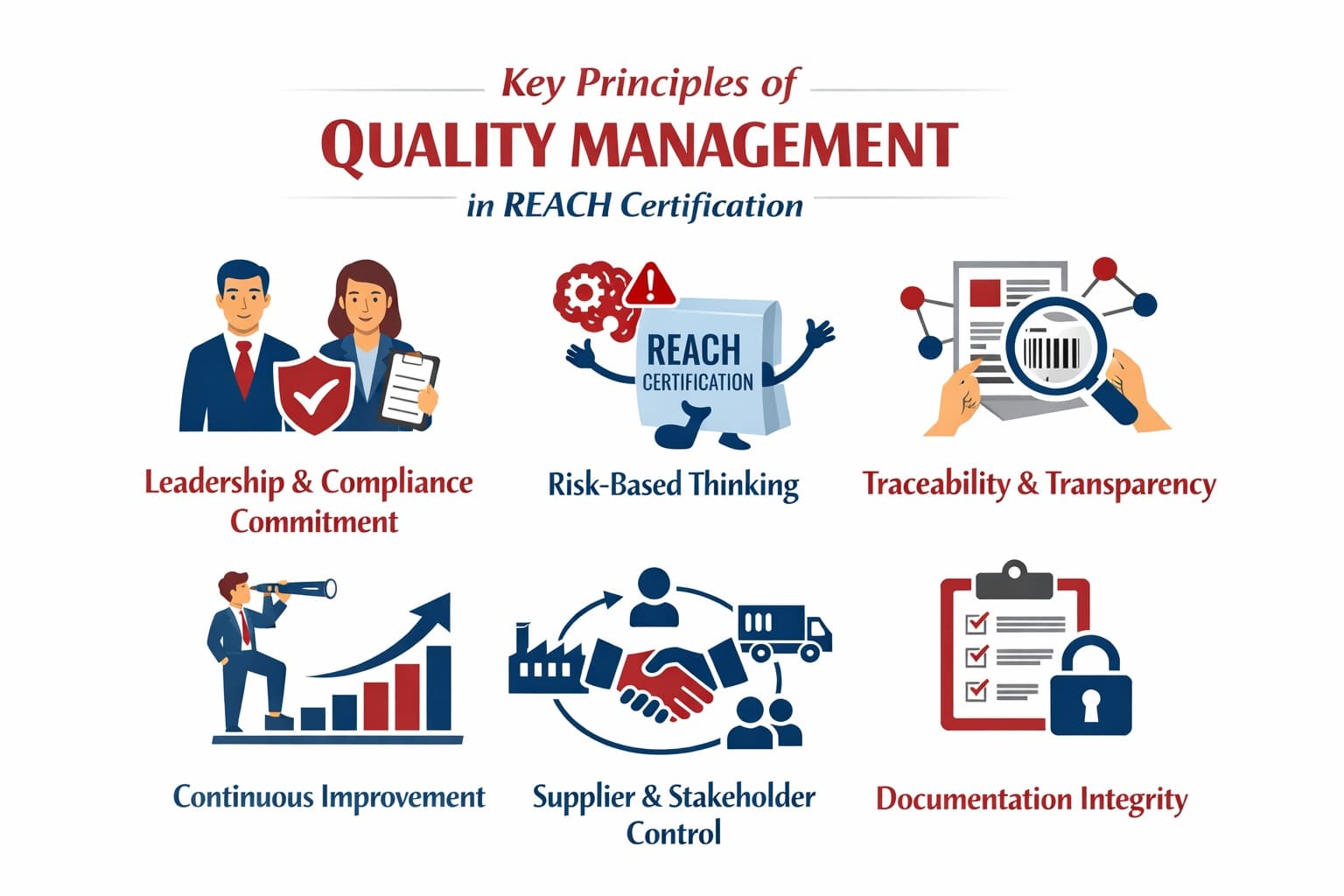
REACH Certification focuses on ensuring chemical safety, regulatory compliance, and environmental protection across the supply chain. Here are the key principles of quality management in REACH certification:
- Leadership and Compliance Commitment: Demonstrating active commitment to chemical safety and regulatory compliance by establishing policies, allocating resources, and promotes a culture of accountability.
- Risk-Based Thinking: Proactively identifying, evaluating, and controlling risks associated with chemical substances and adopting a preventive approach to reduce regulatory violations, environmental harm, and health hazards.
- Traceability and Transparency: Ensuring traceability of substances, data, and documentation along with transparent flow of information across departments and supply chain partners to ensure accurate reporting.
- Continuous Improvement: Regularly reviewing compliance systems, updating procedures, and striving to improve risk controls.
- Documentation Integrity: Maintaining accurate records, audit trails, and updated technical data ensures reliability, supports inspections, and demonstrates consistent adherence to REACH practices.
- Supplier and Stakeholder Control: Evaluating and monitoring suppliers to ensure substances meet REACH obligations. Ensuring strong stakeholder coordination to improve information exchange and reduce the likelihood of supply chain disruptions.
What is the Difference Between REACH Certification and RoHS Certification?
REACH and RoHS are European Union regulations that control hazardous substances in products, but they differ in scope, objective, and applicability. Here are the key differences between the two:
|
Basis of Difference |
REACH Certification |
RoHS Certification |
|
Governing Authority |
European Chemicals Agency (ECHA) |
European Commission |
|
Primary Objective |
Ensures safe manufacture and use of chemicals in the EU |
Restricts specific hazardous substances in electrical and electronic equipment |
|
Scope |
Applies to chemicals, mixtures, and articles placed on the EU market |
Applies only to electrical and electronic equipment (EEE) |
|
Focus |
Registration and control of chemical substances |
Restriction of specific hazardous substances |
|
Substance Coverage |
Covers thousands of chemicals including SVHCs |
Restricts 10 specific substances (e.g., lead, mercury, cadmium) |
|
Registration Requirement |
Mandatory registration for substances ?1 ton/year |
No chemical registration required |
What are the Key Requirements for REACH Certification?
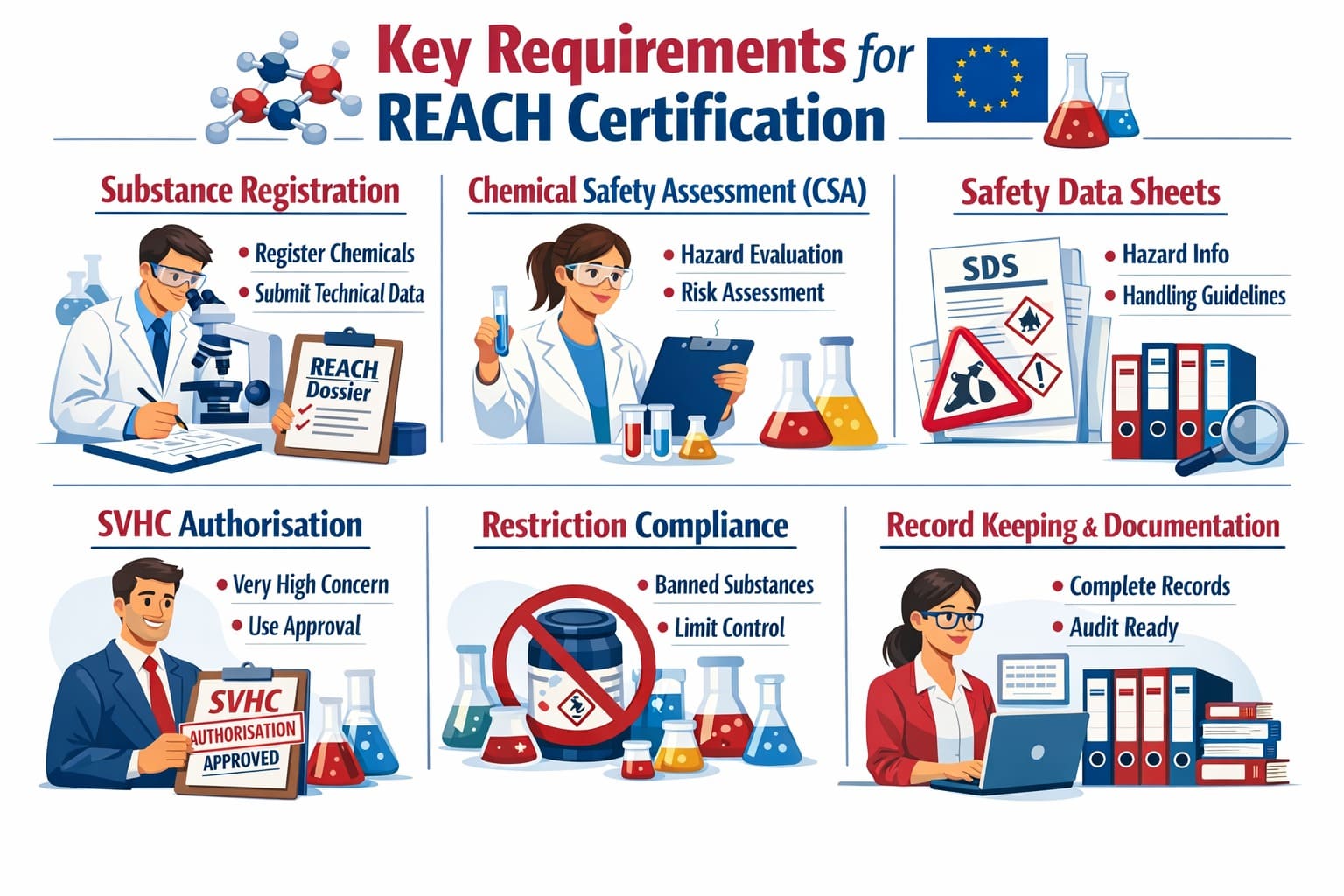
REACH Certification requires businesses to comply with strict chemical safety, registration, and documentation obligations before placing substances on the European market. Below are the core requirements organisations must fulfil to demonstrate compliance:
1. Substance Registration: Manufacturers and importers must register chemical substances produced or imported above one tonne per year. Registration includes submitting technical dossiers, safety data, and risk assessments to demonstrate safe use and regulatory conformity.
2. Chemical Safety Assessment (CSA): The manufacturer must undergo a comprehensive Chemical Safety Assessment to evaluate hazards, exposure scenarios, and risk control measures.
3. Safety Data Sheet Preparation: Manufacturers must prepare and supply updated Safety Data Sheets containing hazard classification, handling instructions, and risk management measures.
4. Authorisation for Substances of Very High Concern (SVHC): If a substance is identified as SVHC, manufacturers must obtain authorisation for its continued use. This process requires demonstrating controlled risks or proving that socio-economic benefits outweigh potential hazards.
5. Restriction Compliance: Certain hazardous substances are restricted or banned under REACH. Organisations must ensure products do not exceed permitted limits and must monitor regulatory updates.
6. Record Keeping and Documentation: Manufacturers must maintain registration records, testing data, supply chain communications, and compliance evidence for inspection. Proper documentation ensures traceability, supports audits, and demonstrates continuous compliance.
Who Regulates REACH Certification?
REACH Certification is regulated by the European Chemicals Agency (ECHA). ECHA manages the registration, evaluation, authorisation, and restriction of chemicals under the REACH Regulation. It works in coordination with the European Commission to ensure compliance, chemical safety, and environmental protection. ECHA also maintains substance databases, reviews registration dossiers, and enforces regulatory actions to safeguard human health and the environment.
Why Choose REACH Certification?
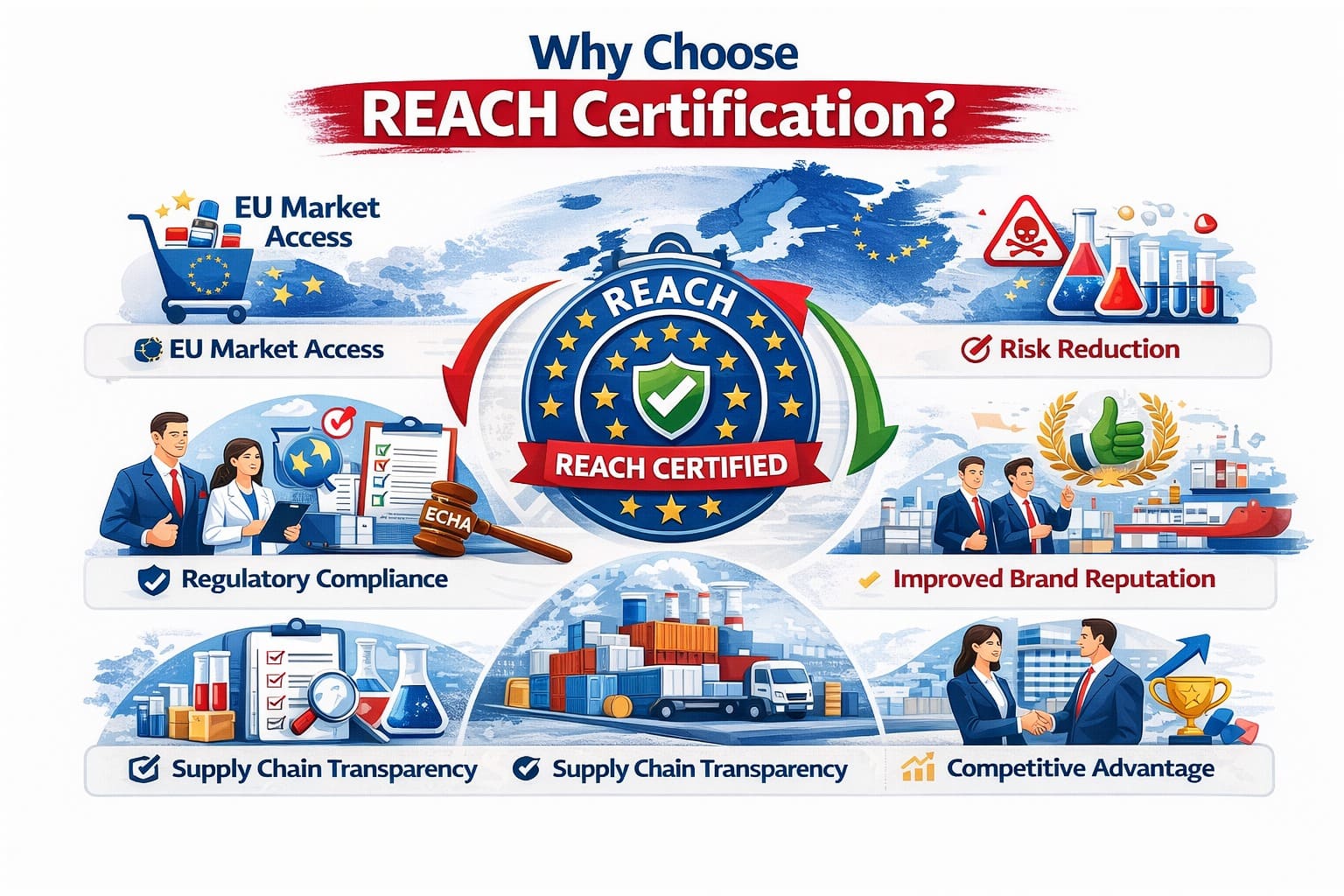
REACH Certification helps businesses ensure chemical safety compliance while accessing the European Union market. It strengthens regulatory credibility, reduces environmental and health risks, and demonstrates responsible chemical management practices, making it essential for manufacturers, importers, and exporters dealing with regulated substances. Here’s why you should choose REACH Certification:
- EU Market Access: Allows manufacturers and exporters to legally manufacture, import, and sell chemical substances and products across all European Union member states without regulatory barriers.
- Regulatory Compliance: Ensures full compliance with European chemical safety laws, reducing legal risks and preventing penalties, bans, or product withdrawal from the market.
- Risk Reduction: Identifies hazardous substances and promotes safer alternatives, helping minimise health risks to workers, consumers, and the environment.
- Improved Brand Reputation: Demonstrates commitment to safety, sustainability, and responsible chemical management, increasing customer trust and business credibility globally.
- Supply Chain Transparency: Strengthens communication across the supply chain through proper documentation, safety data sheets, and clear chemical information disclosure.
- Competitive Advantage: Enhances market credibility and improves opportunities to secure contracts with EU-based buyers, distributors, and multinational companies.
What are the Documents Required for REACH Certification?
REACH Certification requires specific technical and regulatory documents to demonstrate compliance with European Union chemical safety requirements before substances are manufactured, imported, or placed on the EU market. Here are the key documents manufacturers required to obtain REACH certification:
- Substance Identification Information
- Technical Dossier
- Chemical Safety Report (CSR)
- Safety Data Sheet (SDS)
- Test Reports (Laboratory Analysis)
- Exposure Scenario Documentation
- Declaration of Compliance
- Only Representative (OR) Agreement
What is the Process to Obtain REACH Certification?
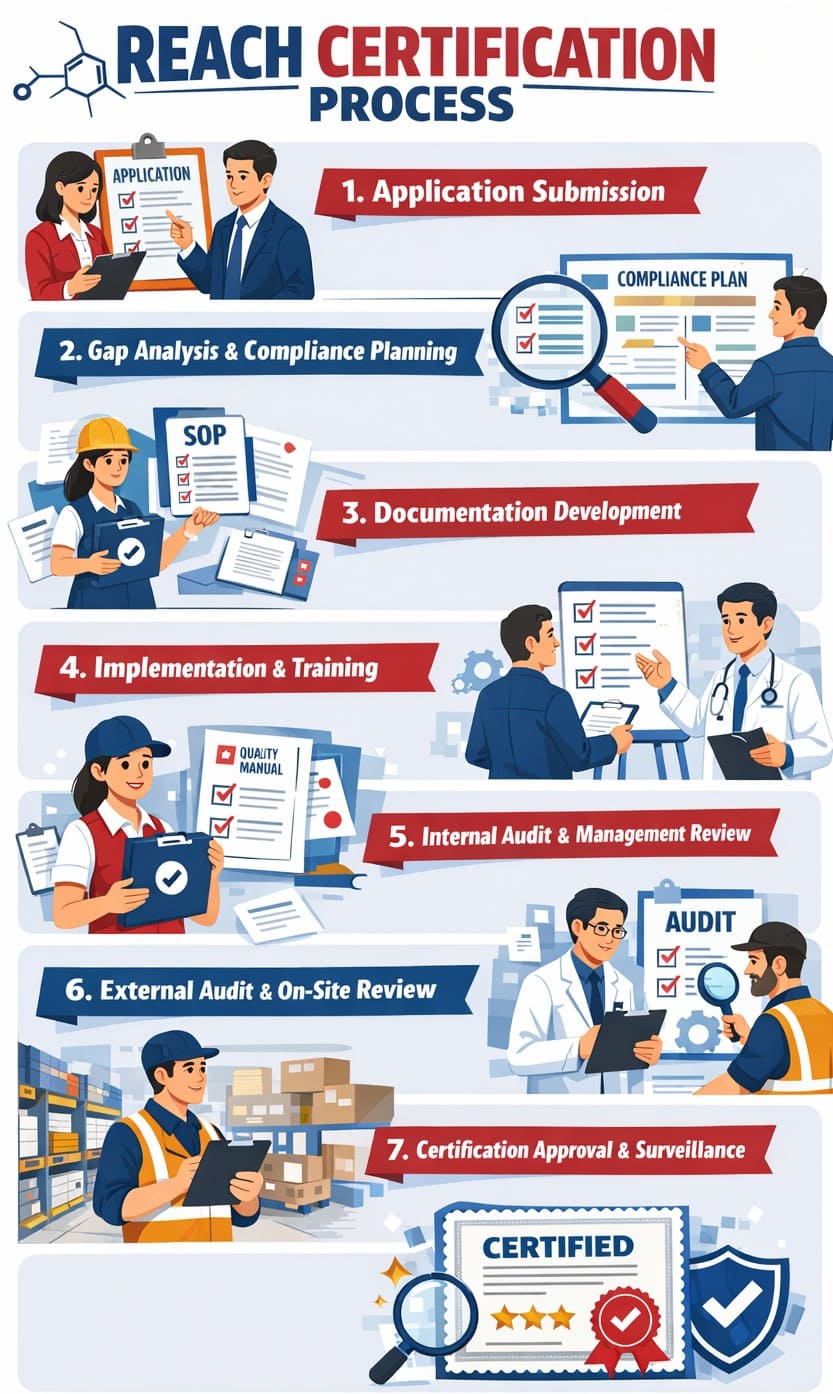
Here is the step-by-step process for obtaining REACH certification:
1. Application Submission
The organisation needs to submit a formal application to an accredited certification body, defining the scope of activities, product categories, warehouse locations, applicable drug licenses, other required information or documents.
2. Gap Analysis & Compliance Planning
After submitting the application, a preliminary assessment is conducted to identify gaps between existing practices and GDP requirements. Based on findings, a compliance plan is developed to address deficiencies in storage, transportation, documentation, and quality systems.
3. Documentation Development
The organisation prepares and updates required documents, including the quality manual, SOPs, temperature monitoring procedures, deviation handling process, CAPA records, complaint management system, recall procedure, and training records.
4. Implementation & Staff Training
In this step, GDP procedures are implemented across operations. Personnel involved in storage, handling, and transportation are trained on hygiene, documentation control, product traceability, and risk management responsibilities.
5. Internal Audit & Management Review
An internal audit is conducted to verify compliance with GDP standards. Non-conformities are corrected through CAPA, and top management reviews system performance before proceeding to external audit.
6. External Audit and On-Site Review
The certification body conducts an external audit, reviewing documentation and inspecting facilities, storage conditions, transportation systems, and quality controls to ensure full GDP compliance.
7. Certification Approval & Surveillance
Upon successful audit and closure of non-conformities, GDP Certification is issued to the manufacturers. To ensure continuous compliance with the requirements, periodic surveillance audits are conducted by the certification body.
The Way Ahead!
REACH Certification plays a vital role in ensuring the safe manufacture, import, and use of chemicals within the European Union. It enhances environmental protection, safeguards human health, and promotes transparency in the supply chain. By complying with REACH requirements, businesses gain legal market access, improve credibility, and demonstrate their commitment to sustainability and regulatory compliance. If you face any challenges or problems while applying for the certification, you can contact us for expert guidance and support.
FAQS
Have some questions about REACH Certification?
We have got you covered:
-
Is REACH Certification mandatory for online sellers exporting to Europe?
Yes, REACH Certification is mandatory if exported products contain regulated substances exceeding one tonne annually.
- Does REACH Certification apply to finished consumer products?
- Is REACH certification required for polymers?
- How does REACH Certification impact small businesses?
- Is REACH Certification valid permanently after registration?
- Does REACH Certification cover cosmetic ingredients?
- How does REACH certification affect research laboratories?
- Does REACH Certification apply to recycled materials?
- Are intermediates covered under REACH Certification?
- Does REACH Certification apply to non-EU companies?
- Is REACH certification required for medical devices?
- What are the penalties for non-compliance with REACH certification?
- Does REACH Certification impact packaging materials?
- Is REACH Certification required for mixtures?
- Does REACH Certification require exposure scenarios?
- Can distributors rely solely on supplier REACH certification compliance?
- Is REACH certification necessary for batteries?
- Does REACH Certification apply to nanomaterials?
- Does REACH certification influence supply chain contracts?
- Can REACH certification improve corporate sustainability ratings?


