
Table of Content
- What is RC 14001 Certification?
- What are the Key Objectives of RC 14001 Certification?
- Chemicals Covered under RC 14001 Certification
- Key Principles of Quality management in RC 14001 Certification
- How RC 14001 Certification is Different from ISO 14001 Certification?
- Key Requirements for RC 14001 Certification
- Process for Obtaining RC 14001 Certification
- Documents Required for RC 14001 Certification
- Validity Period for RC 14001 Certification
- How Legal Babu can Help?
What is RC 14001 Certification?
RC 14001 certification is a management system certification designed for companies involved in the chemical industry to ensure responsible environmental, health, safety, and security practices. It is based on the Responsible Care (RC) initiative developed by the American Chemistry Council that helps organisations establish structured policies and procedures to manage environmental impacts and reduce risks associated with chemical production. By obtaining RC 14001 certification, chemical companies demonstrate their commitment to responsible operations, sustainable practices, and transparency in managing hazardous materials.
What are the Key Objectives of RC 14001 Certification?
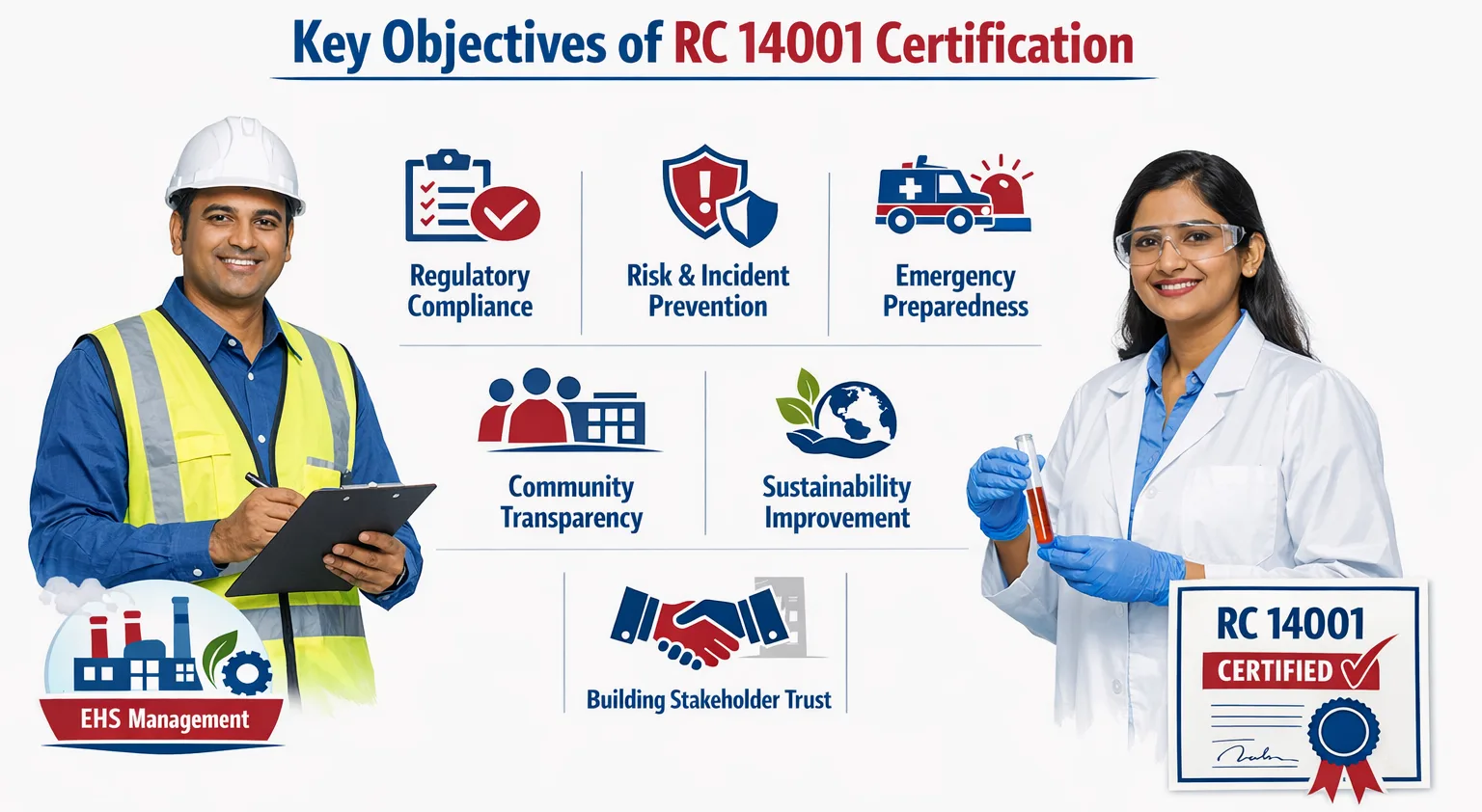
RC 14001 certification aims to improve environmental performance, strengthen safety management, ensure regulatory compliance, and promote responsible chemical industry practices. The key objectives of RC 14001 certification include the following:
- Improving environmental, health, and safety management systems
- Promoting responsible handling and management of chemicals
- Ensuring compliance with environmental and safety regulations
- Reducing operational risks and prevent workplace incidents
- Strengthening emergency preparedness and response planning
- Improving transparency with regulators and community stakeholders
- Encouraging continuous improvement in sustainability performance
- Enhancing trust among customers, employees, and regulators
Which Chemicals are Covered under RC 14001 Certification?
RC 14001 certification applies to key chemical groups that require strict environmental and safety management including:
|
Chemical Category |
Examples |
|
Petrochemicals |
Ethylene, Propylene, Benzene, Toluene, Butadiene, Styrene |
|
Industrial Solvents |
Methanol, Ethanol, Acetone, Xylene, Isopropanol, Toluene |
|
Agricultural Chemicals |
Urea, Ammonium Nitrate, Glyphosate, Atrazine, 2,4-D, Carbendazim |
|
Basic Inorganic Chemicals |
Chlorine, Sulfuric Acid, Nitric Acid, Ammonia, Caustic Soda, Sodium Carbonate |
|
Plastic & Polymer Chemicals |
Polyethylene, Polypropylene, PVC, Polystyrene, PET, Polycarbonate |
|
Specialty Chemicals |
Adhesives, Dyes, Pigments, Catalysts, Resins, Coating Additives |
What are the Key Principles of Quality management in RC 14001 Certification?
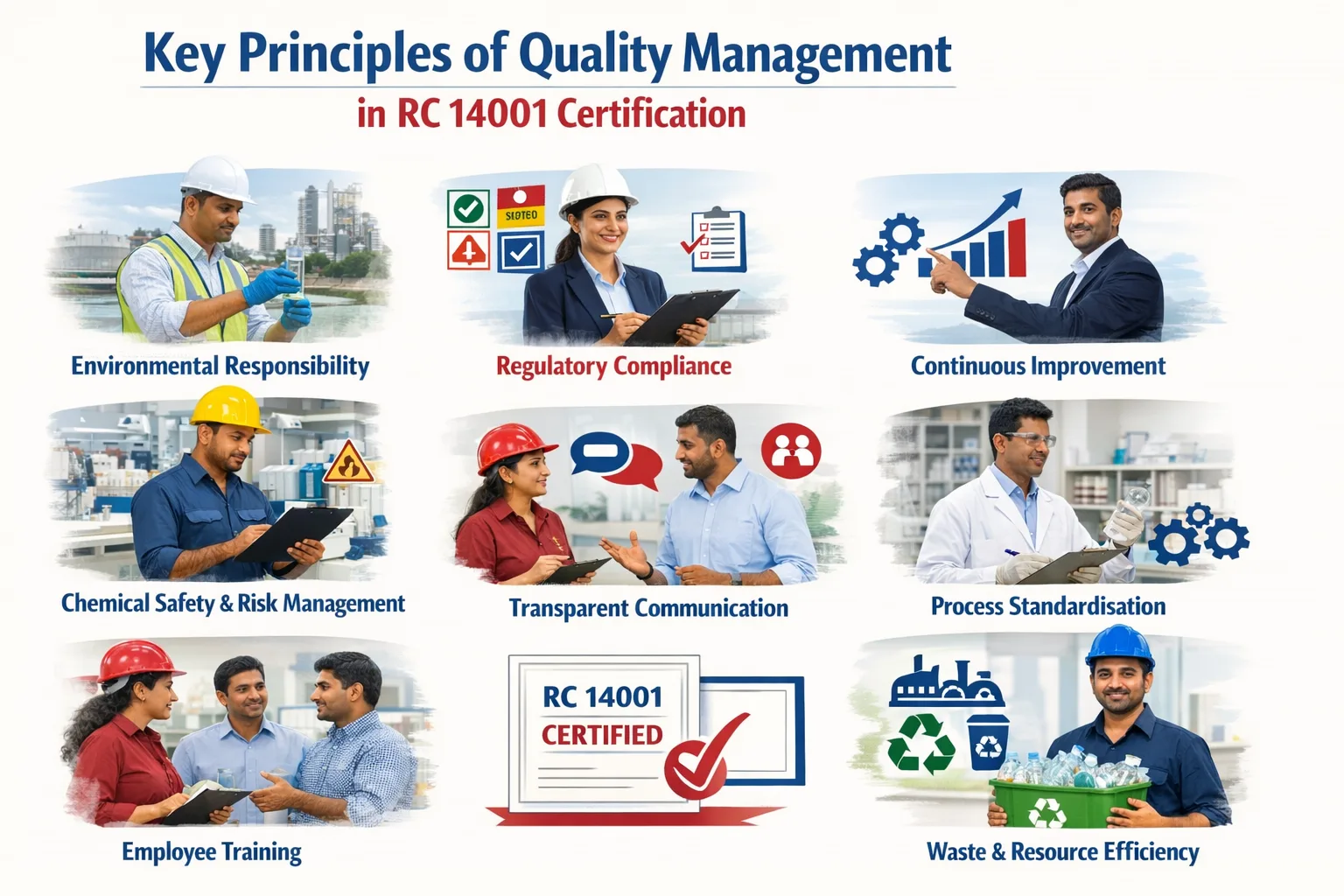
RC 14001 certification promotes responsible chemical management through structured quality and environmental practices. It includes several key principles of quality management, such as:
- Environmental Responsibility: Organisations must minimise environmental impact by controlling emissions, waste generation, and resource usage while ensuring sustainable production processes and compliance with environmental regulations.
- Chemical Safety and Risk Management: Companies should identify, assess, and control risks associated with hazardous chemicals to protect workers, communities, and the environment throughout production, storage, and transportation.
- Regulatory Compliance: Organisations must comply with national and international environmental, health, and safety regulations related to chemical manufacturing, handling, storage, and disposal practices.
- Continuous Improvement: Businesses are encouraged to regularly review processes, monitor environmental performance, and implement improvements that enhance safety, efficiency, and sustainability in chemical operations.
- Employee Awareness and Training: Employees should receive proper training on chemical handling, environmental protection practices, and emergency procedures to ensure safe and responsible workplace operations.
- Transparent Communication and Accountability: Organisations should maintain open communication with stakeholders, authorities, and communities while demonstrating accountability for environmental performance and responsible chemical management practices.
- Process Standardisation: Organisations should establish documented procedures for chemical production, storage, and handling to ensure consistent quality, operational efficiency, and compliance with environmental and safety standards.
- Waste Management and Pollution Prevention: Businesses should implement proper waste treatment, recycling, and pollution control systems to reduce environmental contamination and support sustainable chemical industry practices.
- Resource Efficiency: Companies should optimise the use of raw materials, energy, and water during chemical production to reduce operational costs and environmental impact.
How RC 14001 Certification is Different from ISO 14001 Certification?
RC 14001 and ISO 14001 certifications both address environmental management but differ in industry focus and scope. The key differences include the following:
|
Basis of Difference |
RC 14001 Certification |
ISO 14001 Certification |
|
Focus |
Responsible care management for chemical industries |
Environmental management system for all industries |
|
Industry Scope |
Primarily chemical manufacturing and processing companies |
Applicable to all types of organisations |
|
Objective |
Improve chemical safety, environmental protection, and responsible handling |
Manage environmental impact and improve sustainability |
|
Regulatory Emphasis |
Strong focus on chemical safety and hazardous substance management |
Focus on overall environmental compliance and impact reduction |
|
Industry Initiative |
Developed under Responsible Care initiative for chemical sector |
Developed by the International Organization for Standardization |
|
Applicability |
Chemical producers, processors, and distributors |
Manufacturing, service, government, and other sectors |
What are the Key Requirements for RC 14001 Certification?
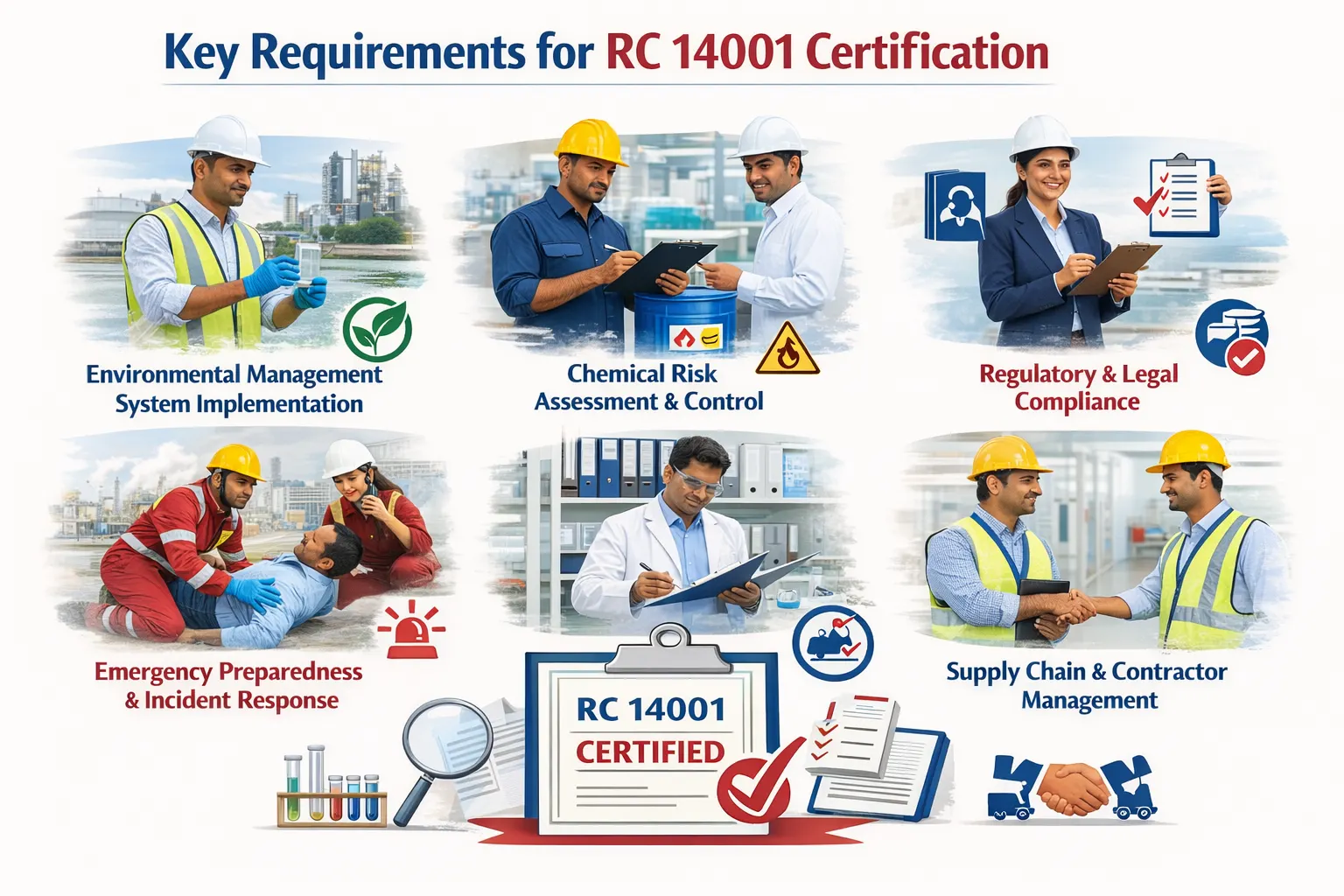
RC 14001 certification requires organisations to implement structured environmental, safety, and responsible chemical management practices within their operations.
1. Environmental Management System Implementation: Organisations must establish and maintain a structured environmental management system that identifies environmental impacts, sets measurable objectives, and defines procedures to control emissions, waste, and resource usage across chemical manufacturing and handling activities.
2. Chemical Risk Assessment and Control: Companies must identify hazards related to chemical production, storage, and transportation. Proper risk assessment procedures should be implemented to minimise accidents, environmental damage, and health risks for employees, communities, and surrounding ecosystems.
3. Regulatory and Legal Compliance: Organisations must comply with applicable environmental, safety, and chemical management regulations. They should regularly monitor legal requirements, maintain documentation, and ensure operational practices meet national and international compliance standards.
4. Emergency Preparedness and Incident Response: Companies must establish emergency response plans to address chemical leaks, spills, fires, or other industrial incidents. Regular drills, safety equipment, and employee training help organisations respond quickly and minimise environmental and safety risks.
5. Documentation and Record Management: Organisations must maintain accurate documentation of environmental policies, operational procedures, safety protocols, audits, and performance records. Proper record management ensures transparency, supports regulatory inspections, and helps track compliance with responsible chemical management standards
6. Supply Chain and Contractor Management: Companies must ensure suppliers, contractors, and logistics partners follow responsible environmental and safety practices while handling chemicals. Evaluating supplier performance helps maintain consistent quality, safety, and compliance throughout the chemical supply chain.
What is the Process for Obtaining RC 14001 Certification?
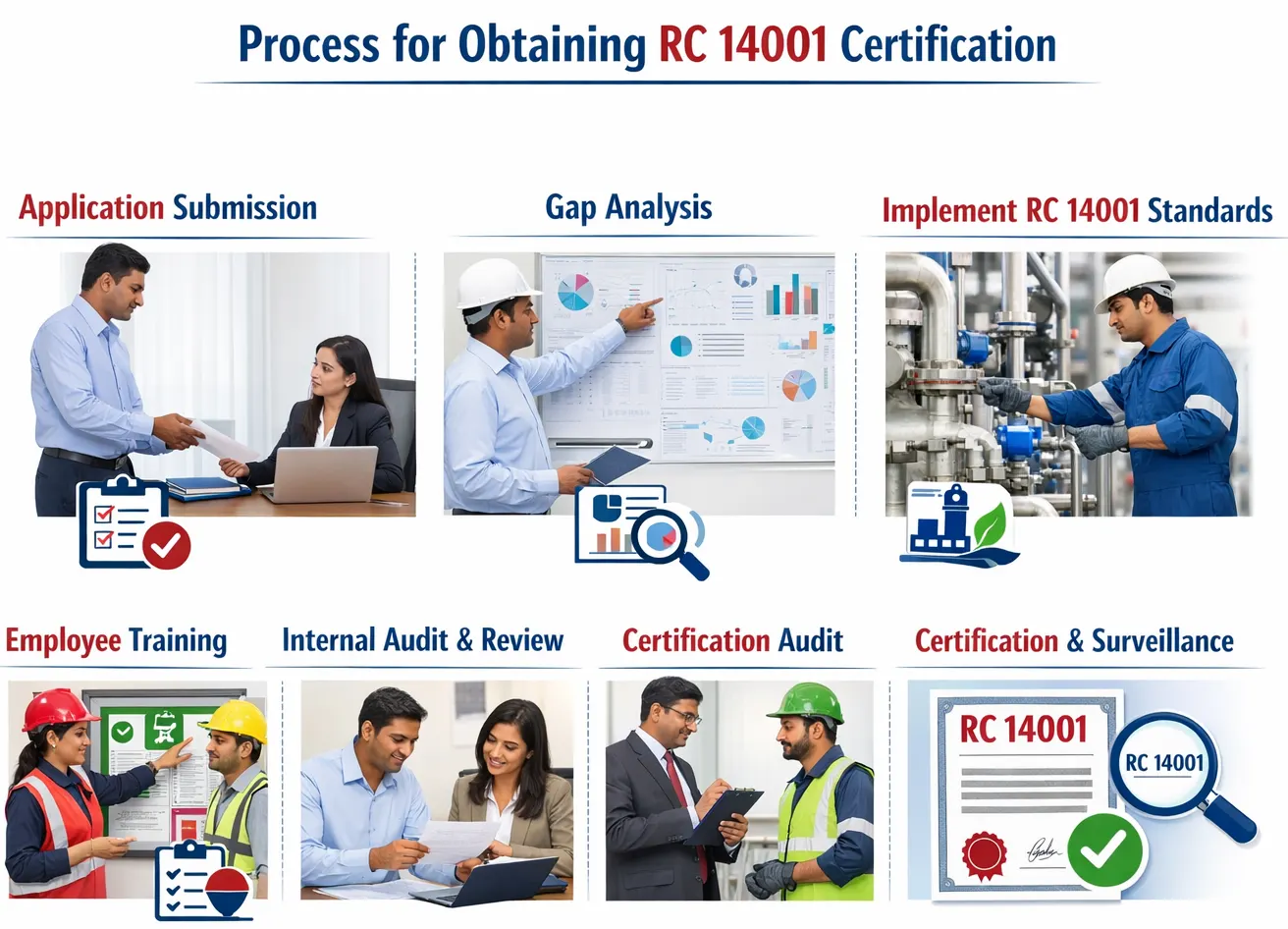
Here is the step-by-step for successfully obtaining RC 14001 certification:
1. Application Submission to Certification Body
The organisation must submit an application to an accredited certification body for RC 14001 certification. The application includes company details, scope of operations, environmental policies, and required documentation for evaluation before the certification audit is scheduled.
2. Initial Gap Analysis
The organisation first conducts a gap analysis to evaluate existing environmental and safety practices against RC 14001 requirements. This assessment identifies areas that require improvement, helping businesses develop a clear action plan for implementing responsible care and environmental management standards.
3. Implementation of RC 14001 Standards
The organisation establishes policies, procedures, and operational controls aligned with RC 14001 guidelines. This stage involves developing environmental management systems, chemical safety measures, documentation processes, and operational practices to ensure responsible chemical production, storage, and handling.
4. Employee Training and Awareness
Employees are trained on responsible chemical management, environmental protection practices, safety procedures, and emergency response protocols. Proper training ensures staff understand operational responsibilities and follow standard procedures to maintain compliance with RC 14001 certification requirements.
5. Internal Audit and Management Review
Before applying for certification, the organisation conducts an internal audit to evaluate the effectiveness of implemented systems. Management reviews audit results, identifies non-conformities, and takes corrective actions to improve environmental and chemical safety performance.
6. Certification Audit by Accredited Body
An accredited certification body conducts a formal audit to verify compliance with RC 14001 standards. Auditors review documentation, operational procedures, and environmental practices to ensure the organisation meets responsible care and chemical management requirements.
7. Certification Approval and Ongoing Surveillance
If the organisation successfully meets the certification requirements, RC 14001 certification is issued. Regular surveillance audits are conducted during the validity period to ensure continuous compliance and improvement in responsible chemical management practices.
What are the Documents Required for RC 14001 Certification?
RC 14001 certification requires essential documents to verify environmental compliance, including:
- Environmental Management Policy
- Chemical Safety and Risk Assessment Reports
- Environmental Impact Assessment (EIA) Documents
- Legal and Regulatory Compliance Records
- Standard Operating Procedures (SOPs) for Chemical Handling
- Emergency Preparedness and Response Plan
- Employee Training and Competency Records
- Waste Management and Pollution Control Records
- Supplier and Contractor Compliance Documents
What is the Validity Period for RC 14001 Certification?
The validity period for RC 14001 certification is typically three years, provided the organisation continues to comply with the required environmental and responsible chemical management standards. During this period, certification bodies conduct regular surveillance audits, usually once every year, to verify ongoing compliance. After the three-year cycle, organisations must undergo a recertification audit to renew and maintain the validity of their RC 14001 certification.
How Legal Babu can Help?
Legal Babu provides expert guidance and end-to-end support to help businesses obtain RC 14001 certification smoothly and efficiently. Here’s why you should choose us:
- Expert consultation for RC 14001 certification
- Assistance in implementing RC 14001 standards
- Coordination with accredited certification bodies
- Support during certification audit process
- Post-certification compliance and renewal assistance
FAQS
Have some questions about RC 14001 Certification:
We have got you covered:
-
Is RC 14001 certification mandatory for chemical companies?
RC 14001 certification is generally voluntary but often required by regulators, international partners, and customers in chemical supply chains.
- Which industries commonly obtain RC 14001 certification?
- What management system does RC 14001 certification follow?
- Does RC 14001 certification cover product lifecycle management?
- Can RC 14001 certification improve global market credibility?
- Is RC 14001 certification recognised internationally?
- What types of organisations benefit from RC 14001 certification?
- Can RC 14001 certification be integrated with other ISO standards?
- What role does leadership play in RC 14001 certification?
- Does RC 14001 certification focus on community safety?
- What role do performance indicators play in RC 14001 certification?
- Can logistics companies obtain RC 14001 certification?
- Does RC 14001 certification help reduce environmental incidents?
- What type of audits are conducted under RC 14001 certification?
- Can RC 14001 certification support sustainability goals?
- How does RC 14001 certification support chemical risk communication?
- Does RC 14001 certification require emergency communication systems?
- Can RC 14001 certification improve operational efficiency?
- Does RC 14001 certification address transportation safety?
- Can RC 14001 certification help build stakeholder trust?


