
Table of Contents:
- What is PS 9000:2016 Certification?
- Who Needs PS 9000:2016 Certification?
- Key Principles of Quality Management in PS 9000:2016 Certification
- Key Requirements for PS 9000:2016 Certification
- Why is PS 9000:2016 Certification Important?
- Documents are Required for PS 9000:2016 Certification
- Cost of PS 9000:2016 Certification
- Process for Obtaining PS 9000:2016 Certification
- Validity Period of PS 9000:2016 Certification
What is PS 9000:2016 Certification?
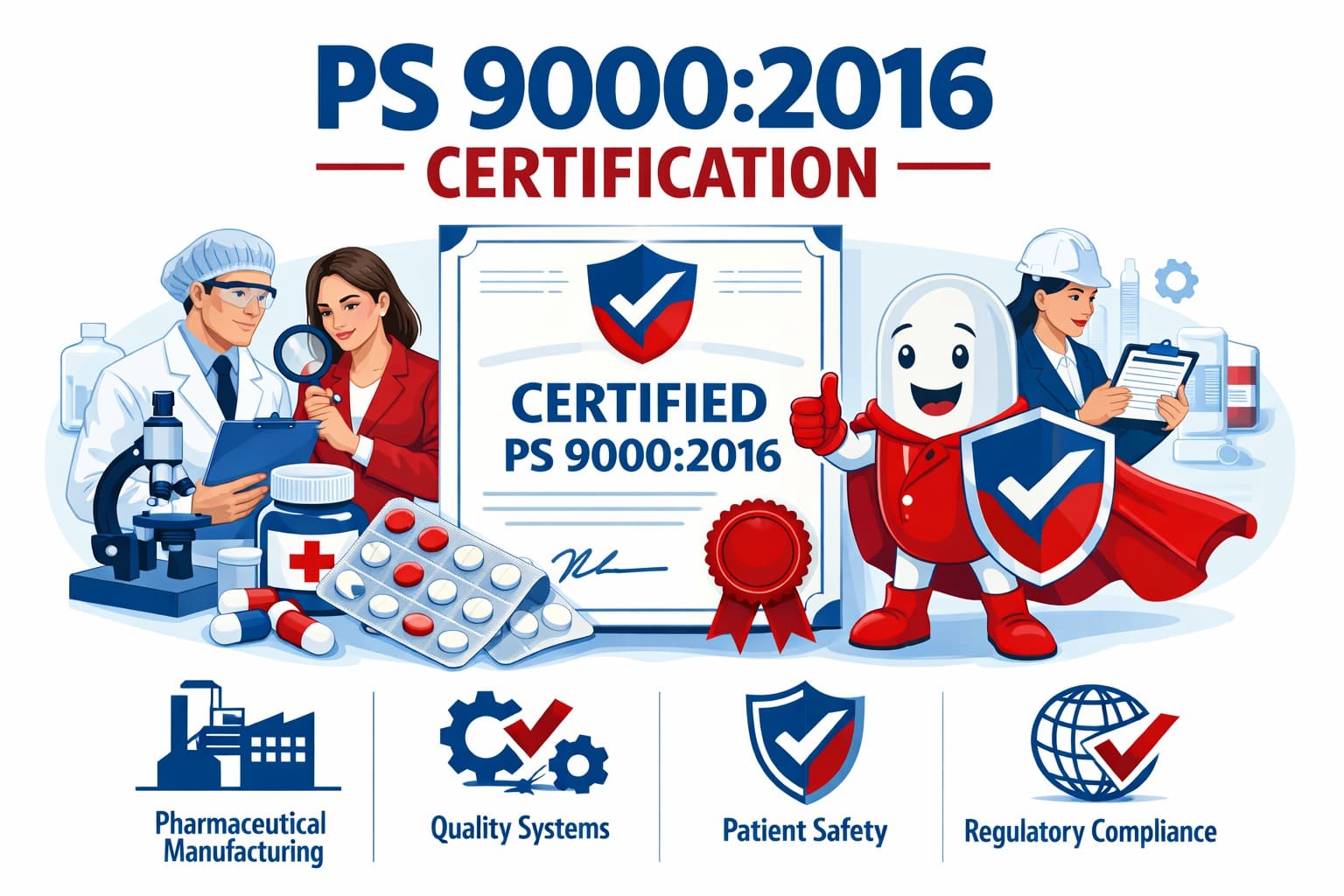
PS 9000:2016 Certification is a quality management system standard developed specifically by the Pharmaceutical Export Promotion Council of India (PHARMEXCIL) for pharmaceutical wholesalers, distributors, and exporters in India. It ensures that pharmaceutical products are stored, handled, and distributed under controlled conditions to maintain their safety, quality, and integrity throughout the supply chain. PS 9000:2016 effectively integrates with GDP and GMP, enabling companies to maintain a unified and compliant pharmaceutical quality management system.
Who Needs PS 9000:2016 Certification?
PS 9000:2016 Certification is essential for pharmaceutical supply chain entities involved in the storage, distribution, export, and logistics of medicines to ensure quality control, regulatory compliance, and product integrity. It is required by:
- Pharmaceutical wholesalers
- Drug distributors and stockists
- Merchant exporters of pharmaceutical products
- Third-party logistics providers handling medicines
- Export-oriented pharmaceutical trading companies
- Warehousing service providers for pharmaceutical goods
What are the Key Principles of Quality Management in PS 9000:2016 Certification?
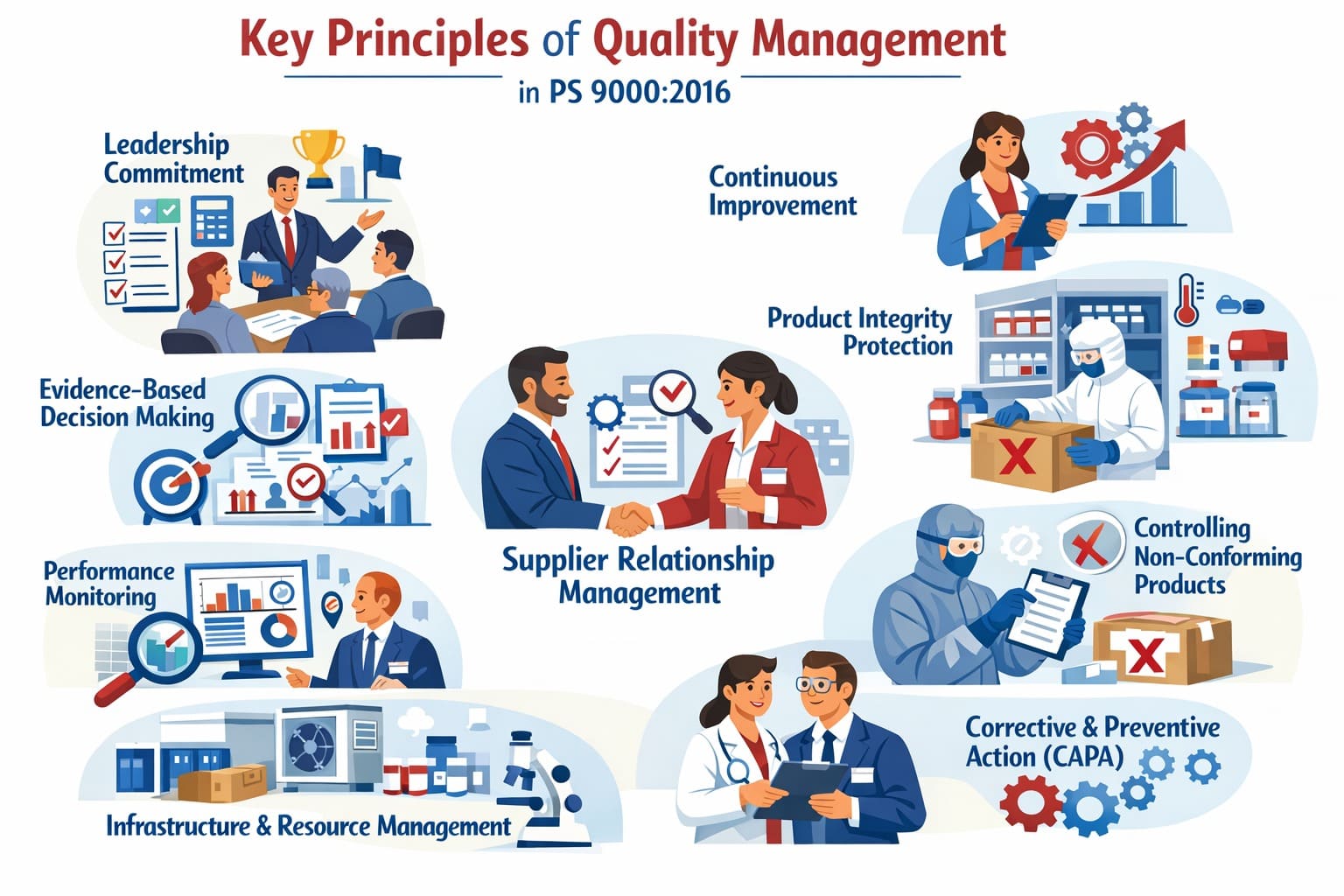
The following are the key principles of quality management in PS 9000:2016 certification:
- Leadership Commitment: Demonstrating active involvement, establishing quality objectives, allocating resources, and promoting a culture of compliance and accountability.
- Evidence-based Decision Making: Making informed decisions based on documented data, audit findings, performance indicators, and factual analysis.
- Continuous Improvement: Regularly evaluating performance through audits and reviews, implementing corrective and preventive actions to enhance system effectiveness.
- Product Integrity Protection: Ensuring proper storage conditions, temperature control, and handling practices to prevent deterioration, contamination, or damage to pharmaceutical products.
- Performance Monitoring: Tracking quality objectives, delivery timelines, non-conformities, and corrective actions to measure effectiveness and improve operational reliability.
- Supplier Relationship Management: Maintaining transparent and controlled relationships with approved suppliers to ensure consistent product quality, timely delivery, and regulatory compliance.
- Controlling Non-Conforming Products: Identifying, segregating, and managing damaged, expired, or suspect products to prevent unintended distribution and protect patient safety.
- Corrective and Preventive Action (CAPA): Establishing a structured system to investigate root causes of deviations and implement corrective and preventive measures to avoid recurrence.
- Infrastructure & Resource Management: Ensuring adequate facilities, equipment, and environmental controls are available to maintain pharmaceutical product quality throughout storage and distribution.
What are the Key Requirements for PS 9000:2016 Certification?
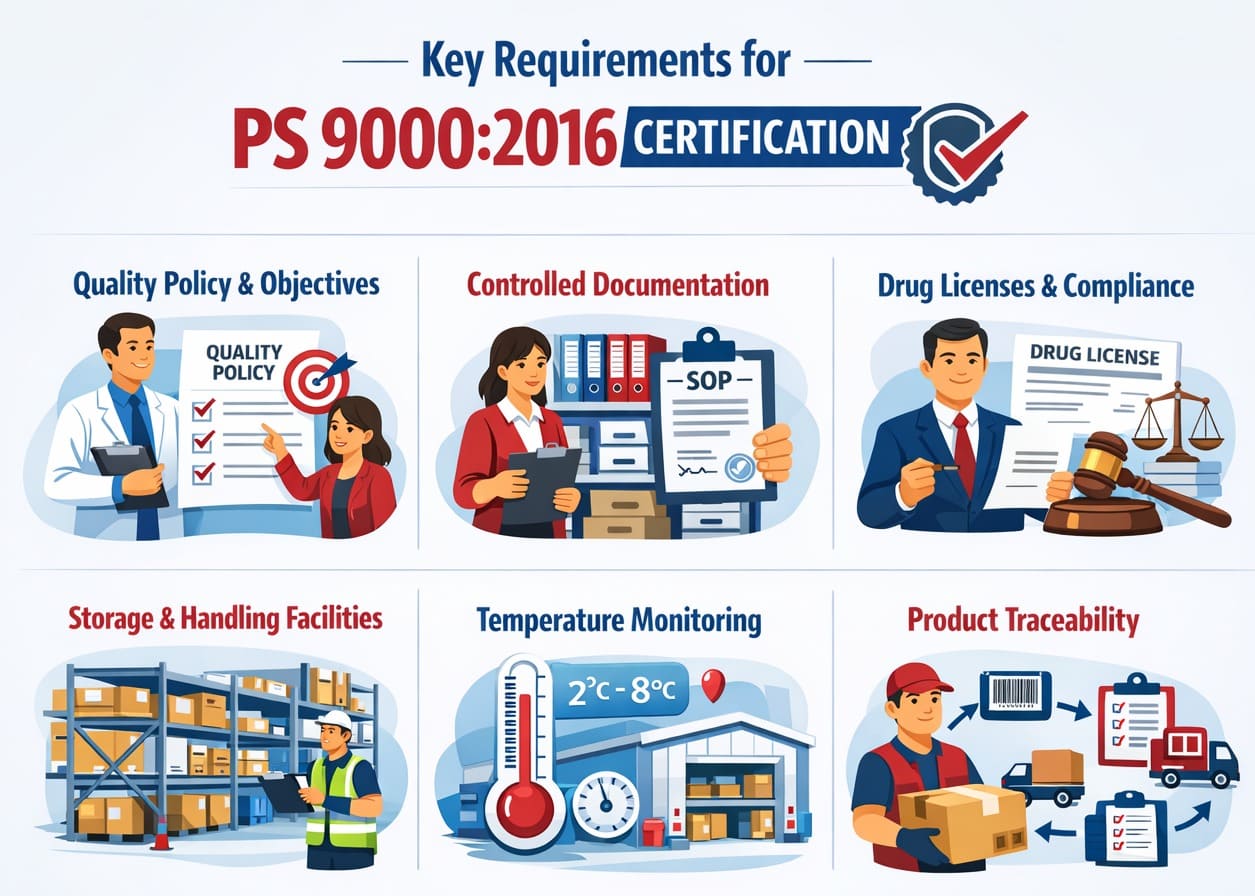
PS 9000:2016 outlines mandatory operational, regulatory, and system-based requirements that pharmaceutical distributors must fulfil to achieve structured quality compliance and certification approval. Some of them are:
1. Quality Policy and Objectives: The organisation must establish a documented quality policy and measurable objectives aligned with pharmaceutical distribution practices, ensuring commitment to compliance, product integrity, and continuous system improvement.
2. Controlled Documentation System: A formal document control system must be implemented to manage SOPs, records, forms, and policies, ensuring documents are approved, updated, accessible, and protected from unauthorised changes.
3. Valid Drug Licenses and Legal Compliance: Organisations must hold valid wholesale/export drug licenses and comply with applicable pharmaceutical laws and regulatory requirements governing storage and distribution.
4. Adequate Storage and Handling Facilities: Facilities must meet prescribed standards for cleanliness, segregation, security, ventilation, and environmental control to prevent contamination, mix-ups, or deterioration of medicines.
5. Temperature Monitoring and Calibration: Continuous temperature monitoring systems and calibrated equipment are required to maintain specified storage conditions and ensure product stability throughout warehousing and transportation.
6. Product Traceability Mechanism: A documented system must track products batch-wise from procurement to dispatch, enabling efficient recall and preventing distribution of expired, damaged, or counterfeit products.
Why is PS 9000:2016 Certification Important?
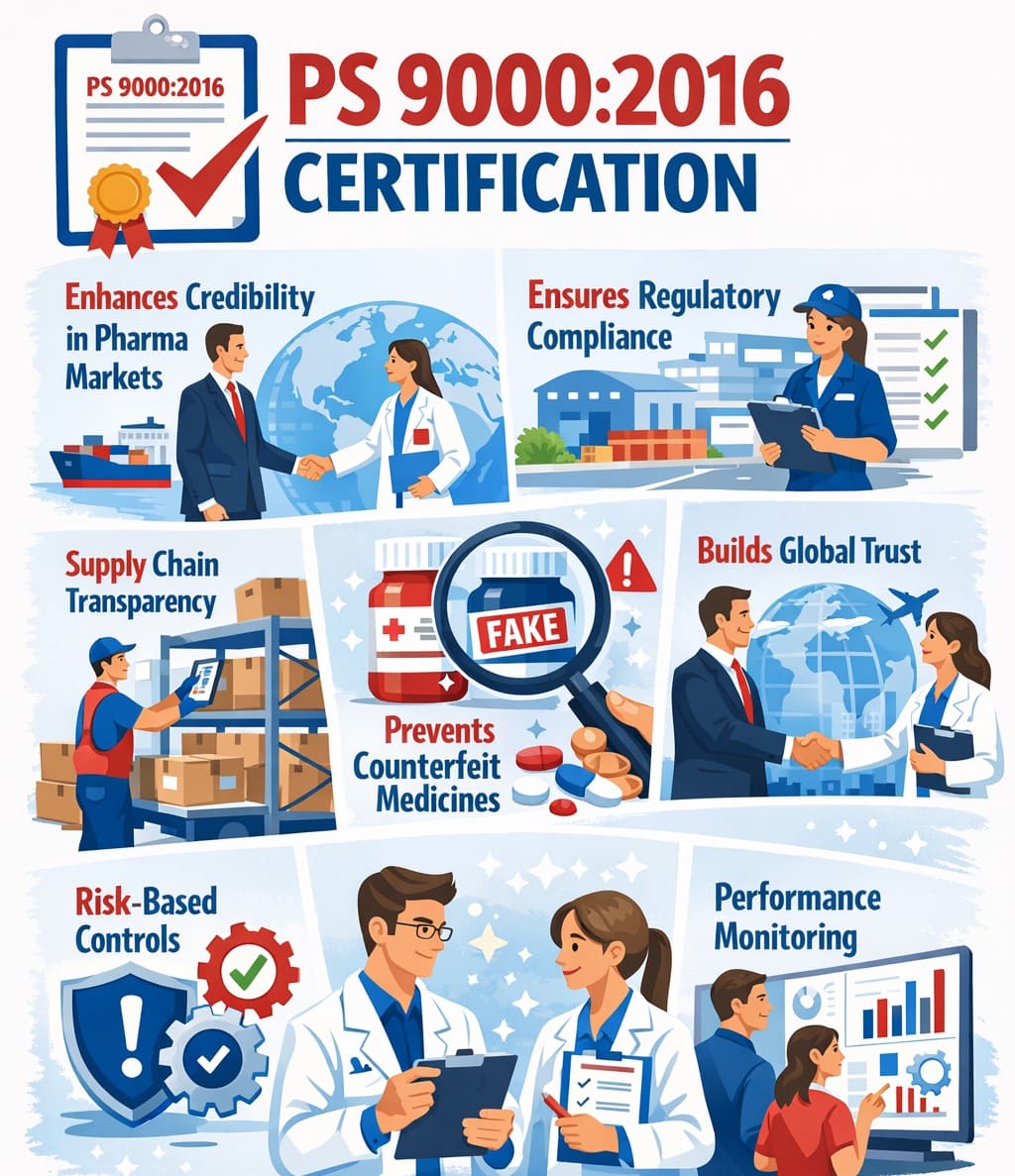
PS 9000:2016 certification plays a vital role in strengthening quality assurance within the pharmaceutical distribution sector. It provides a structured framework for maintaining product integrity, regulatory compliance, and supply chain transparency. The certification enhances business credibility and supports organisations in meeting domestic and international pharmaceutical distribution standards effectively. It is quite important, as it:
- Enhances credibility in domestic and export pharmaceutical markets
- Ensures compliance with pharmaceutical distribution regulations
- Improves transparency across the pharmaceutical supply chain
- Minimizes risks of counterfeit and substandard medicines
- Strengthens trust among regulators and global buyers
- Promotes systematic quality management practices
- Supports risk-based operational control mechanisms
- Encourages consistent monitoring and performance evaluation
What Documents are Required for PS 9000:2016 Certification?
The key documents required to obtain PS 9000:2016 certification includes:
- Quality Policy and Quality Manual
- Standard Operating Procedures (SOPs)
- Valid Drug License and Regulatory Registrations
- Organization Structure and Responsibility Matrix
- Warehouse Layout and Infrastructure Details
- Temperature Monitoring and Calibration Records
- Product Receipt, Storage, and Dispatch Records
- Batch-wise Stock Register and Traceability Records
- Complaint Handling and Recall Procedure Documents
- Deviation Reports and CAPA Records
What is the Cost of PS 9000:2016 Certification?
The cost of PS 9000:2016 certification varies based on factors such as the size of the organisation, the number of warehouse and distribution locations, the complexity of operations, and the level of documentation readiness. The usual expenses incurred in obtaining PS 9000 certification include application fees, pre-audit gap analysis, external audit charges, and consultancy support. Larger operations with multiple sites may incur higher costs, while well-prepared organisations with robust systems in place can reduce overall certification expenses.
What is the Process for Obtaining PS 9000:2016 Certification?
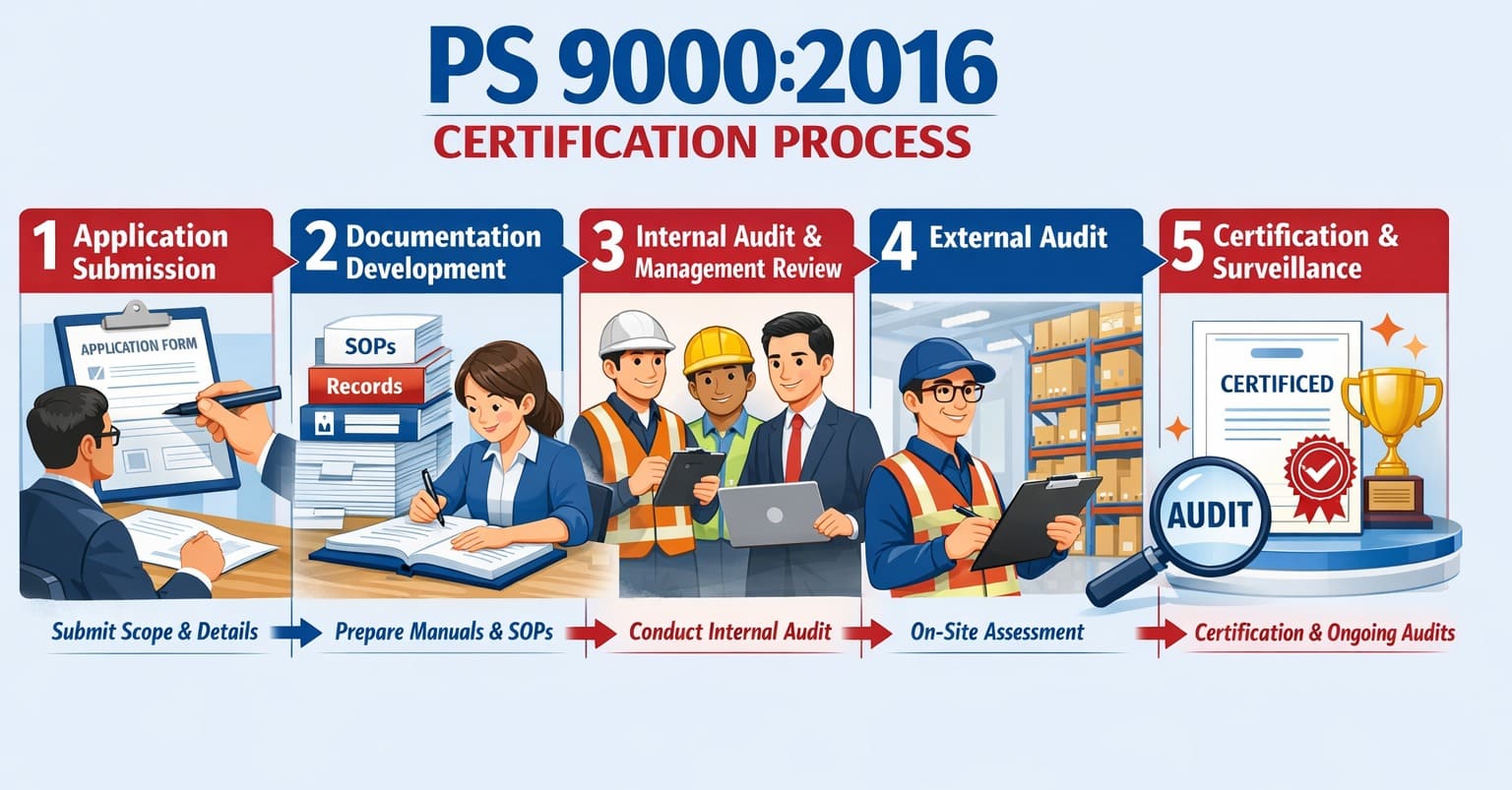
Here is the step-by-step process for successfully obtaining PS 2000:2016 certification:
1. Application Submission
The organisation submits a formal application to an accredited certification body, defining the scope of activities, warehouse locations, drug licences, and operational details for assessment under PS 9000:2016 requirements.
2. Documentation Development
The organisation prepares and formalises required documents, including quality manuals, SOPs, traceability records, temperature logs, compliance registers, and corrective action procedures to align operations with certification requirements.
3. Internal Audit and Management Review
An internal audit is conducted to evaluate compliance and identify non-conformities. Top management reviews audit findings and ensures corrective actions are completed before the external certification audit.
4. External Audit
The certification body conducts documentation review and on-site inspection of facilities, records, and processes to verify compliance with PS 9000:2016 quality management requirements.
5. Certification Grant and Surveillance
Upon successful audit and closure of non-conformities, certification is issued. The certification body further conducts periodic surveillance audits to ensure continuous compliance and maintenance of quality standards.
What is the Validity Period of PS 9000:2016 Certification?
The validity period of PS 9000:2016 Certification is generally three years from the date of issuance, subject to successful completion of periodic surveillance audits. During this period, the certification body conducts annual or scheduled surveillance assessments to verify continued compliance with quality management and regulatory requirements. After three years, the organisation must undergo a recertification audit to renew and maintain the certification status.
Get PS 9000:2016 Certified Today!
PS 9000:2016 Certification is a valuable quality benchmark for pharmaceutical wholesalers, distributors, and exporters aiming to enhance compliance, traceability, and operational efficiency. By implementing PS 9000:2016 standards, organisations can improve supply chain transparency, reduce risks, and build long-term trust with regulators and international buyers.
Start your certification journey today with us to elevate your pharmaceutical distribution practices.
FAQS
Have some questions about PS 9000:2016 Certification?
We have got you covered:
-
Is PS 9000:2016 certification mandatory for pharmaceutical exporters?
No, it is not legally mandatory, but many international buyers prefer certified suppliers for enhanced quality assurance and export credibility.
- Can PS 9000:2016 Certification be obtained by small distributors?
- What is the main objective of PS 9000:2016 certification?
- How does PS 9000:2016 certification differ from GMP certification?
- Can PS 9000:2016 certification enhance brand reputation?
- Does PS 9000:2016 certification support global market expansion?
- Does PS 9000:2016 cover cold chain management?
- How long does it take to obtain PS 9000:2016 certification?
- Is PS 9000:2016 recognised internationally?
- Can multiple warehouse locations be covered under one certification?
- Does PS 9000:2016 include supplier evaluation requirements?
- Is on-site inspection mandatory for PS 9000 certification approval?
- Does PS 9000:2016 require calibration of monitoring equipment?
- Is risk assessment compulsory under PS 9000:2016 certification?
- Can PS 9000:2016 certification be suspended?
- Does PS 9000:2016 cover transportation validation?
- Does PS 9000:2016 require continuous improvement evidence?
- Does PS 9000:2016 certification require segregation of expired medicines?
- Can PS 9000:2016 certification improve operational efficiency?
- Does PS 9000:2016 certification require documented warehouse cleaning procedures?


