
7 Common Reasons Why RPSL License Gets Cancelled & How to Avoid It
- by kapil
- Updated March 5, 2026
- 10 mins read
An RPSL License is a statutory authorization granted to recruitment and placement agencies under the Merchant Shipping (Recruitment and Placement of Seafarers) Rules, 2016, by the Directorate General of Shipping (DGS). It allows agencies to recruit Indian seafarers for foreign-going vessels while ensuring compliance with national and international maritime labour standards.
However, an RPSL License remains valid only if the agency continuously complies with inspection norms, grievance handling obligations, and documentation requirements. In recent years, enforcement actions have increased, and multiple agencies have faced RPSL License cancellation for procedural as well as serious compliance violations.
To understand the foundation of eligibility, documentation, and validity, agencies should first review the complete RPSL License registration process and approval framework, which explains the licensing lifecycle and DG Shipping expectations.
Current RPSL License Status in India: What the Data Shows
According to the latest monitoring data released by the Directorate General of Shipping, the status distribution of RPSL agencies in India is as follows:
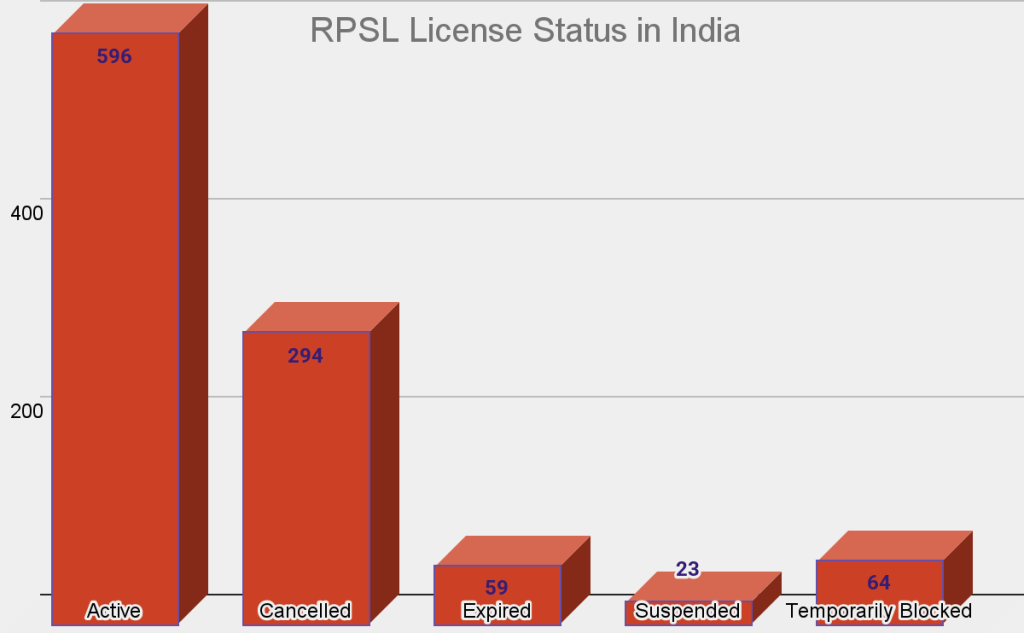
Out of a total of 1,036 registered RPSL agencies, 28.4% have faced RPSL License cancellation.
This means more than one in four RPSL agencies have lost their RPSL License at some stage, reflecting the strict enforcement framework under the Merchant Shipping (Recruitment and Placement of Seafarers) Rules, 2016.
The data clearly demonstrates that DG Shipping’s action against non-compliant RPSL agencies is a consistent reality, not an exception.
The Legal Structure Behind an RPSL License
Every RPSL License operates in alignment with the Maritime Labour Convention, 2006 (MLC 2006). This international convention mandates the protection of seafarers’ wages, welfare, and working conditions.
Under DGS RPSL rules, agencies must maintain annual inspection compliance, valid bank guarantees, structured grievance mechanisms, accurate Form-I entries, and updated office records. Failure in any of these areas can trigger proceedings under Rule 12.
Additionally, DG Shipping’s expectations have tightened under the latest compliance circulars. The recent RPSL License DG Shipping update 2025 explains how enforcement mechanisms and digital scrutiny have evolved. Let’s have a look on most common reasons for licence cancellation.
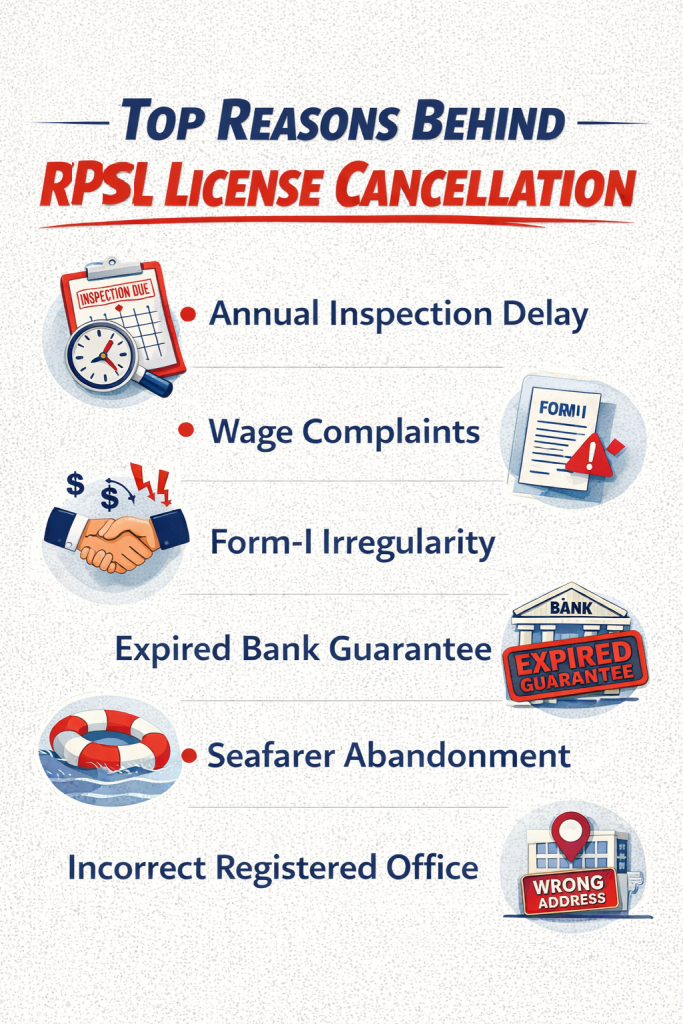
1. Failure to Conduct Annual Inspection
The most common reason for RPSL License cancellation is failure to conduct annual inspection within prescribed timelines.
Annual inspection is not a mere formality. It verifies whether the agency:
- Maintains proper infrastructure
- Displays the RPSL License certificate
- Employs qualified personnel
- Maintains updated digital records
- Follows grievance redressal protocols
Recent enforcement data indicate that inspection-related non-compliance forms a substantial portion of cancellation orders. When inspection is delayed for consecutive years, DG Shipping interprets it as systemic negligence under DGS RPSL rules.
Agencies can prevent such risk by aligning operations with a structured RPSL compliance checklist and annual filing system, ensuring inspection is completed before expiry deadlines.
For instance: The company failed to conduct Annual Inspections for 2022 and 2023 despite Show Cause Notices. During a personal hearing (March 6, 2025), the Director admitted non-compliance and ignorance of online procedures. License withdrawal followed under Rule 12.
2. Wage Complaints and Grievance Escalation
Another leading cause of RPSL License cancellation is wage-related complaints.
Under MLC 2006 standards, recruitment agencies are responsible for ensuring that seafarers are not left unpaid or stranded due to employer defaults. In several documented enforcement actions, DG Shipping initiated proceedings after multiple grievances were filed regarding pending wages and delayed settlements.
The wage protection obligations and employer documentation requirements are explained under the MLC 2006 certification compliance guidelines, which detail financial security standards for vessel operators.
If grievances remain unresolved, the DGS may issue a Show Cause Notice. Repeated failure to provide satisfactory explanations can result in RPSL License withdrawal.
For example: Multiple grievances were filed for unpaid wages and misleading overseas deployment. Despite directives, wages were not fully settled. The Bank Guarantee was invoked, and the license was withdrawn with director debarment.
3. Seafarer Abandonment and Non-Reporting
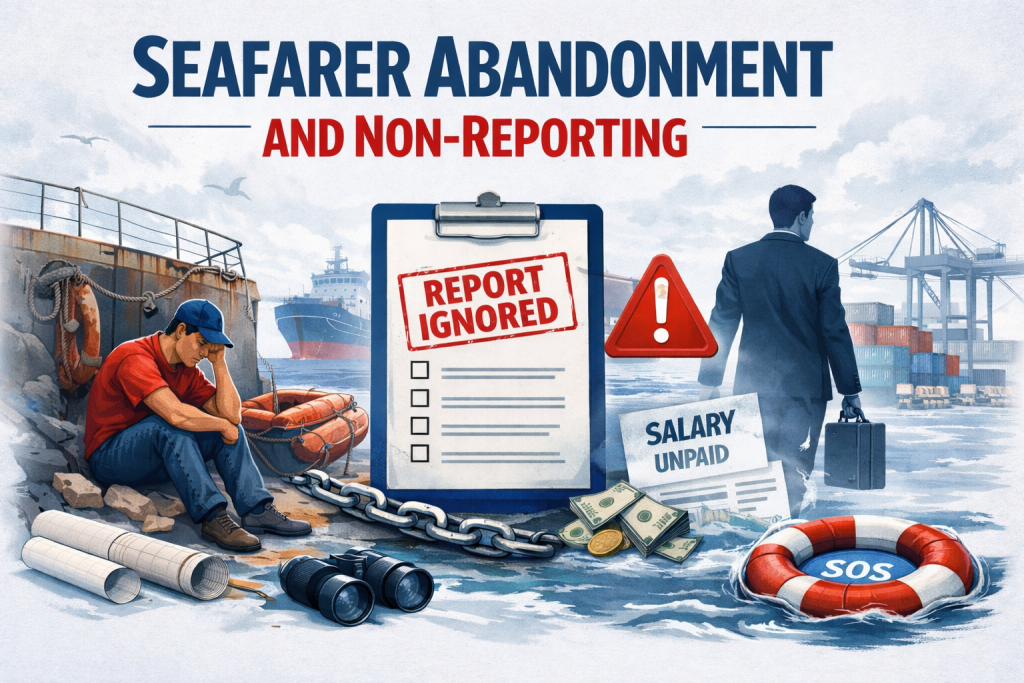
Failure to report abandonment cases has directly resulted in RPSL License cancellation in multiple instances.
Under Rule 5 obligations, agencies must inform DG Shipping immediately if deployed seafarers face abandonment, wage default, or passport confiscation issues. Concealment or delayed reporting is treated as a breach of fiduciary responsibility.
The operational responsibilities of recruitment agencies under the RPS framework are further elaborated in the detailed RPSL operational compliance overview, which explains reporting mechanisms and accountability standards.
Agencies must maintain active tracking systems for deployed crews to avoid DG Shipping exposure.
4. Misuse of Form-I and Digital Portal Irregularities
Digital scrutiny has significantly increased. DG Shipping closely monitors Form-I uploads, vessel capacity alignment, and joining records.
In certain enforcement cases, bulk uploading of seafarer entries within short timeframes, deletion of generated Form-I records, and incorrect sea service updates were cited as grounds for cancellation.
Such irregularities are treated as misuse of the government migration portal. Since Form I is directly linked to RPSL License monitoring, any discrepancy can quickly escalate into formal proceedings.
For instance: Form-I records were generated and deleted for multiple seafarers, violating Rule 5(1)(q). The agency also failed to attend hearings. License withdrawn; directors debarred for five years.
5. Expired Bank Guarantee or MLC Documentation
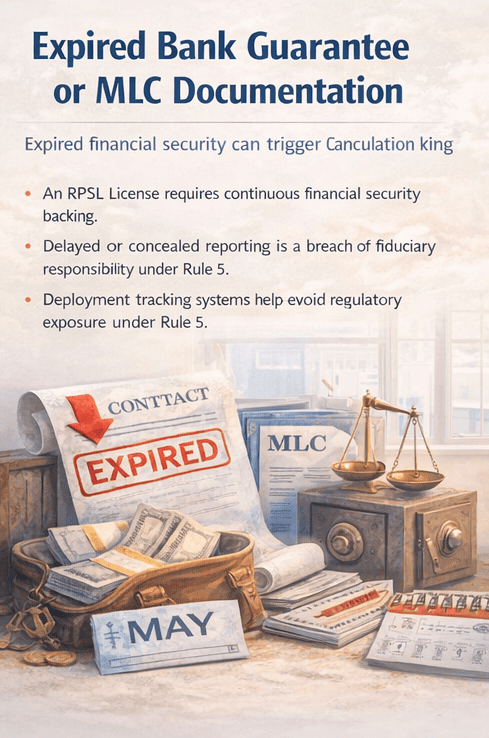
An RPSL License requires continuous financial security backing. If the bank guarantee expires or does not align with the validity period of the license, DG Shipping may initiate cancellation proceedings.
Similarly, expired MLC documentation or Financial Security Documents weaken compliance standing.
Agencies that periodically audit their statutory validity dates under a structured RPSL License compliance management system significantly reduce the risk of document-related cancellation.
For example: The agency allowed its Bank Guarantee, MLC, and Financial Certificates to expire and failed to apply for renewal within six months prior to expiry as mandated under Rule 9(2). License withdrawn.
6. Incorrect Registered Office or Physical Non-Compliance
During surprise inspections, DG Shipping has discovered agencies operating from unregistered addresses or failing to update office relocation details in the DGS system.
Physical non-verification undermines DG Shipping’s credibility. Under Rule 17, maintaining an operational registered office is mandatory for RPSL License validity.
Ensuring proper address updates and inspection coordination forms an essential part of structured RPSL compliance.
For instance, a surprise inspection revealed the registered office was not operational; signage displayed another company’s name. Letters returned “No Such Person at Address.” License withdrawn under Rule 12.
7. Ignoring Show Cause Notices
A Show Cause Notice is a final opportunity before cancellation. DG Shipping provides an opportunityto hearg under Rule 12 before withdrawing an RPSL License.
In several cancellation cases, agencies either failed to respond within the stipulated period or provided incomplete explanations. Once the Director passes a withdrawal order, the RPSL License stands cancelled with immediate effect.
Understanding procedural safeguards and enforcement patterns through the latest DGS RPSL update analysis helps agencies anticipate compliance risks.
Other specific issues:
- No up-to-date seafarer records; wage settlements unverified
- No qualified management staff (General Manager absent on inspection day)
- Seafarers lacked required certifications (only CDC, no GP rating)
- No pre-employment interview procedures
- Management staff lacked maritime industry knowledge
- No documented annual inspection reminder procedures
- Poor record-keeping
- No verification of placements
- Missing documentation
- Seafarers signed off without wages
- MLC violations
- Forced placement on Iranian vessels
- Confined in hotels
- Unlawful detention
- Alleged monetary fraud with multiple seafarers
What Do the Latest RPSL Compliance Numbers Reveal About Active Agencies and DG Shipping Enforcement Actions?
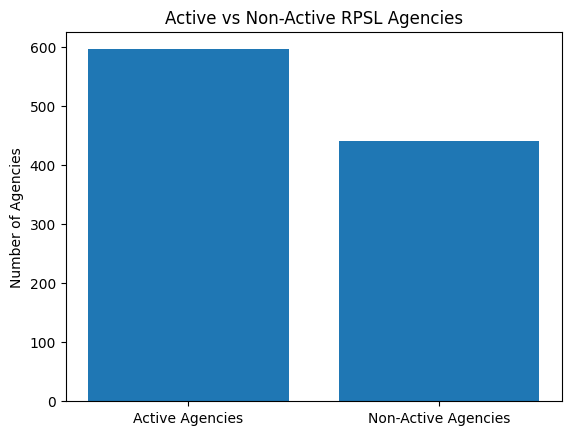
As per the latest monitoring framework of the Directorate General of Shipping, out of 1,036 registered RPSL agencies, only 596 agencies (57.5%) are currently active, while 440 agencies (42.5%) fall under non-active categories.
This non-active segment includes 294 cancelled licenses (28.4%), 23 suspended agencies (2.2%), 64 temporarily blocked entities (6.2%), and 59 expired licenses (5.7%).
These figures clearly indicate that more than two out of every five registered agencies have faced regulatory disruption.
The actions taken by DG Shipping include cancellation under Rule 12, suspension of online migration privileges, temporary blocking of portal access, invocation of bank guarantees in financial default cases, and director debarment in serious violations, reflecting a structured and enforcement-driven compliance environment.
How to Prevent RPSL License Cancellation
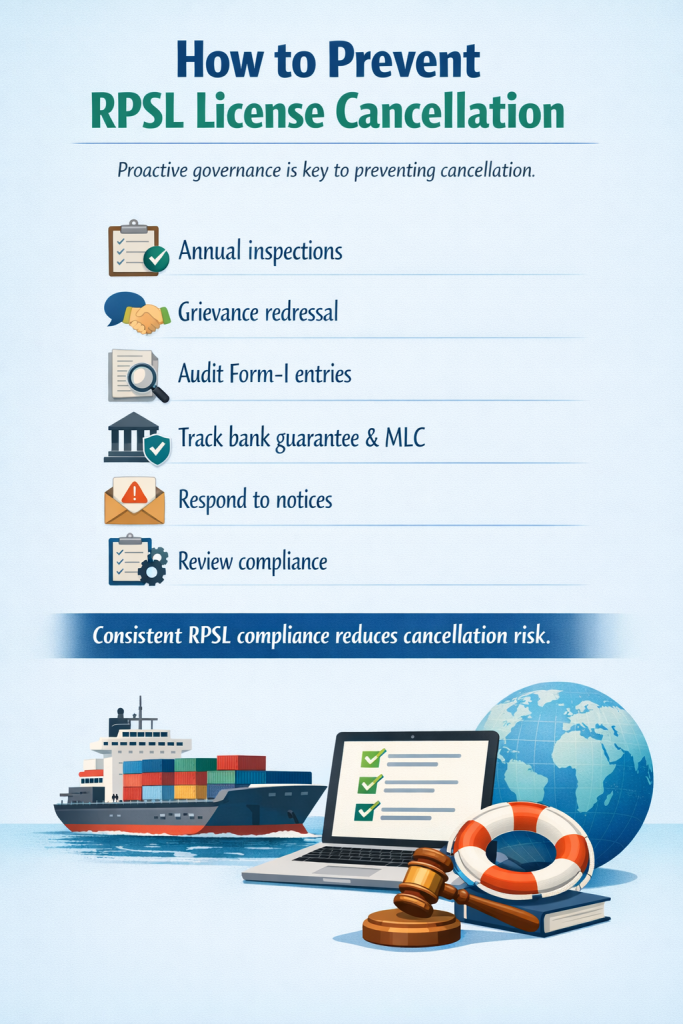
Preventing RPSL License cancellation requires proactive governance rather than a reactive response.
Agencies should:
- Complete annual inspections before due dates
- Maintain transparent grievance redressal
- Audit Form-I entries internally
- Monitor bank guarantee and MLC validity
- Respond promptly to DG Shipping notices
- Periodically review compliance under the official RPSL framework
Organizations that treat RPSL compliance as a continuous process rather than a yearly obligation are significantly less likely to face cancellation.
Compliance Risk & Prevention Matrix for RPSL Agencies
RPSL License cancellation typically follows identifiable compliance failures rather than isolated incidents. The following compliance risk matrix outlines major DG Shipping triggers and structured preventive measures for RPSL agencies.
| Compliance Area | Common Violation Trigger | Regulatory Risk | Preventive Action |
|---|---|---|---|
| Annual Inspection | Missed inspection window | Cancellation under Rule 12 | Compliance calendar |
| Form-I Upload | Cluster generation/mismatch | Digital investigation | Internal audit |
| Wage Complaints | Unresolved grievances | Suspension + BG invocation | Wage monitoring |
| Abandonment | Failure to report | Immediate suspension | Crew tracking system |
| Bank Guarantee | Expired validity | Financial enforcement | Renewal alerts |
| Registered Office | Non-verification | Suspension risk | Address update |
| Show Cause Notice | No response | Direct withdrawal | Legal response protocol |
KEY TAKEAWAYS
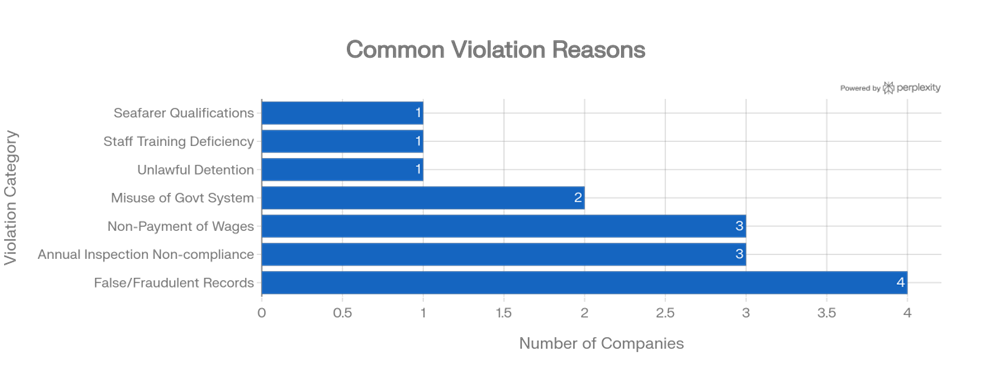
- Primary Risk: False/fraudulent seafarer records (67% of cases)
- Most Common Issue: Misuse of the government system without verification
- Seafarer Vulnerability: 50% of cases involved non-payment or unsafe placement
- Enforcement: Zero-tolerance policy – all fraud cases result in immediate withdrawal
- Geographic Pattern: Mumbai shows 83.33% of cancellations (higher enforcement or concentration)
- Penalty Severity: Combined INR 55+ crore penalties + 5-year director bans
- Quick Action: Average 2-6 months from complaint to license withdrawal
Frequently Asked Questions (FAQs)
Q1. What percentage of RPSL agencies have faced cancellation in India?
Out of 1,036 registered RPSL agencies, 294 have been cancelled, approximately 28.4%, meaning more than one in four agencies lost their license.
Q2. How many RPSL agencies are currently active in India?
As per the latest DGS monitoring data, 596 agencies are active, reflecting that only about 57% of total registered agencies remain fully operational.
Q3. How many agencies are currently under suspension or temporary block?
Currently, 23 agencies are suspended, and 64 are temporarily blocked, indicating ongoing DG Shipping scrutiny in nearly 8% of cases.
Q4. How many RPSL agencies are inactive due to expiry?
At present, 59 agencies have expired licenses, which means they cannot legally recruit seafarers until renewal compliance is completed.
Q5. What is the total number of RPSL agencies registered under DGS?
There are 1,036 registered RPSL agencies in India, but only 596 maintain an active compliance status.
Q6. Can an RPSL License be suspended before cancellation?
Yes. Under Rule 12, authorities may suspend online privileges or operational rights before ordering full withdrawal.
Q7. Does cancellation of an RPSL License affect ongoing seafarer contracts?
No. The agency remains liable for all seafarers already recruited, even after license withdrawal.
Q8. Can directors of a cancelled RPSL agency start a new maritime company?
In serious violations, directors may face debarment and DIN blacklisting under Merchant Shipping Notice 11 of 2024.
Q9. Is digital Form-I monitoring linked to cancellation risk?
Yes. DGS conducts data scrutiny of Form-I entries, vessel capacity alignment, and migration records.
Q10.What happens to the Bank Guarantee after the license is cancelled?
It may be invoked under Rule 15 if violations involve wage default, abandonment, or serious compliance breaches.
You may also like


What Does Project Logistics Alliance Membership Offer?
Project Logistics Alliance membership offers an Indian project cargo business a