Table of Content
- What is ISO 7153-1:2016 Surgical Instrument Certification?
- Who needs ISO 7153-1:2016 Surgical Instrument Certification?
- Surgical Instruments Covered in ISO 7153-1:2016 Surgical Instrument Certification?
- Key Principles of Quality Management in ISO 7153-1:2016 Surgical Instrument Certification
- Difference Between ISO 7153 and ISO 13485
- Requirements for ISO 7153-1:2016 Surgical Instrument Certification
- Benefits of ISO 7153-1:2016 Surgical Instrument Certification
- Process for Obtaining ISO 7153-1:2016 Surgical Instrument Certification
What is ISO 7153-1:2016 Surgical Instrument Certification?
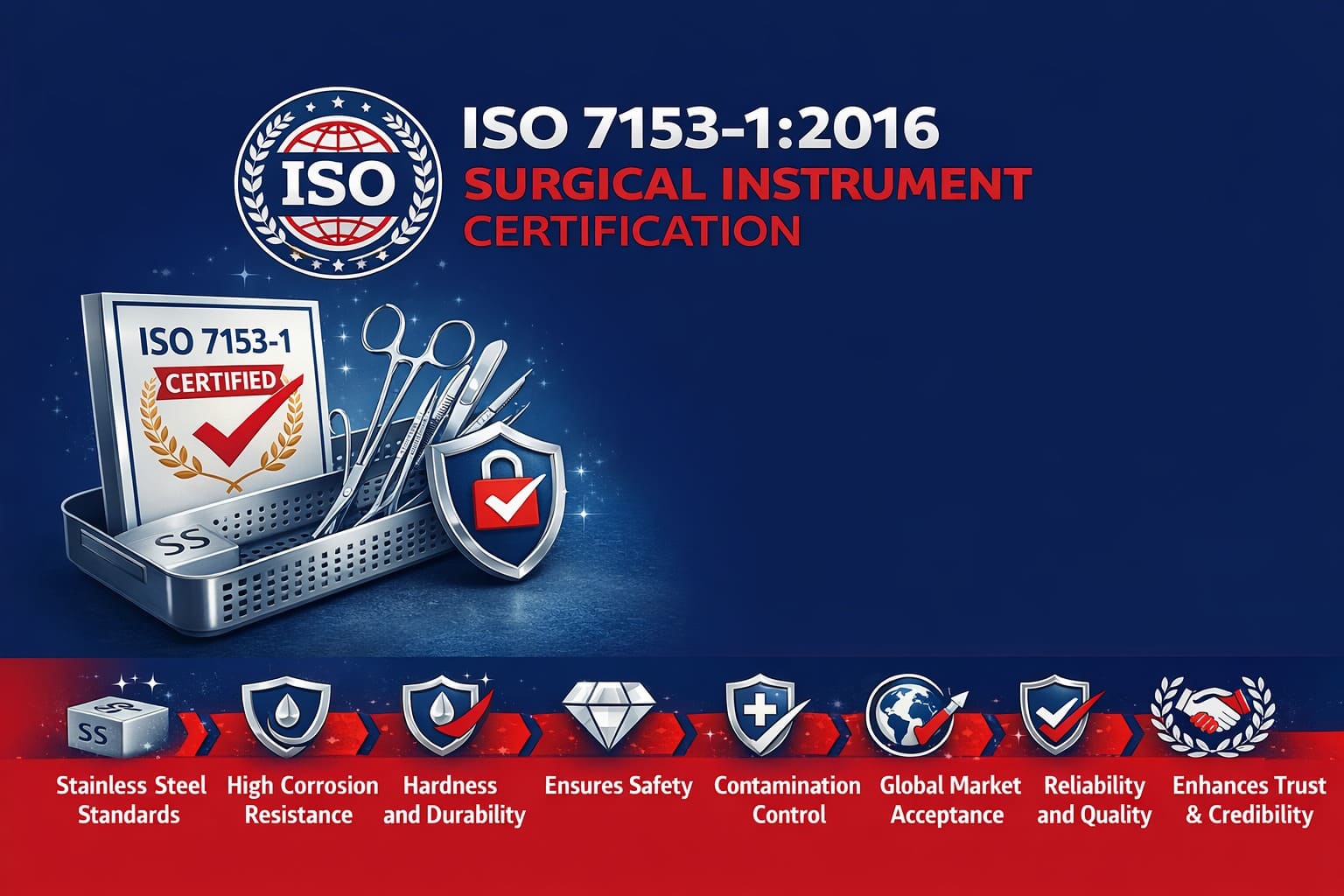
ISO 7153-1:2016 surgical instrument certification, issued by the International Organisation for Standardisation, is a standard benchmark that specifies the types and grades of stainless steel materials that are suitable for manufacturing surgical instruments. It focuses on the quality and material of surgical instruments used for medical and dental procedures.
ISO 7153-1: 2016 certification requires manufacturers to select appropriate steel grades to ensure chemical composition, corrosion resistance, hardness, durability, and safety of surgical instruments. It enhances the reliability of the instrument, reduces the risk of contamination and supports global market acceptance. It is a key certification in the medical device industry and helps manufacturers in enhancing the brand's credibility and trustworthiness.
Who needs ISO 7153-1:2016 Surgical Instrument Certification?
ISO 7153-1:2016 surgical instrument certification is for manufacturers or organisations dealing in medical equipment or surgical instruments. It is required by:
- Surgical instrument manufacturers and designers
- Material and alloy suppliers
- Quality assurance and regulatory teams in medical device companies
- Procurement specialists sourcing compliant materials
- Test laboratories
Surgical Instruments Covered in ISO 7153-1:2016 Surgical Instrument Certification?
|
Category |
Instruments Covered |
|
General Surgery |
Scalpel handles and blades, scissors, forceps, hemostats/clamps, retractors, probes, hooks, elevators, surgical mirrors |
|
Orthopaedic Surgery |
Bone cutters, chisels, osteotomes, gouges & rasps, bone-holding forceps, mallets, elevators, awls, orthopedic retractors, periosteal elevators |
|
Dental Instruments |
Explorers, probes, mouth mirrors, periodontal scalers & curettes, extraction forceps, elevators & luxators, dental chisels & spatulas, excavators, handpieces (non-powered reusable), scaler tips |
|
ENT (Ear, Nose & Throat) |
Microscopic forceps, ear specula, nasal specula, ENT scissors, suction tubes, head mirrors & handles, staging hooks, tonsil knives & dissectors |
|
Neurosurgery |
Dissectors, nerve hooks, spinal rongeurs, curettes (metal reusable components) |
|
Cardiovascular Surgery |
Vascular clamps, needle holders, cannulation instruments (metal reusable), aortic punch handles |
Key Principles of Quality Management in ISO 7153-1:2016 Surgical Instrument Certification
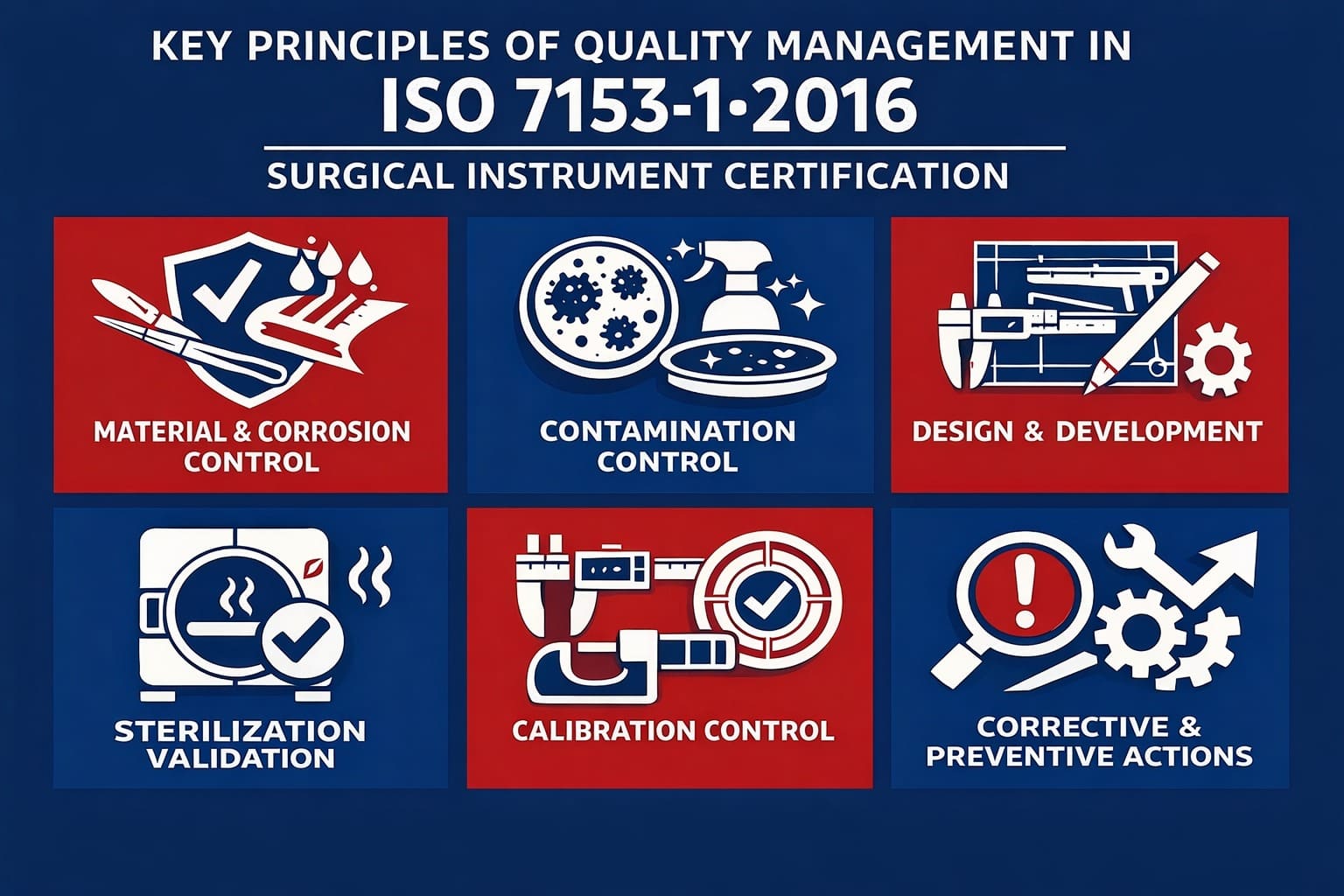
The following are the key principles of quality management in ISO 7153-1:2016 surgical instrument certification:
- Material Control and Corrosion Resistance: Ensuring surgical instruments have high corrosion resistance, chemical composition, mechanical properties and guarantees safety and durability.
- Contamination Control: Preventing particulate contamination and ensuring high instrument cleaning procedures and hygienic safety.
- Design and Development Control: Ensuring surgical instruments are developed systematically with defined inputs, outputs, verification, and validation stages with no defects.
- Validation of Sterilisation Processes: Ensuring that the surgical instrument can withstand the sterilisation process without corrosion, degradation, or performance loss.
- Calibration and Equipment Control: Calibrating all instruments and equipment frequently to ensure their accuracy, reliability, and quality.
- Corrective and Preventive Actions: Identifying potential risk before using an equipment and implementing corrective actions to improve operational efficiency, strengthen compliance, and support long-term sustainability.
Difference Between ISO 7153 and ISO 13485
Often manufacturers confused ISO 7153-1 with ISO 13485, as both standards regulate medical devices. However, ISO 7153-1:2016 surgical instrument certification is quite different from ISO 13485 Medical Devices QMS. Here’s how:
|
Aspect |
ISO 7153-1:2016 Certification |
ISO 13485 Certification |
|
Purpose |
Specifies materials suitable for manufacturing surgical instruments. |
Defines quality management system requirements for medical device organisations. |
|
Focus Area |
Material composition and suitability for reusable surgical instruments. |
Quality management across medical device design, production, and distribution. |
|
Scope |
Applies mainly to reusable surgical instruments and their material standards. |
Applies to all medical device manufacturers and related service providers. |
|
Who is it for? |
Surgical instrument manufacturers and material suppliers. |
Medical device manufacturers, suppliers, and regulatory-compliant organisations. |
|
Product Coverage |
Limited to reusable surgical instruments and their materials. |
Covers all categories of medical devices and related services. |
Requirements for ISO 7153-1:2016 Surgical Instrument Certification
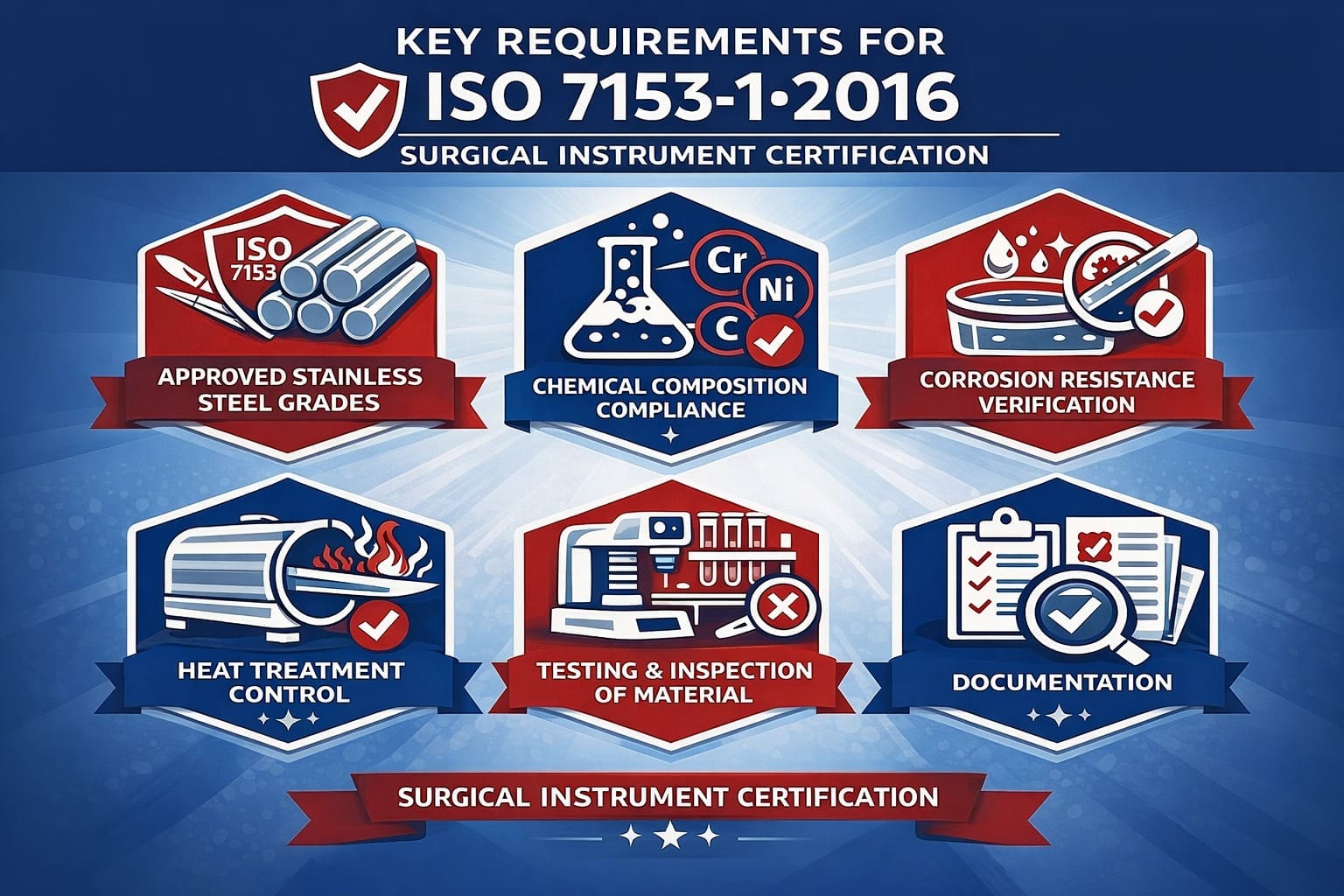
Here are the key requirements that every manufacturer or retailer must fulfil to obtain ISO 7153-1:2016 surgical instrument certification:
1. Use of Approved Stainless Steel Grades: The surgical instrument should be made only with the approved stainless steel grade to ensure its suitability for repeated sterilisation and mechanical strength.
2. Chemical Composition Compliance: The elements, like chromium, carbon, and nickel, should remain within the prescribed limit and not exceed it. The instrument should be according to the standard chemical composition requirement.
3. Corrosion Resistance Verification: The instrument material must demonstrate strong corrosion resistance under standard testing methods. The stainless steel should be of high quality that can withstand exposure to moisture, biological fluids, and sterilisation.
4. Heat Treatment Control: The stainless steel material should undergo a controlled heat treatment process to ensure hardness, strength, and durability in extreme conditions.
5. Testing and Inspection of Material: The manufacturer must undergo a series of tests and inspections, including chemical analysis, hardness testing, and metallurgical examination, to ensure compliance with certification requirements and standards.
6. Documentation: The manufacturer must prepare, maintain, and update all the relevant and necessary documentation, including the material specification sheet, material test certificate, chemical analysis report, inspection report, and traceability records.
Benefits of ISO 7153-1:2016 Surgical Instrument Certification
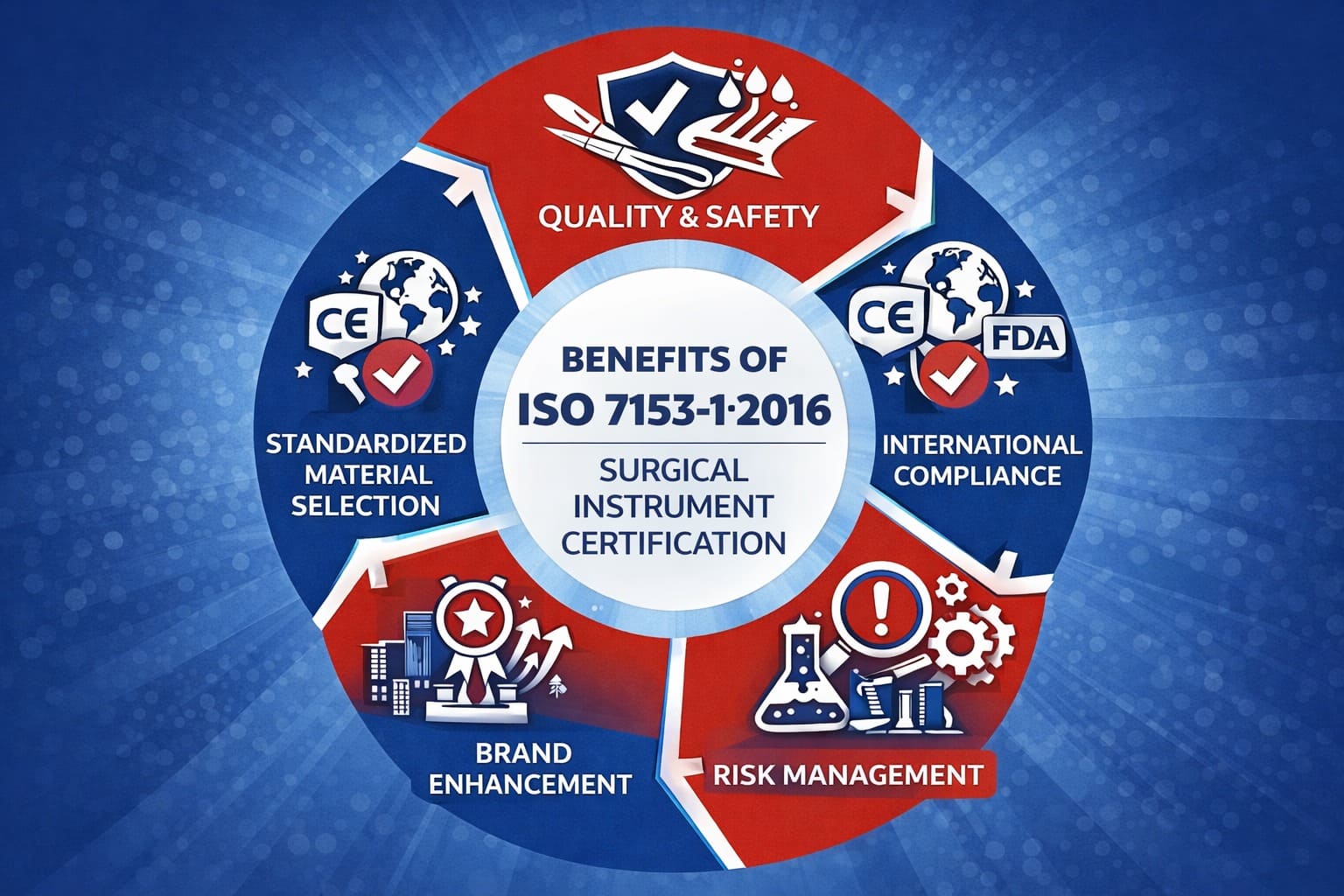
Here are the key benefits of obtaining ISO 7153-1:2016 surgical instrument certification:
1. It guarantees quality and safety by ensuring that instruments are produced with proper care, high-quality material, and can effectively resist corrosion or high temperature.
2. It helps manufacturers to meet international standards, ensure regulatory compliance, and aid in obtaining CE marking or FDA compliance certification.
3. It provides an effective framework for risk assessment, identification of failures or threats, and allows manufacturers to take preventive actions to avoid surgical disasters or mismanagement.
4. It allows manufacturers to build their brand image, gain trust, and offer a competitive advantage.
5. It facilitates standardised material selection by providing clear guideliness on appropriate material selection for different surgical instruments.
Process for Obtaining ISO 7153-1:2016 Surgical Instrument Certification
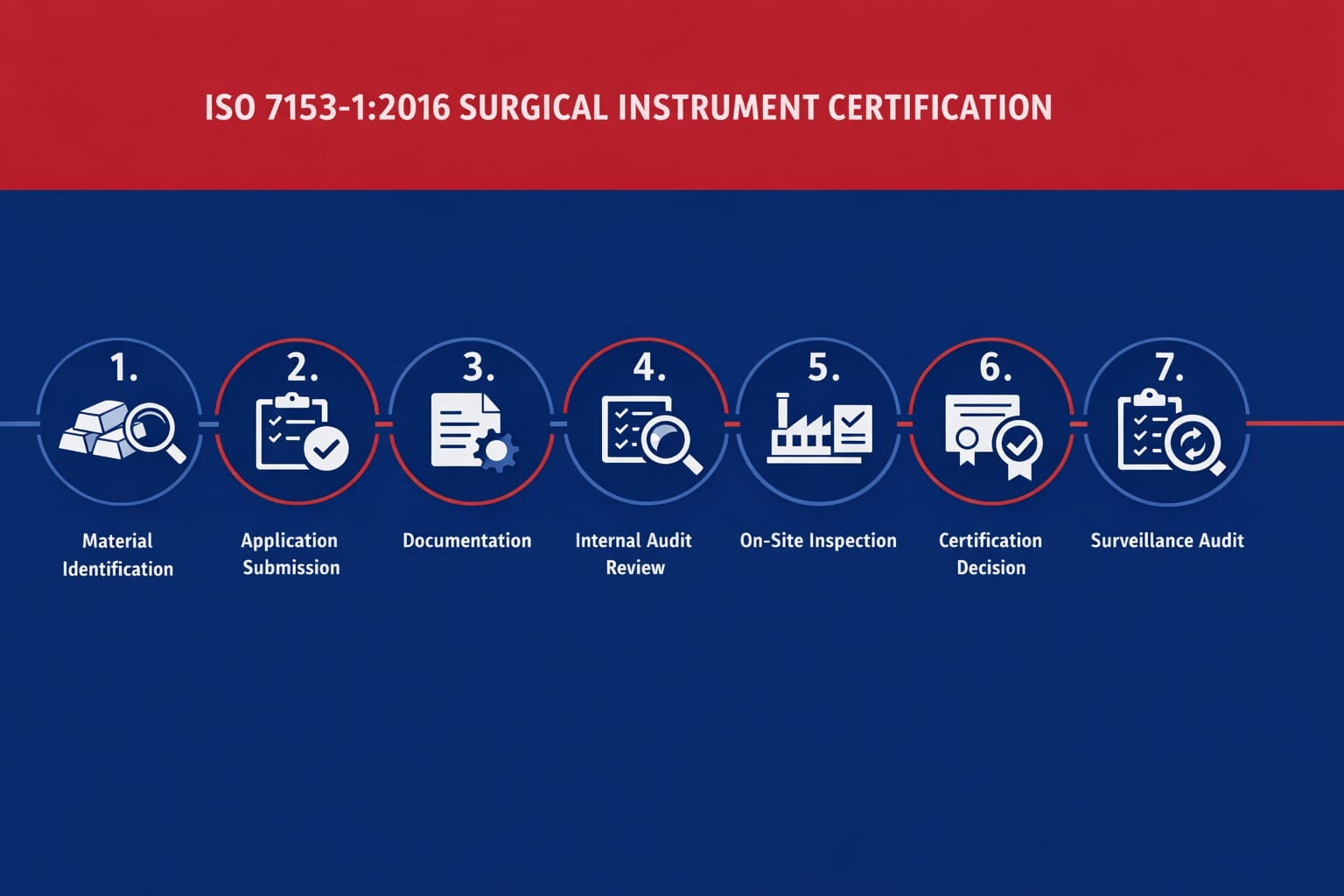
The process for obtaining ISO 7153-1 surgical instrument certification is quite easy. You just need to follow these steps:
1. Identification of Applicable Material Grade
The manufacturer needs to identify the specific stainless steel material listed under ISO 7153-1 required to make the intended surgical instrument. The manufacturer must ensure that it possesses the required chemical composition, corrosion requirements, and mechanical properties.
2. Application Submission
In the next step the manufacturer is required to submit an application to the accredited certification body. The application should contain the facility details, equipment details, material grade used, and supporting documentation to demonstrate compliance.
3. Documentation
The manufacturer must prepare and update all the relevant documentation, including the chemical composition report, manufacturing process, mechanical test results, and traceability records. Properly maintaining these records helps in internal and external audits.
4. Internal Audit and Management Review
The manufacturer must conduct an internal audit to carefully analyse all the relevant documents and missing information and prepare a comprehensive audit report. Afterwards, the management reviews the report, identifies potential gaps in the process and takes preventive actions.
5. On-Site Audit and Inspection
After carefully analysing the application process, the certification body conducts an on-site review to verify the processes, documentation, and implementation of testing and inspection procedures in the facility.
6. Certification Decision
The certification body, on its satisfaction that all the requirements are effectively complied with, grants the certificate to the manufacturer. If any non-conformities are found during the on-site audit, the certification body suggests suitable corrective actions before granting the certificate.
7. Surveillance Audit and Renewal
The certification body conducts an annual surveillance audit to ensure continuous compliance with the requirements of ISO 7513-1 certification requirements and renews the certification on its expiry.
The Way Ahead
ISO 7153-1:2016 surgical instrument certification is a key certification that ensures surgical instruments meet strict material, safety, and performance standards, boosting global market trust and regulatory compliance. Consulting an expert to obtain this certification simplifies documentation, testing, and certification approval. To strengthen your brand’s credibility, you can contact us and ensure long-term competitiveness across the globe.
FAQS
Have some questions about ISO 7153-1:2016 Surgical Instrument Certification?
We have got you covered:
-
What is the full name of ISO 7153-1?
It is “ISO 7153-1:2016 – Surgical Instruments – Materials – Part 1: Stainless Steel.”
- Is ISO 7153-1 mandatory?
- Does ISO 7153-1 certify companies?
- Which materials are covered under ISO 7153-1?
- Does the standard apply to disposable instruments?
- What industries benefit from this certification?
- Does ISO 7153-1 cover implantable devices?
- Does ISO 7153-1 regulate instrument design?
- Does ISO 7153-1 apply worldwide?
- What happens if materials fail compliance with ISO 7153-1 certification requirements?
- Does ISO 7153-1 cover powered surgical tools?
- Can ISO 7153-1:2016 compliance improve product lifespan?
- Why do hospitals prefer ISO 7153-1 compliant instruments?
- How does ISO 7153-1:2016 support infection control?
- Does ISO 7153-1 certification increase market acceptance?
- Can ISO 7153-1 certification be renewed?
- Are alloyed stainless steels allowed under ISO 7153-1?
- Is traceability required under ISO 7153-1?
- Does ISO 7153-1 apply to titanium instruments?
- Does ISO 7153-1 certification include labelling compliance?


