Table of Content
- What is ISO 31000:2018 Risk Management Certification?
- Key Principles of Quality Management in ISO 31000:2018 Risk Management Certification
- Scope of ISO 31000:2018 Risk Management Certification
- Difference Between ISO 31000 and ISO 22301
- Key Requirements of ISO 31000:2018 Risk Management Certification
- Why is ISO 31000:2018 Risk Management Certification Important?
- Process for Obtaining ISO 31000:2018 Risk Management Certification
- Document Required for ISO 31000:2018 Risk Management Certification
- Validity Period of ISO 31000:2018 Risk Management Certification
- Why choose Legal Babu?
What is ISO 31000:2018 Risk Management Certification?
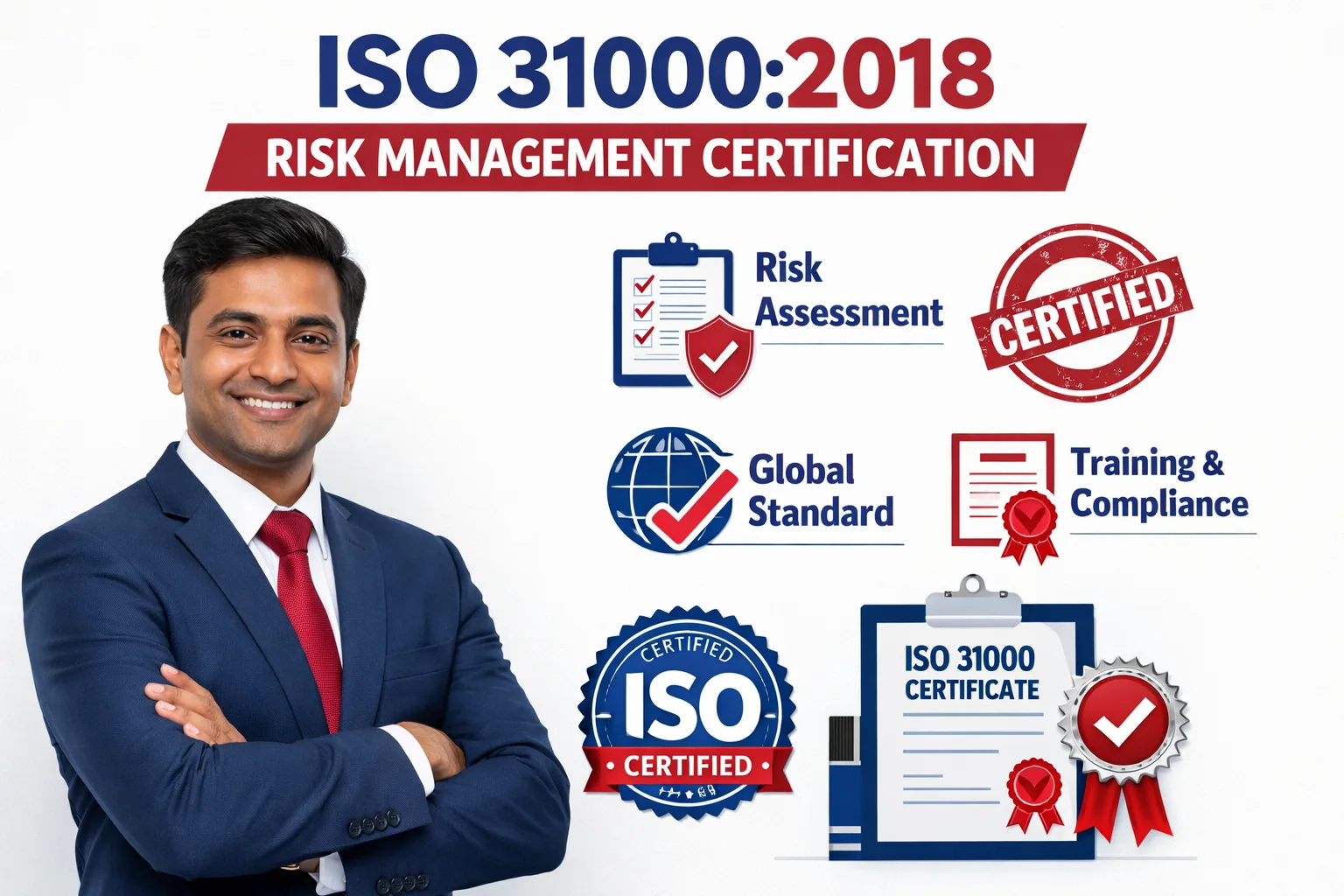
ISO 31000:2018 Risk Management certification refers to the implementation of an internationally recognised framework designed to help organisations identify, assess, and manage risks in a structured and systematic manner. The standard provides guidelines and principles that support businesses in integrating risk management into their overall governance, strategy, and decision-making processes. ISO 31000 certification integrated with ISO 27001, ISO 14001, ISO 45001, and ISO 10002 creates a proactive risk culture where organisations can anticipate potential threats, minimise losses, and seize new opportunities effectively.
What are the Key Principles of Quality Management in ISO 31000:2018 Risk Management Certification?
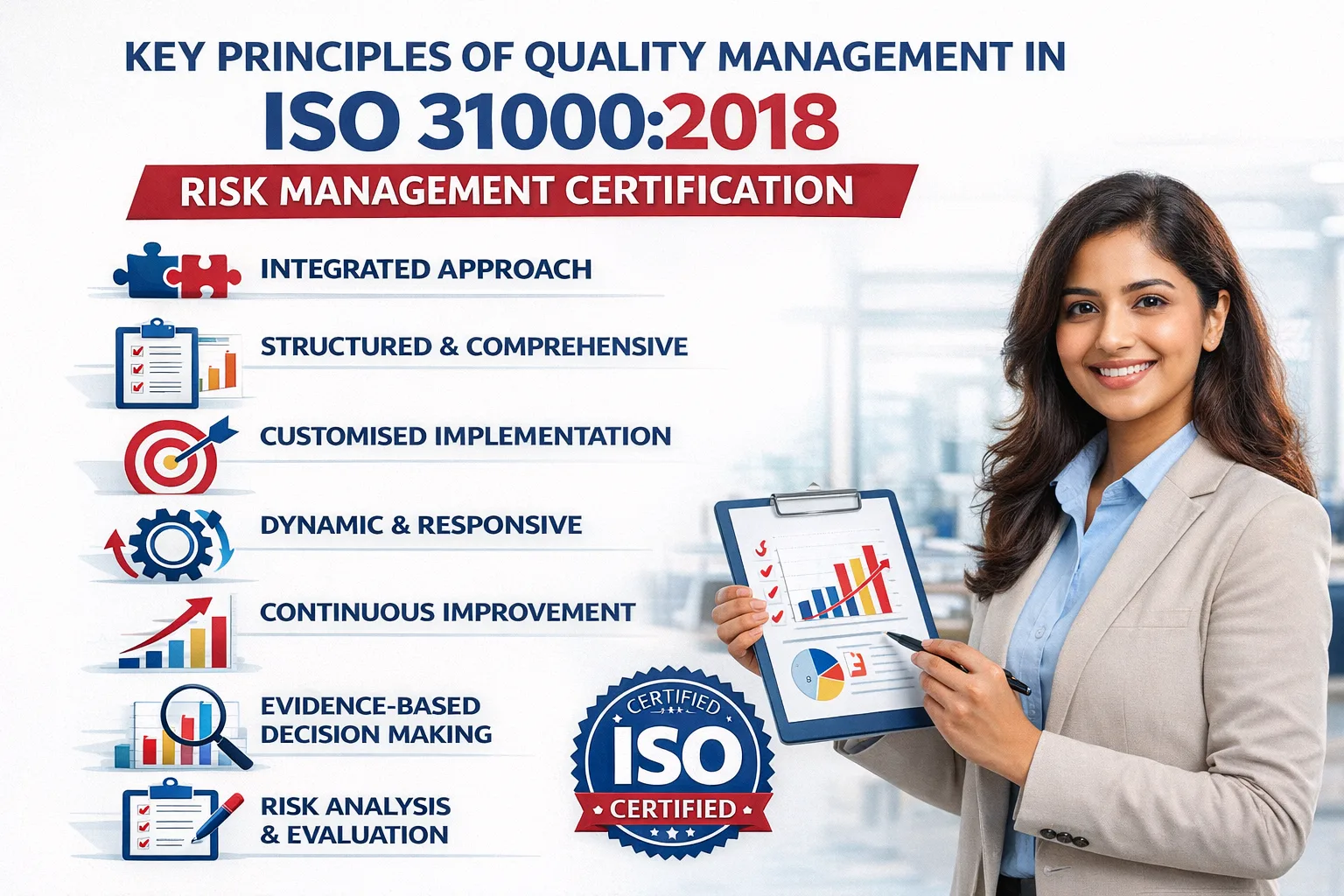
ISO 31000:2018 risk management certification is based on several core principles of quality management that help organisations build an effective risk management framework. Some of them include the following:
- Integrated Approach: It should be integrated into all organisational activities, including strategy, planning, and operations, ensuring risks are considered during every decision-making process.
- Structured and Comprehensive Process: A systematic and well-structured risk management approach improves consistency, reliability, and efficiency when identifying, analysing, and addressing potential risks.
- Customised Implementation: The risk management framework should be tailored to the organisation’s objectives, size, industry, and operational environment to ensure it effectively addresses relevant risks.
- Dynamic and Responsive: It should continuously adapt to internal and external changes, ensuring organisations remain prepared for emerging threats and evolving business conditions.
- Continuous Improvement: Organisations should regularly monitor, review, and improve their risk management practices to enhance effectiveness, strengthen resilience, and support long-term organisational success.
- Evidence-Based Decision-Making: Risk assessments rely on data, historical records, expert judgement, and analytical methods to evaluate risks accurately and support reliable organisational decisions.
- Risk Analysis and Evaluation: Identified risks are analysed to determine their likelihood and impact, allowing organisations to prioritise significant risks and allocate resources for effective control measures.
What is the Scope of ISO 31000:2018 Risk Management Certification?
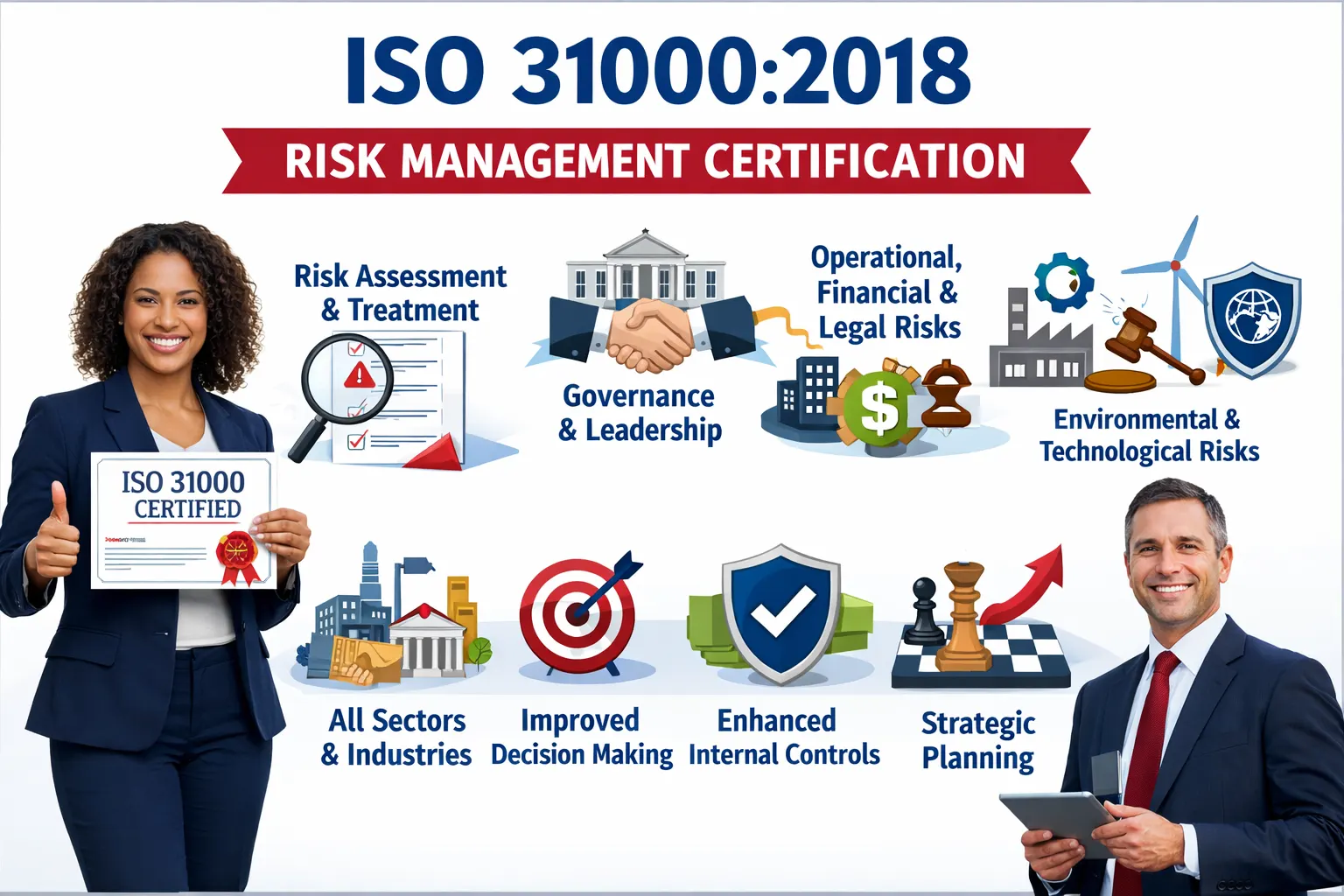
ISO 31000:2018 risk management certification provides internationally recognised guidelines for establishing a comprehensive risk management framework within organisations. It supports the systematic identification, analysis, evaluation, and treatment of risks that may influence organisational objectives, operational activities, and strategic planning. The framework can be applied across all sectors, including private companies, government institutions, and non-profit organisations, regardless of size or industry. It addresses a wide range of risks such as operational disruptions, financial uncertainties, legal exposures, environmental issues, and technological challenges.
The certification also emphasises integrating risk management into leadership practices, governance structures, policy development, and everyday business processes. By adopting these guidelines, organisations can improve decision-making, enhance internal control systems, and strengthen their ability to anticipate and respond to uncertainties.
What is the Difference Between ISO 31000 and ISO 22301?
ISO 31000:2018 Risk Management and ISO 22301 Business Continuity System both address organisational risk and resilience, but they focus on different aspects of managing uncertainty and operational disruptions. Here is the key difference between the two:
|
Basis of Difference |
ISO 31000:2018 Risk Management |
ISO 22301 Business Continuity System |
|
Purpose |
Provides guidelines for identifying, analysing, and managing risks across the organisation. |
Focuses on preparing organisations to continue operations during disruptions or emergencies. |
|
Scope |
Covers enterprise-wide risk management for strategic, operational, financial, and compliance risks. |
Concentrates specifically on business continuity planning and disruption recovery. |
|
Objective |
Helps organisations manage uncertainties and improve decision-making. |
Ensures organisations can maintain critical operations during crises or disasters. |
|
Application |
Applicable to any organisation or activity requiring risk management practices. |
Used by organisations needing structured business continuity and disaster recovery planning. |
What are the Key Requirements of ISO 31000:2018 Risk Management Certification?
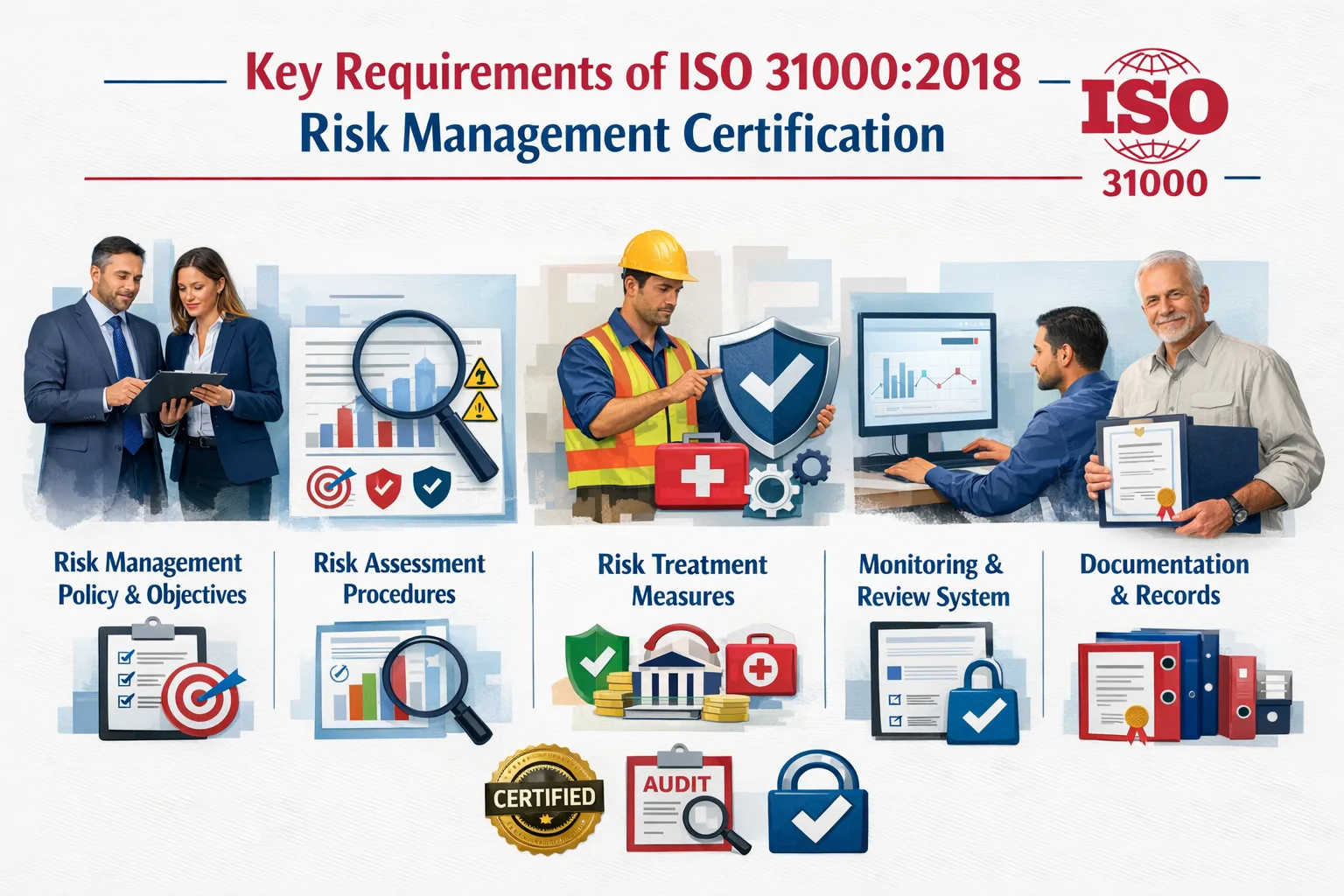
Here are the key requirements for ISO 31000:2018 risk management certification:
1. Risk Management Policy and Objectives: Organisations must establish a formal risk management policy that defines objectives, scope, responsibilities, and commitment to managing risks. The policy should align with organisational strategy and guide employees on how risks are identified, assessed, and managed across all operational and strategic activities.
2. Risk Assessment Procedures: A structured procedure must be implemented to identify, analyse, and evaluate risks that may affect organisational objectives. This requirement ensures that potential threats are systematically assessed based on their likelihood and impact before appropriate control measures are applied.
3. Risk Treatment Measures: Organisations must establish measures to manage identified risks effectively. This may involve implementing preventive controls, improving operational procedures, transferring risk through insurance, or developing contingency plans to reduce potential negative impacts on business operations.
4. Monitoring and Review System: A continuous monitoring and review mechanism must be implemented to evaluate the effectiveness of risk management practices. Regular assessments help organisations identify gaps, update risk controls, and ensure the framework remains aligned with changing business environments.
5. Documentation and Record Maintenance: Proper documentation of risk management policies, procedures, risk assessments, and control measures must be maintained. Maintaining accurate records ensures transparency, supports internal reviews, and provides evidence that risk management activities are properly implemented and monitored within the organisation.
Why is ISO 31000:2018 Risk Management Certification Important?
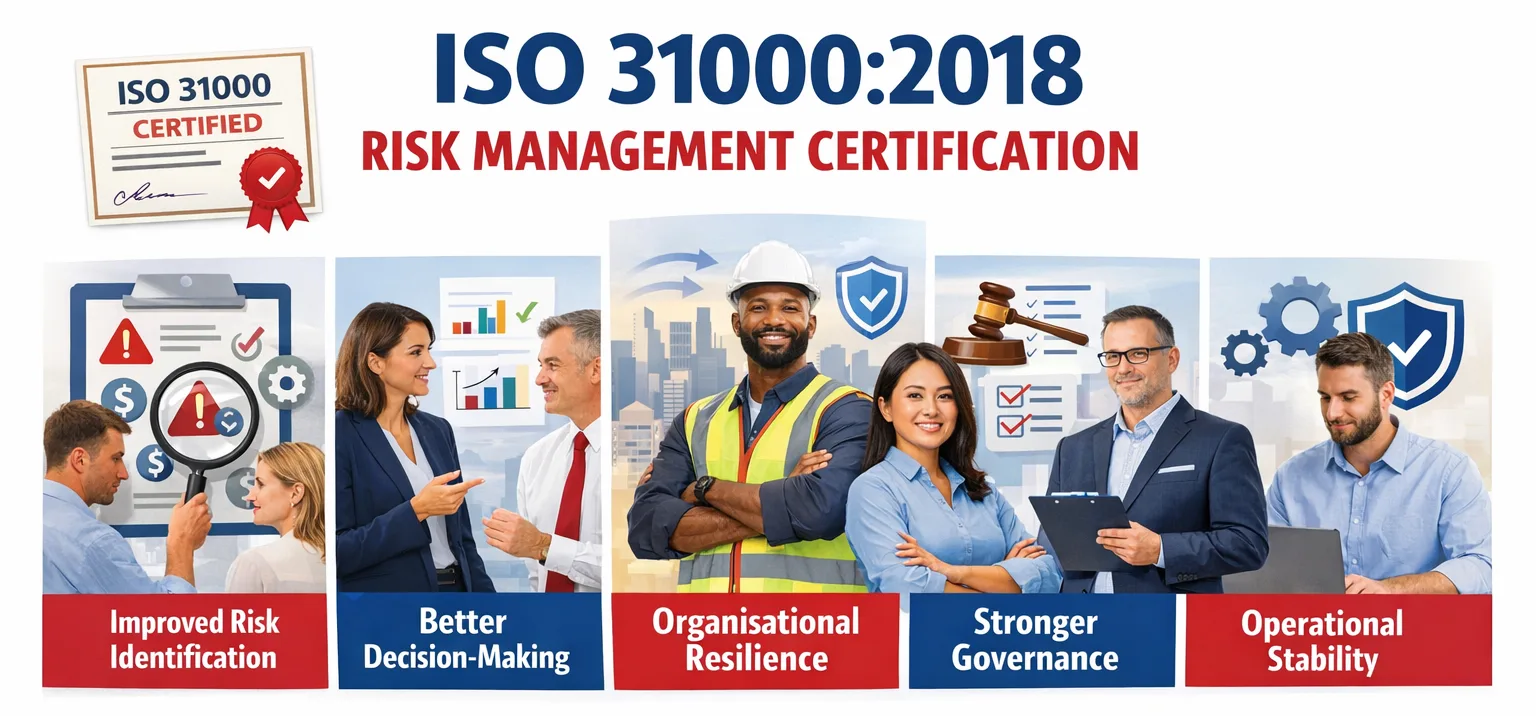
ISO 31000:2018 risk management certification plays a crucial role in helping organisations manage uncertainties and strengthen internal controls. It supports better planning, improves organisational resilience, and enables businesses to identify potential risks early while implementing effective strategies to minimise their impact. Here is why it is important:
- Improved Risk Identification: Helps organisations systematically identify potential operational, financial, legal, and strategic risks that may affect business objectives.
- Better Decision-Making: Provides structured risk analysis that supports management in making informed and evidence-based strategic and operational decisions.
- Enhanced Organisational Resilience: Strengthens the organisation’s ability to respond effectively to disruptions, uncertainties, and changing business environments.
- Stronger Governance and Accountability: Establishes clear risk management responsibilities and oversight mechanisms within the organisation’s governance structure.
- Improved Operational Stability: Helps businesses minimise unexpected disruptions by implementing preventive controls and structured risk management practices.
What is the Process for Obtaining ISO 31000:2018 Risk Management Certification?
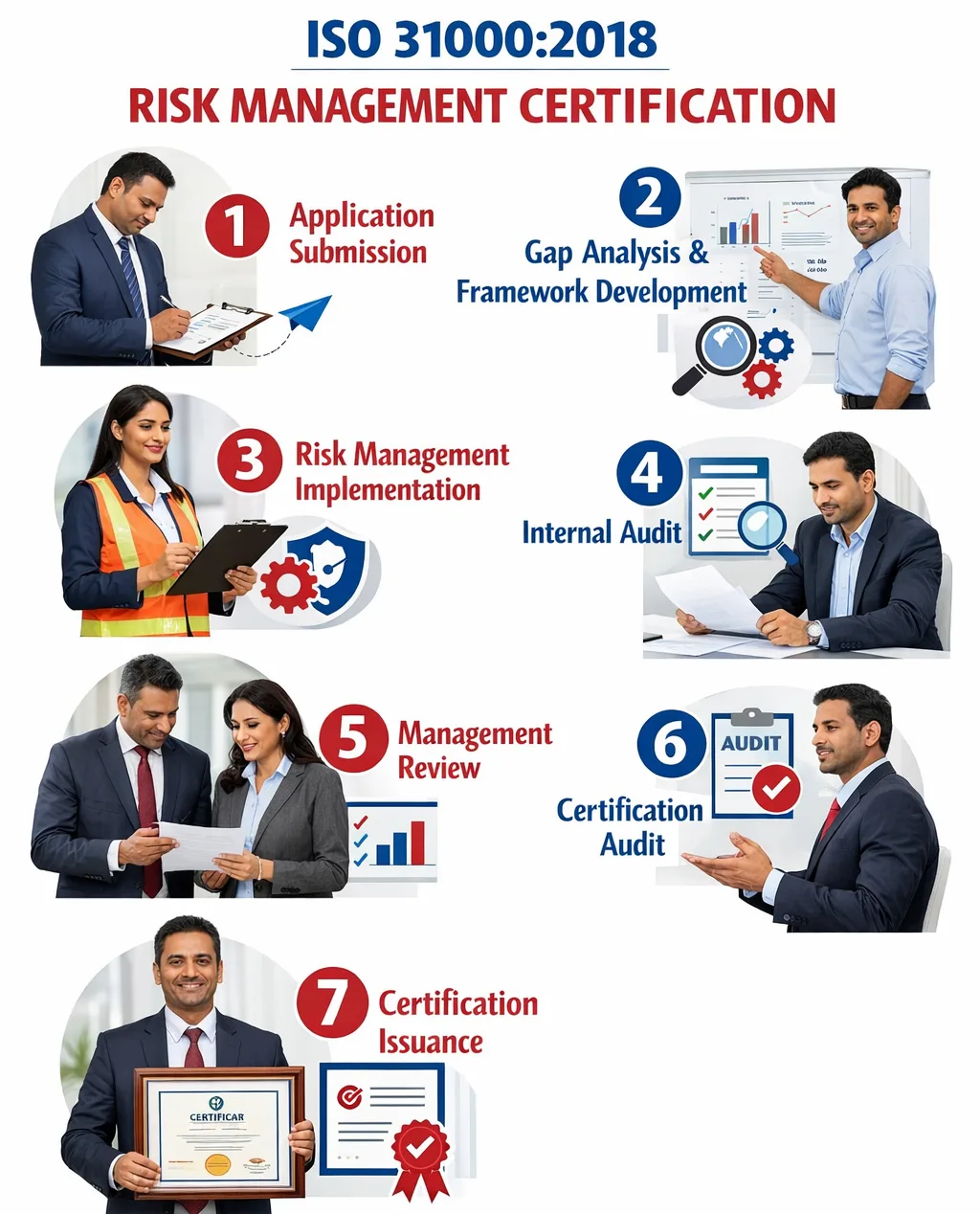
Here is the step-by-step process for ISO 31000:2018 risk management certification:
1. Application Submission
The organisation submits an application to a certification body along with company details, scope of implementation, and required documents to begin the certification and evaluation process.
2. Gap Analysis and Framework Development
A gap analysis is conducted to evaluate existing risk management practices and identify areas that need improvement before implementing the required risk management framework.
3. Implementation of Risk Management System
The organisation establishes risk management policies, procedures, and controls. Risk identification, analysis, and treatment processes are integrated into organisational operations and decision-making activities.
4. Internal Audit
An internal audit is conducted to assess whether the risk management framework is properly implemented and functioning effectively. This helps identify non-conformities and areas that require corrective actions.
5. Management Review
Top management reviews the internal audit results, risk performance, and system effectiveness to ensure the framework aligns with organisational objectives and to approve necessary improvements.
6. Certification Audit
An external certification body conducts an audit to verify that the organisation’s risk management framework meets the requirements and guidelines of the standard.
7. Issuance of Certification
If the organisation successfully meets the audit requirements, the certification body issues the certificate confirming compliance with recognised risk management practices.
What are the Document Required for ISO 31000:2018 Risk Management Certification?
Organisations applying for ISO 31000:2018 risk management certification must maintain essential documentation to demonstrate an effective risk management framework and organisational compliance. The key documentation required includes:
- Risk Management Policy
- Business Impact Analysis (BIA) Report
- Risk Management Framework Documentation
- Risk Assessment and Risk Analysis Reports
- Risk Treatment Plan
- Roles and Responsibilities Document
- Internal Audit Reports
- Management Review Records
- Corrective and Preventive Action Records
- Monitoring and Review Reports
- Compliance and Regulatory Requirement Records
What is the Validity Period of ISO 31000:2018 Risk Management Certification?
The validity period of ISO 31000:2018 risk management certification is generally three years. During this period, certification bodies conduct annual surveillance audits to ensure that the organisation continues to maintain effective risk management practices and compliance with the requirements of the standard. After three years, the organisation must undergo a recertification audit to renew the certification.
Why choose Legal Babu?
Partnering with us for ISO 31000 risk management certification services ensures professional guidance and a smooth certification process. Our team assists businesses with documentation, compliance requirements, and audit preparation to help obtain certification efficiently. With our experienced consultants, timely support, and transparent procedures, organisations can implement required standards effectively while reducing delays and ensuring a hassle-free certification experience.
FAQS
Have some questions about ISO 31000 certification?
We have got you covered:
-
What industries can benefit from ISO 31000 certification?
ISO 31000 certification benefits all industries, including manufacturing, finance, IT, healthcare, and government, by providing structured risk management practices to mitigate potential operational and strategic risks.
- Does ISO 31000 certification improve decision-making?
- Can ISO 31000 certification help with regulatory compliance?
- How does ISO 31000 certification reduce operational losses?
- Is ISO 31000 certification mandatory for businesses?
- How does ISO 31000 certification support strategic planning?
- Does ISO 31000 certification cover cybersecurity risks?
- How long does it take to implement ISO 31000 certification?
- Can ISO 31000 certification improve stakeholder trust?
- Does ISO 31000 certification require continuous monitoring?
- Is ISO 31000 certification compatible with ISO 27001?
- Can ISO 31000 certification be applied internationally?
- What role does management play in ISO 31000 certification?
- Does ISO 31000 certification include financial risk management?
- Can ISO 31000 certification help with crisis preparedness?
- Are employees trained during ISO 31000 certification?
- Does ISO 31000 certification improve project risk management?
- Can ISO 31000 certification be integrated with ISO 9001?
- What is the cost of ISO 31000 certification?
- How often should ISO 31000 certification frameworks be reviewed?


