Table of Content
- What is ISO 29001:2020 Oil and Gas Certification?
- Which Industries Benefited from ISO 29001:2020 Oil and Gas Certification?
- Key Objectives of ISO 29001:2020 Oil and Gas Certification
- Key Principles of Quality Management in ISO 29001:2020 Oil and Gas Certification
- Difference Between ISO 29001 and ISO 9001
- Key Requirements for ISO 29001:2020 Oil and Gas Certification
- Why Choose ISO 29001:2020 Oil and Gas Certification?
- Process for ISO 29001:2020 Oil and Gas Certification
- Documents Required for ISO 29001:2020 Oil and Gas Certification
- Validity Period of ISO 29001:2020 Oil and Gas Certification
- How Long Does It Take to Get ISO 29001:2020 Certification?
- Challenges in Implementing ISO 29001:2020 Certification
- How Legal Babu Can Help?
What is ISO 29001:2020 Oil and Gas Certification?
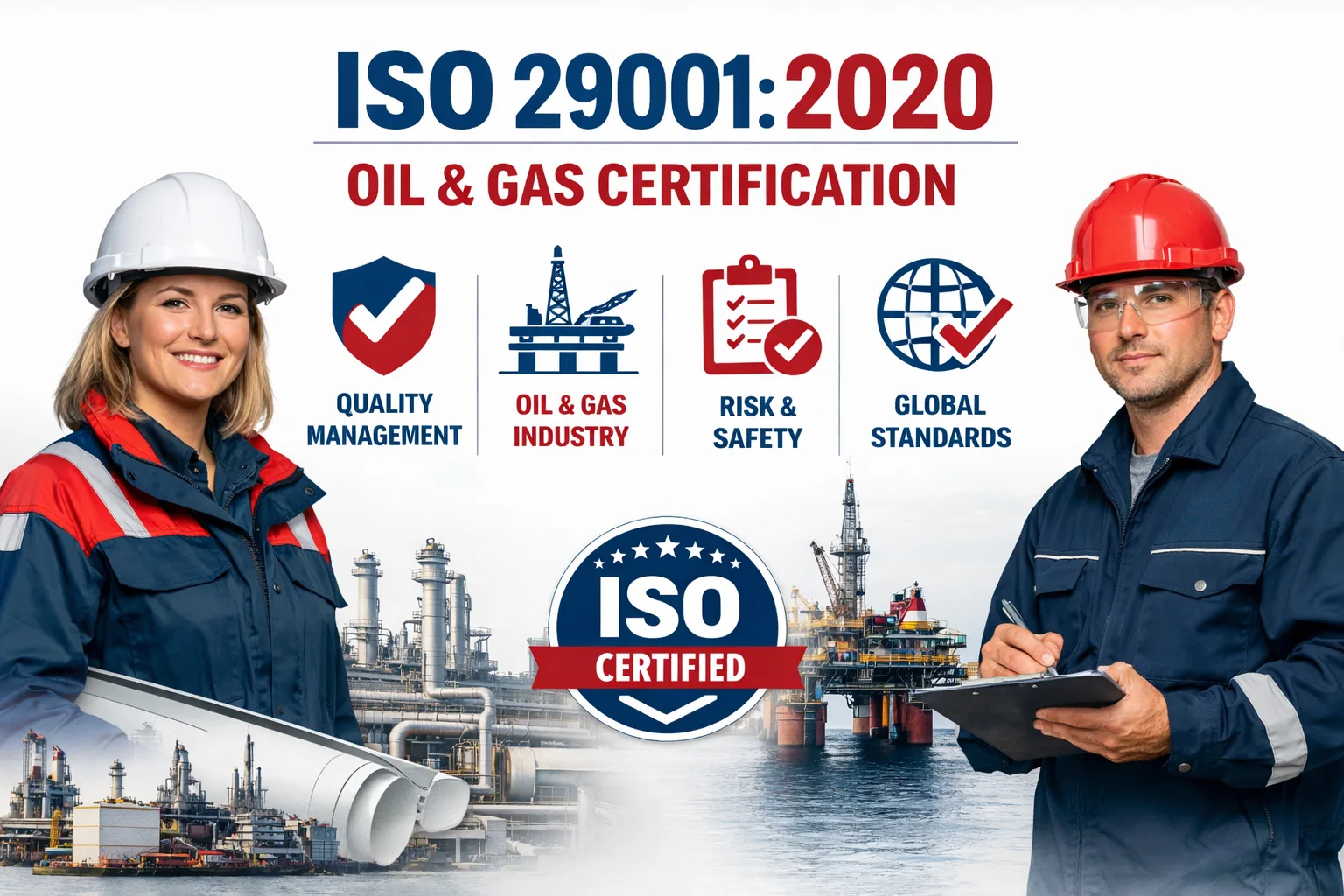
ISO 29001:2020 oil and gas certification is an internationally recognised quality management standard specifically developed for organisations operating in the oil and gas industry. It establishes a structured framework for managing quality, improving operational efficiency, and reducing risks across the petroleum, petrochemical, and natural gas supply chains. ISO 29001:2020 focuses on defect prevention, continuous improvement, and the reduction of variation and waste within manufacturing and service processes.
It can be effectively integrated with ISO 14001, ISO 45001, ISO 31000 and ISO 27001 to create an integrated management system that helps organisations reduce duplication, improve compliance, and manage quality, safety, and environmental responsibilities more efficiently.
Which Industries Benefited from ISO 29001:2020 Oil and Gas Certification?
ISO 29001:2020 supports multiple industries involved in oil and gas production, supply, and service operations, including:
- Oil and Gas Exploration Companies
- Petroleum Refining Companies
- Oilfield Equipment Manufacturers
- Engineering, Procurement, and Construction (EPC) Companies
- Oilfield Service Providers
- Pipeline and Oil Transportation Companies
- Petrochemical Manufacturing Industries
- Natural Gas Processing Companies
- Oil and Gas Storage and Distribution Companies
What are the Key Objectives of ISO 29001:2020 Oil and Gas Certification?
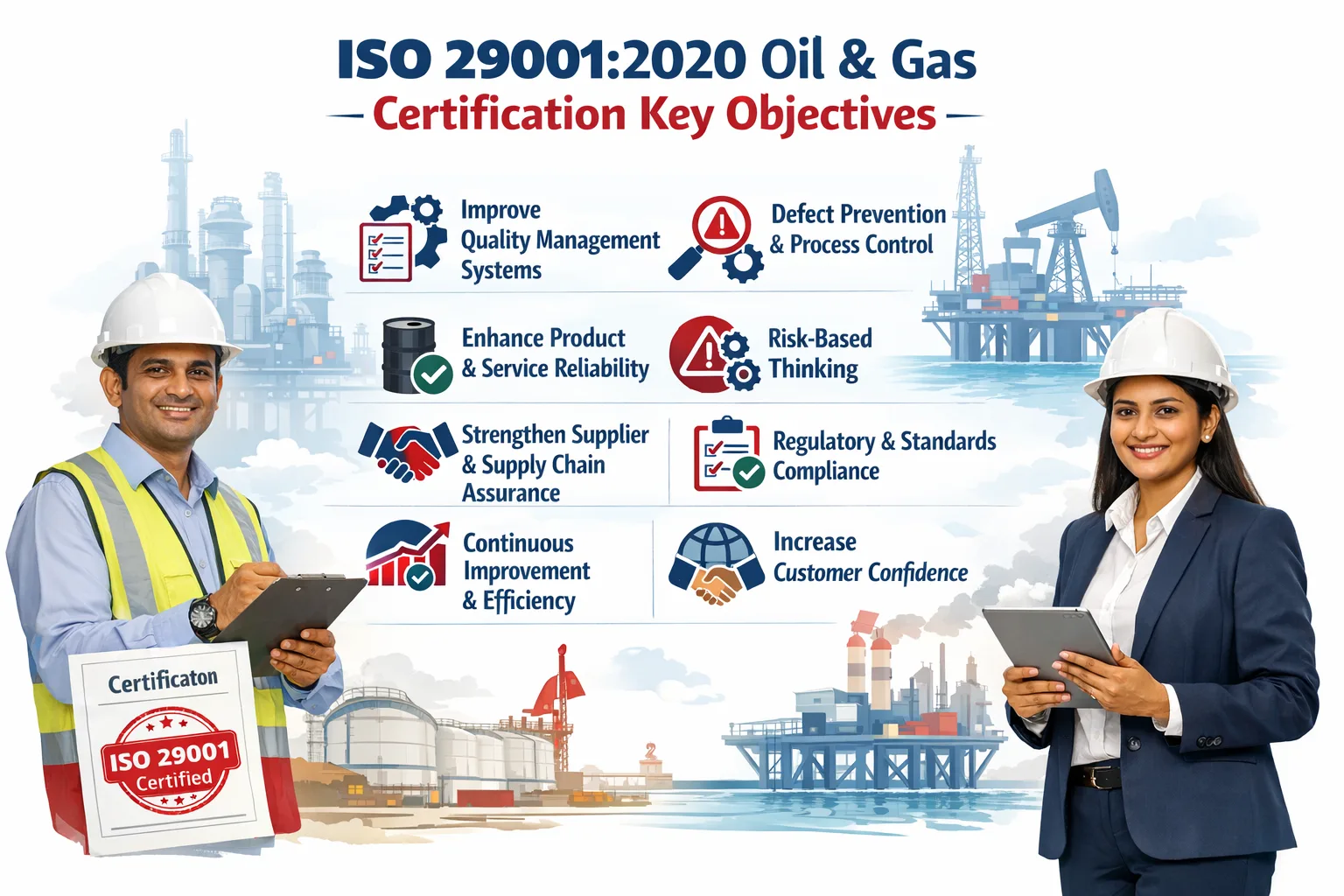
ISO 29001:2020 certification aims to strengthen quality management practices within the oil and gas industry. It focuses on improving operational reliability, ensuring regulatory compliance, reducing risks, and enhancing product and service quality across the petroleum, petrochemical, and natural gas supply chains. Key objectives of ISO 29001:2020 certification includes:
- Improve quality management systems across oil and gas production and supply operations.
- Prevent defects and reduce operational variations in petroleum industry processes.
- Enhance product reliability and service quality for oil and gas customers.
- Promote risk-based thinking in manufacturing and service delivery activities.
- Strengthen supplier management and supply chain quality assurance systems.
- Ensure compliance with industry regulations and international quality standards.
- Encourage continuous improvement in operational performance and process efficiency.
- Increase customer confidence and credibility in global oil and gas markets.
What are the Key Principles of Quality Management in ISO 29001:2020 Oil and Gas Certification?
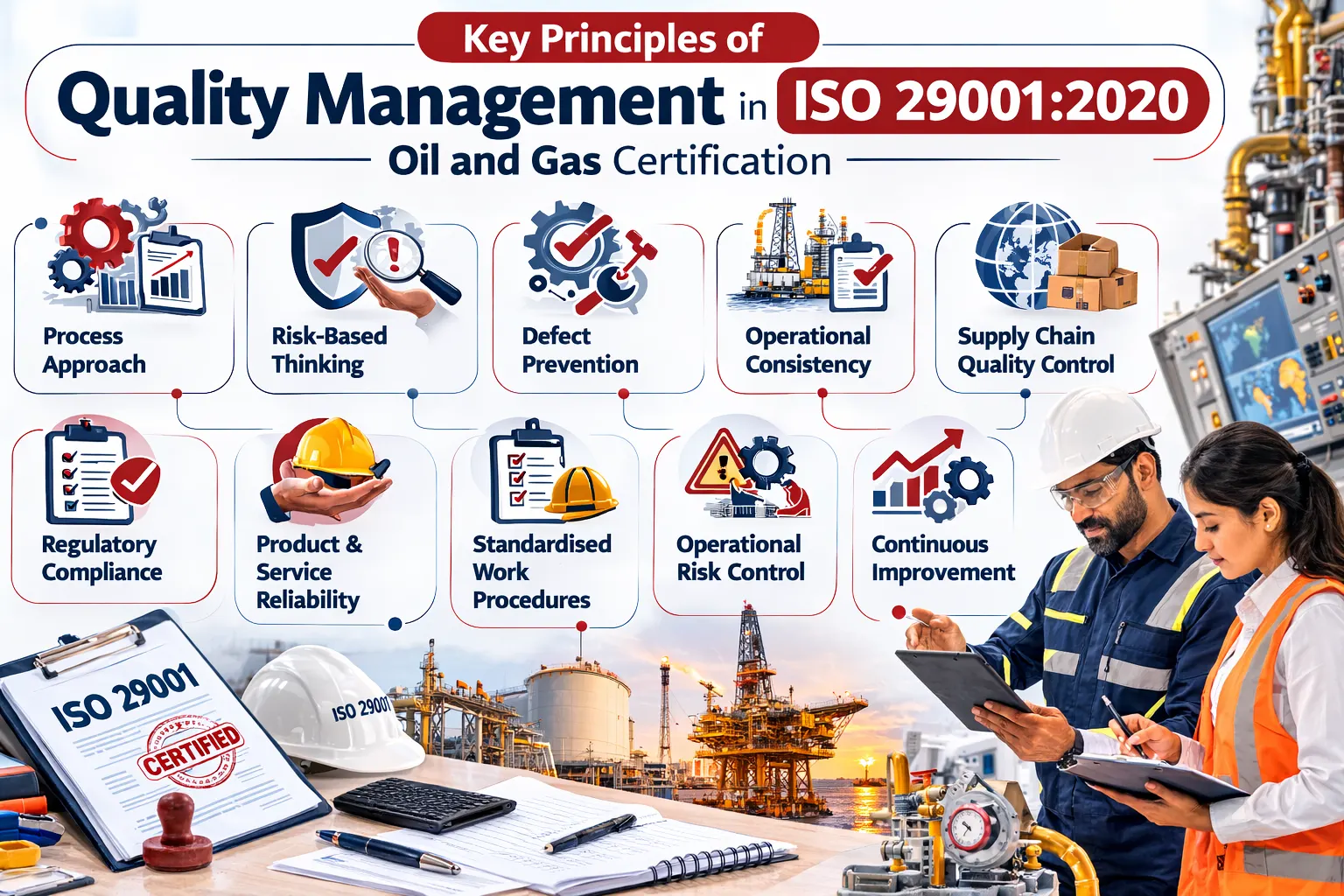
The following are the key principles of quality management in ISO 29001:2020 oil and gas certification:
- Process Approach: Activities are managed effectively to improve efficiency, reduce operational errors, and ensure consistent outcomes across manufacturing, supply, and service operations.
- Risk-Based Thinking: Organisations identify potential risks in operations and implement preventive controls to minimise failures, defects, and operational disruptions.
- Defect Prevention: Organisations implement preventive controls and monitoring systems to identify potential issues early and reduce defects during manufacturing, production, and service delivery processes.
- Operational Consistency: Standardised procedures ensure uniform performance across operations, helping organisations maintain consistent product quality and service reliability throughout oil and gas activities.
- Supply Chain Quality Control: Companies monitor suppliers and contractors to ensure materials, equipment, and services meet required quality standards and industry specifications.
- Regulatory Compliance: Organisations ensure all processes align with applicable national and international regulations governing oil, gas, and petrochemical industry operations.
- Product and Service Reliability: Organisations ensure products and services consistently meet operational requirements and safety standards.
- Standardised Work Procedures: Clear procedures and guidelines help employees follow consistent methods for operations, inspections, and service activities.
- Operational Risk Control: Identifying operational hazards helps organisations minimise disruptions and maintain safe, reliable production and service processes.
- Risk-Based Thinking: Organisations identify potential risks in operations and implement preventive controls to minimise failures, defects, and operational disruptions.
- Continuous Improvement: Businesses regularly evaluate performance, identify improvement opportunities, and implement corrective actions to enhance quality, efficiency, and operational reliability.
What is the Difference Between ISO 29001 and ISO 9001?
Both ISO 29000 and ISO 9001 focus on quality management systems but differ in scope, industry application, and specific requirements for specialised sectors. The key differences include the following:
|
Basis of Comparison |
ISO 29001:2020 |
ISO 9001:2015 |
|
Industry Focus |
Specifically designed for the oil, gas, and petrochemical industries. |
Applicable to all industries and sectors worldwide. |
|
Purpose |
Addresses quality management requirements within oil and gas supply chains. |
Provides general quality management framework for organisations of any type. |
|
Application Scope |
Used by equipment manufacturers, service providers, and contractors in the oil and gas sector. |
Used by organisations across manufacturing, services, healthcare, education, and other sectors. |
|
Supply Chain Focus |
Strong emphasis on supplier control and petroleum industry supply chain reliability. |
Focuses on general supplier management practices. |
|
Risk Management Approach |
Addresses operational risks specific to oil and gas production and services. |
Focuses on general risk-based thinking in quality management. |
What are the Key Requirements for ISO 29001:2020 Oil and Gas Certification?
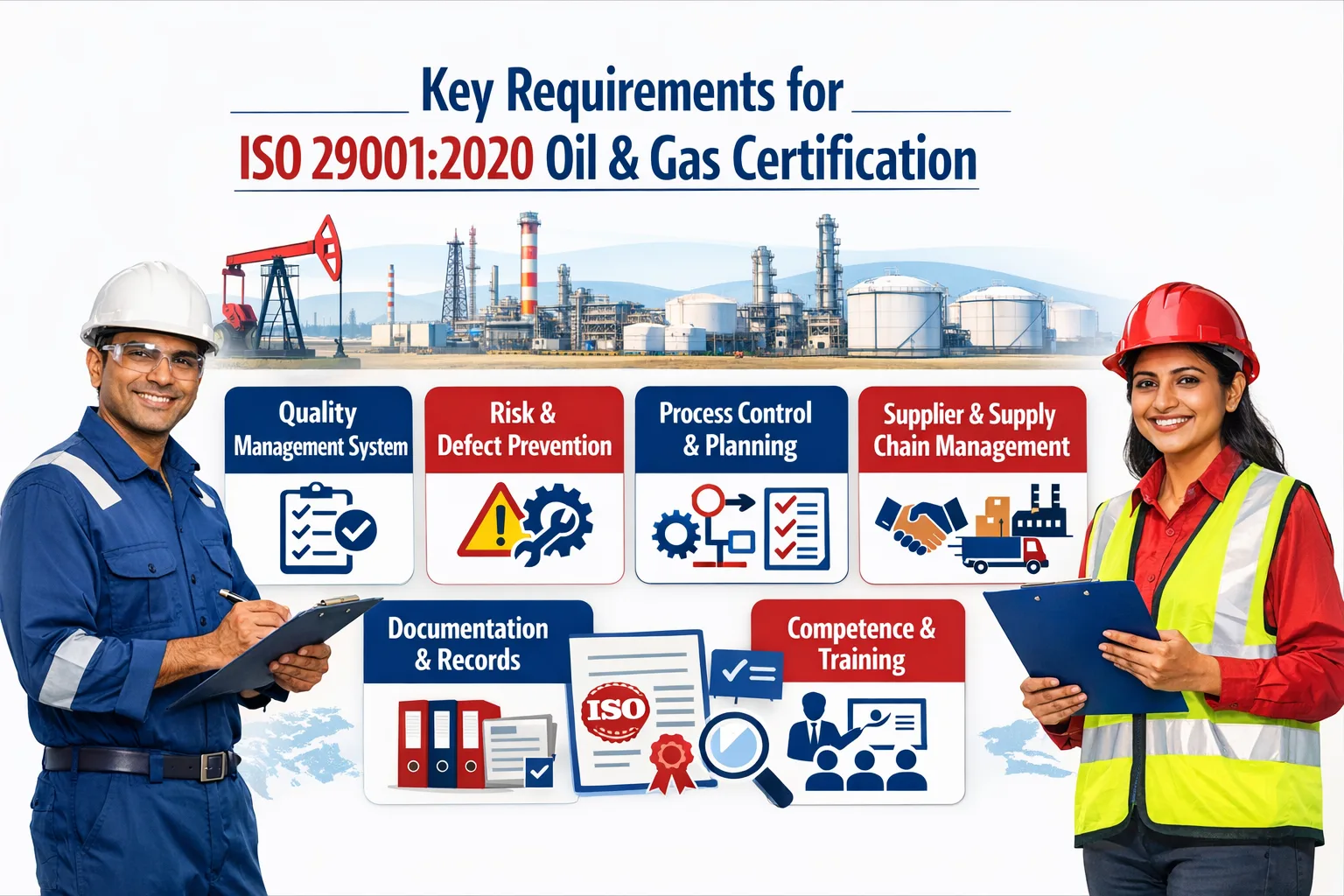
Here are the key requirements for ISO 29001:2020 oil and gas certification:
1. Quality Management System (QMS) Implementation: Organisations must establish and maintain a documented quality management system that defines processes, responsibilities, and procedures. The system should align operational activities with quality objectives while ensuring consistent product and service delivery across oil and gas operations.
2. Risk Management and Defect Prevention: Organisations must identify potential operational risks and implement preventive controls to minimise defects. This requirement focuses on improving reliability in manufacturing, equipment supply, and service delivery within the petroleum and natural gas industry.
3. Process Control and Operational Planning: Organisations are required to plan, manage, and control operational processes to ensure efficiency and quality consistency. This includes defining procedures, monitoring performance, and implementing controls to maintain product and service standards.
4. Supplier and Supply Chain Management: Organisations must evaluate and monitor suppliers, contractors, and service providers to ensure materials, components, and services meet required quality standards and industry specifications.
5. Documentation and Record Management: Proper documentation must be maintained for policies, procedures, operational records, and quality activities. These records support transparency, traceability, and regulatory compliance across the oil and gas supply chain.
6. Competence, Training, and Awareness: Organisations must ensure employees possess the necessary skills and knowledge to perform their roles effectively. Regular training and awareness programs help maintain operational competence and support continuous improvement.
Why Choose ISO 29001:2020 Oil and Gas Certification?
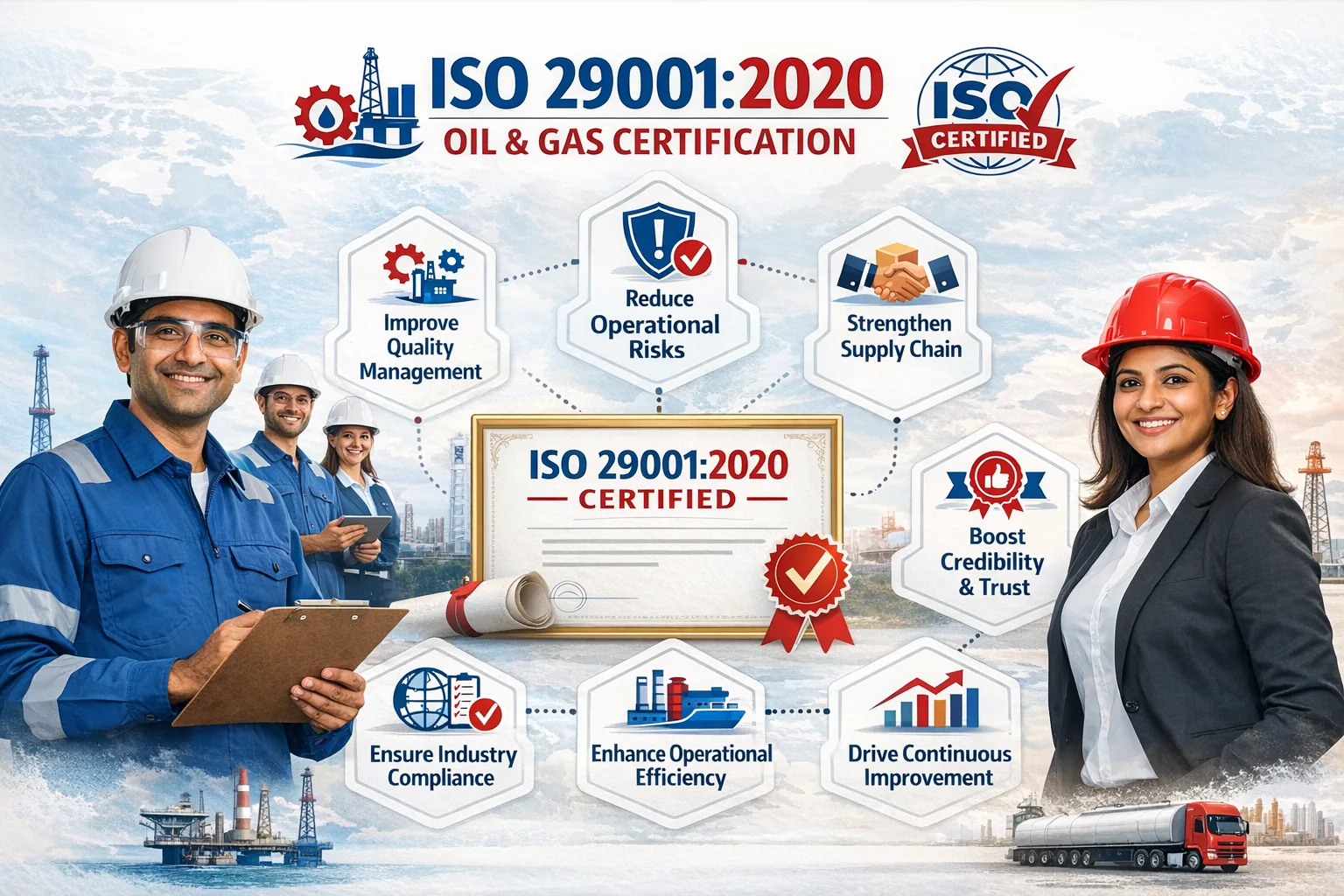
ISO 29001:2020 certification helps organisations strengthen quality management systems within the oil and gas industry. It improves operational efficiency, ensures consistent product and service quality, reduces risks, and enhances credibility with global oil and gas companies and industry stakeholders. Here is why you should choose ISO 29001:2020 certification:
- Improve quality management practices across oil and gas production and service operations.
- Reduce operational risks and prevent defects in petroleum industry processes.
- Strengthen supplier and supply chain quality management systems.
- Enhance credibility with international oil and gas companies and industry stakeholders.
- Ensure compliance with global oil, gas, and petrochemical industry standards.
- Improve operational efficiency and reliability in manufacturing and service delivery.
- Increase customer confidence through consistent product and service quality.
- Support continuous improvement and long-term business growth in the energy sector.
What is the Process for ISO 29001:2020 Oil and Gas Certification?
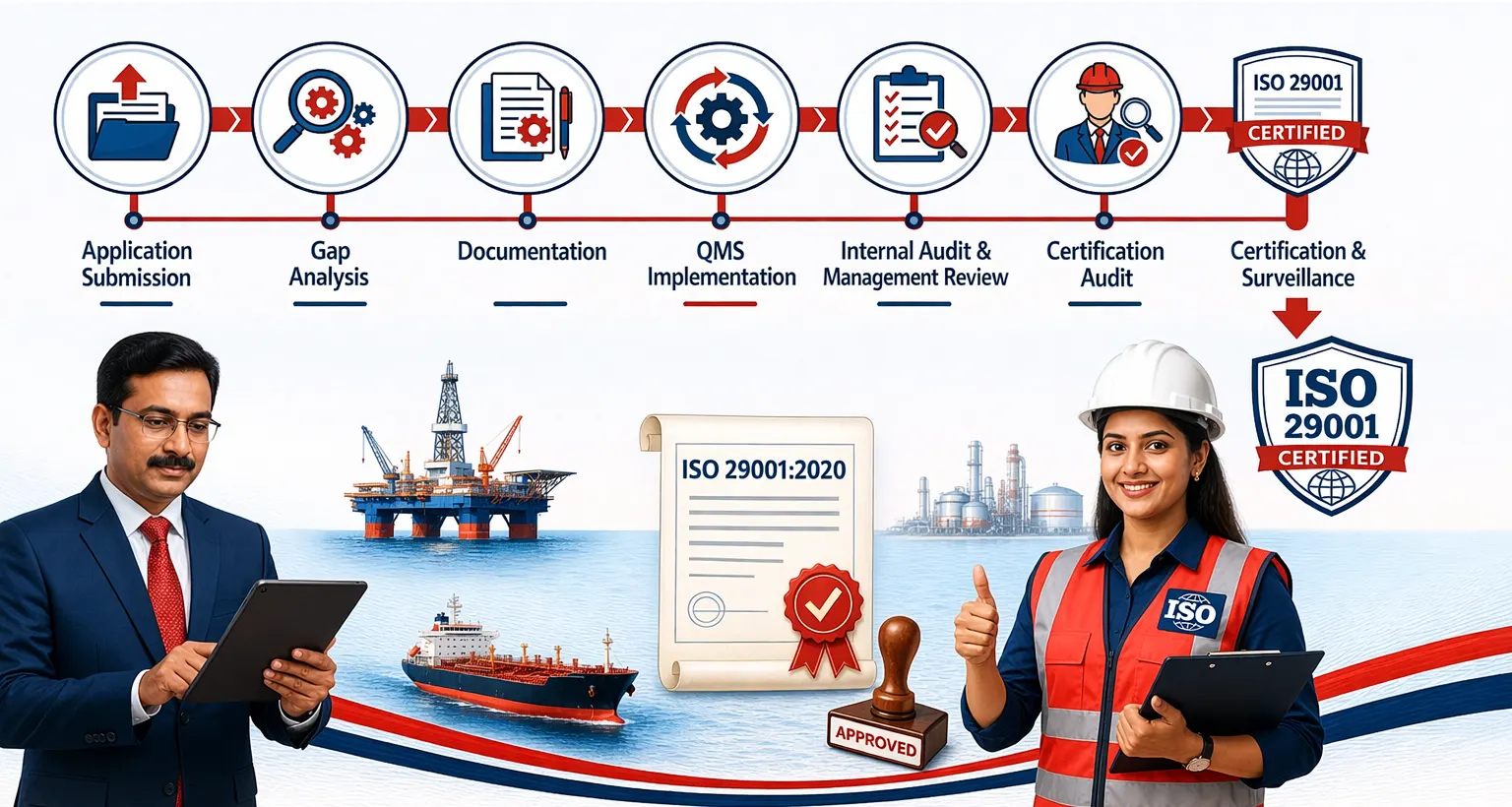
Obtaining ISO 29001:2020 oil and gas certification is quite easy. You just need to follow these steps:
1. Application Submission to Certification Body
The organisation submits a formal application to an accredited certification body for ISO 29001 certification. The application includes company details, scope of certification, documentation, and information required to schedule the certification audit.
2. Gap Analysis and Initial Assessment
The organisation conducts a gap analysis to compare existing processes with ISO 29001 requirements. This assessment identifies weaknesses, compliance gaps, and improvement areas required to implement an effective quality management system for oil and gas operations.
3. Documentation and System Development
The organisation prepares essential documentation such as quality policies, procedures, manuals, and operational guidelines. Proper documentation ensures that processes are standardised, responsibilities are defined, and quality requirements are consistently followed.
4. Implementation of the Quality Management System
After documentation, the organisation implements the quality management system across departments. Employees are trained on procedures, operational controls, and quality objectives to ensure effective adoption and compliance with ISO 29001 requirements.
5. Internal Audit and Management Review
Internal audits are conducted to evaluate system effectiveness and identify non-conformities. Management reviews the audit results, operational performance, and quality objectives to ensure the system is functioning properly before applying for certification.
6. Certification Audit by Certification Body
The certification body conducts a two-stage audit to assess whether the organisation’s quality management system complies with ISO 29001 requirements. Any identified non-conformities must be corrected before certification approval.
7. Certification Grant and Surveillance Audits
Once the organisation successfully passes the audit, the certification body issues the ISO 29001 certificate. Periodic surveillance audits are conducted to ensure the organisation continues to comply with the standard.
What are the Documents Required for ISO 29001:2020 Oil and Gas Certification?
The following documents are typically required for ISO 29001:2020 certification:
- Quality Management System (QMS) Manual
- Process Procedures and Work Instructions
- Risk Assessment and Risk Management Records
- Supplier and Vendor Evaluation Records
- Purchase and Procurement Records
- Production and Operational Control Records
- Inspection and Testing Reports
- Employee Training and Competency Records
- Internal Audit Reports
- Corrective and Preventive Action (CAPA) Reports
What is the Validity Period of ISO 29001:2020 Oil and Gas Certification?
The validity period of ISO 29001:2020 oil and gas certification is typically three years from the date of issuance. During this period, the certified organisation must undergo annual surveillance audits conducted by the certification body to ensure continued compliance with the standard’s requirements and maintain the effectiveness of its quality management system.
How Long Does It Take to Get ISO 29001:2020 Certification?
Obtaining ISO 29001:2020 oil and gas certification typically takes 3-4 days, depending on the organisation’s size, operational complexity, and existing quality management practices. The timeline includes gap analysis, documentation preparation, system implementation, internal audits, and the final certification audit conducted by an accredited certification body.
What are the Challenges in Implementing ISO 29001:2020 Certification?
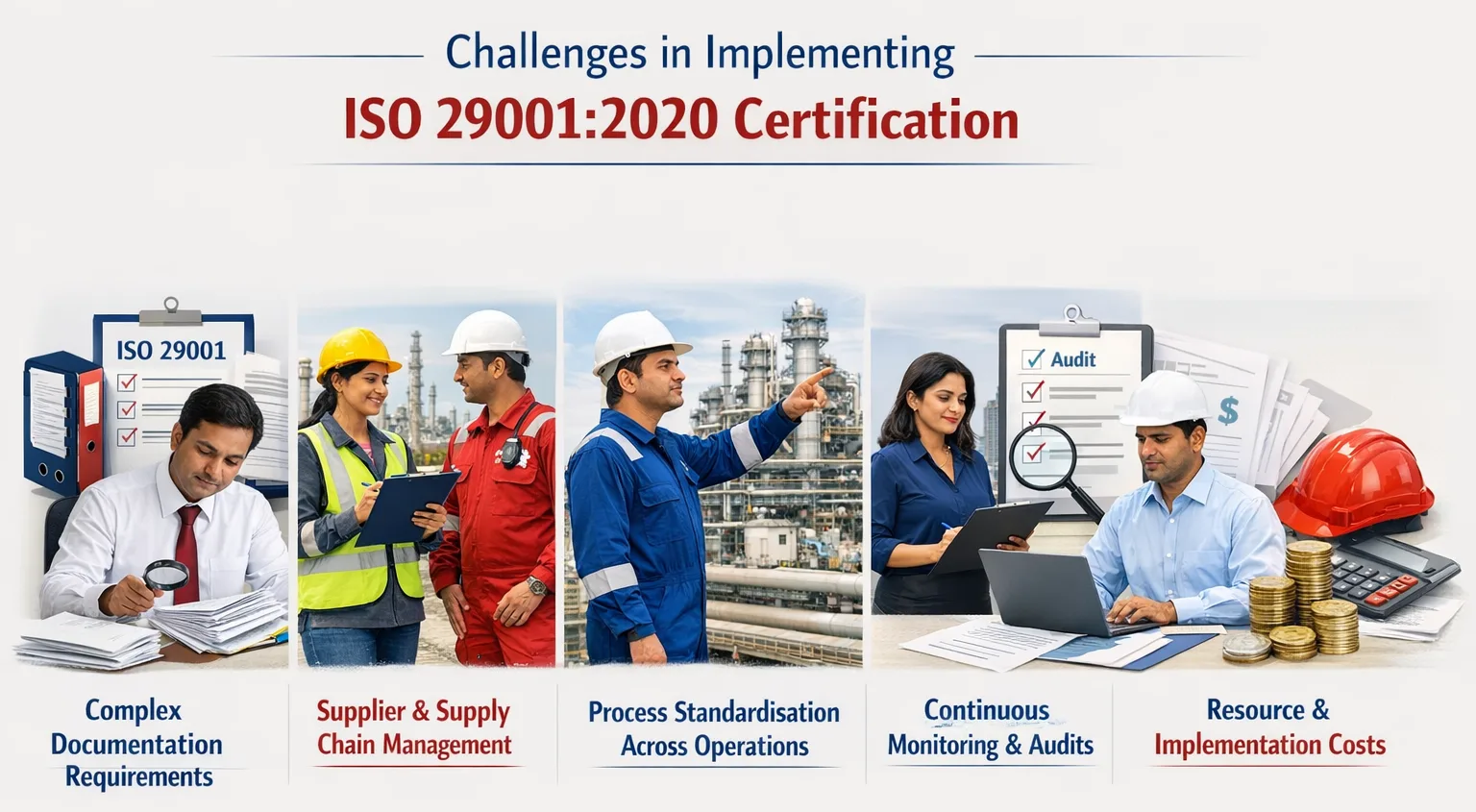
Implementing ISO 29001 oil and gas certification can involve several challenges, like:
- Complex Documentation Requirements: Organisations must prepare detailed procedures, records, and quality manuals, which can be time-consuming and require strong documentation management practices.
- Supplier and Supply Chain Management: Managing supplier compliance and monitoring quality standards across multiple contractors and vendors can be difficult in complex oil and gas supply chains.
- Process Standardisation Across Operations: Aligning diverse operational processes with ISO 29001 requirements requires significant coordination, process redesign, and consistent quality control mechanisms.
- Continuous Monitoring and Audits: Organisations must regularly conduct internal audits, performance reviews, and corrective actions to maintain compliance and improve system effectiveness.
- Resource and Implementation Costs: Implementing ISO 29001 may require financial investment, dedicated resources, and time for training, documentation development, and system improvements.
How Legal Babu Can Help?
Legal Babu provides end-to-end support for ISO 29001:2020 oil and gas certification to help organisations achieve compliance efficiently. Our experts assist with gap analysis, documentation preparation, and implementation of the quality management system. They also guide organisations through employee training, internal audits, and certification audit preparation.
With our professional consultation and streamlined processes, organisations can obtain ISO 29001 certification smoothly while ensuring compliance with industry quality standards.
FAQS
Have some questions about ISO 29001 certification?
We have got you covered:
-
What is the primary purpose of ISO 29001 certification in the oil and gas industry?
ISO 29001 certification ensures consistent quality management practices, defect prevention, and reliable product and service delivery across global oil and gas supply chains.
- Who developed the ISO 29001 certification standards?
- Is ISO 29001 certification mandatory for oil and gas companies?
- Can small companies obtain ISO 29001 certification?
- Does ISO 29001 certification apply to offshore operations?
- How does ISO 29001 certification improve operational reliability?
- Does ISO 29001 certification require third-party audits?
- Can ISO 29001 certification improve global market access?
- What role does documentation play in ISO 29001 certification?
- Does ISO 29001 certification support supplier quality assurance?
- Can ISO 29001 certification help reduce operational defects?
- Is ISO 29001 certification recognised internationally?
- How does ISO 29001 certification support regulatory compliance?
- Can ISO 29001 certification enhance customer confidence?
- Does ISO 29001 certification apply to oilfield service companies?
- How does ISO 29001 certification support continuous improvement?
- Can ISO 29001 certification improve supply chain transparency?
- Does ISO 29001 certification help manage operational risks?
- What type of organisations typically pursue ISO 29001 certification?
- Can ISO 29001 certification support sustainable operations?


