
Table of Content
- What is ISO 22716 Cosmetic Certification?
- Which Industries are Benefited from ISO 22716 Certification?
- Products are Included in ISO 22716 Cosmetic Certification
- Key Principles of Quality Management in ISO 22716 Cosmetic Certification
- Key Requirements of ISO 22716 Certification
- How ISO 22716 Certification Helps Cosmetic Business?
- Documents Required for ISO 22716 Certification
- Process for Obtaining ISO 22716 Certification
- Validity Period of ISO 22716 Certification
- Key Challenges in Obtaining ISO 22716 Certification
- How Legal Babu Can Help?
What is ISO 22716 Cosmetic Certification?
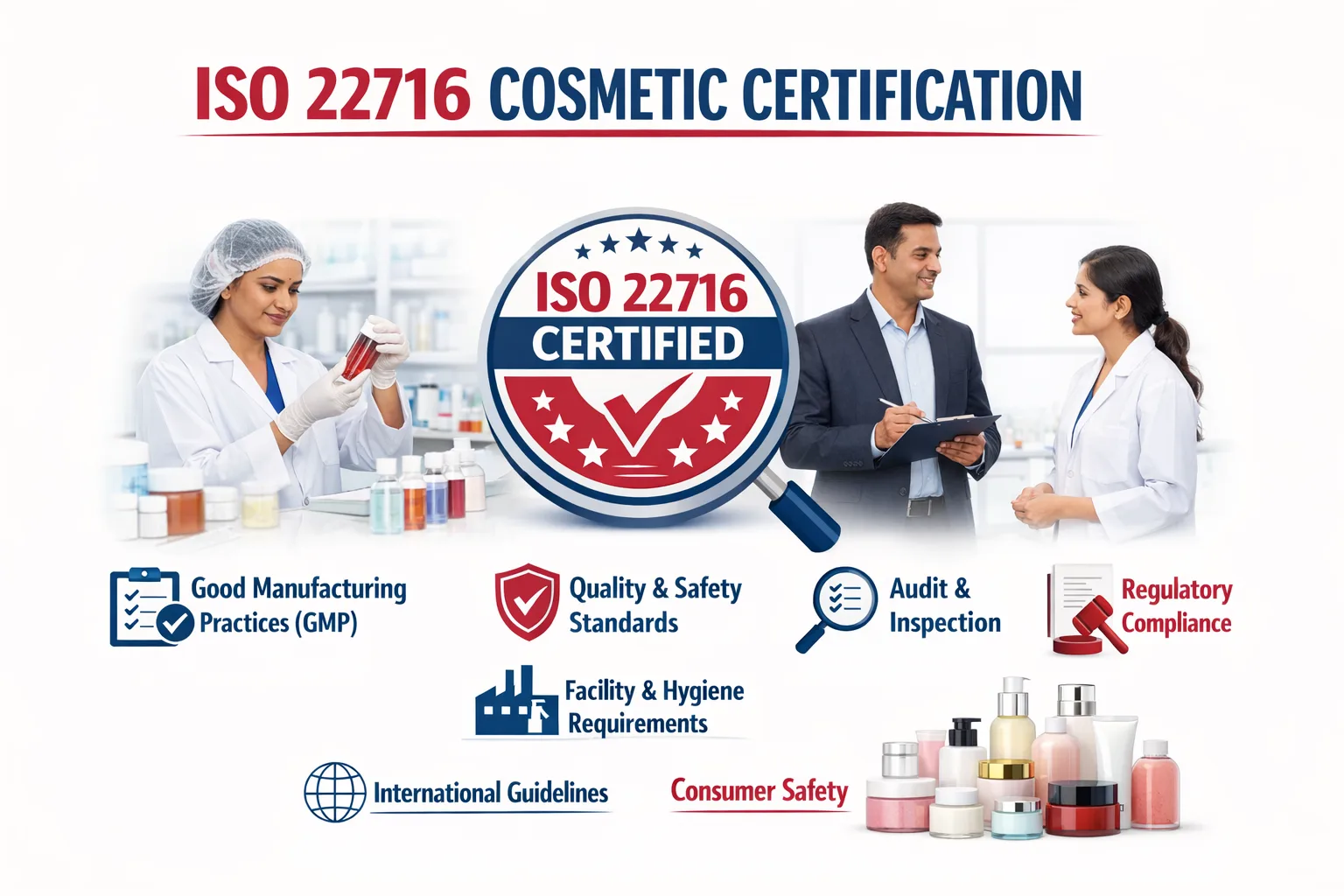
ISO 22716 cosmetic certification refers to an international standard that provides guidelines for Good Manufacturing Practices (GMP) in the cosmetics industry. It helps cosmetic manufacturers maintain product safety, quality, and hygiene throughout the production process. The standard is issued by the International Organization for Standardisation (ISO) and focuses on key aspects such as raw material handling, production processes, packaging, storage, documentation, personnel training, and quality control to ensure cosmetics are consistently produced under safe and hygienic conditions. The certification is widely recognised by regulatory authorities and cosmetic brands worldwide and also supports compliance with legal regulations.
Which Industries are Benefited from ISO 22716 Certification?
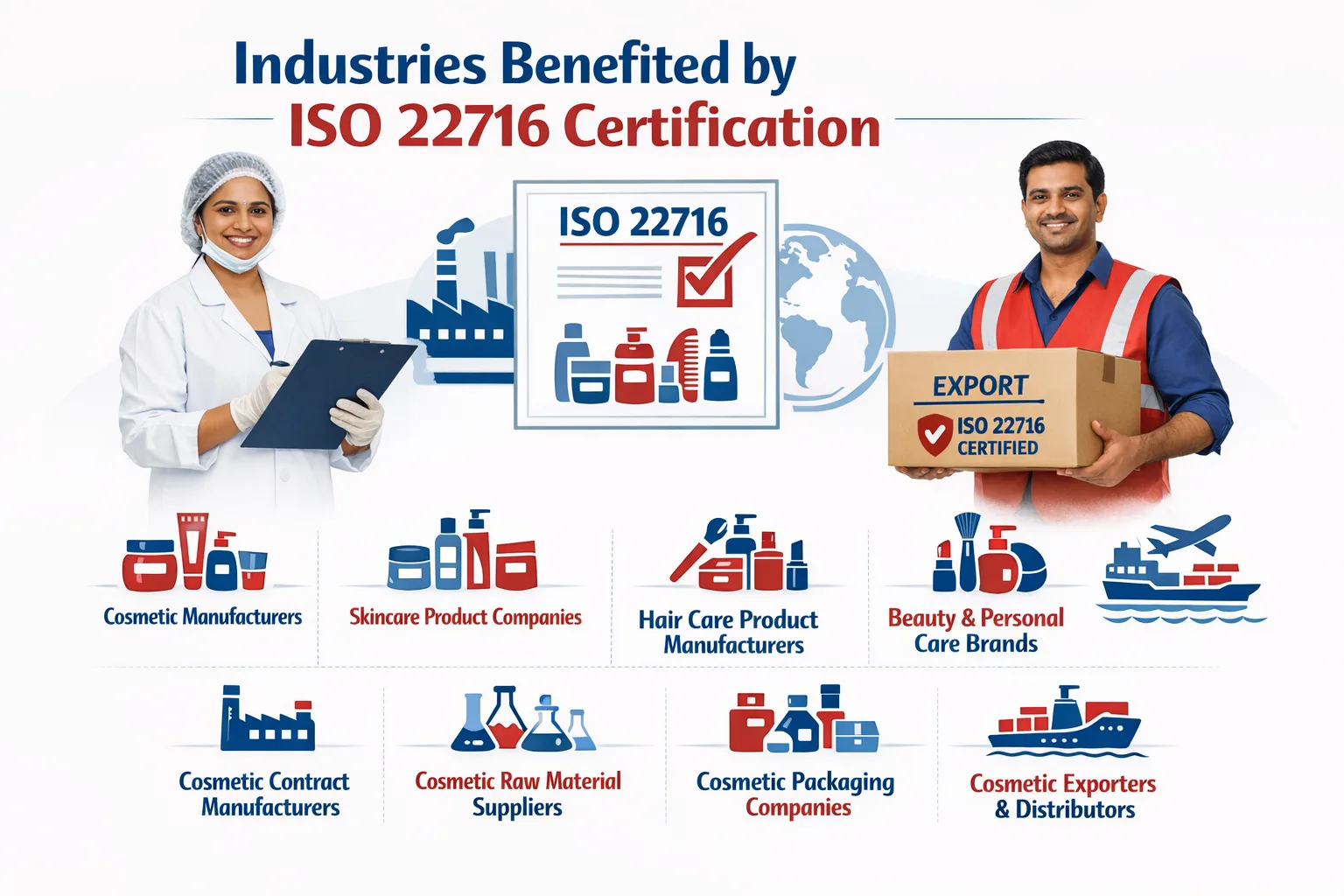
ISO 22716 certification helps cosmetic businesses maintain hygiene, safety, and quality standards throughout manufacturing, packaging, storage, and distribution processes. The key industries benefited from ISO 22716 certification includes:
- Cosmetic Manufacturers
- Skincare Product Companies
- Hair Care Product Manufacturers
- Beauty and Personal Care Brands
- Cosmetic Contract Manufacturers
- Cosmetic Raw Material Suppliers
- Cosmetic Packaging Companies
- Cosmetic Exporters and Distributors
Which Products are Included in ISO 22716 Cosmetic Certification?
ISO 22716 certification applies to various cosmetic products to ensure safe manufacturing, hygiene, and consistent product quality. Here are some of them:
|
Category |
Products |
|
Skincare Products |
Moisturizer, face cream, face serum, toner, cleanser, facial oil, night cream, day cream, anti-aging cream, face gel |
|
Hair Care Products |
Shampoo, conditioner, hair oil, hair serum, hair mask, hair spray, hair gel, hair mousse, dry shampoo, scalp treatment |
|
Makeup Products |
Foundation, compact powder, concealer, blush, bronzer, highlighter, setting powder, primer, contour kit, makeup fixer |
|
Body Care Products |
Body lotion, body butter, body cream, body oil, body scrub, body gel, body polish, firming cream, stretch mark cream, body serum |
|
Eye Care Cosmetics |
Eyeliner, kajal, mascara, eye shadow, brow gel, eyebrow pencil, under-eye cream, eye primer, lash serum, eye makeup remover |
|
Fragrance Products |
Perfume, deodorant spray, roll-on deodorant, body mist, fragrance oil, cologne, scented body spray, perfume sticks, fragrance lotion, aromatic body spray |
|
Sun Care Products |
Sunscreen lotion, sunscreen cream, sunscreen gel, sunblock, after-sun lotion, tanning oil, SPF moisturizer, SPF lip balm, SPF body spray, sun protection stick |
What are the Key Principles of Quality Management in ISO 22716 Cosmetic Certification?
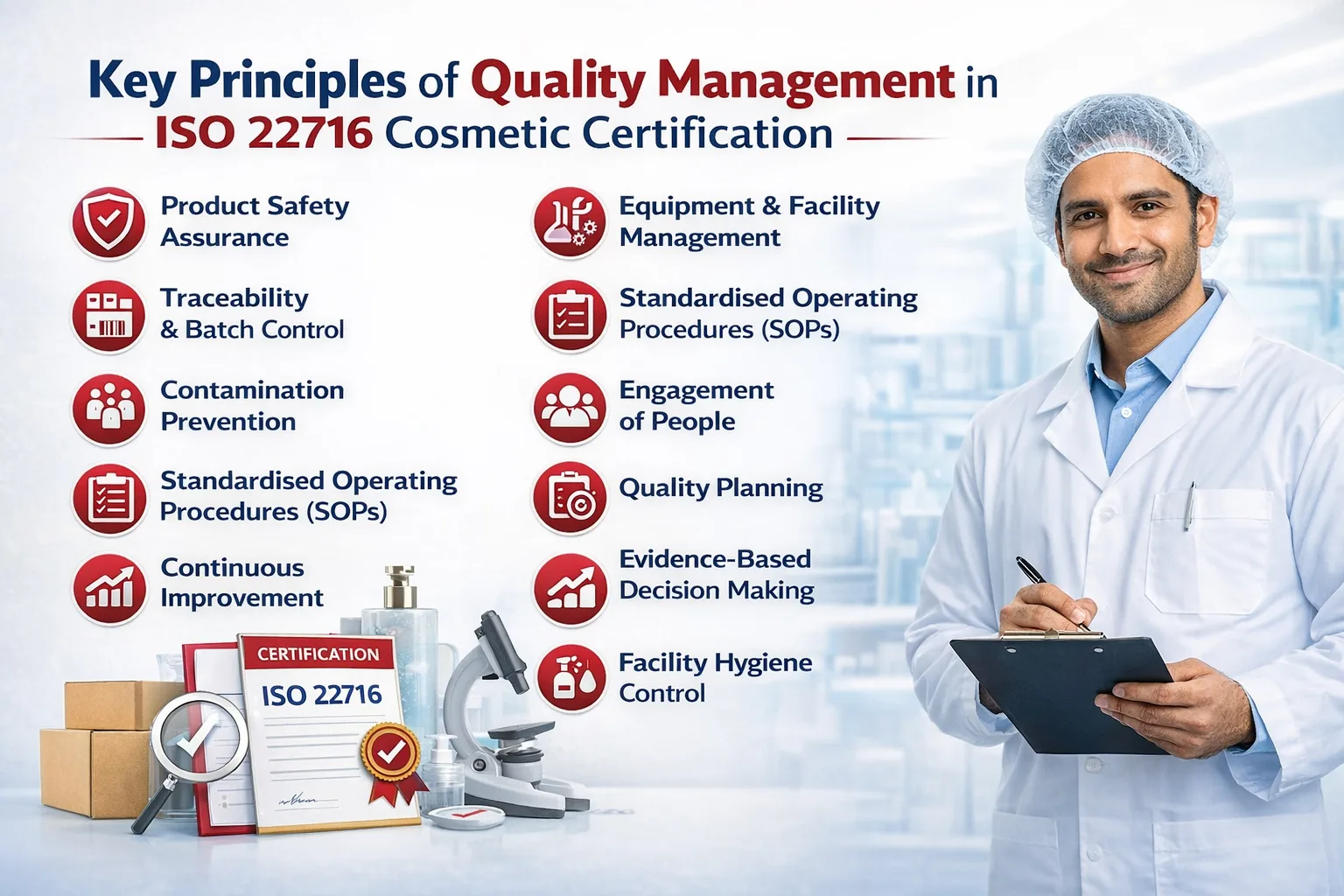
ISO 22716 certification promotes strong quality management principles to ensure consistent cosmetic product safety, compliance, and operational efficiency. Some of them are:
- Product Safety Assurance: Cosmetic products must be manufactured following strict safety measures to ensure they are safe for human use and comply with applicable regulatory standards.
- Traceability and Batch Control: Maintaining batch records and traceability systems helps track raw materials and finished products, enabling quick identification and resolution of quality issues.
- Contamination Prevention: Strict hygiene procedures and facility controls must be implemented to prevent physical, chemical, or microbiological contamination during production.
- Standardised Operating Procedures (SOPs): Clearly documented procedures ensure consistent operations, proper employee guidance, and uniform quality standards across cosmetic manufacturing activities.
- Equipment and Facility Management: Regular maintenance, cleaning, and calibration of equipment and facilities ensure smooth operations and prevent quality issues during production.
- Engagement of People: Skilled and well-trained employees contribute to maintaining hygiene, quality standards, and effective manufacturing processes within cosmetic production facilities.
- Quality Planning: Organisations must establish clear quality objectives, procedures, and operational plans to ensure cosmetic products are manufactured consistently according to defined quality standards.
- Continuous Improvement: Organisations should regularly review manufacturing processes, identify areas for improvement, and implement corrective actions to enhance product quality and operational performance.
- Evidence-Based Decision Making: Business decisions related to quality should be based on reliable data, testing results, performance evaluations, and documented production records.
- Facility Hygiene Control: Maintaining strict hygiene and sanitation within manufacturing facilities helps prevent contamination and ensures cosmetic products remain safe for consumer use.
What are the Key Requirements of ISO 22716 Certification?
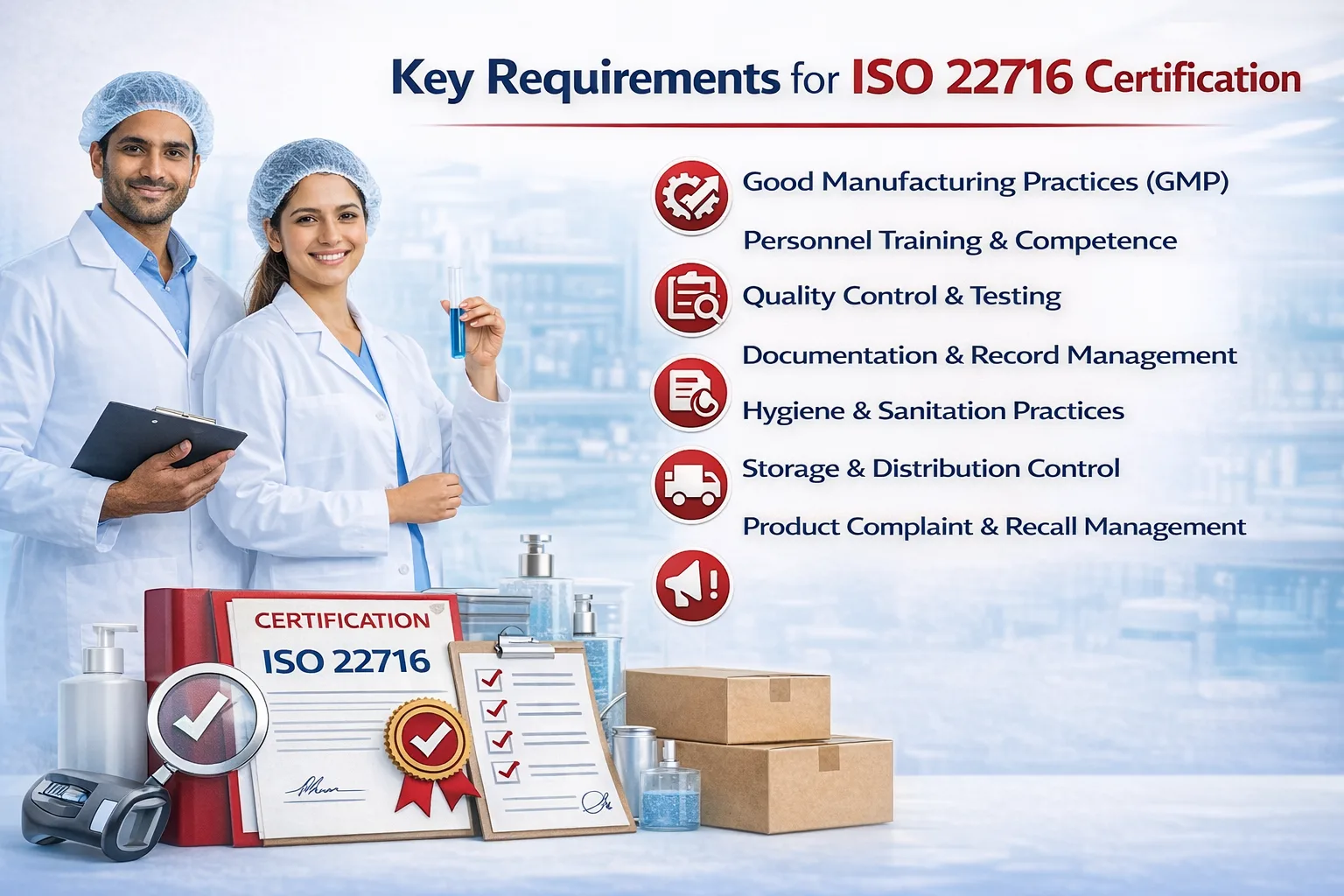
The following are the key requirements for ISO 22716 certification:
1. Good Manufacturing Practices (GMP): Good Manufacturing Practices ensure cosmetic products are produced in controlled and hygienic environments with standardised procedures and proper equipment maintenance. It maintains consistent product quality, prevents contamination, and ensures cosmetics meet safety standards.
2. Personnel Training and Competence: Employees involved in cosmetic production must receive continuous training on hygiene, operational procedures, equipment handling, and safety practices. Skilled and knowledgeable personnel help maintain manufacturing accuracy, reduce production errors, and prevent contamination risks.
3. Quality Control and Testing: Quality control involves systematic inspection and testing of raw materials, production processes, and finished cosmetic products. These checks ensure that products meet predefined specifications, safety standards, and regulatory requirements while preventing defective or unsafe cosmetic products from reaching the market.
4. Documentation and Record Management: Accurate documentation of manufacturing procedures, batch records, quality inspections, and operational guidelines ensures transparency and traceability in cosmetic production.
5. Hygiene and Sanitation Practices: Strict hygiene and sanitation practices in cosmetic manufacturing facilities are essential to prevent contamination. Clean workspaces, properly sanitised equipment, and personal hygiene among employees ensure that cosmetic products are produced in a safe environment and remain suitable for consumer use.
6. Storage and Distribution Control: Proper storage and distribution systems help maintain the stability and quality of cosmetic products. Controlled temperature, humidity conditions and secure transportation methods ensure that products remain safe, effective, and compliant with quality standards.
7. Product Complaint and Recall Management: An effective complaint and recall management system is a must to allow organisations to respond quickly to consumer feedback or product safety concerns.
How ISO 22716 Certification Helps Cosmetic Business?
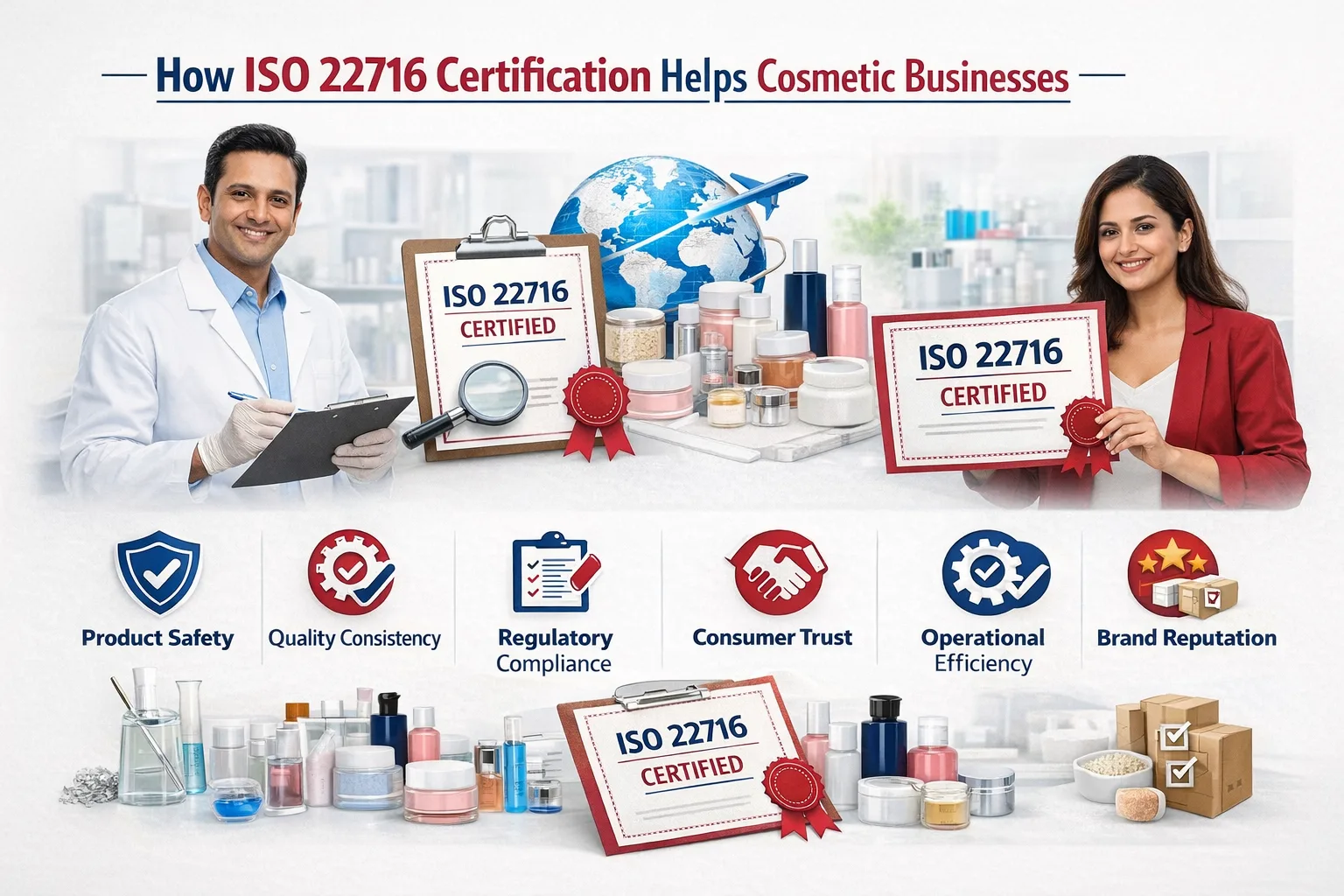
ISO 22716 certification helps cosmetic businesses implement good manufacturing practices to maintain product safety, quality consistency, and regulatory compliance. It strengthens operational control, improves consumer trust, and ensures that cosmetic products are manufactured, stored, and distributed under hygienic and standardised conditions. Here’s how it helps businesses:
- Improves Product Safety: Ensures cosmetics are manufactured in hygienic conditions, reducing contamination risks and protecting consumers health.
- Enhances Product Quality: Standardised production processes help maintain consistent cosmetic product quality across all manufacturing batches.
- Supports Regulatory Compliance: Helps businesses comply with international cosmetic safety regulations and market requirements.
- Builds Consumer Trust: Certified quality systems increase customer confidence in cosmetic product safety and reliability.
- Improves Operational Efficiency: Structured procedures reduce production errors and improve workflow efficiency in manufacturing operations.
- Strengthens Brand Reputation: Certification demonstrates commitment to quality, safety, and responsible cosmetic manufacturing practices.
- Facilitates Global Market Access: International recognition of certification helps companies expand into global cosmetic markets.
- Enhances Supplier Management: Encourages better supplier evaluation and quality control of raw materials and packaging components.
What are the Documents Required for ISO 22716 Certification?
Here are the key documents required to obtain ISO 22716 cosmetic certification:
- Good Manufacturing Practices (GMP) Policy
- Standard Operating Procedures (SOPs)
- Organizational Structure and Responsibilities Document
- Personnel Training Records
- Raw Material Specifications and Supplier Records
- Production and Batch Manufacturing Records
- Equipment Cleaning and Maintenance Records
- Quality Control and Testing Reports
- Product Specifications and Formulation Records
- Storage and Inventory Management Records
- Product Complaint and Recall Procedure Documents
- Corrective and Preventive Action (CAPA) Records
- Hygiene and Sanitation Procedures Records
What is the Process for Obtaining ISO 22716 Certification?
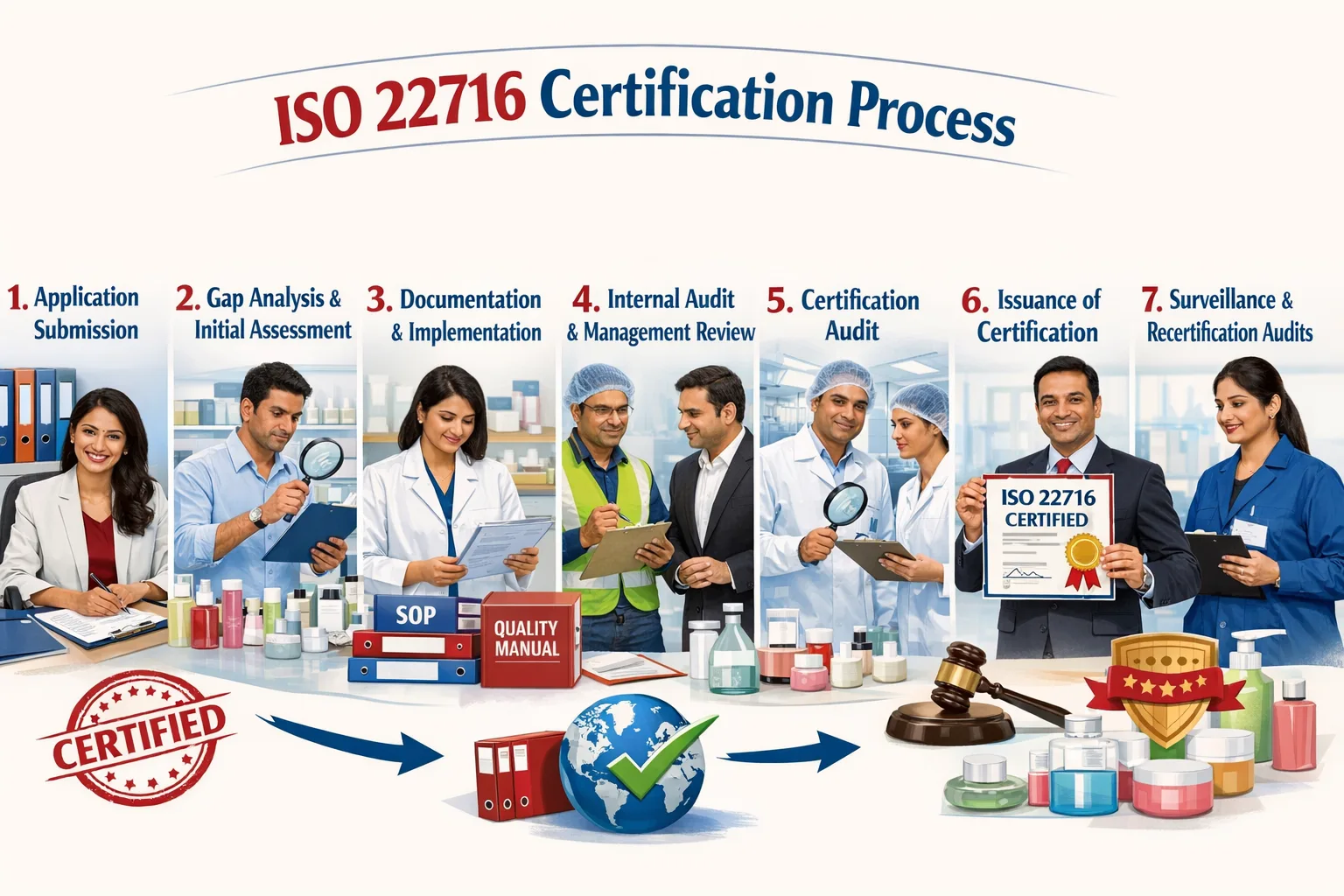
Here is the step-by-step process to successfully obtain ISO 22716 certification:
1. Application Submission
The organisation submits an application to an accredited certification body with company details, scope of cosmetic manufacturing, and basic documentation. This step begins the certification process and allows the certification body to review the organisation’s readiness for the ISO 22716 assessment.
2. Gap Analysis and Initial Assessment
A gap analysis is conducted to evaluate the organisation’s existing manufacturing practices against ISO 22716 requirements. This helps identify missing procedures, compliance gaps, and areas that require improvement before the official certification audit is conducted.
3. Documentation Development and Implementation
The organisation prepares required documentation such as quality manuals, standard operating procedures, hygiene policies, and production records. These documents are implemented within daily operations to ensure cosmetic manufacturing processes follow the Good Manufacturing Practices guidelines of ISO 22716.
4. Internal Audit and Management Review
Internal audits are conducted to evaluate whether the implemented procedures comply with ISO 22716 requirements. Management reviews audit findings, evaluates operational performance, and takes corrective actions to address non-conformities before the external certification audit begins.
5. Certification Audit
An external audit is conducted by the certification body to assess the organisation’s compliance with ISO 22716 standards. Auditors review documents, inspect facilities, and evaluate production processes to confirm that the organisation follows proper cosmetic manufacturing practices.
6. Issuance of Certification
If the organisation successfully meets all ISO 22716 requirements and resolves any identified non-conformities, the certification body issues the ISO 22716 certificate. The certificate confirms that the cosmetic manufacturing system complies with international Good Manufacturing Practices standards.
7. Surveillance and Recertification Audits
After certification, periodic surveillance audits are conducted to ensure continued compliance with ISO 22716 requirements. Organisations must maintain proper manufacturing practices and undergo recertification audits after the certification cycle to retain their certification validity.
What is the Validity Period of ISO 22716 Certification?
The validity period of ISO 22716 certification is typically three years from the date of issuance by an accredited certification body. During this period, organisations must undergo periodic surveillance audits, usually conducted annually, to verify ongoing compliance with cosmetic good manufacturing practices. After the three-year cycle, companies must complete a recertification audit to renew and maintain their certification status.
What are the Key Challenges in Obtaining ISO 22716 Certification?
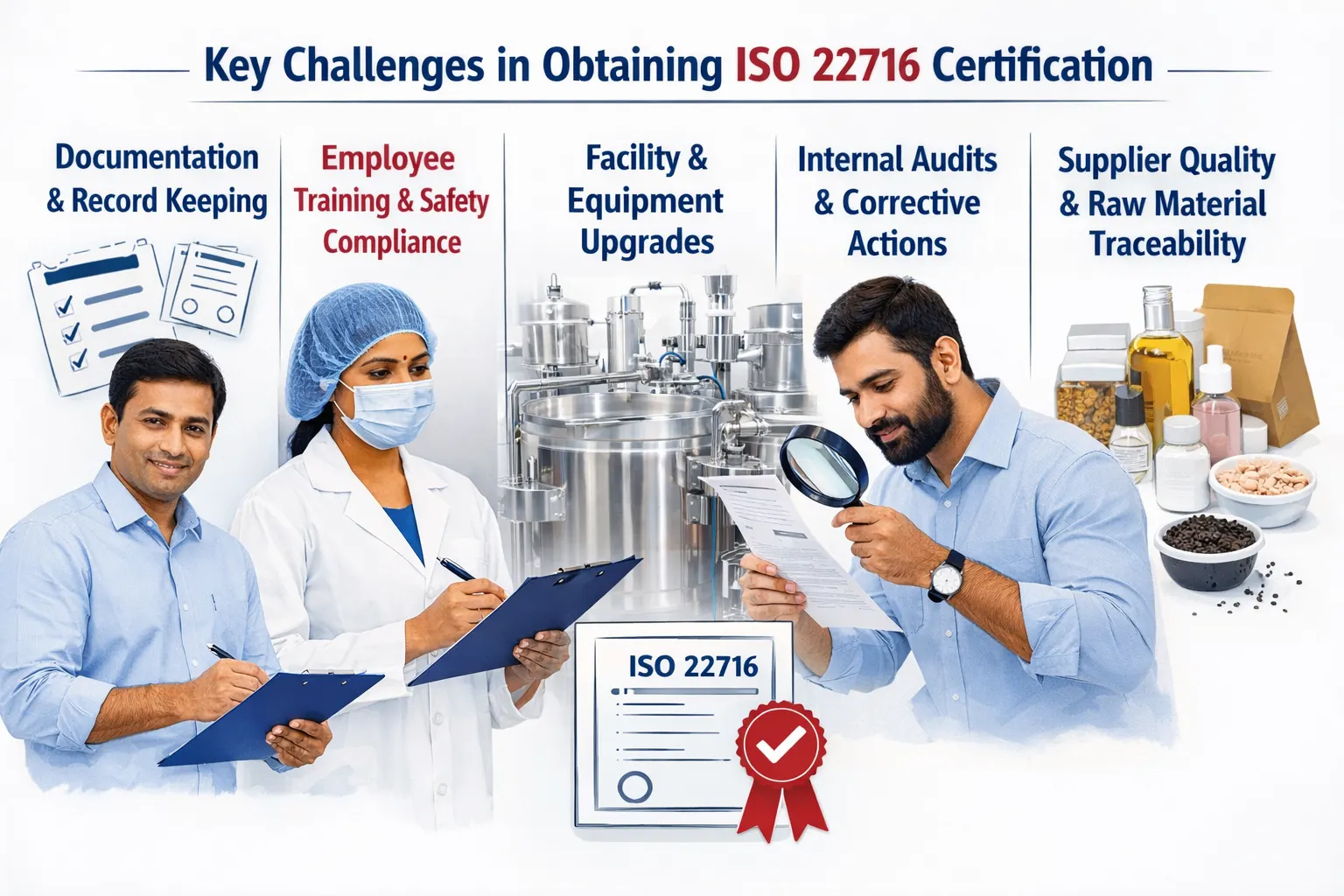
Obtaining ISO 22716 certification can be challenging for cosmetic manufacturers due to strict documentation, GMP compliance, audits, and operational adjustments. The key challenges that businesses usually face include the following:
- Maintaining comprehensive documentation and records aligned with Good Manufacturing Practices' requirements.
- Training employees to consistently follow hygiene, safety, and quality control procedures.
- Upgrading manufacturing facilities and equipment to meet strict cosmetic GMP infrastructure standards.
- Conducting internal audits and correcting non-conformities before external certification assessment.
- Ensuring supplier quality management and traceability of raw materials used in cosmetic production.
How Legal Babu Can Help?
Legal Babu assists businesses in obtaining ISO 22716 certification through a structured compliance approach. Our experts help with documentation preparation, GMP implementation, and gap analysis to identify compliance issues. They also guide organisations in establishing quality control procedures, employee training, and internal audits. Additionally, we coordinate with accredited certification bodies and support companies throughout the certification process, ensuring faster approval and smooth regulatory compliance.
FAQS
Have some questions about ISO 22716 Certification?
We have got you covered:
-
Is ISO 22716 certification mandatory for cosmetic companies?
ISO 22716 certification is generally voluntary but often required by international buyers, regulators, and cosmetic brands to demonstrate GMP compliance.
- Who issues ISO 22716 certification?
- How long does it take to obtain ISO 22716 certification?
- Can small cosmetic businesses apply for ISO 22716 certification?
- Is ISO 22716 certification recognised internationally?
- Does ISO 22716 certification apply to cosmetic laboratories?
- What is the cost of ISO 22716 certification?
- Can ISO 22716 certification improve export opportunities?
- Does ISO 22716 certification cover cosmetic product formulation?
- Is ISO 22716 certification applicable to herbal cosmetics?
- Can cosmetic distributors benefit from ISO 22716 certification?
- Does ISO 22716 certification require facility inspections?
- What role does hygiene play in ISO 22716 compliance?
- Can ISO 22716 certification reduce product recalls?
- Is ISO 22716 certification related to cosmetic product safety testing?
- Does ISO 22716 certification require employee hygiene policies?
- Can ISO 22716 certification help in brand reputation building?
- Does ISO 22716 certification support supply chain management?
- Can contract cosmetic manufacturers obtain ISO 22716 certification?
- Does ISO 22716 certification apply to cosmetic packaging operations?


