
Table of Content
- What is the ISO 20121:2024 Event Sustainability Management Certification?
- Key principles of quality management outlined in the ISO 20121:2024 Event Management Certification
- Key requirements for obtaining the ISO 20121:2024 Event Management Certification
- Why choose the ISO 20121:2024 Event Management Certification?
- Stages involved in the ISO 20121:2024 Event Management Certification process
What is the ISO 20121:2024 Event Sustainability Management Certification?
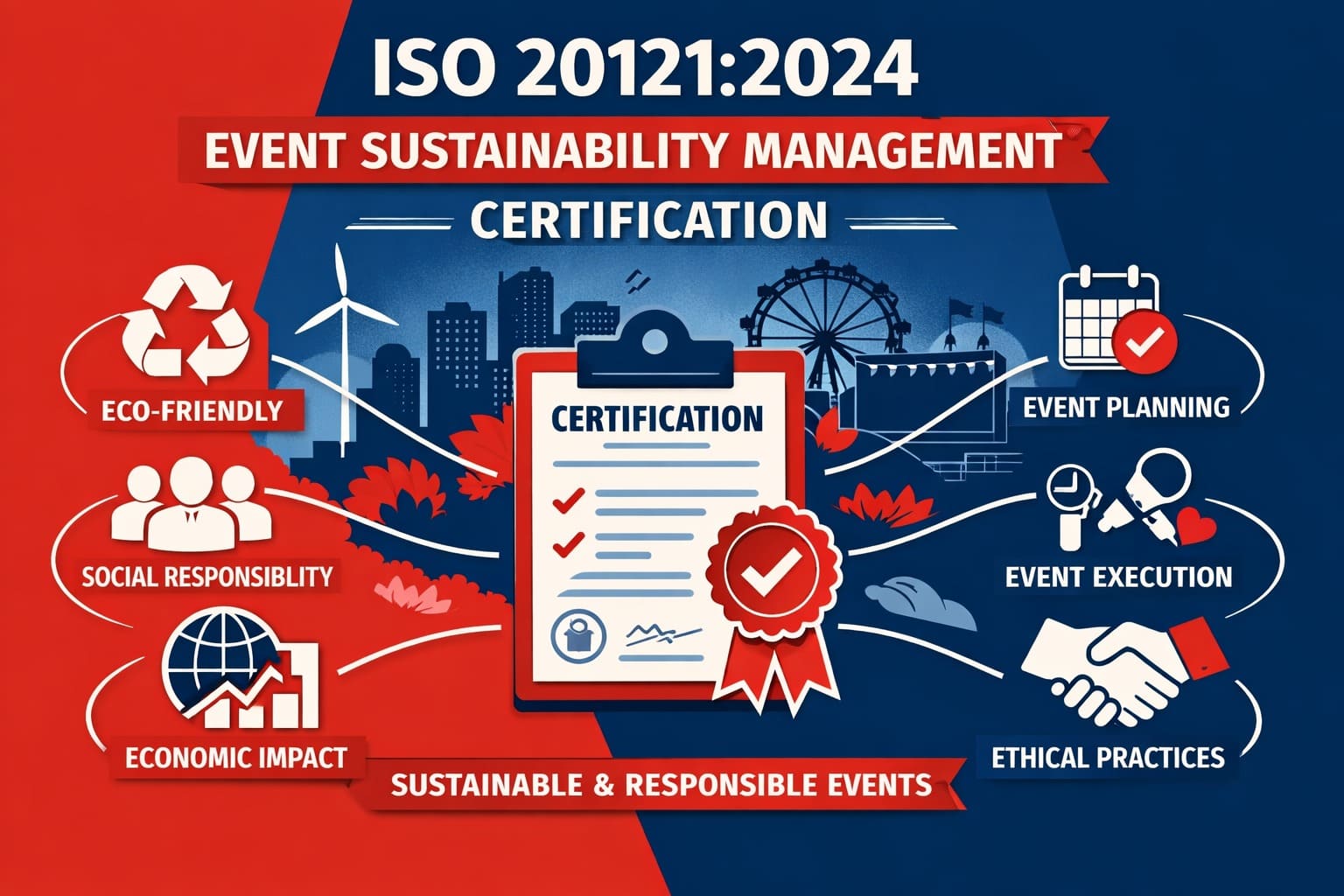
The ISO 20121:2024 event sustainability management certification is an international benchmark that provides a structured guide to integrate sustainability into all your event planning and execution. From organising a small event to hosting special events or occasions, this certification supports you in managing multiple tasks at hand and their social, economic, and environmental impact.
ISO 20121:2024 event sustainability management certification reflects that an organisation’s management committee meets the established standards for planning, executing, hosting or organising any event. This certificate demonstrates the organisation’s commitments towards more ethical, standardised, eco-friendly, sustainable, and socially conscious practices.
The ISO 20121 certification, integrated with ISO 9001, ISO 14001, and ISO 45001, helps organisations streamline processes, improve quality, enhance environmental performance, ensure occupational health and safety, and achieve holistic sustainable event management.
What are the Key Principles of Quality Management outlined in the ISO 20121:2024 Event Sustainability Management Certification?
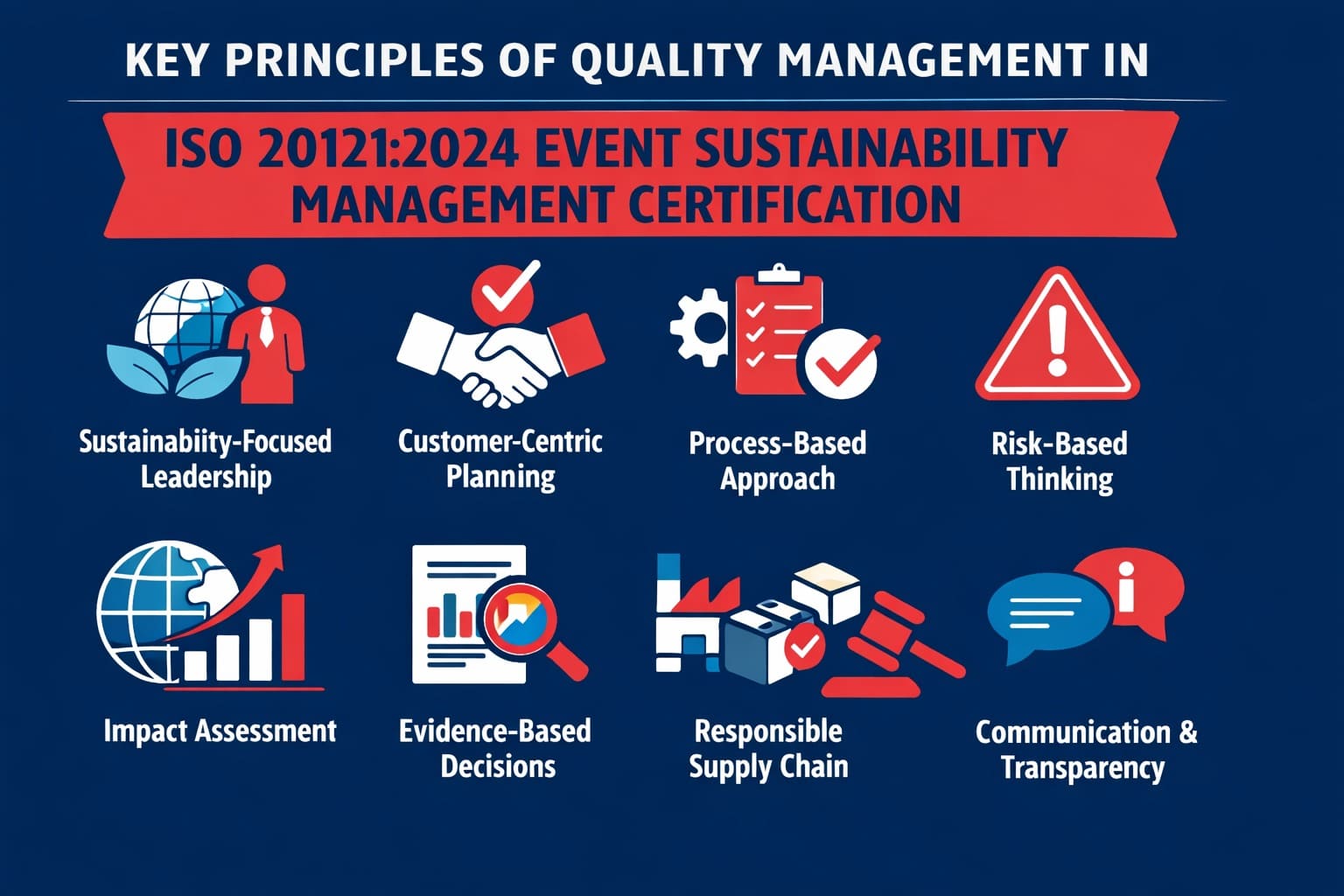
The key principles of quality management outlined in the ISO 20121:2024 event sustainability management certification include the following:
- Sustainability-Focused Leadership: It reflects a strong leadership commitment towards sustainability, environmental safety, and eco-friendly practices by establishing rational policies and ensuring accountability for responsible event management.
- Customer-Centric Event Planning: It promotes understanding customer behaviour and expectations while organising sustainable events. It ensures client satisfaction and meeting required standards without compromising environmental protection or ethical practices.
- Process-based Management Approach: The ISO 20121:2024 event sustainability management certification includes careful planning, implementation, monitoring performance, and reviewing activities. It ensures consistency, efficiency, and control, leading to favourable outcomes.
- Risk-based Thinking: It includes identifying potential sustainability-related risks and taking corrective actions for them to reduce their negative environmental effect.
- Impact Assessment: The ISO 20121:2024 event sustainability management certification includes assessing the environmental, social, and economic impacts of an event and taking preventive actions.
- Evidence-based Decision Making: The ISO 20121 certification includes monitoring resource usage, waste generation, carbon emission, and energy-efficient use of technology, which ensures informed decision-making.
- Responsible Supply Chain Management: It supports responsible supply chain management by evaluating suppliers, negative environmental effects, task alignment, and monitoring sustainable procurement.
- Legal Compliance: ISO 20121 certificates ensure strict compliance with applicable laws, regulations, environmental guidelines, and ethical standards.
- Communication and Transparency: It encourages clear internal as well as external communication, which is a core principle for the effective functioning of an organisation. It establishes a chain for transparent reporting and commitment towards sustainable goals.
What are the Key Requirements for Obtaining ISO 20121:2024 Event Sustainability Management Certification?
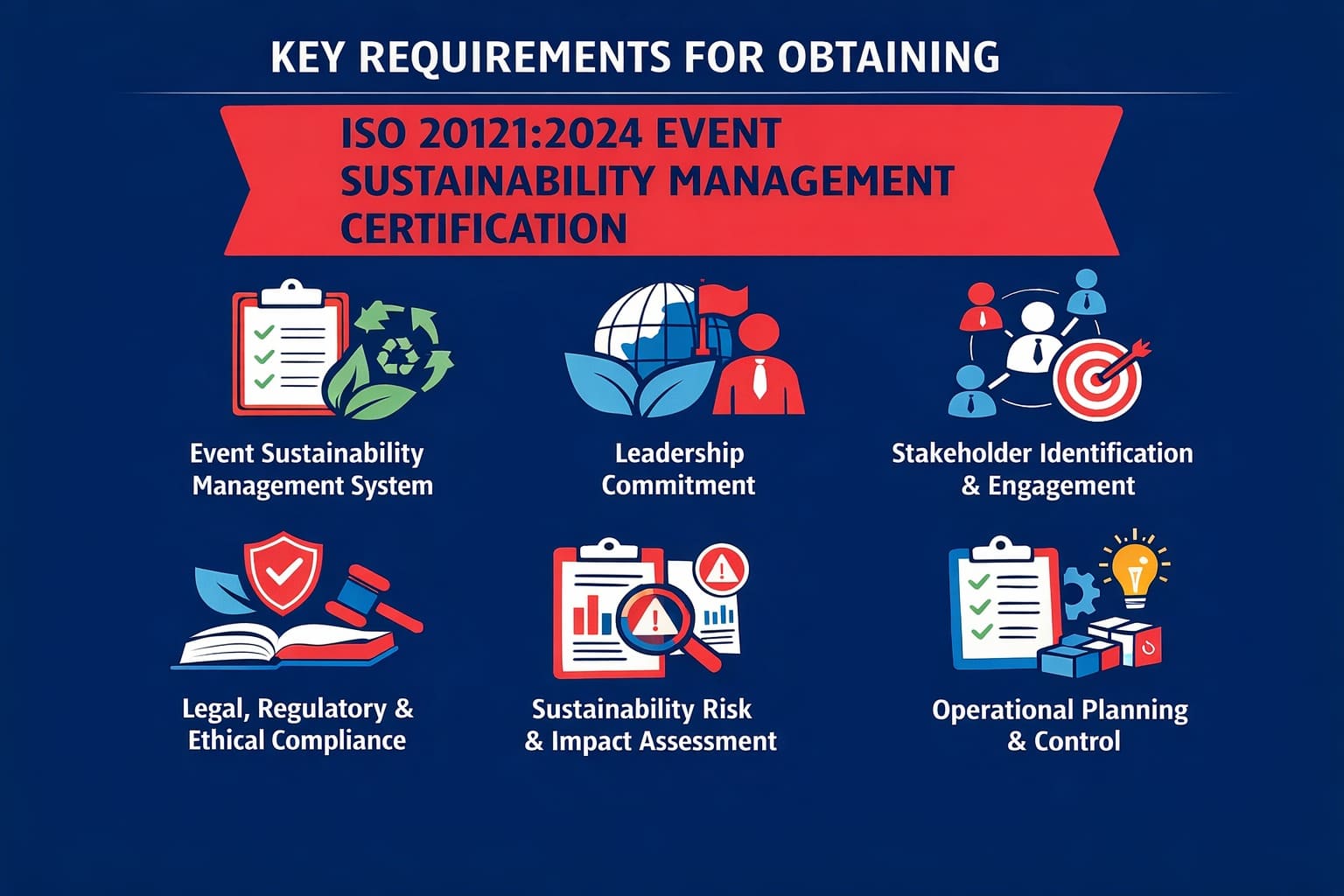
The following are the key requirements for obtaining the ISO 20121:2024 event sustainability management certification:
1. Event Sustainability Management System: The organisation must establish and implement a well-structured event sustainability management system. This management system should clearly define the scope, sustainable policies, objectives, and procedures to manage the environmental effects across all stages of planning and execution.
2. Leadership Commitment: The organisation and management must demonstrate strong leadership by establishing an integrated management system, strong sustainable practices, and integrating sustainability into strategic decision-making. Management should clearly define roles and ensure accountability throughout the organisation.
3. Stakeholder Identification and Engagement: The organisation must identify stakeholders, clients, suppliers, attendees, and other regulators. The organisation is responsible for assessing their needs, requirements, and expectations and addressing them efficiently.
4. Legal, Regulatory, and Ethical Compliance: The organisation must ensure compliance with all environmental laws, labour laws, health and safety standards, and community welfare. The organisation must stay updated on new laws and regulations, monitor performance, and ensure compliance throughout the organisation.
5. Sustainability Risk and Impact Assessment: ISO 20121:2024 event sustainability management certification requires organisations to evaluate and monitor potential sustainable risks and their impact on the organisation and the environment. It includes deep risk analysis and implementation of suitable policies to mitigate the negative effect.
6. Operational Planning and Control: The organisation must plan and control its operations to meet the sustainability objectives. It includes efficient allocation of resources, establishing an effective waste management system, and taking precautions or safety measures.
Why Choose the ISO 20121:2024 Event Sustainability Management Certification?
ISO 20121:2024 event sustainability management is an international benchmark that helps organisations to plan, execute and deliver events in a sustainable and environmentally friendly way. It establishes goals, procedures, communication, transparency, roles, responsibilities, and a structured framework to manage the environmental, social, and economic impact throughout the event. With this certification, the organisation can demonstrate strong compliance and commitment of the organisation towards sustainability.
The key benefits of obtaining an ISO 20121:2024 event sustainability management certification are:
- Environmental Impact Reduction: Helps organisations identify and reduce environmental impacts by efficiently managing energy, materials, and waste during events.
- Enhanced Brand Reputation: Demonstrates a clear commitment to sustainability, strengthening trust and credibility with clients, sponsors, and stakeholders.
- Regulatory and Compliance Support: Assists in meeting legal and sustainability requirements, reducing the risk of non-compliance and penalties.
- Cost Efficiency: Promotes efficient use of resources and waste reduction, leading to lower operational and event management costs.
- Competitive Advantage: Positions organisations as sustainable event leaders, helping attract environmentally conscious clients and opportunities.
Additional Benefits:
- Improved Risk Management: Helps identify sustainability-related risks early and implement controls to prevent disruptions and reputational damage.
- Global Recognition: Being an internationally accepted certification, it enhances acceptance and credibility in global markets.
- Continuous Improvement: Encourages regular performance evaluation and improvement of sustainability practices across events.
- Positive Social Impact: Supports ethical practices, inclusivity, and community well-being throughout the event lifecycle.
What are the Stages Involved in the ISO 20121:2024 Event Sustainability Management Certification Process?
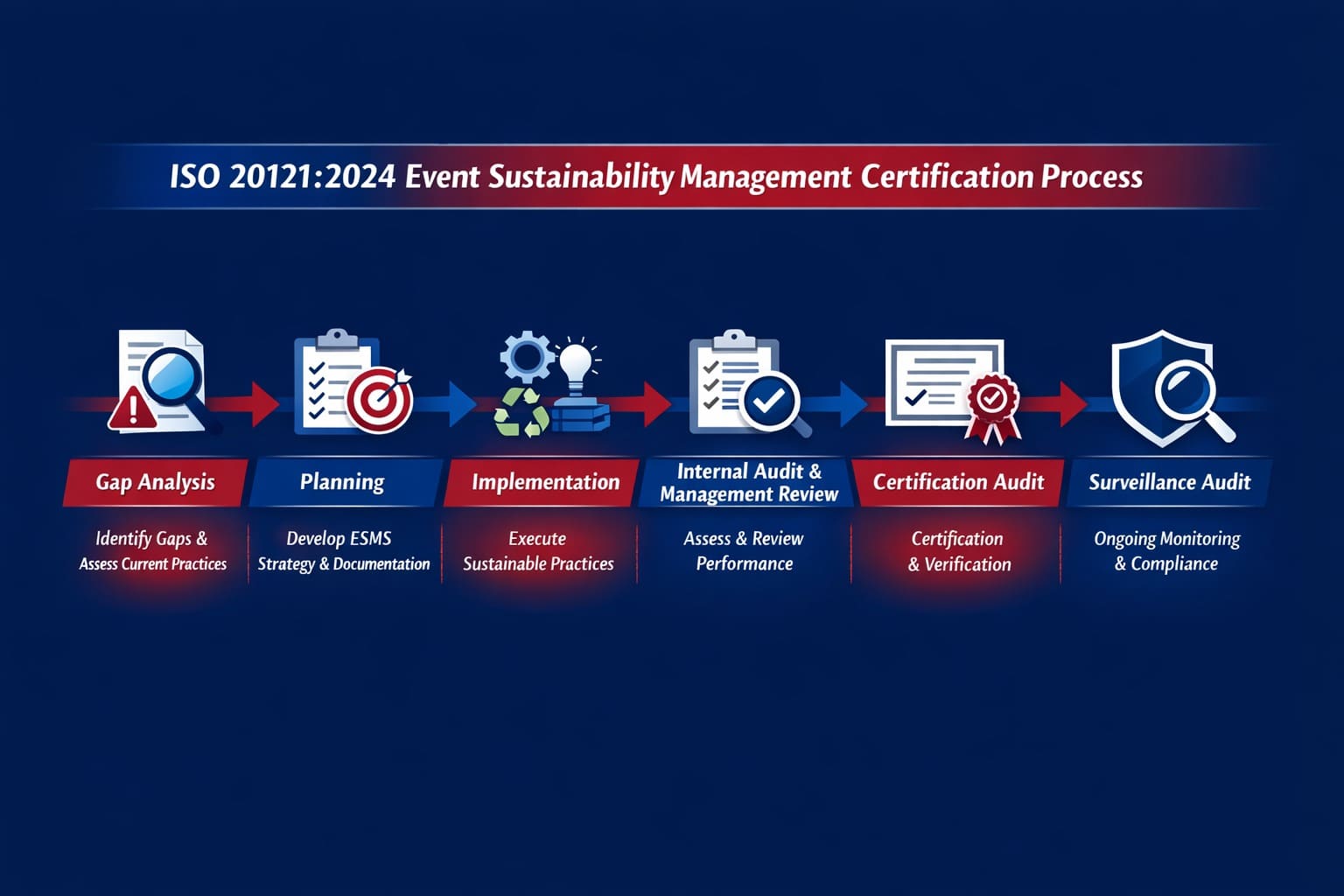
The ISO 20121:2024 event sustainability management certification process involves gap analysis, planning, ESMS document development, implementation, internal audit and management review, followed by certification audit and surveillance audit. Here is a detailed overview of the stages involved in the ISO 20121:2024 event sustainability management certification:
1. Gap Analysis
The organisation identifies the gaps between current event management practices and the requirements or guidelines established under the ISO 20121 certification. It includes identifying missing elements and compliance gaps and improving current practices to make them sustainable and reduce their environmental impact.
2. Planning
In the next stage, a well-established Event Sustainability Management System (ESMS) plan is made. It clearly defines the event details, location, activities covered, policies, procedures, roles, responsibilities, and objectives. Clearly defining each role and preparing documentation ensures focused alignment of tasks and easy implementation to avoid confusion or chaos.
3. Implementation
In this stage, the ESMS plan is implemented across all departments and event planning activities. Focus is given to sustainable practices like waste management, responsible sourcing, resource allocation, and energy efficiency. Employees are trained to effectively carry out the plan.
4. Internal Audit and Management Review
After implementation, an internal audit is conducted by professionals to assess whether the ESMS plans conform with the ISO 20121 requirements or not. The management reviews the ESMS performance through the internal audit and identifies non-conformities, weaknesses, and areas for improvement.
5. Certification Audit
The certifying authority reviews the ESMS implementation plan, its scope, policies and legal compliance and visits the organisation for an on-site verification of the plan implementation and execution. After verifying all the requirements and compliance, the authority issues the ISO 20121 certification.
6. Surveillance Audit
After successful procurement of the certification, the organisation must undergo periodic surveillance audits to ensure continued compliance and improvement.
FAQS
Have some questions about ISO 20121:2024 event sustainability management certificates?
Here are the answers for all your questions!
-
Who can apply for the ISO 20121:2024 event sustainability management certification?
Any organisation involved in planning, organising, or delivering events can apply for the ISO 20121:2024 certification.
- What types of events does the ISO 20121 certification cover?
- What is the main objective of the ISO 20121:2024 event sustainability management certification?
- Is the ISO 20121:2024 event sustainability management certification mandatory for event organisers?
- How is the ISO 20121 certification different from the ISO 9001 certification?
- Does the ISO 20121 certification help reduce environmental impact?
- How long does the ISO 20121 certification remain valid?
- Is the ISO 20121:2024 event sustainability management certification applicable to small event organisers?
- Is documentation required for the ISO 20121 certification?
- Is training required under the ISO 20121 certification?
- Who conducts ISO 20121 certification audits?
- How long does it take to get ISO 20121 certified?
- Can NGOs get ISO 20121 certified?
- Is the ISO 20121:2024 event sustainability management certification suitable for large-scale international events?
- Does the ISO 20121 certification address energy efficiency?
- Does the ISO 20121 certification include social responsibility practices?
- Does event contractors benefit from the ISO 20121 certification?
- Does ISO 20121 help reduce costs?
- Are there penalties for non-compliance with the requirements of ISO 20121 certification?
- Is the ISO 20121 certification publicly listed?


