
Table of Content
- What is ISO/IEC 20000-1:2018 IT Service Management Certification?
- Which Indusrties Benefited form ISO/IEC 20000-1:2018 IT Service Management Certification?
- Difference Between ISO/IEC 20000 and ISO 27001 Certification
- Key Principles of ISO/IEC 20000-1:2018 IT Service Management Certification
- Scope of ISO/IEC 20000-1:2018 IT Service Management Certification
- Key Requirements of ISO/IEC 20000-1:2018 IT Service Management Certification
- How ISO/IEC 20000-1:2018 IT Service Management Certification Boost Business Growth?
- Process for Obtaining ISO/IEC 20000-1:2018 IT Service Management Certification
- Validity Period of ISO/IEC 20000-1:2018 IT Service Management Certification
- Key Challanges in Obtaining ISO/IEC 20000-1:2018 IT Service Management Certification
- How Legal Babu Can Help?
What is ISO/IEC 20000-1:2018 IT Service Management Certification?
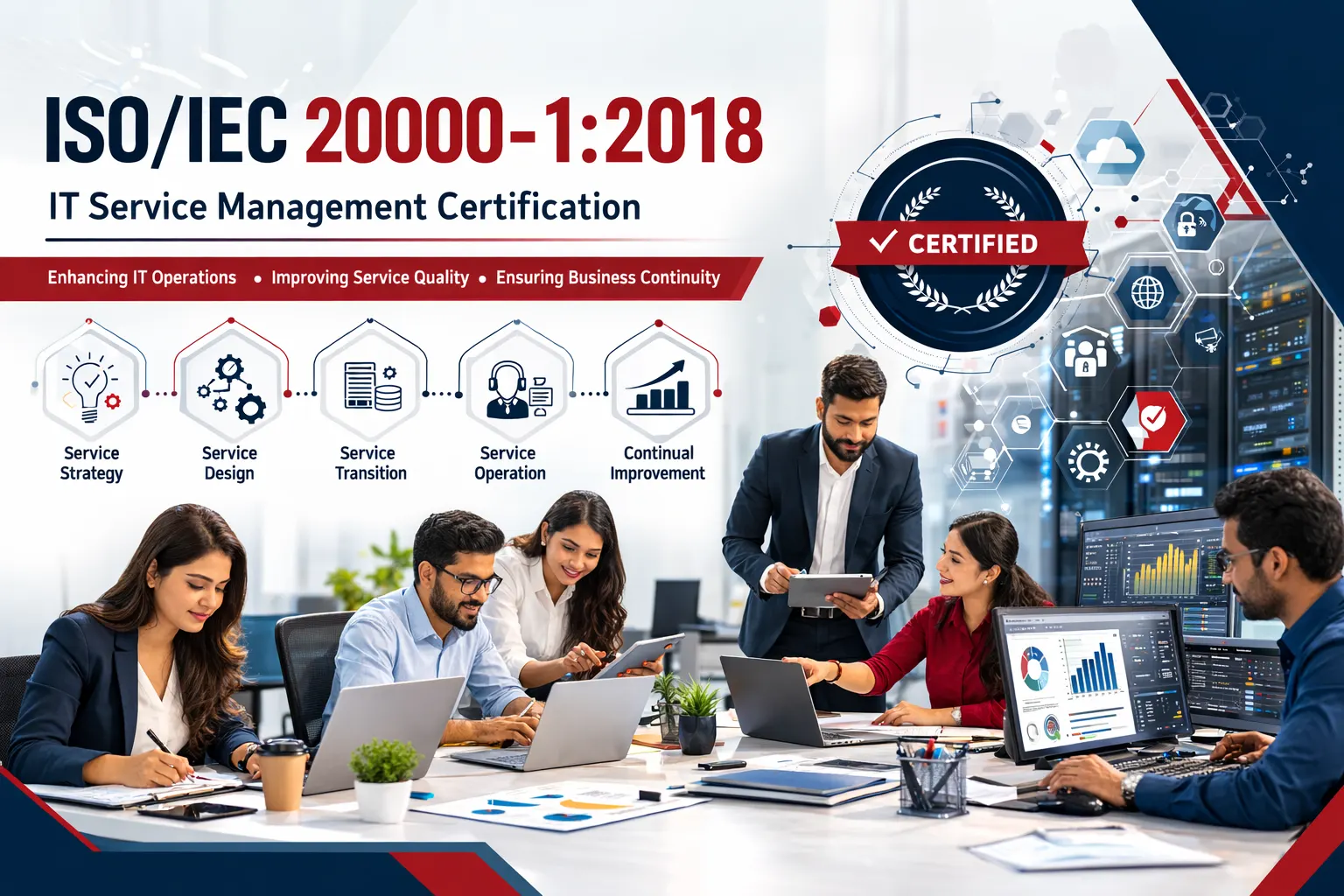
ISO/IEC 20000-1:2018 IT service management systems certification is an internationally recognised standard that specifies the requirements for establishing, implementing, maintaining, and continually improving a service management system (SMS) within an organisation. The standard provides a structured framework to help organisations effectively plan, deliver, control, and improve services to meet customer and business requirements.
It focuses on the systematic management of service processes, including service design, service transition, service delivery, performance monitoring, risk management, and continual improvement.
Which Indusrties Benefited form ISO/IEC 20000-1:2018 IT Service Management Certification?
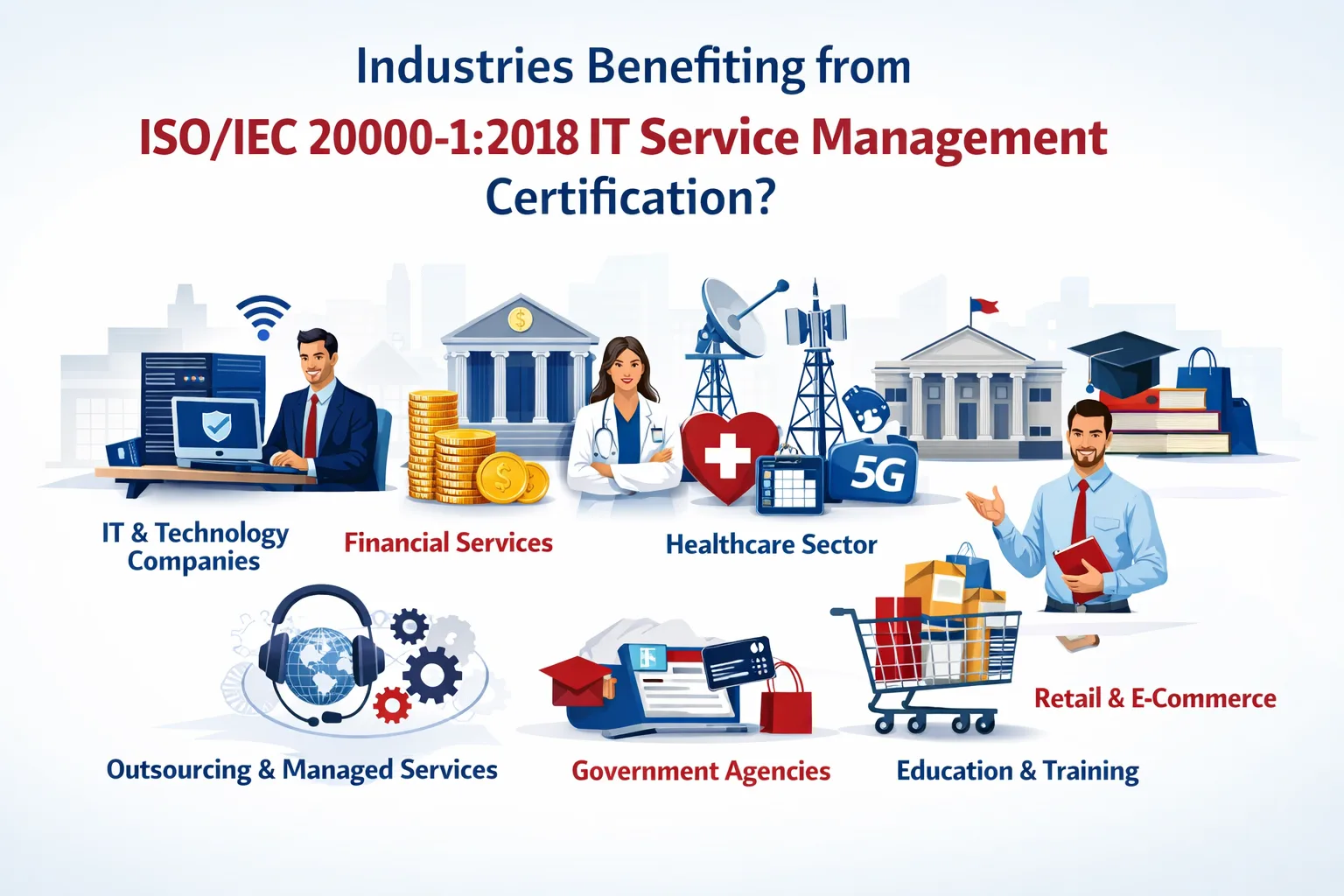
Many industries adopt service management systems to improve service delivery, operational efficiency, customer satisfaction, and organisational performance. Some of them include:
- Information Technology and Software Services
- Telecommunications and Network Service Providers
- Banking and Financial Services
- Government and Public Sector Organisations
- Healthcare and Medical Services
- Education and E-learning Institutions
- Business Process Outsourcing (BPO) Providers
- Cloud and Data Centre Service Providers
- Retail and E-commerce Service Platforms
- Logistics and Transportation Service Providers
What is the Difference Between ISO/IEC 20000 and ISO 27001 Certification?
ISO/IEC 20000-1:2018 IT service management systems and ISO/IEC 27001 information security management are internationally recognised standards that focus on different aspects of organisational management systems. While ISO/IEC 20000 emphasises effective service management and delivery processes, ISO/IEC 27001 focuses on protecting sensitive information through a structured information security management framework. Here’s the Key difference between the two:
|
Basis of Difference |
ISO/IEC 20000 Certification |
ISO/IEC 27001 Certification |
|
Purpose |
Focuses on establishing and maintaining an effective service management system. |
Focuses on establishing and managing an information security management system. |
|
Primary Objective |
Ensures consistent delivery and improvement of organisational services. |
Ensures protection of confidential, sensitive, and critical information. |
|
Key Focus Area |
Service planning, service delivery, performance monitoring, and continual service improvement. |
Risk management, data protection, and security controls. |
|
Management System |
Service Management System (SMS). |
Information Security Management System (ISMS). |
|
Main Concern |
Quality, reliability, and efficiency of service management processes. |
Confidentiality, integrity, and availability of information assets. |
|
Applicable Organisations |
Organisations managing and delivering services to customers. |
Organisations handling sensitive information or data. |
What are the Key Principles of ISO/IEC 20000-1:2018 IT Service Management Certification?
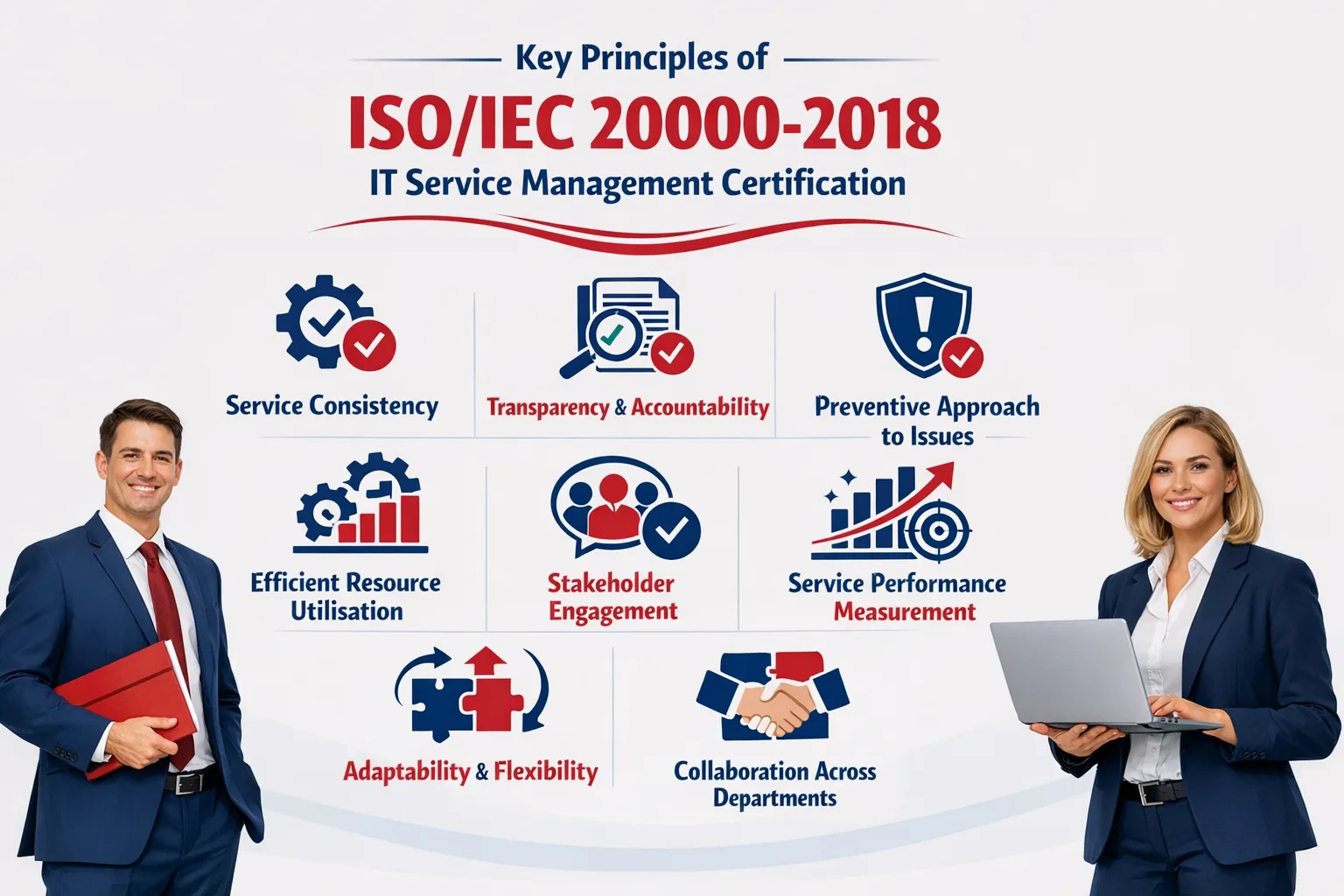
Here are the key principles of quality management in ISO/IEC 20000-1:2018 IT Service Management Certification:
- Service Consistency: Organisations must maintain consistent service delivery by following defined procedures and standards to ensure reliability and uniform service performance.
- Transparency and Accountability: Clear communication, documentation, and accountability help organisations maintain transparency in service management and improve stakeholder trust.
- Preventive Approach to Issues: Organisations should focus on identifying potential service issues in advance and implementing preventive measures to avoid disruptions.
- Efficient Resource Utilisation: Proper use of organisational resources such as personnel, technology, and infrastructure supports effective service management and improved performance.
- Stakeholder Engagement: Active engagement with stakeholders helps organisations understand expectations and deliver services that meet business and customer needs.
- Service Performance Measurement: Regular monitoring and evaluation of service performance help organisations maintain service quality and identify opportunities for improvement.
- Adaptability and Flexibility: Organisations should adapt their service management processes to changing customer needs, technological developments, and market conditions.
- Collaboration Across Departments: Effective coordination between teams ensures seamless service delivery and reduces communication gaps within the organisation.
- Knowledge Management: Sharing and maintaining organisational knowledge helps employees improve service quality and resolve issues more efficiently.
- Sustainable Service Improvement: Long-term service improvement strategies help organisations maintain service quality while supporting sustainable operational growth.
What is the Scope of ISO/IEC 20000-1:2018 IT Service Management Certification?
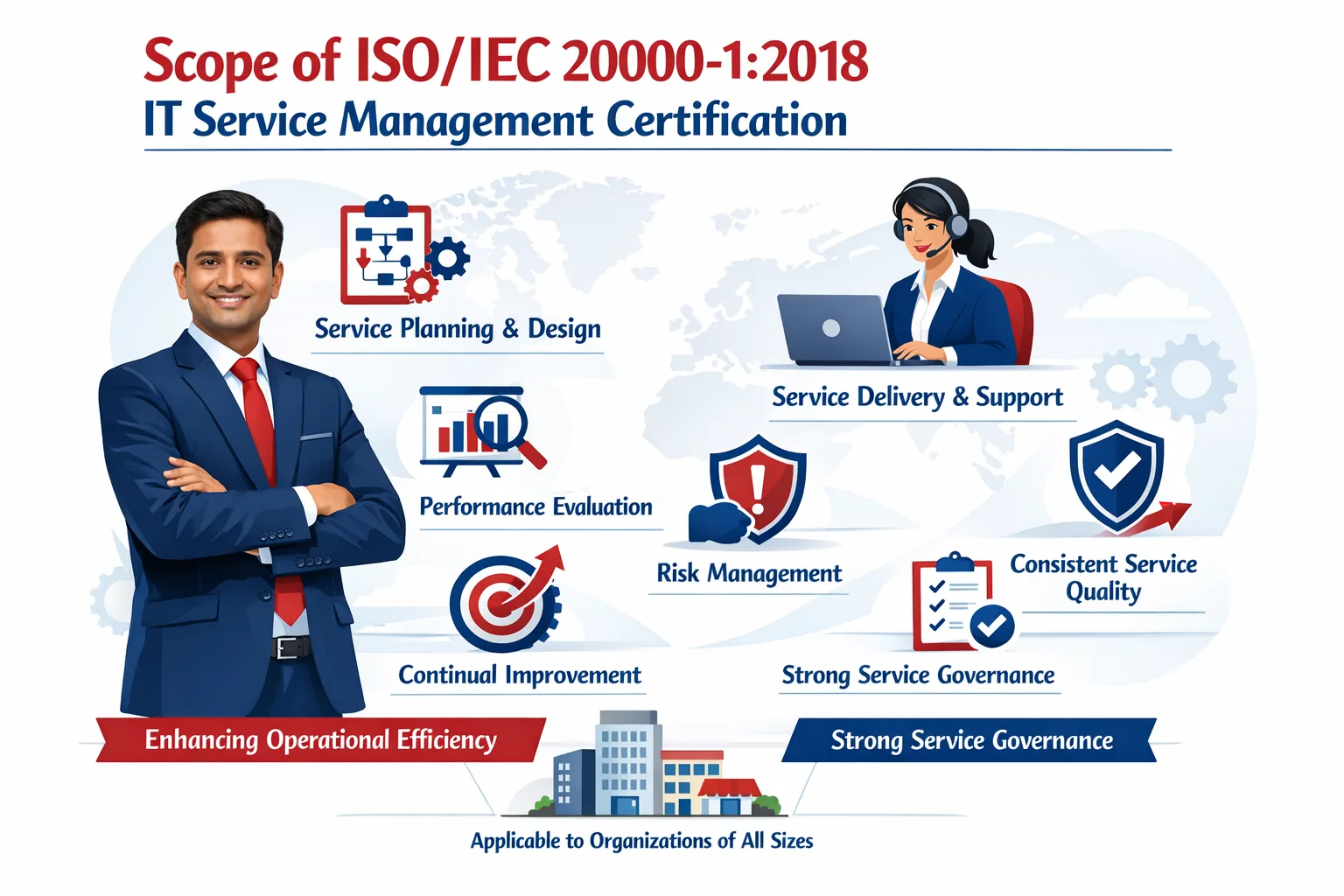
Organisations implementing ISO/IEC 20000-1:2018, IT service management systems certification, establish a structured framework for managing and improving service management systems. The standard applies to organisations responsible for planning, designing, delivering, and continually improving services to meet customer and business requirements. It covers various service management activities, such as service planning, service delivery, performance evaluation, risk management, and continual improvement.
The certification can be adopted by organisations of any size that manage service processes and aim to ensure consistent service quality. By implementing this standard, organisations can strengthen service governance, improve operational efficiency, and ensure that services are delivered in a reliable and well-controlled manner.
What are the Key Requirements of ISO/IEC 20000-1:2018 IT Service Management Certification?
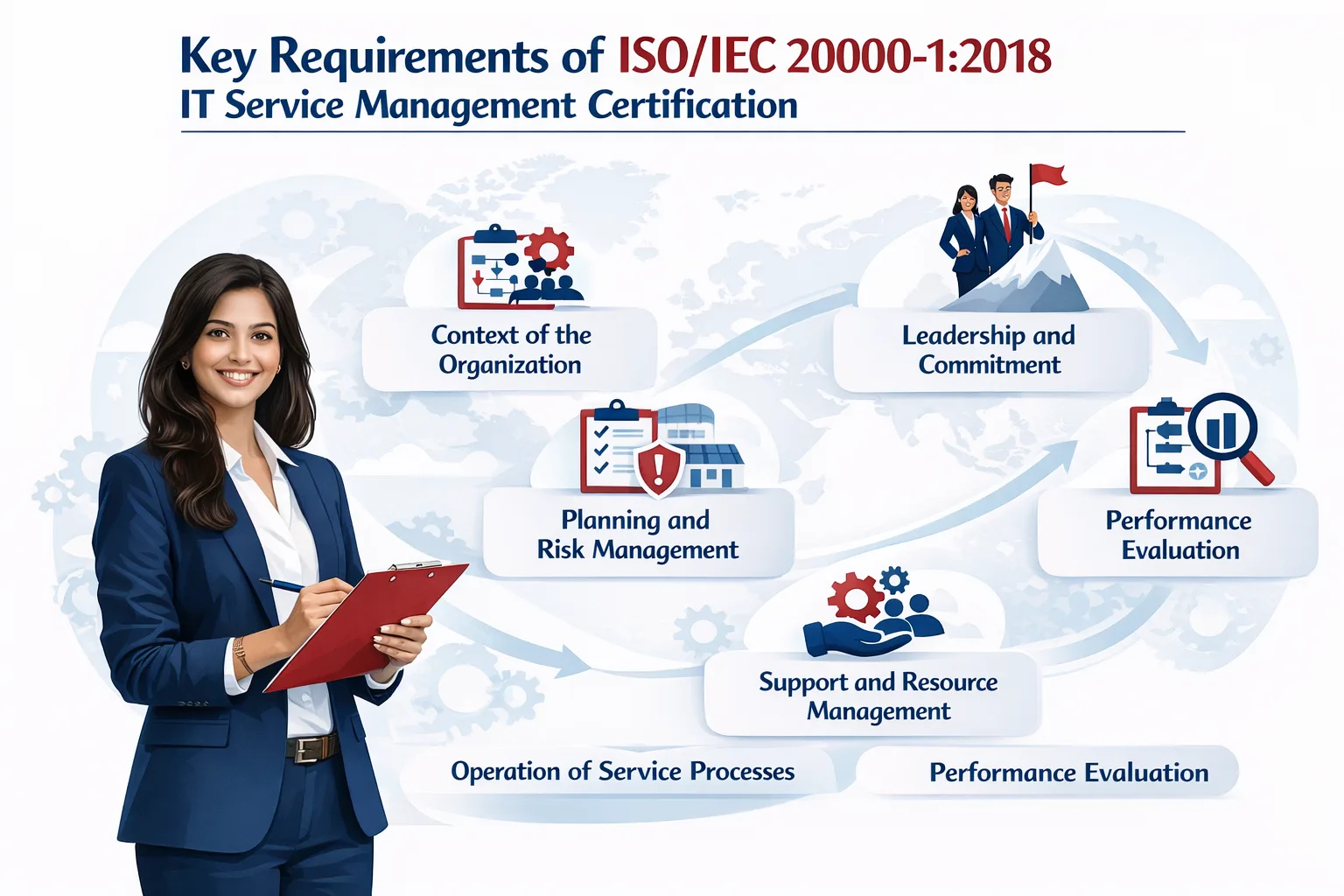
ISO/IEC 20000-1:2018 certification requires organisations to implement specific service management requirements to ensure consistent service delivery, operational control, and continual improvement. The key requirements of the certification include the following:
1. Context of the Organisation: Organisations must identify internal and external factors affecting service management and understand stakeholder expectations. Defining the scope of the service management system ensures that all relevant services, processes, and organisational activities are properly controlled and managed.
2. Leadership and Commitment: Top management must demonstrate commitment to the service management system by establishing policies, assigning responsibilities, and ensuring sufficient resources are available to maintain effective service management processes.
3. Planning and Risk Management: Organisations must identify potential risks and opportunities that may affect service performance. Proper planning helps organisations minimise disruptions, improve service reliability, and ensure service objectives are achieved.
4. Support and Resource Management: Adequate resources such as skilled personnel, infrastructure, and documented information must be maintained to support service management activities and ensure effective communication and operational control.
5. Operation of Service Processes: Organisations must implement structured operational processes for planning, controlling, and delivering services. This ensures services are managed consistently and aligned with defined organisational objectives.
6. Performance Evaluation: Regular monitoring, internal audits, and management reviews are required to evaluate the effectiveness of the service management system and ensure compliance with organisational requirements.
7. Improvement and Corrective Actions: Organisations must identify non-conformities and implement corrective actions to prevent recurrence. Continual improvement ensures the service management system remains effective and adapts to changing organisational needs.
How ISO/IEC 20000-1:2018 IT Service Management Certification Boost Business Growth?
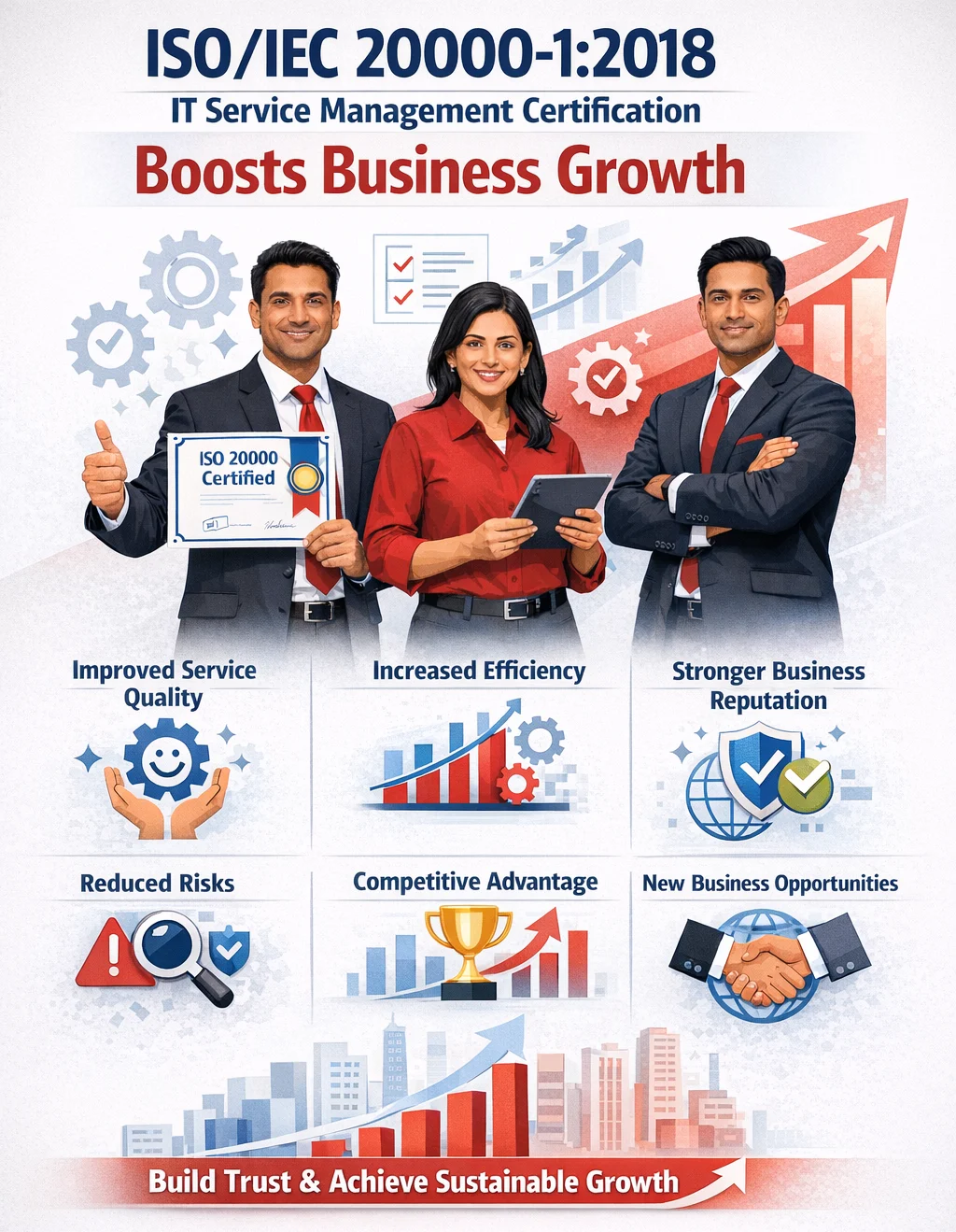
ISO/IEC 20000-1:2018 certification helps organisations strengthen service management practices, improve operational efficiency, and ensure reliable service delivery. By implementing structured processes and performance monitoring, businesses can enhance customer satisfaction, build trust, and achieve sustainable business growth.
- It improves service quality by establishing structured processes that ensure consistent service delivery and better operational performance.
- It enhances customer satisfaction by ensuring services are delivered reliably and aligned with customer expectations and requirements.
- It increases operational efficiency through clearly defined service processes, better resource utilisation, and improved workflow management.
- It strengthens business reputation by demonstrating commitment to internationally recognised service management standards and professional practices.
- It provides competitive advantage by helping organisations stand out in the market with certified and reliable service management systems.
- It reduces operational risks by identifying service issues early and implementing effective monitoring and control mechanisms.
- It creates new business opportunities as certification increases credibility and trust among global clients and business partners.
What is the Process for Obtaining ISO/IEC 20000-1:2018 IT Service Management Certification?
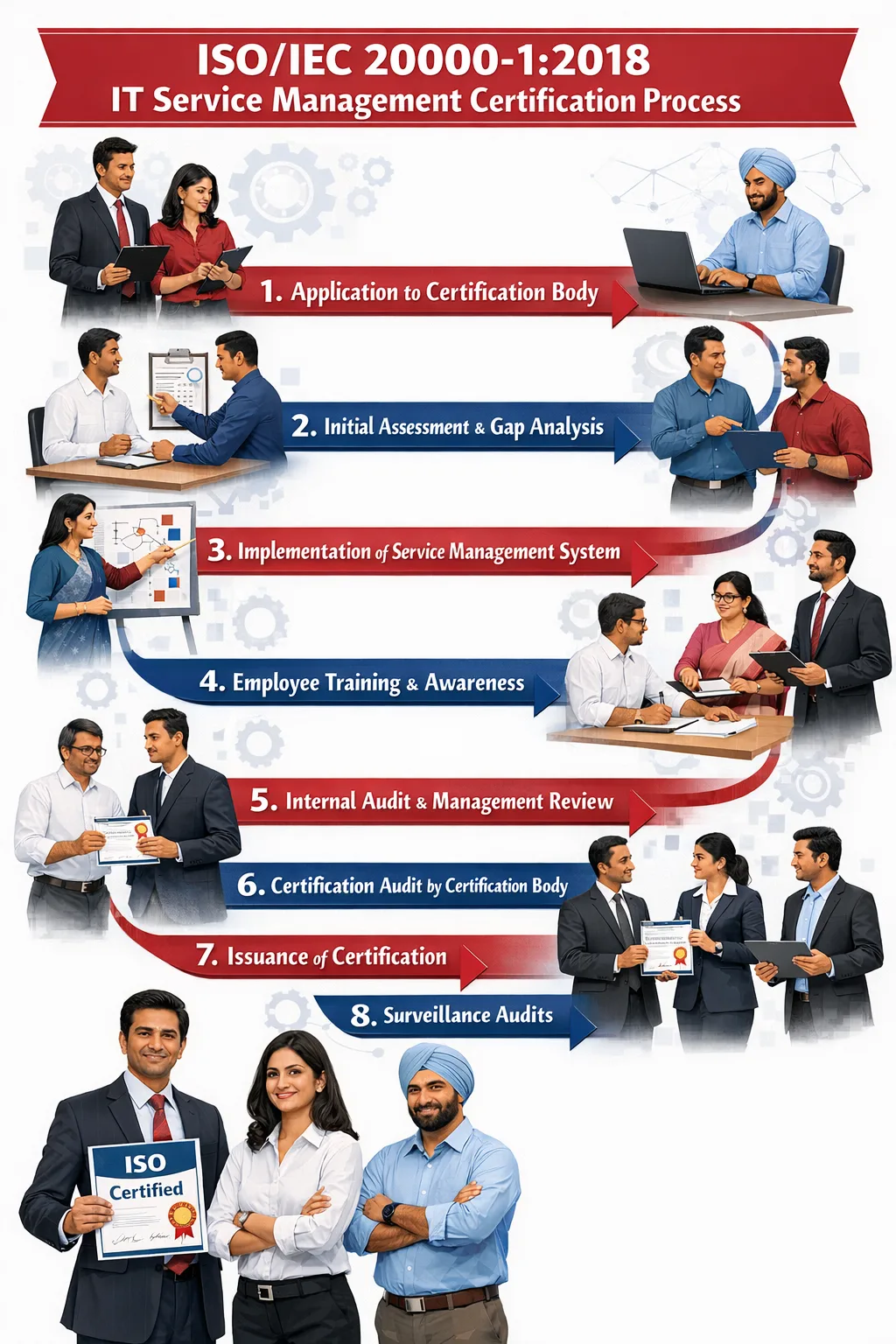
The process for obtaining ISO/IEC 20000-1:2018 certification involves implementing a structured service management system, meeting the standard requirements, and successfully completing an audit conducted by an accredited certification body. Here is the step-by-step process:
1. Application to Certification Body
The organisation submits an application to an accredited certification body with details about its services, scope of certification, organisational structure, and relevant documentation required for initiating the certification assessment process.
2. Initial Assessment and Gap Analysis
The organisation evaluates its existing service management practices to identify gaps between current processes and ISO/IEC 20000-1 requirements. This assessment helps determine the improvements and controls needed before implementing the service management system.
3. Implementation of Service Management System
The organisation develops and implements the required policies, procedures, and service management processes according to the standard. Proper documentation, resource allocation, and staff awareness are ensured to support effective service management practices.
4. Employee Training and Awareness
Employees involved in service management activities are trained on the requirements of the standard and their roles in maintaining service quality. Training ensures that staff understand procedures and consistently follow defined service management practices.
5. Internal Audit and Management Review
The organisation conducts internal audits to evaluate the effectiveness of the implemented service management system. Management reviews the audit results, identifies non-conformities, and takes corrective actions before the external certification audit.
6. Certification Audit by Certification Body
An accredited certification body performs an external audit to verify whether the organisation’s service management system complies with ISO/IEC 20000-1 requirements.
7. Issuance of Certification
Once the organisation meets all requirements and resolves any non-conformities, the certification body issues the ISO/IEC 20000-1 certificate confirming compliance with the standard.
8. Surveillance Audits
Periodic surveillance audits are conducted by the certification body during the certification cycle to ensure the organisation continues to maintain and follow the service management system requirements.
What is the Validity Period of ISO/IEC 20000-1:2018 IT Service Management Certification?
The validity period of ISO/IEC 20000-1:2018 IT service management certification is typically three years from the date of issuance by the accredited certification body. During this period, organisations must undergo annual surveillance audits to ensure continued compliance with the standard’s requirements. After the three-year cycle, a recertification audit is conducted to renew the certification and verify that the service management system remains effective and properly maintained.
What are the Key Challanges in Obtaining ISO/IEC 20000-1:2018 IT Service Management Certification?
Implementing ISO/IEC 20000-1:2018 IT service management certification can be challenging because organisations must establish structured service management processes, maintain proper documentation, and ensure compliance with standard requirements. Limited resources, lack of awareness, and process integration difficulties often create obstacles during certification implementation. The most common challenges include the following:
- Understanding and interpreting ISO/IEC 20000-1 requirements correctly can be difficult without proper guidance or expert consultation.
- Developing and maintaining comprehensive documentation for service management processes requires significant time, effort, and organisational coordination.
- Aligning existing organisational processes with standard requirements may require major operational changes and structured process redesign.
- Ensuring employee awareness and training for effective implementation of service management practices can be challenging for many organisations.
- Allocating sufficient resources, including skilled personnel and infrastructure, is often difficult for organisations with limited operational capacity.
- Maintaining consistent service management practices and monitoring performance requires continuous effort and effective internal control systems.
- Preparing for certification audits and addressing non-conformities identified during assessments may delay the certification process.
How Legal Babu Can Help?
Legal Babu assists organisations throughout the ISO/IEC 20000-1:2018 IT service management certification process by providing expert guidance on documentation, system implementation, and compliance requirements. Our team supports gap analysis, policy preparation, audit readiness, and coordination with certification bodies. With our professional assistance, businesses can streamline the certification process, reduce implementation challenges, and achieve certification efficiently.
FAQS
Have some questions about ISO/IEC 20000 Certification?
We have got you covered:
-
What does ISO/IEC 20000 certification demonstrate for organisations?
ISO/IEC 20000 demonstrates that an organisation follows internationally recognised practices for managing services efficiently and consistently.
- Who issues ISO/IEC 20000 certification to organisations?
- Is ISO/IEC 20000 certification mandatory for organisations?
- How long does it take to obtain ISO/IEC 20000 certification?
- Can small businesses apply for ISO/IEC 20000 certification?
- Does ISO/IEC 20000 certification require continuous monitoring?
- Can organisations integrate ISO/IEC 20000 certification with other ISO standards?
- What role does documentation play in ISO/IEC 20000 certification?
- Can ISO/IEC 20000 certification improve organisational transparency?
- Is employee participation important for ISO/IEC 20000 certification implementation?
- Does ISO/IEC 20000 certification require defined service objectives?
- Can ISO/IEC 20000 certification support digital service environments?
- How does ISO/IEC 20000 certification improve service governance?
- Does ISO/IEC 20000 certification require performance measurement indicators?
- Can ISO/IEC 20000 certification improve internal communication?
- Does ISO/IEC 20000 certification support service lifecycle management?
- Can ISO/IEC 20000 certification improve customer confidence?
- Does ISO/IEC 20000 certification help organisations standardise service processes?
- Can ISO/IEC 20000 certification reduce operational inefficiencies?
- Does ISO/IEC 20000 certification support risk management in services?


