
Table of Content
- What is ISO 15189:2022 Medical Lab Certification?
- Key Principles of Quality Management in ISO 15189:2022 Medical Lab Certification
- What is Covered under ISO 15189:2022 Medical Lab Certification?
- What is Not Covered under ISO 15189:2022 Medical Lab Certification?
- Difference Between ISO 15189 and ISO 17025
- Who Requires ISO 15189:2022 Medical Lab Certification?
- Key Requirements for ISO 15189:2022 Medical Lab Certification
- Why is ISO 15189:2022 Medical Lab Certification Important?
- Process for Obtaining ISO 15189:2022 Medical Lab Certification Important
- Documents Required for ISO 15189:2022 Medical Lab Certification
- Validity Period of ISO 15189:2022 Medical Lab Certification
What is ISO 15189:2022 Medical Lab Certification?
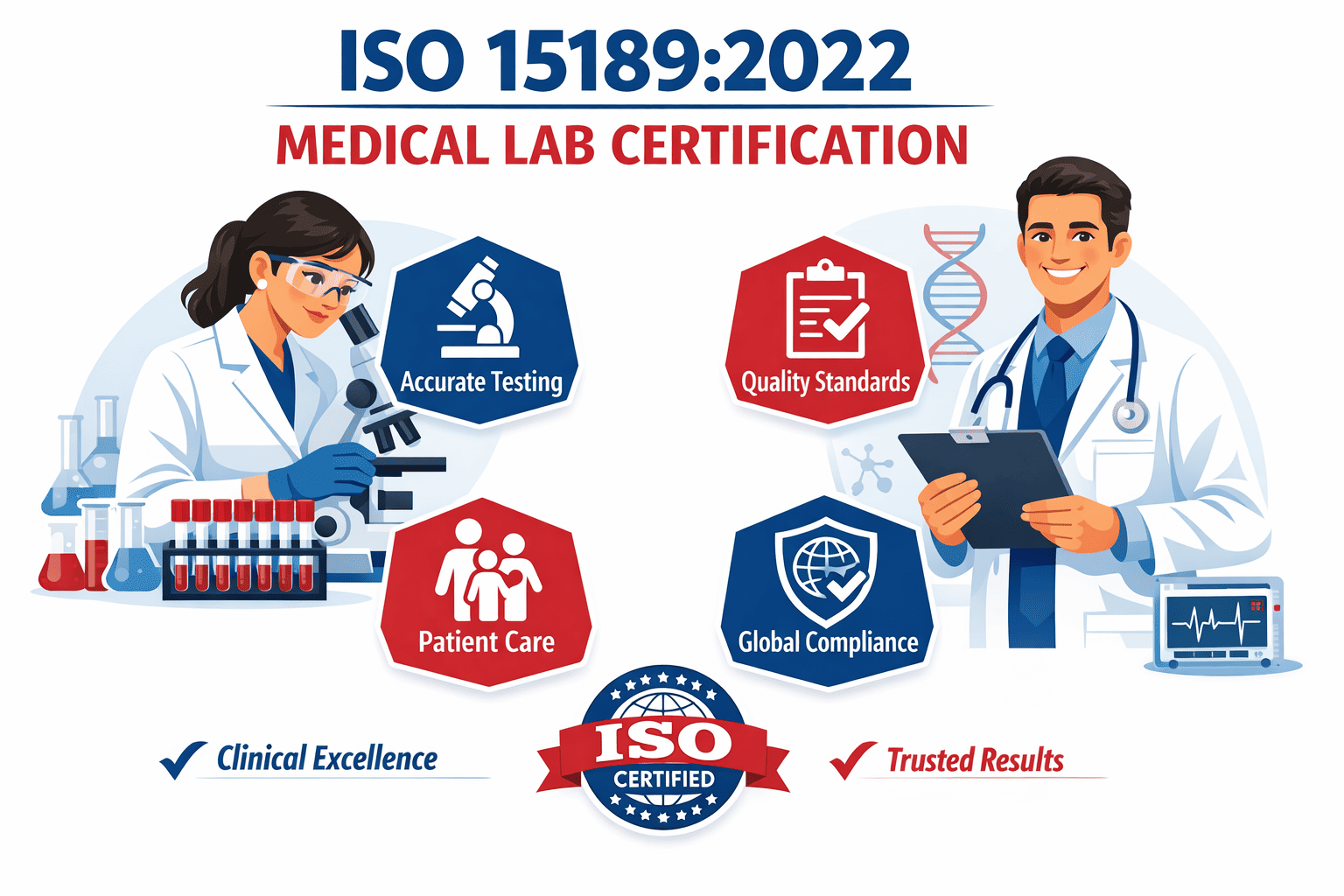
ISO 15189:2022 is an internationally recognised accreditation that sets quality management and technical competence requirements for medical laboratories, ensuring accurate diagnostic testing and reliable healthcare outcomes. ISO 15189 specifically addresses clinical laboratory processes, pre-examination and post-examination activities, and patient-centric reporting systems. This certification demonstrates compliance with international best practices, enhancing credibility, patient trust, regulatory acceptance, and overall healthcare service quality.
What are the Key Principles of Quality Management in ISO 15189:2022 Medical Lab Certification?
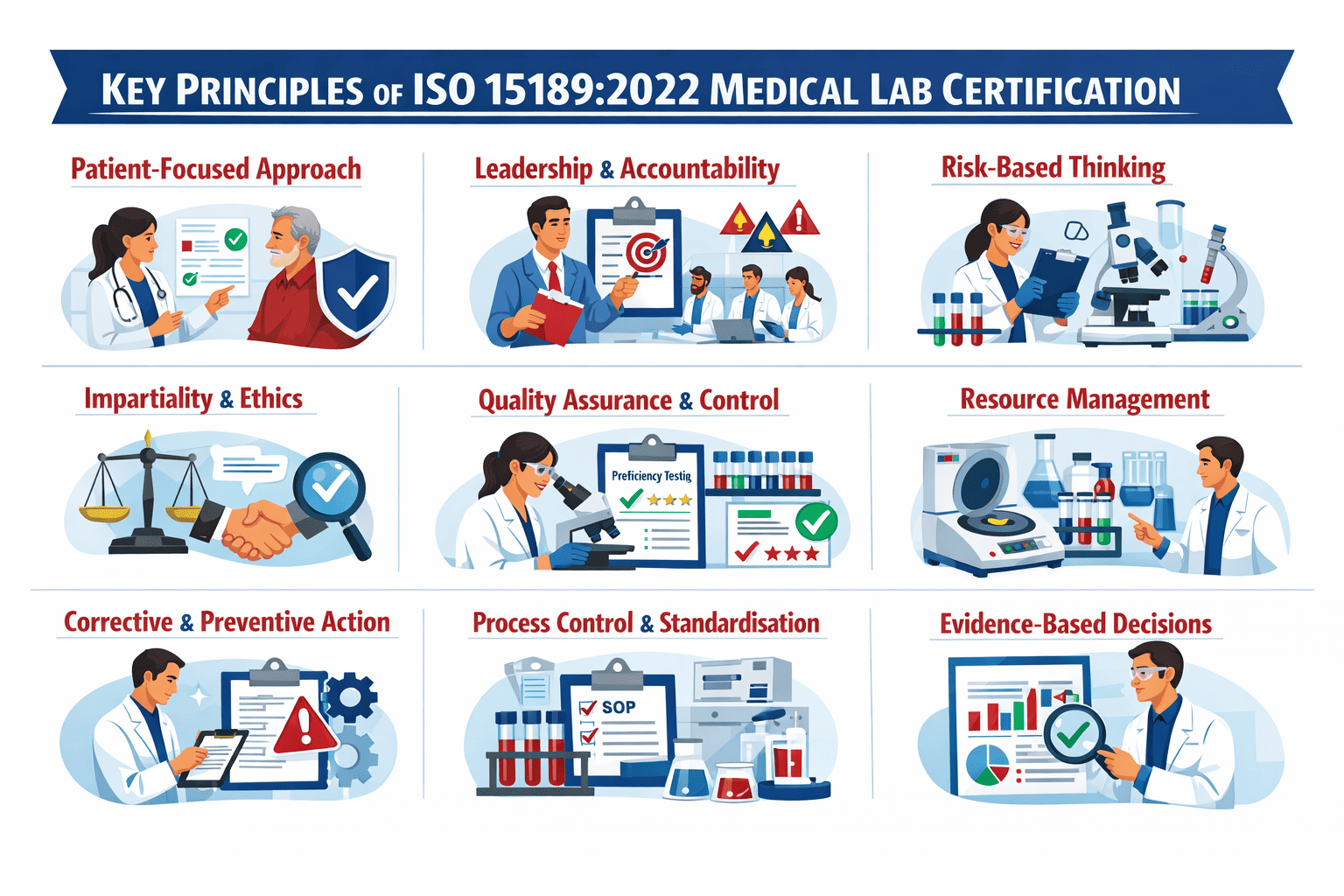
ISO 15189:2022 includes several quality management principles ensuring accuracy, reliability, and continuous improvement in medical laboratory services. Some of them are:
- Patient-Focused Approach: Laboratory processes must prioritise patient safety, confidentiality, accurate reporting, and timely delivery of results supporting effective clinical decision-making.
- Leadership and Accountability: Top management must demonstrate commitment by defining responsibilities, establishing quality objectives, and ensuring resources for effective system implementation.
- Risk-Based Thinking: Laboratories must identify potential risks affecting test accuracy, patient safety, and data integrity, implementing controls to minimise errors.
- Impartiality and Ethical Conduct: Laboratories must operate without bias, manage conflicts of interest, and uphold ethical standards to maintain trust and professional integrity.
- Quality Assurance and Control: Internal quality control and participation in external proficiency testing ensure accuracy, reliability, and consistency of examination results.
- Resource Management: Adequate infrastructure, equipment, reagents, and personnel must be available to support reliable and uninterrupted laboratory operations.
- Corrective and Preventive Action: Nonconformities must be investigated thoroughly, root causes identified, and preventive measures implemented to avoid recurrence.
- Process Control and Standardisation: Documented procedures must govern pre-examination, examination, and post-examination activities to ensure consistency, traceability, and reproducible results.
- Evidence-Based Decision Making: Decisions must rely on verified data, quality indicators, audit findings, and performance metrics to enhance operational effectiveness.
What is Covered under ISO 15189:2022 Medical Lab Certification?
ISO 15189:2022 defines internationally accepted requirements for medical laboratories, ensuring accurate testing, reliable results, technical competence, and effective quality management across all stages of laboratory examination processes. Here is what covered under ISO 15189:2022 certification:
- Clinical Laboratory Testing Services
- Pathology & Diagnostic Services
- Molecular & Genetic Testing
- Immunology & Serology Testing
- Pre-Examination & Post-Examination Services
What is Not Covered under ISO 15189:2022 Medical Lab Certification?
ISO 15189:2022 does not apply to product certification or manufacturing activities outside medical laboratory testing services like:
- Manufacturing of diagnostic kits
- Pharmaceutical production processes
- Hospital management systems
- Clinical treatment or patient care services
- Accreditation of non-medical testing laboratories
- Environmental testing laboratories
- Calibration laboratories
What is the Difference Between ISO 15189 and ISO 17025?
ISO 15189:2022 and ISO 17025:2017 are internationally recognised laboratory standards, but they differ in scope, application, and focus. While one is designed specifically for medical laboratories, the other applies to general testing and calibration laboratories across various industries. Here are the key differences between the two:
|
Basis of Comparison |
ISO 15189 |
ISO 17025 |
|
Applicable To |
Medical laboratories |
Testing and calibration laboratories |
|
Primary Focus |
Patient-centered laboratory services |
Technical competence in testing and calibration |
|
Field of Application |
Clinical diagnostics and healthcare testing |
Industrial, environmental, mechanical, chemical, and calibration testing |
|
Risk Management |
Focus on patient safety and result reliability |
Focus on technical risks affecting test validity |
|
Patient Care Requirements |
Includes patient confidentiality, ethics, and advisory services |
Does not include patient-related requirements |
Who Requires ISO 15189:2022 Medical Lab Certification?
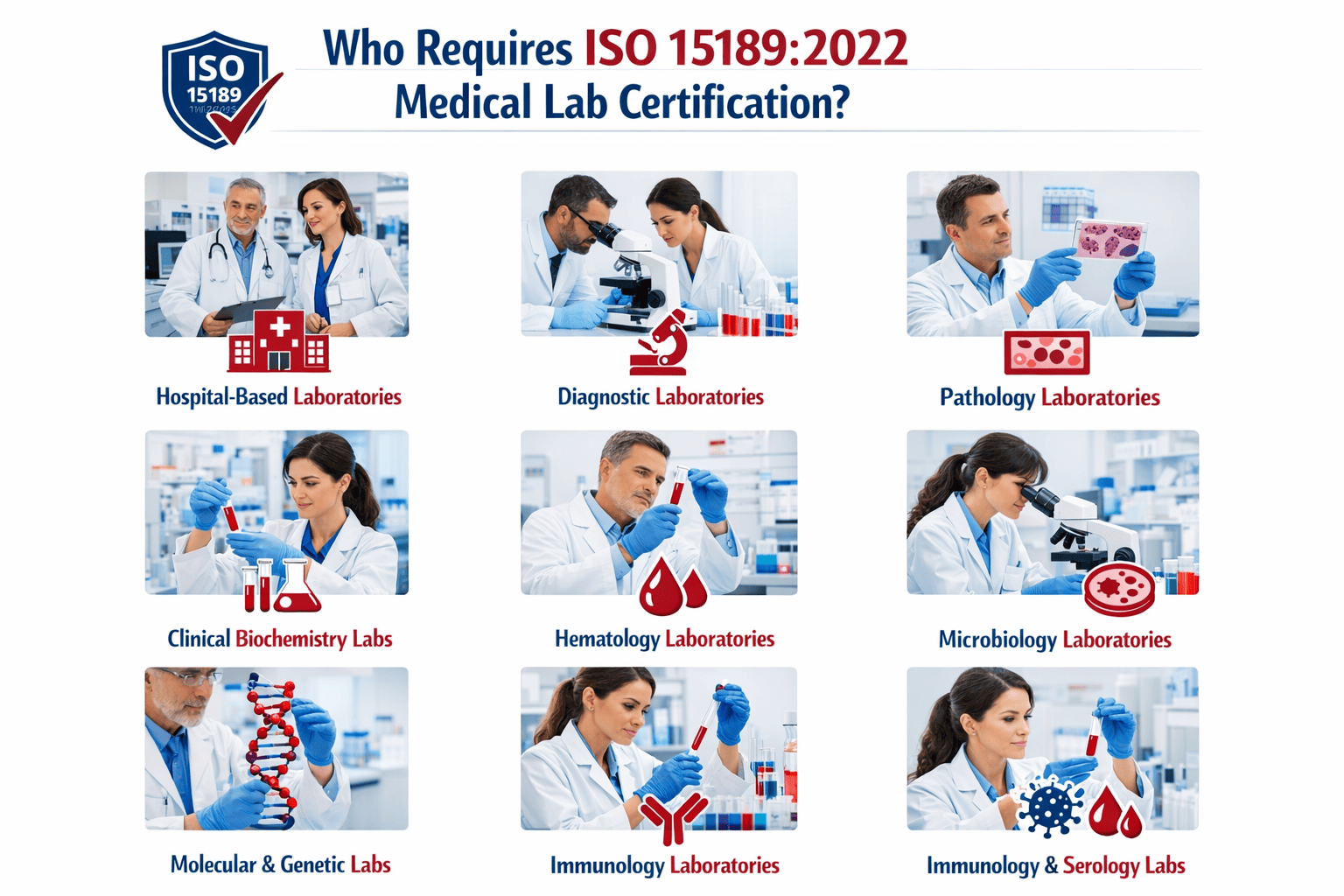
ISO 15189:2022 medical lab certification is required by laboratories providing medical diagnostic and clinical testing services, including:
- Hospital-based medical laboratories
- Independent diagnostic laboratories
- Pathology laboratories
- Clinical biochemistry laboratories
- Hematology laboratories
- Microbiology laboratories
- Molecular and genetic testing laboratories
- Immunology and serology laboratories
What are the Key Requirements for ISO 15189:2022 Medical Lab Certification?
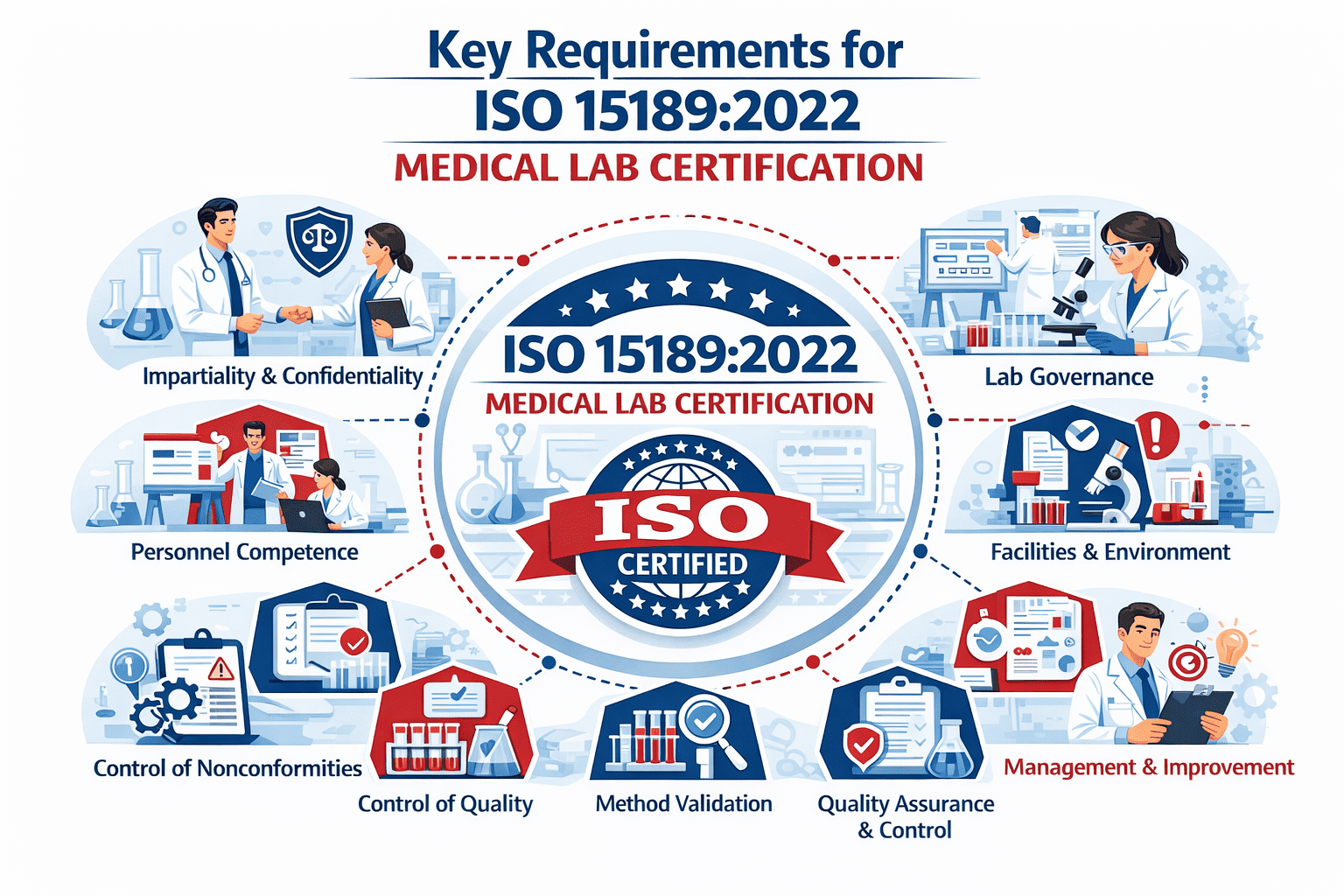
The following are the key requirements for ISO 15189:2022 medical lab certification:
1. Impartiality and Confidentiality: The laboratory must operate impartially, avoid conflicts of interest, and ensure complete confidentiality of patient information, test data, and medical records to maintain trust, ethical conduct, and data security.
2. Laboratory Governance and Responsibility: A defined organisational structure with clear roles, responsibilities, and authorities must be established, ensuring leadership accountability and effective oversight of quality management and laboratory operations.
3. Personnel Competence: All laboratory personnel must be appropriately qualified, trained, authorised, and regularly evaluated to ensure technical competence and the ability to perform assigned testing activities accurately and safely.
4. Facilities and Environmental Conditions: Laboratories must provide suitable premises and controlled environmental management to protect sample integrity, ensure staff safety, and support accurate and reliable examination results.
5. Equipment Management and Calibration: Equipment must be properly selected, installed, calibrated, maintained, and monitored to ensure measurement traceability, operational reliability, and consistent accuracy of test results.
6. Sample Handling and Pre-Examination Processes: Documented procedures must control sample collection, transportation, reception, storage, and acceptance criteria to prevent contamination, misidentification, or deterioration before testing.
7. Examination Method Validation and Verification: Test methods must be validated or verified to confirm suitability, accuracy, precision, and reliability before being implemented for routine medical diagnostic purposes.
8. Quality Assurance and Quality Control: Internal quality control measures and participation in external quality assessment programs are required to monitor performance and ensure consistent reliability of laboratory results.
9. Result Reporting and Communication: Laboratories must issue clear, accurate, timely, and complete reports containing relevant patient data, test results, reference intervals, and interpretative comments where applicable.
10. Complaint Management: A formal procedure must exist to receive, document, investigate, and resolve complaints, ensuring corrective actions are implemented to improve laboratory service quality.
11. Control of Nonconforming Work: Processes must identify, evaluate, and correct nonconforming work to minimise risks, prevent recurrence, and maintain confidence in laboratory results.
12. Management System and Continuous Improvement: The laboratory must implement and maintain a structured quality management system, including risk management, internal audits, management reviews, and continual improvement activities.
Why is ISO 15189:2022 Medical Lab Certification Important?
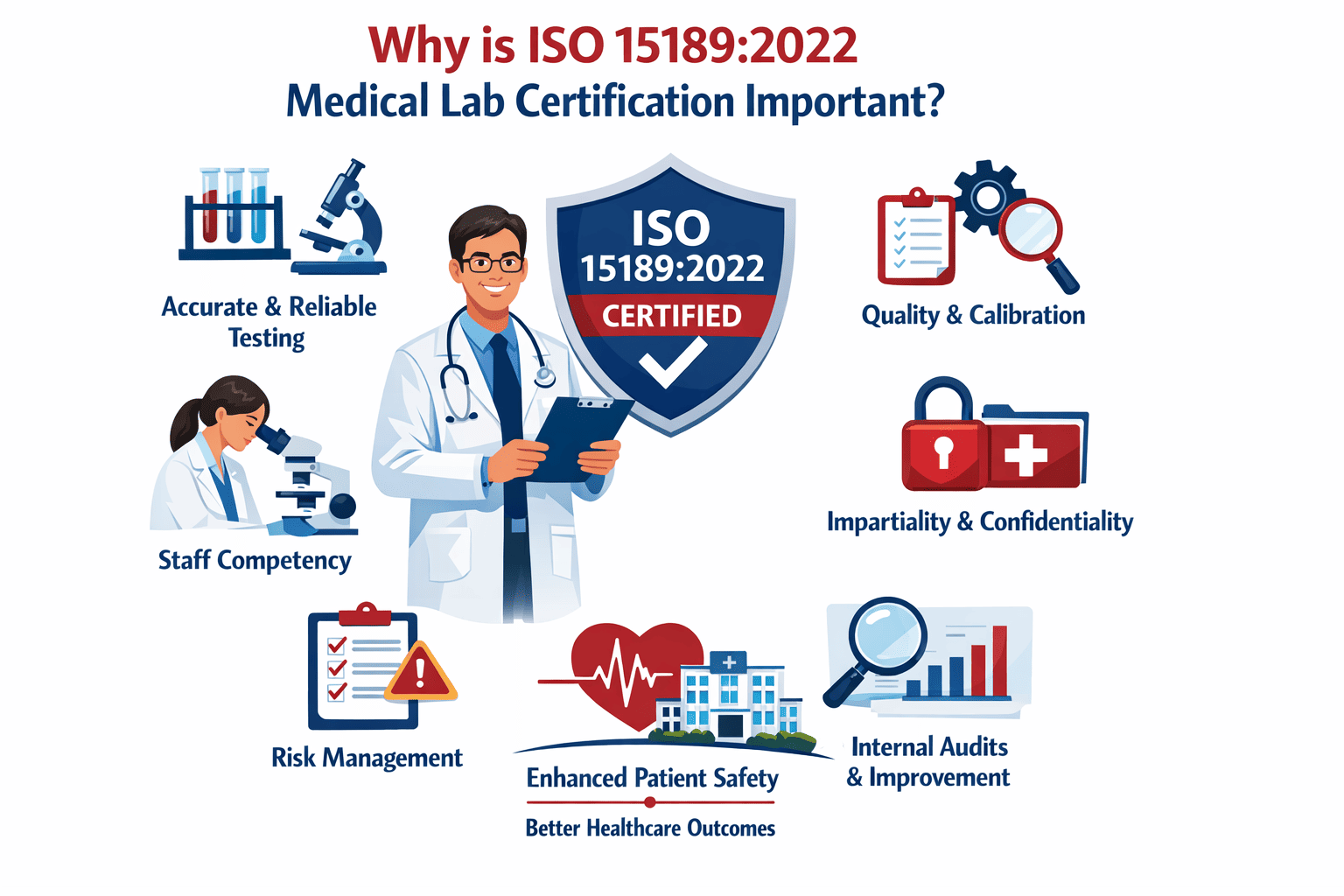
ISO 15189:2022 medical lab certification plays a critical role in ensuring the accuracy, reliability, and consistency of medical laboratory services. It promotes validated testing methods, proper equipment calibration, staff competency, and strict quality control procedures to minimise errors and enhance patient safety.
ISO 15189:2022 also emphasises risk management, impartiality, and confidentiality, ensuring ethical practices and protection of sensitive patient information. Furthermore, it encourages continuous improvement through internal audits and management reviews. By implementing ISO 15189:2022, laboratories demonstrate their commitment to delivering dependable diagnostic services and supporting improved healthcare outcomes.
What is the Process for Obtaining ISO 15189:2022 Medical Lab Certification Important?
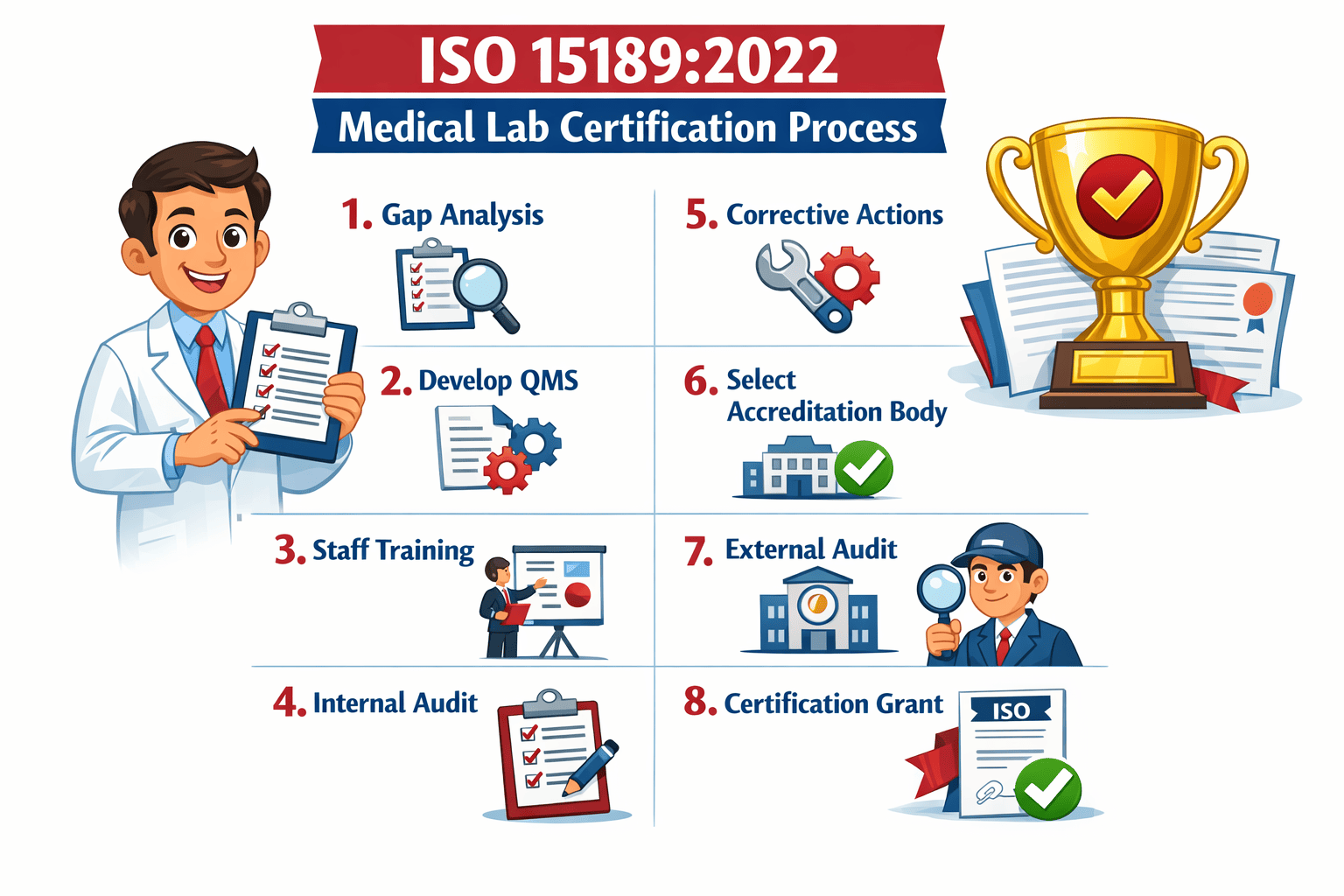
Here is the detailed process for obtaining ISO 15189:2022 medical lab certification:
1. Gap Analysis
Conduct a detailed gap analysis to evaluate existing laboratory practices against ISO 15189:2022 requirements and identify deficiencies that must be addressed before implementing the quality management system.
2. Develop and Implement QMS
Establish and implement a documented quality management system covering policies, procedures, technical processes, risk management, and quality objectives aligned with ISO 15189:2022 requirements.
3. Staff Training and Awareness
Provide structured training to laboratory personnel on ISO 15189 requirements, technical procedures, documentation practices, and quality responsibilities to ensure effective system implementation.
4. Internal Audit and Management Review
Perform internal audits to verify compliance and effectiveness of the QMS, followed by a management review to evaluate performance and approve necessary improvements.
5. Corrective and Preventive Actions
Identify nonconformities during audits, determine root causes, and implement corrective and preventive actions to eliminate issues and prevent recurrence before external assessment.
6. Selection of Accreditation Body
Choose a recognised accreditation body to conduct the assessment and submit the formal application along with the required quality documentation and scope of services.
7. External Audit
The accreditation body conducts document reviews and on-site evaluations to assess technical competence, compliance, staff capability, and effectiveness of laboratory operations.
8. Certification Grant
Upon successful closure of nonconformities, the accreditation body issues ISO 15189:2022 certification, subject to periodic surveillance audits to maintain ongoing compliance.
What are the Documents Required for ISO 15189:2022 Medical Lab Certification?
The following documents are required to successfully obtain ISO 15189:2022 medical lab certification:
- Quality Manual and Scope of Laboratory Services
- Equipment Calibration and Maintenance Records
- Quality Policy and Quality Objectives
- Document Control Procedure and Record Control Procedure
- Risk Management Procedure
- Corrective and Preventive Action (CAPA) Procedure
- Personnel Qualification and Training Records
- Test Methods and Standard Operating Procedures (SOPs)
- Quality Control (QC) and Proficiency Testing Records
What is the Validity Period of ISO 15189:2022 Medical Lab Certification?
ISO 15189:2022 certification is generally valid for three years, subject to successful completion of periodic surveillance assessments by the accreditation body. During this period, the medical laboratory must maintain compliance with quality management and technical requirements. After three years, the laboratory must undergo a reassessment process for renewal of accreditation.
The Way Ahead!
ISO 15189:2022 Medical Lab Certification is a vital benchmark for laboratories committed to delivering accurate, reliable, and patient-focused diagnostic services. By implementing robust quality management systems and demonstrating technical competence, laboratories enhance credibility, regulatory acceptance, and global recognition. Achieving ISO 15189 certification not only strengthens operational control and risk management but also builds lasting trust among patients, healthcare providers, and stakeholders in the evolving healthcare ecosystem. You can easily get your certification today with us!
FAQS
Have some questions about ISO 15189:2022 Medical Lab Certification?
We have got you covered:
-
Is ISO 15189:2022 certification mandatory in India?
ISO 15189:2022 Certification is not legally mandatory in India but is often required by regulators, insurance providers, and hospital networks.
- Is ISO 15189:2022 certification different from NABL accreditation?
- How long does ISO 15189:2022 certification implementation take?
- What is the cost of ISO 15189:2022 certification?
- Can small laboratories obtain ISO 15189:2022 certification?
- Does ISO 15189:2022 Certification require a full-time quality manager?
- Is proficiency testing mandatory for ISO 15189:2022 certification?
- Does ISO 15189:2022 certification cover point-of-care testing?
- Can ISO 15189:2022 certification be integrated with ISO 9001?
- Does ISO 15189:2022 certification apply to blood banks?
- Is remote auditing allowed for ISO 15189:2022 certification?
- Does ISO 15189:2022 certification improve international recognition?
- What happens if nonconformities are found during the ISO 15189:2022 certification audit?
- Can ISO 15189:2022 certification be suspended?
- Does ISO 15189:2022 certification require digital record systems?
- Is method uncertainty evaluation required for ISO 15189:2022 certification?
- Does ISO 15189:2022 Certification address cybersecurity risks?
- Can multi-location laboratories obtain a single ISO 15189:2022 certification?
- Does ISO 15189:2022 certification require patient feedback monitoring?
- Is equipment traceability mandatory under ISO 15189:2022 certification?


